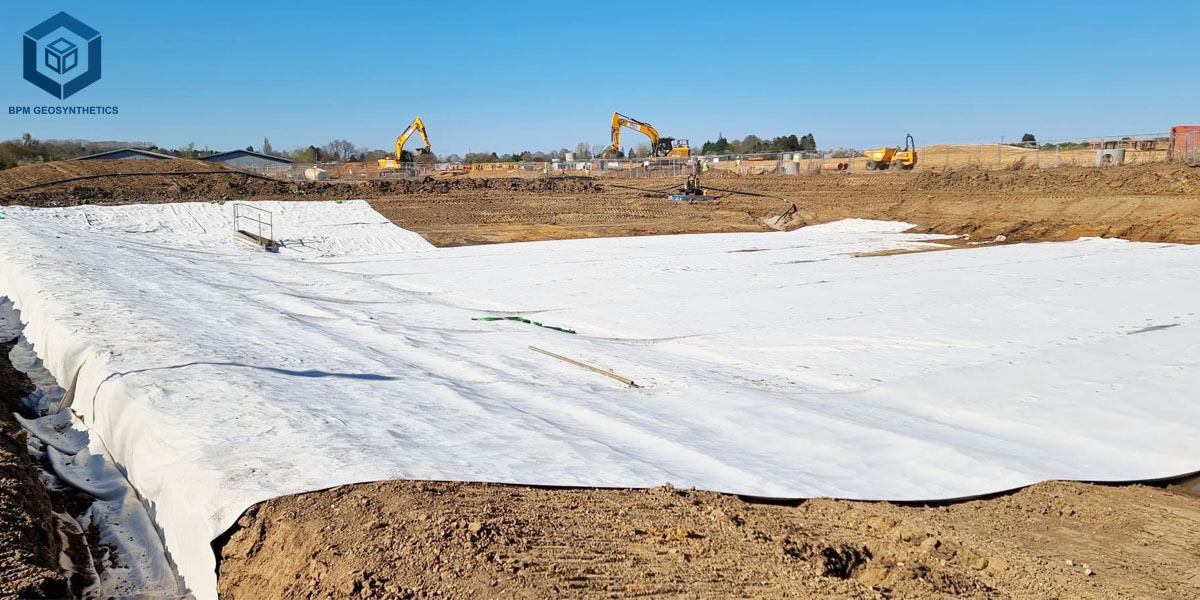
Top 7 Global Geotextile Fabric Manufacturers
Geotextile, or geotextile fabric, are permeable synthetic materials that separate, filter, reinforce, protect, or drain - have been the silent heroes behind the changes in civil, environmental and coastal engineering over the years. Geotextile fabrics are specially designed permeable textiles made of polypropylene (PP), polyester (PET), polyethylene (PE), or recycled polymer.
We profile the top 7 worldwide geotextile fabric manufacturers in 2025 in this article. Our rankings are a result of the comprehensive evaluation of the product excellence, innovation, global presence, customer service beyond expectations, competitive pricing, and dedication to eco-friendly practices. These geotextile manufacturers are the perfect match for engineers solving the problem of road reinforcement, contractors managing ilandfill drainage systems, and project managers working on coastal erosion control as they offer certified solutions that comply with the standards like ASTM D4595, ASTM D4491, and AASHTO M288. Working with these leading companies in the industry can mean achieving filtration efficiencies of 95% as a maximum, service lifespans from 25 to 50 years, and substantial cost savings on maintenance, thus, ensuring regulatory compliance and operational effectiveness.
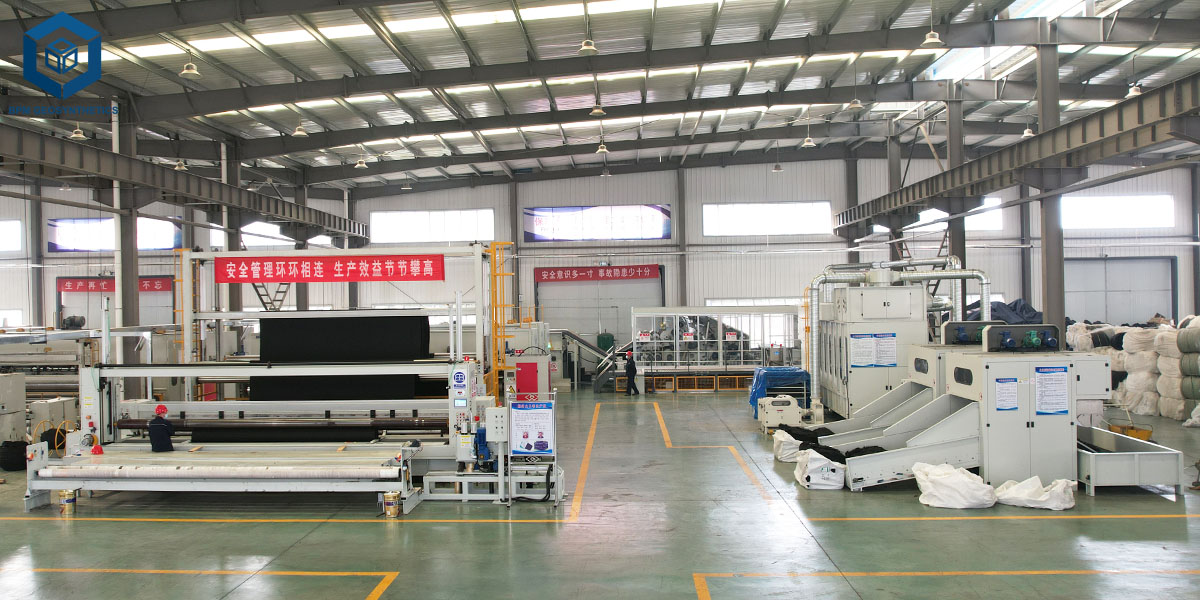
1. The Standards of the Best Geotextile Fabric Manufacturers
When deciding the best geo fabric manufacturers, the following standards should be taken into account:
1.1 Product Quality
Investigate the manufacturing quality of geotextile fabric that the producers offer. The most excellent quality fabric geotextile must be able to prove their tensile strength, puncture resistance, filtration performance, and even-term durability in different site conditions.
1.2 Innovation
Decide on those manufacturers that upgrade the technology of the non woven geotextile fabric and thus have advanced solutions for the variety of its applications. Continuous R&D investment allows geo fabric manufacturers to create new materials that have better properties, are more efficient and can be used in more ways.
1.3 Global Reach
Choose the non woven geotextile manufacturer that has the most extensive distribution channels so that the product can be accessed from any part of the world. Presence on the international market not only means the company is accessible to the customer but also can comply with various project requirements and international standards.
1.4 Customer Service
Manfacturing customers service quality might be a deciding factor for the consumer to choose one manufacturer over another, as it provides support and answer the questions quickly and effectively. Trusting technical support, short response times and expert guidance are just some of the benefits that lead to a more efficient project completion.
1.5 Cost Competitiveness
Adjust the manufacturers' price tags against one another while also factoring in the quality and features provided by their geofabric products. Top manufacturers are those who provide competitive pricing without leading to a performance draw or material standard violations.
1.6 Sustainability Practices
Put first those geo fabric suppliers who maintain eco-friendly practices during the different stages of their production. Responsible for the environment sourcing, production with low emissions of energy and materials that can be recycled, are some of the things that show long-term commitment to sustainability.
1.7 Compliance
Make sure that the producer's geotextile drainage fabric conform to the regulations or standards of the sector such as ASTM D4595, ASTM D4491, and AASHTO M288. Meeting standards ensures steady quality, can easily be accepted in engineering projects all over the world, and reliable performance.
1.8 Longevity
Search for the company that can provide geotextile filter fabric that last for years, thus giving their customers a break from maintenance costs, and at the same time ensuring that the effectiveness will still be there after the years go by. Durable geo textile material, in particular, support the stability of the project and, overall, decrease lifecycle costs.
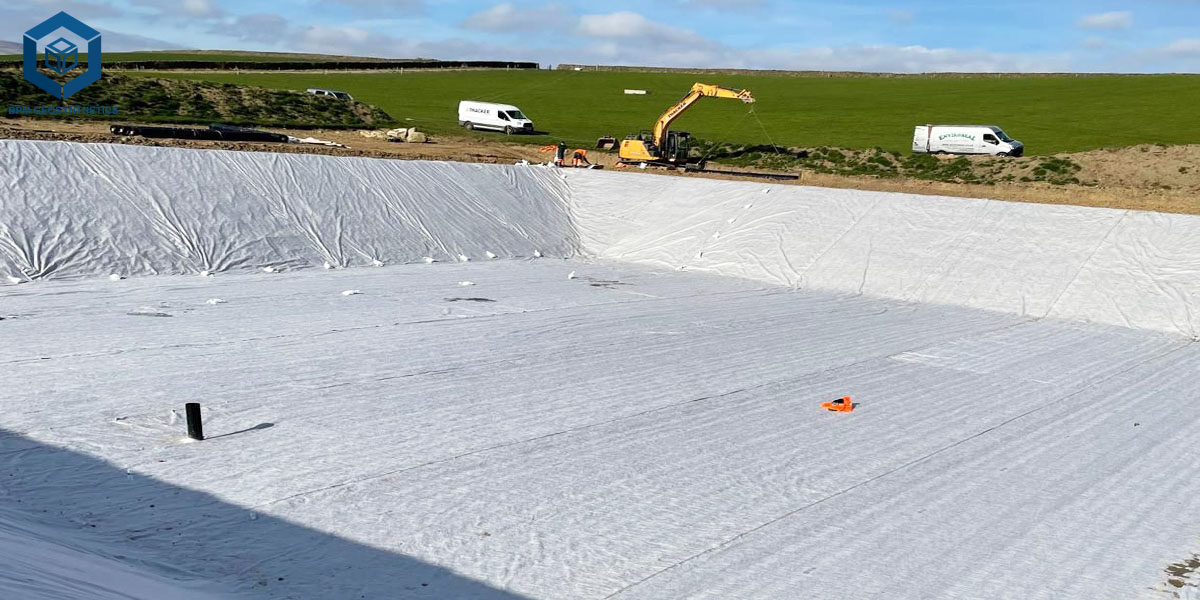
2. Top 7 Geotextile Fabric Manufacturers Worldwide
The list is an eclectic mix of the industry giants and niche innovators that includes two Chinese firms—BPM Geosynthetics and GEOSINCERE—that are redefining the landscape of global players from Canada, the Netherlands, Germany, the UK, and the USA. The brief of each company delineates the specs, uses, pros/cons, and a powerful case study, thus equipping you with the facts to make a wise purchasing decision.
2.1 Solmax – The New Super-Group
Solmax International, originating in 1981 from Varennes, Quebec, Canada, dominates as the world’s largest geosynthetics producer with 1.2 billion m² annual output across global plants. Post-2017 GSE acquisition, Solmax exports to 100+ countries, holding 25% market share in woven/non-woven geo fabrics. In June 2025 Solmax finalised the integration of TenCate Geosynthetics and Propex into a single “Performance Materials” division, instantly creating the world’s largest geosynthetics supplier by both revenue (USD 2.4 bn) and resin throughput . The merger fused TenCate’s European specification know-how with Propex’s U.S. erosion-control dominance and Solmax’s global geomembrane footprint—an unprecedented one-stop shop for liner-and-textile systems.
2.1.1 Their Strux® Series
Woven (200–1,200 g/m², $0.50–$3.00/m²) and non-woven (100–800 g/m²), with 10–200 kN/m tensile (ASTM D4595), 90% erosion control (ASTM D5141), and 0.05–0.4 cm/s permeability. Specs include 8 m rolls, 40–60% recycled content, and 50-year durability. GRI-GM13/ISO 9001 certified.
- Applications:Road pavements (60% usage), landfill drainage, and riverbank protection.
- Pros: Massive scale for rapid supply, innovative recycled blends, and robust warranties (10 years).
- Cons: Premium pricing; fewer niche customizations.
2.2 BPM Geosynthetics (The Best Project Material Co., Ltd.)
Established in 2007 and headquartered in Taian, Shandong, China, BPM Geosynthetics stands as a global leader in versatile geo fabric material, backed by a 26,000 m² ISO 9001/14001-certified facility producing 80,000 tons annually. Exporting to 86+ countries—including the USA, Australia, and Russia—BPM serves sectors from highways to landfills with a 90% customer satisfaction rate. Their portfolio spans non-woven needle-punched (100–800 g/m²) and woven polypropylene geotextiles, utilizing virgin PP enhanced with UV stabilizers for 80% sunlight resistance.
2.2.1 Key specifications
Weights 100–800 g/m², tensile strength 8–120 kN/m (ASTM D4595), permeability 0.05–0.4 cm/s (ASTM D4491), puncture resistance 300–900 N, roll widths 4–8 m, and 25–50-year lifespans in buried applications. Certified to CE, SGS, and ASTM standards, these nonwoven geotextile fabric offer 95% filtration efficiency and chemical resistance across pH 2–13. Pricing: $0.30–$2.50/m² for non-woven; $0.50–$3.00/m² for woven.
- Applications:Primary applications include road stabilization (35% market share), erosion control in coastal zones, and drainage in landfills.
- Pros: Cost-effective bulk pricing (15% discounts on >10,000 m² orders), rapid customization (e.g., perforated variants), and full-spectrum support from design to installation.
- Cons: Extended lead times (20–30 days) for ultra-custom specs; less emphasis on bio-based options compared to European peers.
In a 2024 Malaysian highway project, BPM Geosynthetics supplied 50,000 m² of 250 g/m² non woven geotextile, enhancing soil stability by 35% and saving 15% ($120,000) in aggregate costs while reducing settlement by 90% over two years.
2.3 HUESKER Synthetic – The German Precisionist
HUESKER, headquartered in Germany, is a global leader in geosynthetics and technical textiles, providing innovative solutions for diverse applications.
- Strengths: HUESKER is renowned for its cutting-edge research and development efforts, customer-centric approach, and extensive product portfolio catering to geotechnical challenges worldwide.
- Product Offerings: The company offers a comprehensive range of geotextile fabrics, geogrids, and other geosynthetic materials for applications in soil reinforcement, embankment stabilization, and erosion prevention. Their geotextiles are designed to enhance the durability and performance of infrastructure projects.
2.4 Propex GeoSolutions – The American Benchmark
Propex GeoSolutions has a deep-rooted history in geosynthetic product development, evolving from its origins in textiles and industrial materials. Known for innovation, the company continuously enhances its geosynthetic offerings to prioritize performance and sustainability. Their diverse product line includes geotextile, geogrid, and erosion control solutions, meeting varied project requirements with quality that surpasses industry standards.
With a team of seasoned engineers and experts, Propex guides customers in choosing tailored geosynthetic solutions. Committed to sustainability, the company aims to reduce its environmental footprint. Their products find application in diverse projects such as road construction, erosion control, soil reinforcement, and landfill construction. Geotextiles and geogrids reinforce structures, prevent soil erosion, and enhance drainage systems, showcasing the versatility and effectiveness of Propex GeoSolutions in the geosynthetic industry.
2.5 Shandong GEOSINO New Material Co.,Ltd (GEOSINCERE Geosynthetics) – The Asian Volume Champion
Shandong GEOSINO New Material Co.,Ltd is a China-based non woven geotextile fabric manufacturers, and a leading company in the market. They are known for their state-of-the-art production techniques through which they provide top-quality geotextiles suited for a variety of civil engineering and environmental projects. The company mainly aims at offering strong and reliable geotextile solutions which can be used for soil stabilization, erosion control, drainage, and road construction, etc. Their geotextiles meet the requirements of industry standards and thus, provide the most efficient solutions that prolong the life and effectiveness of infrastructural initiatives.
GEOSINCERE Geosynthetics’s vertically integrated facility—extrusion, needle-punch, heat-set, UV finish all under one 36 000 m² roof—produces ASTM-grade non woven filter fabric at USD 0.40–1.00 m⁻², which is by 25 % lower than that of EU competitors, and at the same time, the purity of the virgin resin is not compromised. The company has 14 export warehouses spread over five continents and thus, is able to ensure a ≤ 7-day landed lead time to 52 countries.
2.6 Fibertex Nonwovens A/S – The Sustainability Pioneer
Fibertex was the very first company in the industry to receive the Bluesign certification (2021) and currently, it offers a carbon-neutral non-woven line that uses 100% green electricity and certified biomass-balanced polypropylene. The company's worldwide non-woven geotextile market share is 12%, and it has been achieved on the basis of the 3000-5000 gsm heavyweights, which are very important, for example, in the case of coastal revetments.
- Key source technologies, Fibertex N-Elite: Spun-laid continuous filament, 500 % elongation at break, absorbs 200 % more impact energy; currently, it is utilized in 30 % of the overlays for winter road maintenance in Scandinavia.
- ReGen™ series: 70 % post-consumer recycled PP, still manages to achieve 25 kN m⁻¹ tensile—thus, very close to the performance level necessary for complete circularity.
- LowMelt approach: Calendar bonding at 142 °C instead of 165 °C results in an 11 % saving of process energy.
2.7 TenCate Geosynthetics
TenCate Geosynthetics, located in the Netherlands, is one of the major contributors in the industry of the manufacturing of geotextile fabric. The company has been known for a long time as a reliable source of high-quality geotextiles, geogrids, and geocomposites for a wide range of applications.
- Strengths:TenCate Geosynthetics is well known for its highly advanced technical skills, continuous product innovation, and strong determination to sustainability. Their geotextiles, geogrids, and geocomposites are created to be the best solutions for erosion control, soil reinforcement, and drainage management, thus, they help in the extension of the life span and the increase of the stability of the infrastructure projects.
TenCate Geosynthetics has an extensive range of geosynthetic products to meet different geotechnical challenges.
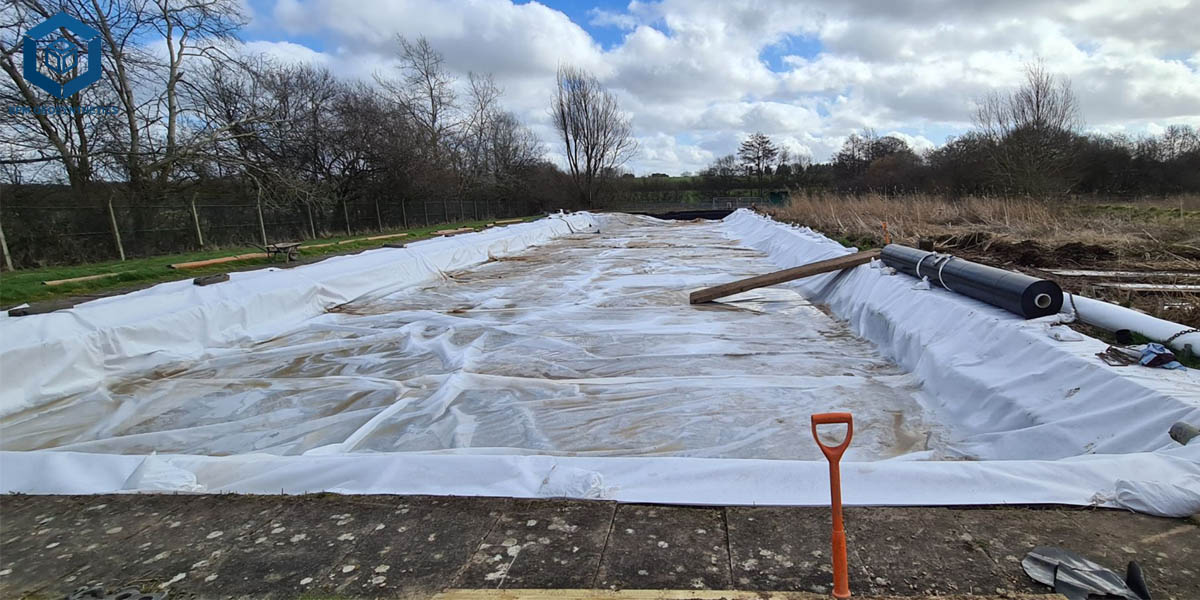
3. Geotextile Fabric Benefits
Geotextile fabric provides several benefits in different construction and environmental applications:
3.1 Soil Erosion Control
The geotextile soil stabilization stabilize the soil and stop the erosion that is caused by the water that runs and wind, in particular, on slopes and embankments.
3.2 Drainage Improvement
They allow water to pass through but at the same time, they prevent soil loss. Therefore, they maintain the soil structure and stability.
3.3 Separation
Non woven geotextile filter fabric is separators that lie between different layers of soil and thus, they prevent the mixing and the breaking of the construction.
3.4 Reinforcement
Geo filter fabric improve the power of soil constructions such as retaining walls by giving extra support and by lessening the risk of them being broken.
3.5 Filtration
Geotextiles for erosion control take out the smallest particles from the water that goes through them and thus, they stop the clogging that is going on and help the drainage systems to work efficiently.
3.6 Road Construction
In road construction projects, the use of geotextile road fabric helps to increase the bearing capacity of the subgrade, decrease rutting, and make the pavement surface last longer.
3.7 Environmental Protection
Non woven geotextile landscape fabric can be used in environmental projects to help reduce pollution, prevent sediment runoff, and facilitate ecological restoration.
3.8 Cost-Effectiveness
The use of non woven needle punched geotextile leads to the long-term saving of money by lessening the maintenance needs, increasing the construction durability, and making the projects more efficient.
Conclusion
The geotextile industry is shifting from being just a commodity market to one of engineered materials where resin science, digital assurance, and embodied-carbon transparency are the factors that determine the next billion-square-metre contract winner. No matter if you are stabilising a desert solar farm, reinforcing an offshore wind-cable trench, or capping a 100-year landfill, the seven manufacturers listed above are the ones that have the technology, regional certification, and supply-chain resilience to help you turn project risk into your competitive advantage.
Among them, The Best Project Material Co., Ltd.(BPM Geosynthetics)is the one that could be described as a partner of choice combining advanced manufacturing capability, strict ASTM and AASHTO compliance, in-house laboratory testing, and a global export experience. Concentrating strongly on product uniformity, tailoring, and offering cost-effective solutions, BPM Geosynthetics produces dependable geotextile fabrics which are the perfect fit for the rigorous requirements of infrastructure, environmental, and energy projects all over the globe and thus a strategic decision for engineers, contractors, and asset owners pursuing reliable performance and competitive advantage.