The 7 Best Geo Clay Liner Review
Geosynthetic Clay Liners (GCL)—commonly referred to as "Geo Clay Liner"—have become indispensable components in modern environmental and civil engineering. These engineered hydraulic barriers consist of a layer of sodium bentonite clay encapsulated between geotextiles, bonded through needle-punching, stitching, or adhesive processes. GCL deliver exceptionally low permeability , self-healing capabilities, and rapid installation, making them superior alternatives to traditional compacted clay liners in landfills, mining tailings ponds, artificial lakes, and hydraulic engineering projects.
This review provides an in-depth analysis of seven leading geo clay liner products, evaluating them against rigorous technical criteria including hydraulic conductivity, shear strength, chemical compatibility, and application suitability.
1. What is Geo Clay Liner?
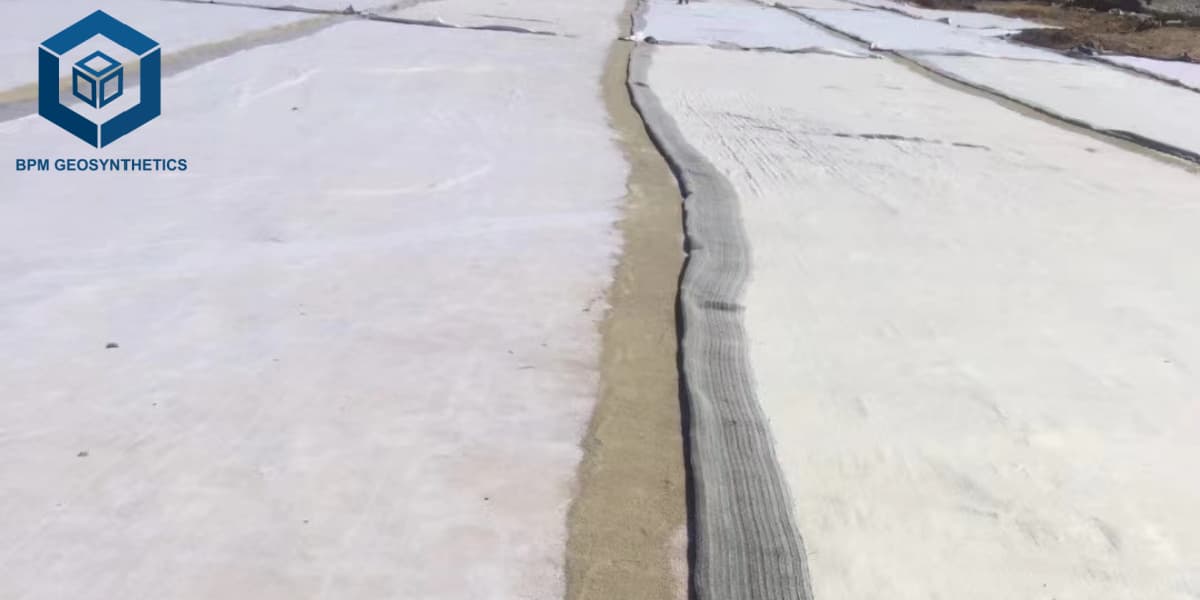
BPM Geosynthetics geo clay liner (GCL) is needle-punched reinforced composites that combine two durable geotextile outer layers with a uniform core of natural sodium bentonite clay to create a hydraulic barrier. The sodium bentonite clay used in the BPM Geosynthetics Geo Clay Liners is a naturally occurring clay mineral that swells when water enters between its clay flakes. When hydrated under confined conditions, the bentonite swells to form a low-permeability clay layer with hydraulic protection equivalent to several feet of compacted clay.
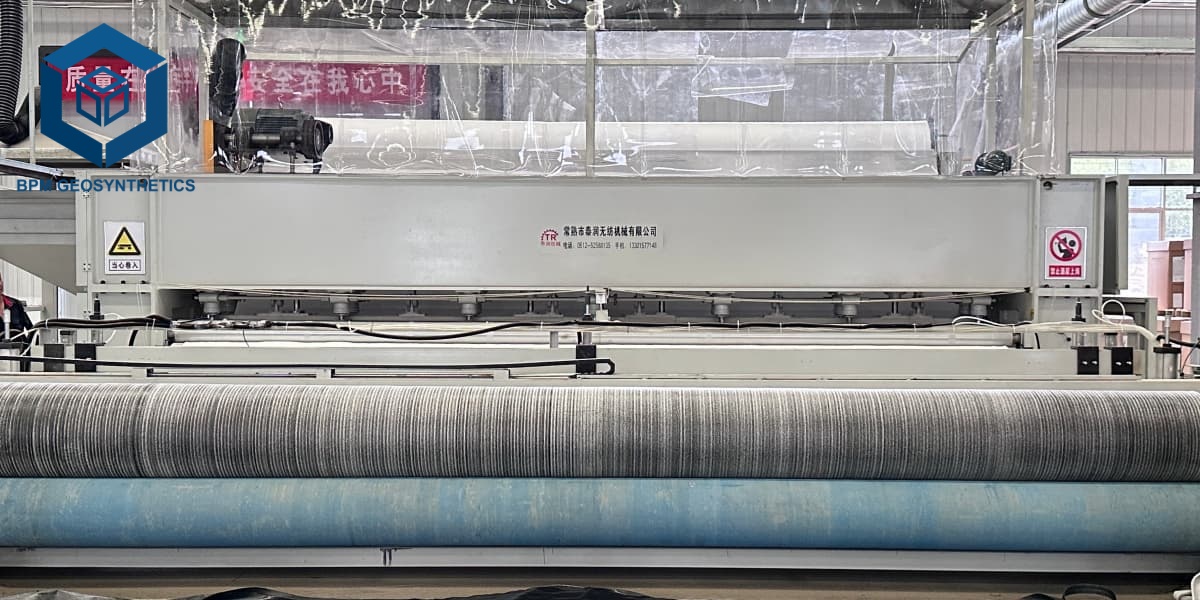
The BPM Geosynthetics GCL liner is made by distributing a uniform layer of sodium bentonite between two layers of geotextile. Fibers from the nonwoven geotextile are then needle-punched through the bentonite layer and incorporated into another layer of geotextile (woven or nonwoven). This process creates a strong mechanical bond between the fabrics. Using a proprietary heat treatment process – the Heat Lock process – the needle-punched fibers are then modified to hold them in place more durably. Properties include enhanced internal shear resistance and long-term creep resistance.
2. Understanding Geo Clay Liner Performance Criteria
Before examining individual products, establishing a robust evaluation framework is essential. The following technical parameters are decisive in GCL selection:
2.1 Bentonite Quality and Chemical Compatibility
The heart of any GCL liner is its sodium bentonite core. Montmorillonite content, purity, and cation exchange capacity directly determine hydraulic performance. However, a critical misconception is that higher bentonite mass alone guarantees better performance. Research has demonstrated that high-purity sodium bentonite exhibits excellent permeability in pure water, but when exposed to leachates containing multivalent cations (e.g., calcium, magnesium), cation exchange can cause bentonite swelling capacity to deteriorate, raising hydraulic conductivity by several orders of magnitude . For landfill or industrial wastewater applications, engineers must demand chemical compatibility test data using actual site-specific liquids rather than relying solely on pure water results.
2.2 Shear Strength and Reinforcement Method
Internal shear strength determines whether a geosynthetic liner can maintain stability on slopes. Products vary dramatically:
- Adhesive-bonded GCL: Older generation products with limited shear performance, now rarely used in critical applications.
- Stitch-bonded GCL: Provide improved strength over adhesive types but remain inferior to needle-punched constructions.
- Needle-punched GCL: Industry standard. Thousands of fibers penetrate the bentonite layer, anchoring upper and lower geotextiles. Peak shear strength is significantly enhanced, and advanced variants (such as thermal-lock processes) further prevent fiber pullout.
2.3. Interface Friction Characteristics
Friction between the GCL and adjacent materials—cover soil or HDPE geomembranes—is equally critical. Clay liner with nonwoven surfaces typically exhibit higher friction angles than woven surfaces, as nonwoven fibers create superior interlocking with soil particles . When a GCL is paired with a smooth geomembrane, interface shear testing becomes indispensable.
2.4 Hydration and Environmental Interactions
Geo synthetic clay liner is not immediately impermeable upon installation. They require moisture absorption from the subgrade or cover materials to hydrate the bentonite fully. In arid conditions or saline soils, incomplete hydration or desiccation can compromise performance. Long-term studies indicate that freeze-thaw and wet-dry cycles significantly affect long-term permeability in extreme climates, reinforcing the importance of site-specific environmental assessment.
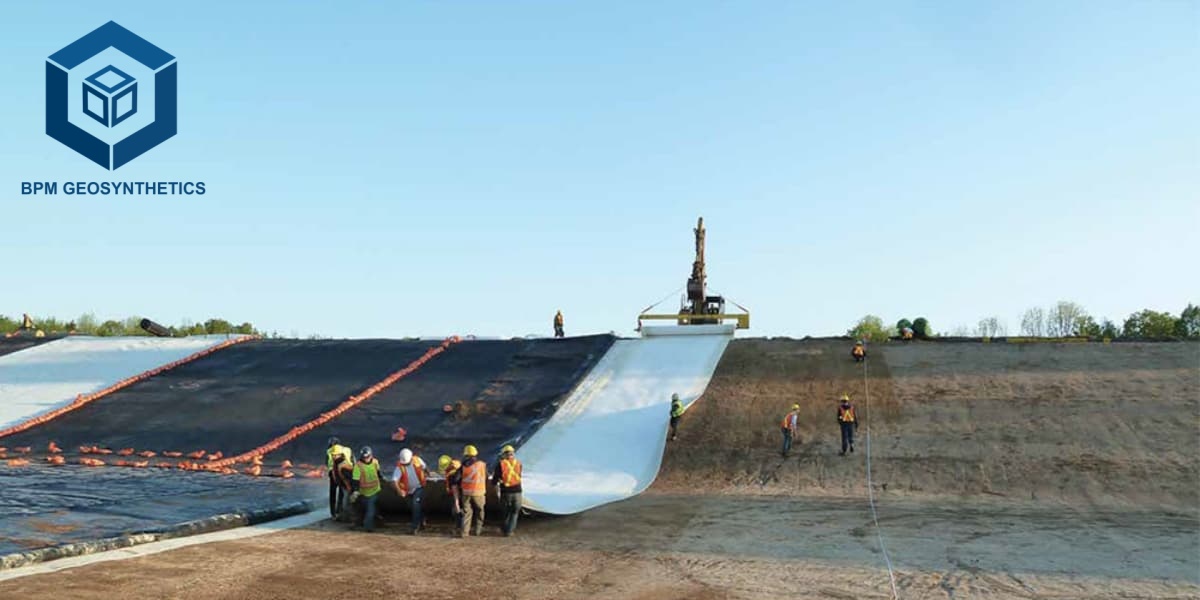
3. The 7 Best Geo Clay Liner Products
Based on the technical criteria outlined above and verified through independent specifications, the following seven products represent the best offerings in the market as of 2026:
3.1 Best Overall: BPM Geosynthetic Clay Liner
BPM Geosynthetics's GCL delivers exceptional versatility, combining a 4,800 gsm sodium bentonite core with needle-punched polypropylene geotextiles. Its hydraulic conductivity achieves ≤10−1110−11 cm/s, and the swell index of 26 mL/2g ensures 95% self-sealing capability. With tensile strength of 20 kN/m, peel strength of 800 N/m, and shear strength of 25 kPa (15% higher than many competitors), this product excels across landfills, mining leach pads, and water containment applications. BPM's ISO 9001:2015-certified production, 16,000 m² facility, and exports to 81+ countries guarantee consistent quality. Bulk orders benefit from 10% cost savings
- Best for: Large-scale landfills, mining, and water reservoirs.
3.2 Best for Landfills: GEOSINCERE Geosynthetic Clay Liner
Optimized specifically for municipal and hazardous waste containment, GEOSINCERE's GCL features a 4,800 gsm bentonite core with hydraulic conductivity ≤10−11 cm/s, preventing 95% of leachate seepage. Its 700 N/m peel strength ensures strong geotextile bonding, while the 24 mL/2g swell index supports reliable self-repair. GEOSINCERE's partnership with China Communications Construction Company (CCCC) and ISO 14001 environmental certification provide assurance of eco-compliance. The product is delivered to over 100 countries with rapid turnaround .
- Best for: MSW landfills, hazardous waste containment.
3.3 Best for Steep Slopes: Solmax Bentoliner X2 NSP4900 GCL
Engineered for challenging terrains, Solmax's Bentoliner X2 incorporates a polyethylene (PE) coating that enhances hydraulic performance (≤5×10⁻¹¹ cm/s) and chemical resistance. With a 5.0 kg/m² bentonite core, 900 N puncture resistance, and exceptional 40 kPa shear strength, this product handles slopes up to 1:2.5 with confidence. The PE coating adds 10% durability in leachate-heavy environments, and wide rolls (up to 5.8 m) reduce seam count and installation time by 20%
- Best for: Landfill caps, steep slopes, mining tailings.
3.4 Best Heavy-Duty Performance: Terrafix Bentofix Thermal Lock GCL
The Bentofix series features patented Thermal Lock technology—fibers are heat-treated after needle-punching to fuse with the base fabric, substantially improving shear strength and puncture resistance (up to 1,000 N). With a 5.5 kg/m² bentonite core and hydraulic conductivity as low as ≤2×10⁻¹¹ cm/s, this product is designed for critical containment structures such as dams and high-risk landfill liners. The thermal locking process reduces bentonite migration by 15%, extending service life
- Best for: Dams, high-risk industrial waste facilities, critical containment.
3.5 Best for Mining and Aggressive Environments: Cetco Bentomat ST
Mining tailings often exhibit extreme pH ranges (2–12) and high salinity. Cetco's Bentomat ST is specifically formulated for such demanding conditions. Part of the CETCO family (Minerals Technologies Inc.), this product undergoes rigorous chemical compatibility verification. It is available in multiple reinforcement configurations—the DN series offers high-density needle-punching for steep slopes, while the ST configuration is specified for slopes up to 3H:1V. For remote mining sites, the STM variant reduces bentonite loading for cost-effective transport while maintaining adequate hydraulic performance
- Best for: Copper/gold heap leach pads, chemical waste ponds.
3.6 Best for Water Containment: AGRU America GeoClay GCL
AGRU's GeoClay GCL is optimized for artificial lakes, lagoons, and irrigation reservoirs. With a 5.0 kg/m² bentonite core, hydraulic conductivity ≤5×10⁻¹¹ cm/s, and 850 N puncture resistance, it effectively prevents water loss through seepage. Its flexible design conforms to uneven subgrades, and 35 kPa shear strength provides stability for moderately sloped applications. AGRU's expertise in geosynthetic manufacturing ensures reliable quality
- Best for: Golf course lakes, ornamental water features, irrigation reservoirs.
3.7 Best Budget-Friendly Option: Tinhy Geosynthetics GCL
For smaller-scale projects such as residential landscape ponds, effluent ponds, or temporary containment, Tinhy provides a cost-effective alternative. Its 4.5 kg/m² bentonite core delivers permeability of ≤5×10⁻¹⁰ cm/s, and needle-punched PP geotextiles offer 600 N puncture resistance. At 20–25% cost savings over premium brands, this product is suitable for flat or low-slope applications (1:4 or gentler). While tensile strength (10 kN/m) is lower than premium options, it meets ISO 9001 quality standards
- Best for: Small reservoirs, landscaping, agricultural ponds.
4. Composite Barrier Systems: Geo Clay Liner and HDPE Geomembrane Synergy
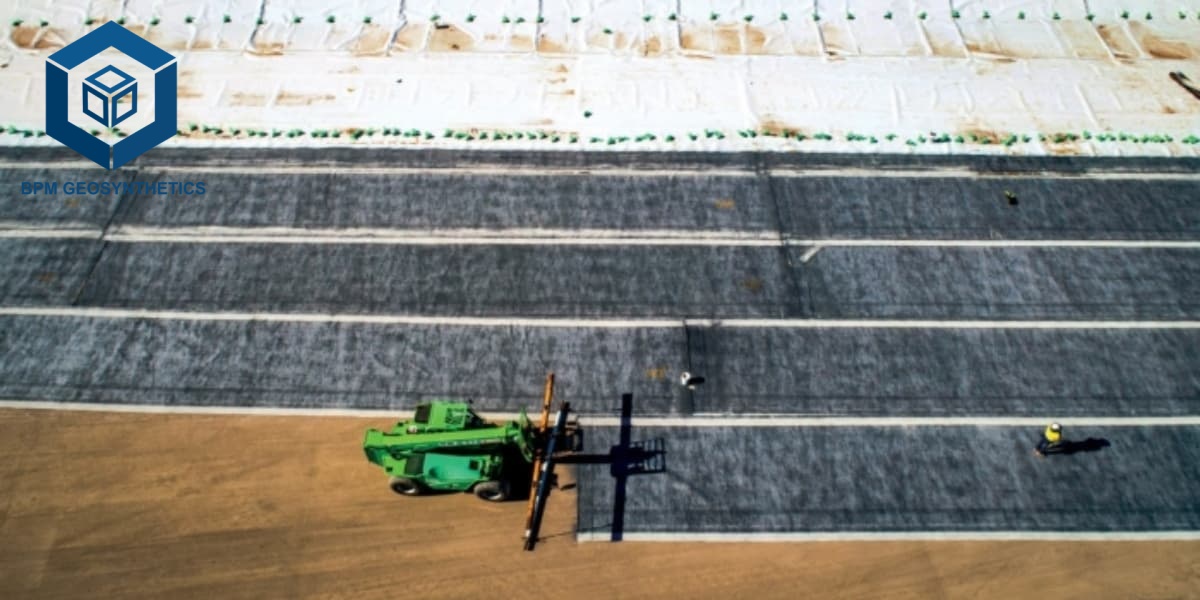
In high-consequence containment projects—such as hazardous waste landfills, coal ash impoundments, and chemical processing facilities—single-layer hydraulic barriers rarely suffice. Instead, environmental regulations and modern engineering standards mandate Composite Barrier Systems, which pair a geosynthetics clay liner directly with a High-Density Polyethylene (HDPE) geomembrane.
By combining the flexible, self-healing qualities of bentonite with the near-zero permeability of synthetic polymers, this dual-layer architecture provides an unparalleled defense against contamination.
4.1 Synergistic Sealing Mechanics (The "Intimate Contact" Principle)
The technical advantage of a composite barrier lies in its combined sealing capability, which is far greater than the sum of its individual layers.
While HDPE geomembranes boast extremely low hydraulic conductivity, field installations inevitably suffer from micro-punctures, seam defects, or stress cracking over decades of service. Conversely, a standalone gcl pond liner is highly impermeable but vulnerable to cation exchange or desiccation under extreme conditions. When placed in direct contact, they form a self-correcting barrier:
4.1.1 Elimination of Lateral Seepage:
Under pressure, the hydrated sodium bentonite core expands against the flexible geomembrane. This intimate contact eliminates the macro-void gap between layers, preventing fluid from spreading laterally underneath the geomembrane if a defect occurs.
4.1.2 Active Self-Healing at Puncture Sites:
If a localized tear or puncture breaches the HDPE geomembrane, infiltrating liquid triggers rapid hydration in the underlying GCL bentonite core. The bentonite swells (achieving free swell values of at least 24 mL/2g, extrudes upward into the void, and seals the breach under confinement.
4.1.3 Superior System Permeability:
This synergistic sealing mechanism drops the effective system hydraulic conductivity to less than 1 × 10⁻¹² cm/s—two orders of magnitude better than a standard GCL or compacted clay liner (CCL) alone.
4.2 Interface Shear Strength and Surface Matching
Slope stability is a primary structural concern when designing composite liners on steep cell side-slopes (such as 3H:1V or 2.5H:1V). Because the composite assembly creates multiple material interfaces, engineers must carefully match the outer geotextile surfaces of the GCL with the surface texture of the HDPE geomembrane to prevent catastrophic slope sliding.
4.2.1 Smooth HDPE + Woven Geotextile GCL:
Yields a very low friction angle (8°-12°) and minimal peak shear strength. Suitable only for flat or near-flat base liners with less than 2% slope.
4.2.2 Smooth HDPE + Nonwoven Geotextile GCL:
Delivers moderate friction (12°-16°). Best suited for low-gradient slopes under 5H:1V, though it retains a risk of slip upon complete hydration.
4.2.3 Textured HDPE + Woven Geotextile GCL:
Provides high friction (18°-22°) with good mechanical grip. Ideal for moderate side-slopes between 4H:1V and 3H:1V.
4.2.4 Textured HDPE + Nonwoven Geotextile GCL:
Delivers exceptional friction (24°-32° or higher). The nonwoven fibers interlock tightly with the textured geomembrane, making this the industry standard for steep side-slopes ranging from 3H:1V to 2.5H:1V.
4.2.5 Critical Design Consideration:
Never rely on generic friction parameters for critical slopes. Direct shear interface testing via ASTM D5321 must be conducted using site-specific soils, hydrated GCL samples, and the exact specified geomembrane under representative normal stresses.
Summary
Selecting the optimal Geo Clay Liner requires balancing hydraulic performance, mechanical strength, chemical resistance, and budget against site-specific demands. The Best Project Material Co., Ltd. (BPM Geosynthetics) offers the best all-around solution for most applications; GEOSINCERE Geosynthetics leads in landfill-specific performance; Solmax excels in slope stability; Terrafix delivers unmatched heavy-duty protection; Cetco addresses aggressive chemical environments; AGRU specializes in water retention; and Tinhy provides an accessible entry point for smaller projects.
The global GCL market continues to grow, driven by stricter environmental regulations, rising awareness of groundwater protection, and the expansion of industrial infrastructure in emerging economies . Understanding the science behind geo clay liner technology—and the distinct capabilities of each leading product—is essential for engineers, contractors, and procurement professionals aiming to deliver safe, durable, and cost-effective containment solutions.