The 7 Best Geocell Road Review
1. Introduction
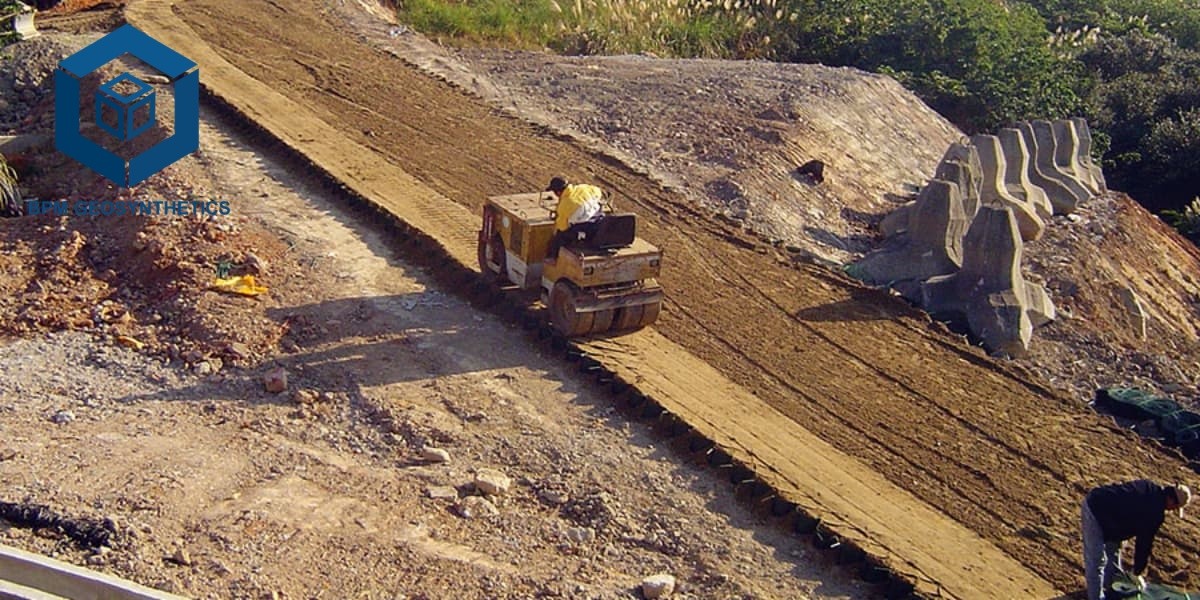
Geocell technology has emerged as one of the most innovative solutions for road construction and rehabilitation in recent decades. These three-dimensional, honeycomb-like cellular confinement systems, typically manufactured from high-density polyethylene (HDPE) or advanced polymer alloys, revolutionize how engineers approach roadbase stabilization, load distribution, and pavement durability .
Unlike traditional planar geosynthetics such as geogrids, geocells create a true three-dimensional reinforcement matrix. When filled with granular materials, each cell acts as a miniature containment unit, preventing lateral movement of infill while distributing vertical loads over a significantly wider area . This "beam effect" transforms weak, deformable soils into stiff, load-bearing platforms capable of supporting heavy traffic with minimal maintenance.
This comprehensive review examines seven exceptional geocell road projects from around the world, analyzing their challenges, solutions, and quantifiable results. From industrial access roads enduring 1,500 heavy axle loads daily to sustainable highway reinforcements reducing asphalt thickness by 23%, these case studies demonstrate the remarkable versatility and effectiveness of geocell technology.
2. Understanding Geocell Road Technology
What Makes Geocells Effective for Roads?
The effectiveness of geocell reinforcement stems from several key mechanisms:
2.1 Cellular Confinement:
The three-dimensional structure confines infill material within individual cells, preventing lateral spreading and controlling both vertical and horizontal movement. This confinement increases the shear strength of the infill material by adding apparent cohesion.
2.2 Load Distribution (Beam Effect):
Geocells create a semi-rigid slab or "beam" that distributes loads more effectively over a wider area. Research has demonstrated that geocell reinforcement can reduce vertical stress by up to 50% compared to unreinforced sections.
2.3 Reduced Layer Thickness:
By improving the load-carrying ratio (LCR) of granular materials, geocells allow engineers to reduce pavement section thickness while maintaining or exceeding required structural capacity. Documented cases show thickness reductions from 450mm to 250mm—a 44% decrease.
2.4 Enhanced Elastic Modulus:
Geocell reinforcement can increase the elastic modulus of pavement layers by 2 to 5 times, enabling heavier traffic loads and extended pavement lifespan.
Standard HDPE geocells are generally not recommended for paved highways due to concerns about long-term stiffness and creep resistance under dynamic loading. Advanced polymer alloys like Neoloy were specifically developed to address these limitations, offering higher modulus and extended design life for demanding applications.
3. Geocell Road Case
3.1 Cold Lake Industrial Access Road, Alberta, Canada
3.1.1 Project Background
In Cold Lake, Alberta, a project site faced an extreme challenge: 1,200 to 1,500 40-kip axle loads daily from heavy industrial traffic. The initial solution involved applying a 4-inch (10 cm) lift of cold mix asphalt over a prepared subgrade, intended to reduce dust and limit grader maintenance.
3.1.2 The Failure
Despite the initial investment, the roadway failed within one year. The frequent traffic and heavy loads quickly overwhelmed the structure. Post-failure analysis revealed a critical design flaw: the existing design was built for only 780,000 Equivalent Single Axle Loads (ESALs), while actual traffic demands required capacity for 5.3 million ESALs—a nearly sevenfold underestimation.
3.1.3 The Geocell Solution
Leveraging the owner's prior experience with geocell technology, the Layfield Geosynthetics Group designed a comprehensive rehabilitation solution. The upgraded cross-section included:
- Enhanced woven geotextile over prepared subgrade (CBR ≥ 3%)
- Geocell GW30V6 (6-inch depth) cellular confinement system
- Compacted granular infill, overfilled by 4 inches
- 4-inch cold mix ACP wearing course
3.1.4 Installation Strategy
Because the roadway was a critical access route, full closure was impossible. The team developed a phased plan: rehabilitate half the road at a time. During the day, traffic flowed with flag-controlled diversions; at night, completed sections reopened to avoid 24-hour flagging operations.
3.1.5 Quantifiable Results
The results were remarkable. Over 14 kilometers of roadway were successfully installed using AASHTO 93 design calculations. The geocell system improved the granular material's Load-Carrying Ratio (LCR) from 0.15 to 0.34, allowing section thickness reduction from 450 mm to 250 mm while still meeting the demanding 5.3 million ESAL requirement.
Additional benefits included:
- Minimized frost heaves in freeze-thaw conditions
- Reduced rutting under heavy loading
- Minimized differential settlement
- Exceptionally durable performance with reduced maintenance needs after years of service
3.1.6 Key Takeaways
The Cold Lake case demonstrates that geocell technology can effectively upgrade roads designed for light traffic to handle extreme industrial loads without complete reconstruction. The phased installation approach also proves that critical infrastructure can be rehabilitated without shutdowns.
3.2 Highway 6 Reinforcement, Israel
3.2.1 Project Background
Highway 6, the Cross Israel Highway, is a 140 km national electronic toll road traversing the country's north-south corridor. Built at a cost of $1.4 billion by AECON, this DBOT project required a third lane in each direction to accommodate increased traffic intensity.
3.2.2 The Challenge
The Derech Eretz Group, the highway concessionaire, needed a design solution that would:
- Meet national pavement design standards
- Align pavement thickness to existing elevation
- Reduce overall asphalt layer thickness
- Replace expensive base infill with lower-cost granular subbase material
3.2.3 The Neoloy Tough-Cell Solution
Conventional geocells made from HDPE were rejected for this paved highway application due to questions about long-term stiffness, creep resistance, and durability under heavy dynamic loading. Instead, the project utilized Neoloy® Tough-Cells—a novel polymeric alloy based on nano-fibers in a polyolefin matrix offering higher modulus and creep resistance than HDPE . The alternative design with Neoloy Tough-Cells achieved two significant improvements:
- Replaced crushed stone base infill with lower-quality granular infill (subbase class A)—achieving 37% infill savings
- Reduced base asphalt layer from 100 mm to 60 mm—achieving 23% asphalt layer reduction
Neoloy 330 geocells (140 mm height, 4 m wide sections) were installed in the base layer, serving as a reinforcing inter-layer directly under the asphalt—contrary to conventional geocell use in subgrade. This placement maximizes the 3D reinforcement mechanism, increasing pavement structure bearing capacity and load distribution.
3.2.4 Quantifiable Results
The road design, based on empirical-mechanistic methodology and Flex-Design pavement design software, demonstrated a 2.7 times higher elastic modulus for each pavement layer.
Monitoring using pressure cells in the base layer recorded vertical stresses from static load plate loading. The results showed that vertical stress on the Neoloy Tough-Cell sections was approximately 50% less than the unreinforced control section.
The beam effect—load distribution over a wider area—was verified by extensive testing at Kansas State University, the University of Kansas, and the Indian Institute of Technology (IIT) Chennai.
3.2.5 Key Takeaways
The Highway 6 case proves that advanced geocell technology can be successfully integrated into paved highway applications, achieving significant material savings while maintaining or improving structural performance. The 50% reduction in vertical stress demonstrates the transformative potential of properly designed geocell reinforcement.
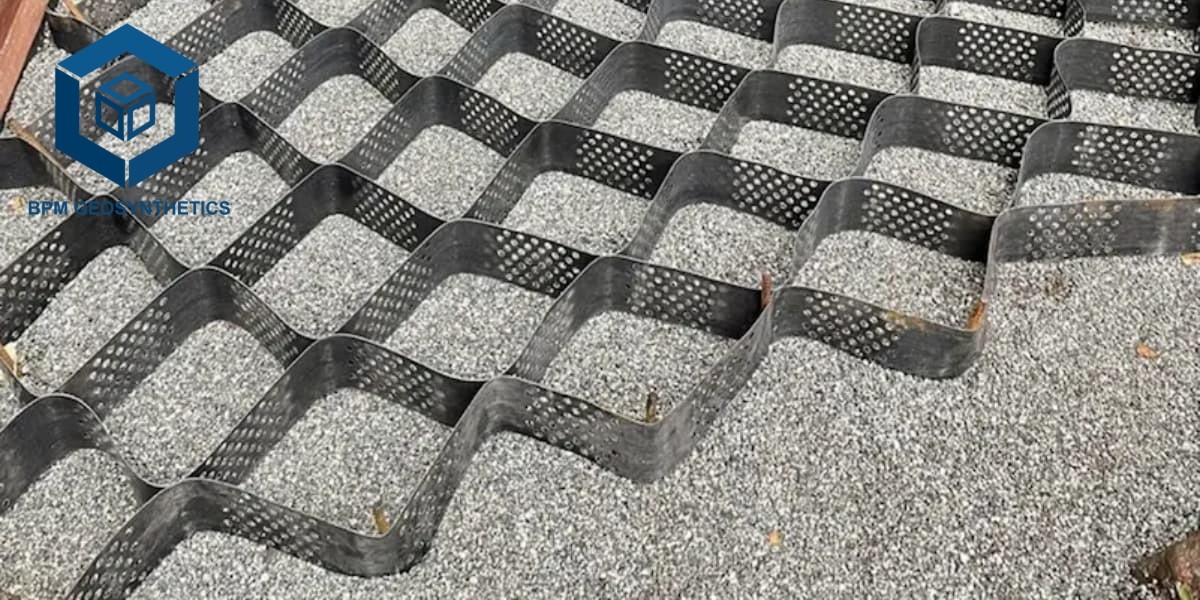
3.3 Electrical Substation Access Road, Plaquemine, Louisiana
3.3.1 Project Background
A new transmission line and electrical substation in the industrial area south of Plaquemine, Louisiana, required a stable, unpaved access road capable of supporting heavy construction equipment and ongoing maintenance traffic .
3.3.2 The Challenge: Extreme Soil Conditions
The site presented some of the most challenging soil conditions imaginable. Lean and fat clays interspersed with silt deposits extended to a depth of approximately 60 feet. Subgrade strength was highly variable, with California Bearing Ratio (CBR) values ranging from an extremely weak 0.5% to 1.5%.
The initial solution attempted to use geogrids with high-quality aggregate. However, due to the exceptionally low subgrade strength, the geogrids could not withstand the heavy construction loads, necessitating an alternative approach.
3.3.3 The Geocell Solution
Project engineers consulted with Presto Geosystems' engineering team, who provided a complimentary project evaluation to develop a solution using the geocell Load Support System. The recommended design incorporated:
- Removal of failed geogrid and subgrade leveling
- 4,800 lbs/ft enhanced woven geotextile for separation, filtration, drainage, and reinforcement
- Geocell GW30V6 (6-inch depth) panels connected with ATRA® Keys
- Crushed aggregate and sand infill, overfilled and compacted
The geocell system's three-dimensional cellular structure was specifically designed to confine infill materials and control shearing, lateral, and vertical movement—critical for such weak subgrade conditions.
3.3.4 Results
The access road project successfully utilized approximately 200,000 square feet of the geocell Load Support System to construct a stable, unpaved access road over extremely poor soil conditions. The solution ensured the road could support heavy construction vehicles and ongoing maintenance traffic while minimizing environmental impacts.
3.3.5 Key Takeaways
The Louisiana substation case demonstrates that geocell technology can overcome extreme soil conditions where even geogrids fail. The combination of high-strength woven geotextile with geocell confinement creates a robust load support system capable of handling heavy industrial traffic on subgrade with CBR values as low as 0.5%.
3.4 Clagett Solar Farm Access Road, Maryland
3.4.1 Project Background
The Clagett Solar Farm in Upper Marlboro, Maryland, is a 2,796 kW community solar project generating approximately 3,947,952 kWh of clean energy annually. The project prevents about 1,500,222 pounds of CO2 emissions each year—equivalent to planting around 18,003 trees.
3.4.2 The Challenge
A critical need for the solar farm was constructing a stable, unpaved access road over poor soil conditions with a subgrade CBR of just 1%. The road needed to support heavy construction equipment during installation and ongoing maintenance traffic throughout the facility's operational life.
Additionally, as a renewable energy project with strong environmental commitments, the solution had to minimize ecological impact and allow vegetation growth where possible.
3.4.3 The Geocell Solution with Vegetated Infill
The project engineer and site support/material supplier, Colonial Construction Materials, collaborated with Presto Geosystems to devise a solution using the geocell Load Support System. The design featured:
- SKAPS® M220 enhanced woven geotextile for separation, filtration, drainage, and reinforcement
- 4-inch compacted base layer
- Geocell GW30V6 (6-inch depth) panels connected with ATRA® Keys
- Unique infill mix: 2/3 clean crushed aggregate and 1/3 topsoil
- Geotextile wrapped entirely around the aggregate base layer to reduce stone loss
The stone component of the infill allows the system to support required loads, while the topsoil component enables vegetation growth—creating a road that is both functional and environmentally integrated.
3.4.4 Results
The Clagett Solar Farm project successfully utilized approximately 100,000 square feet of the geocell Load Support System to construct a stable, unpaved access road over poor soil conditions. The solution ensured the road could support heavy vehicle traffic while minimizing environmental impact and allowing vegetation establishment.
3.4.5 Key Takeaways
The Maryland solar farm case demonstrates that geocell technology can be adapted for environmentally sensitive applications. The innovative infill mix of aggregate and topsoil proves that load support and vegetation establishment are not mutually exclusive objectives.
3.5 New Delhi Plastic Waste Geocell Pilot, India
3.5.1 Project Background
In a transformative move for sustainable infrastructure, New Delhi launched an innovative road construction pilot using waste plastic to build durable pavements through Geocell technology. Developed by CSIR-Central Road Research Institute (CRRI) in collaboration with Bharat Petroleum Corporation Limited (BPCL), this approach turns end-of-life plastics into three-dimensional structural sheets that enhance road strength.
3.5.2 The Innovation
The Geocell modules are manufactured through mechanical recycling of mixed and multi-layered plastic waste—materials that are particularly challenging to recycle due to wide variation in quality. The process produces modules with thicknesses between 4 mm and 8 mm.
When filled with granular sub-base material like soil or construction waste, the Geocell modules serve as road foundations with enhanced load-bearing capacity, particularly suitable for hilly or unstable terrains.
3.5.3 Field Trial
The pilot involved approximately 25 tonnes of mixed plastic waste* to construct a 1,280-square-metre stretch near the DND-Faridabad-KMP Expressway. This marks India's first real-world use of technical textiles derived entirely from waste plastic for public road infrastructure.
Laboratory tests and plant trials confirmed promising performance. According to CRRI, during load testing, no signs of cracking or deformation were detected, and the overall shape of the cells remained intact.
3.5.4 Future Applications
A joint patent application has been filed for the innovation, and a live trial with the Military Engineering Services (MES) is scheduled to demonstrate efficacy in high-stress and remote terrain locations—particularly for rural and border road infrastructure.
3.5.5 Key Takeaways
The New Delhi case demonstrates that geocell technology can serve dual purposes: enhancing road performance while diverting non-recyclable plastics from landfills. This aligns with circular economy principles and offers scalable solutions for managing plastic waste while building climate-resilient infrastructure.
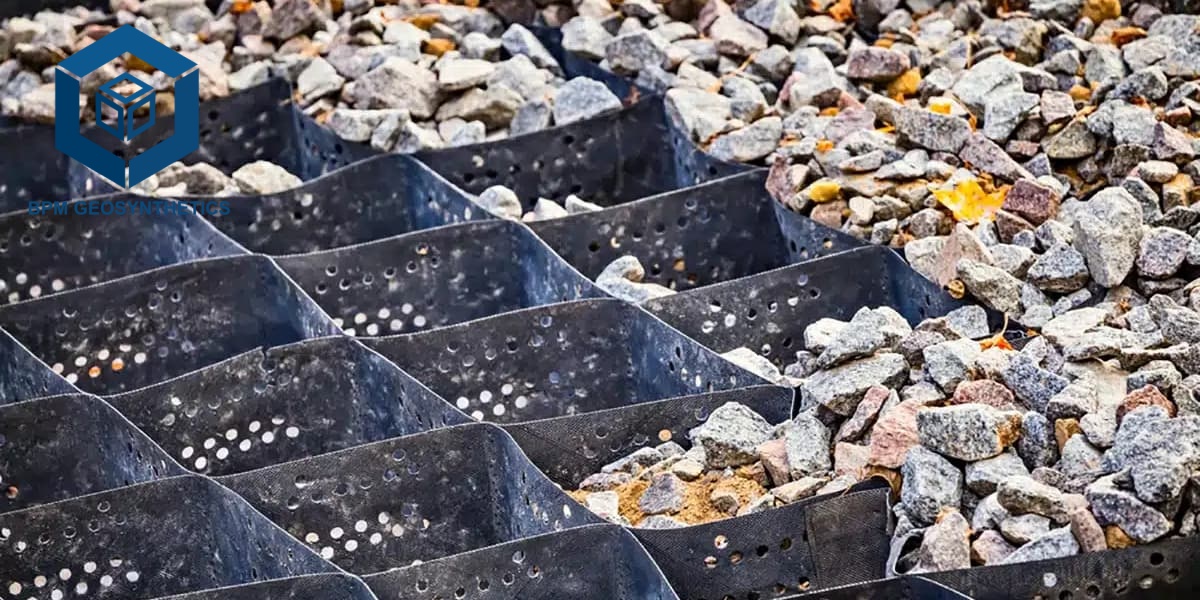
3.6 Research Validation: Multi-Layer Geocell Reinforcement (Laboratory)
3.6.1 Research Background
While field case studies provide practical validation, laboratory research offers controlled quantification of geocell performance. A comprehensive study by Khalaj, Tafreshi, Mask, and Dawson (2024) examined the improvement of pavement foundation response using multiple layers of geocell reinforcement under cyclic plate load testing.
3.6.2 Methodology
Cyclic plate loading tests were performed at a diameter of 300 mm on geocell-reinforced sand beds in a test pit measuring 2000×2000 mm in plane and 700 mm in depth. To simulate half and full traffic loadings, fifteen loading and unloading cycles were applied with amplitudes of 400 and 800 kPa.
3.6.3 Key Findings
The research yielded several critical insights:
Optimal Placement: The optimum embedded depth of the first geocell layer beneath the loading plate is approximately 0.2 times the loading plate diameter—a valuable design guideline for engineers.
Settlement Reduction: The use of four layers of geocell respectively decreased total and residual plastic settlements by 53% and 63% compared to unreinforced cases, while increasing resilient settlement by 145% .
Stress Distribution: At the end of the load cycle at 800 kPa applied pressure, the transferred pressure at 510 mm depth was reduced by:
- 21.4% with one geocell layer
- 43.9% with two geocell layers
- 56.1% with three geocell layers
Shakedown Behavior: The research revealed the ability of multiple geocell layers to achieve "shakedown"—a fully resilient behavior after a period of plastic settlement—except when little or no reinforcement was present under high cyclic pressures .
3.6.4 Key Takeaways
This research validates that geocell reinforcement improves resilient behavior while reducing accumulated plastic and total settlement. The stress reduction of over 56% with three geocell layers confirms the load distribution capabilities observed in field applications .
3.7 Geocell Anchor Cage Innovation (Laboratory)
3.7.1 Research Background
A 2024 study published in Construction and Building Materials proposed a structural modification to geocell reinforcement through a newly developed Geocell Anchor Cage (GAC) system. The GAC consists of a polymeric basal geogrid with several anchor pins, each positioned at the center of a geocell pocket .
3.7.2 Methodology
Plate load tests were carried out on sand beds with a geocell mattress, and a 3D printed polymeric GAC positioned either above or below the mattress. Pressures within geocell pockets and strains in geocell walls were monitored continuously .
3.7.3 Key Findings
The inclusion of GAC significantly improved performance:
Increased Load Capacity:The load carrying capacity of a sand bed reinforced with a geocell mattress of width equal to three times the width of the loading plate plus a GAC was found to equal the capacity of a bed with a geocell mattress of width equal to four times the plate width without a GAC .
Settlement Reduction:With the addition of GAC at the bottom, settlements of reinforced sand beds reduced by 38% .
3.7.4 Key Takeaways
The GAC system demonstrates that structural modifications to geocell reinforcement can achieve higher load carrying capacities with lesser additional cost and reduced space requirements. This innovation offers potential for applications where installation space is constrained or material costs are prohibitive .
As climate change increases the frequency of extreme weather events and infrastructure budgets face growing constraints, the demand for durable, cost-effective, and sustainable road solutions will only increase. Geocell technology—particularly when integrated with advanced materials like Neoloy or waste-plastic feedstocks—offers a proven approach to building roads that last longer, require less maintenance, and minimize environmental impact.
The ultimate review of geocell roads can be summarized in a single conclusion: properly specified and installed geocell systems deliver measurable improvements in load distribution, thickness reduction, settlement control, and long-term durability across the full spectrum of road applications—from unpaved access roads to heavy-duty highways.
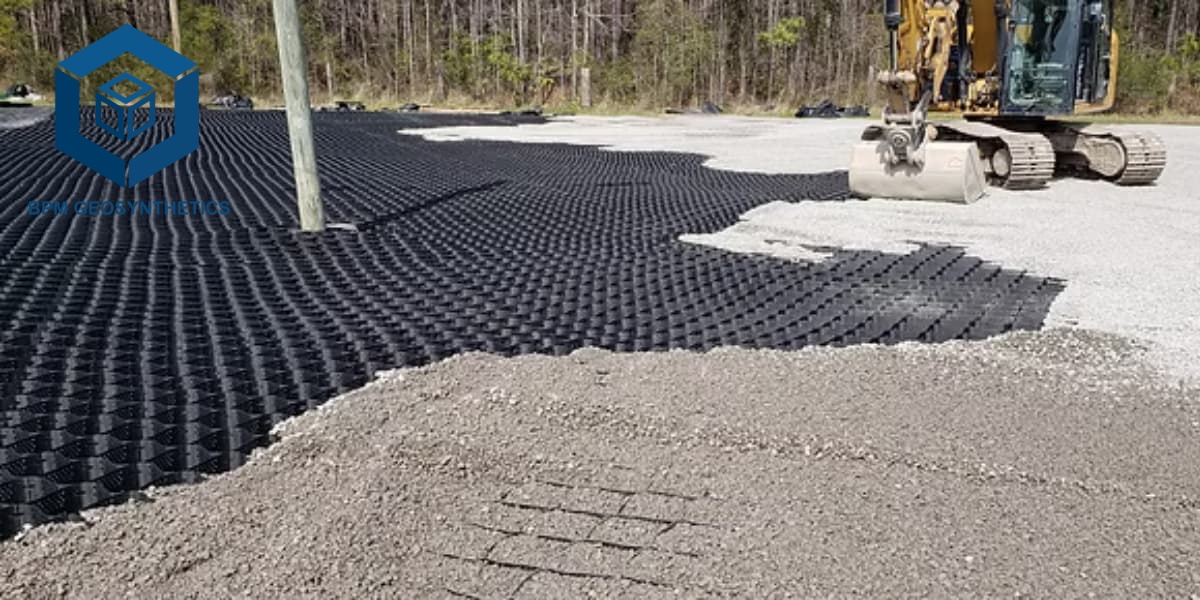
Conclusion
The seven case studies reviewed in this guide demonstrate the remarkable versatility and effectiveness of geocell technology for road applications:
- Cold Lake, Canada proved geocells can upgrade roads to handle 5.3 million ESALs—a 7x increase over conventional design—while reducing section thickness by 44%
- Highway 6, Israel demonstrated that advanced geocells reduce vertical stress by 50% and asphalt thickness by 23% in paved highway applications
- Louisiana Substation showed geocells succeed where geogrids fail—on subgrade with CBR values as low as 0.5% .
- Maryland Solar Farm proved load support and vegetation establishment are compatible objectives .
- New Delhi Pilot demonstrated circular economy benefits, converting 25 tonnes of waste plastic into durable road infrastructure .
- Multi-Layer Research provided quantified validation: 56% stress reduction with three geocell layers.
- GAC Innovation offered a structural modification achieving 38% settlement reduction with less material .
As climate change increases the frequency of extreme weather events and infrastructure budgets face growing constraints, the demand for durable, cost-effective, and sustainable road solutions will only increase. Geocell technology—particularly when integrated with advanced materials like Neoloy or waste-plastic feedstocks—offers a proven approach to building roads that last longer, require less maintenance, and minimize environmental impact.
The ultimate review of geocell roads can be summarized in a single conclusion: properly specified and installed geocell systems deliver measurable improvements in load distribution, thickness reduction, settlement control, and long-term durability across the full spectrum of road applications—from unpaved access roads to heavy-duty highways.
For contractors, engineers, and project developers seeking reliable geocell solutions, The Best Project Material Co., Ltd.(BPM Geosynthetics) offers high-performance geocell products designed for road construction, slope stabilization, erosion control, and ground reinforcement applications. With advanced manufacturing technology, strict quality control, and extensive international project experience, BPM Geosynthetics provides customized geocell solutions that help improve road durability, reduce construction costs, and support sustainable infrastructure development across global markets.