hdpe geomembrane for wastewater treatment
HDPE geomembrane for wastewater treatment is a high-density polyethylene impermeable lining system designed to contain, isolate, and protect against chemically aggressive wastewater, sludge, and process liquids in municipal and industrial treatment facilities under long-term operational conditions.
Technical Parameters and Specifications
The performance of HDPE geomembrane for wastewater treatment applications is governed by mechanical strength, chemical resistance, and durability indicators:
Thickness Range: 1.0 mm / 1.5 mm / 2.0 mm / 2.5 mm
Density: ≥ 0.94 g/cm³
Tensile Strength at Yield: ≥ 15 MPa
Elongation at Break: ≥ 700%
Puncture Resistance: ≥ 320 N
Carbon Black Content: 2.0–3.0%
Oxidative Induction Time (Standard): ≥ 100 minutes
Chemical Resistance: Excellent to acids, alkalis, salts, hydrocarbons
Service Temperature: -40°C to +60°C
Structure and Material Composition
HDPE geomembrane for wastewater treatment is engineered with a controlled polymer formulation to ensure long-term containment:
Primary HDPE Resin: Provides low permeability and structural integrity
Carbon Black: Ensures UV stability for exposed lagoons and tanks
Antioxidant System: Slows thermal and oxidative aging
Smooth or Textured Surface: Selected based on slope stability requirements
Manufacturing Process
Industrial manufacturing of HDPE geomembrane for wastewater treatment follows strict quality-controlled steps:
Virgin resin qualification and incoming material inspection
Precision dosing of polymer, carbon black, and stabilizers
High-temperature extrusion via flat-die or blown-film systems
Automated thickness monitoring and surface defect detection
Controlled cooling to minimize internal stress
Roll winding with batch identification and traceability
Laboratory testing for tensile, OIT, and chemical resistance
Critical equipment includes high-capacity extruders, online gauges, and calibrated mechanical testing instruments.
Industry Comparison
| Lining Material | Chemical Resistance | Leakage Risk | Design Life | Maintenance Requirement |
|---|---|---|---|---|
| HDPE Geomembrane | Excellent | Very Low | 30–50 Years | Low |
| Concrete Tank | Moderate | Medium (Cracking) | 20–30 Years | High |
| Steel Liner | Low–Moderate | Low | 15–25 Years | High (Corrosion) |
| Bituminous Lining | Limited | Medium | 10–15 Years | Medium |
Application Scenarios
HDPE geomembrane for wastewater treatment is widely applied in:
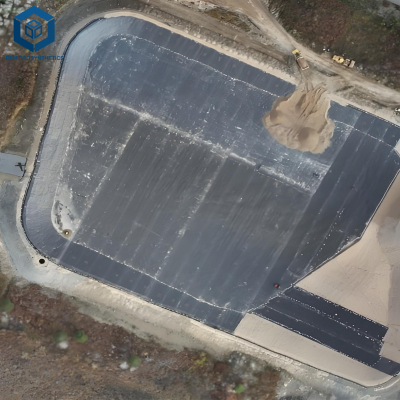
Municipal wastewater treatment ponds and lagoons
Industrial effluent storage and equalization basins
Sludge drying beds and containment cells
Anaerobic digestion tanks and leachate reservoirs
End users include EPC contractors, municipal utilities, industrial plant owners, and engineering consultants.
Core Pain Points and Solutions
Chemical Attack: Use HDPE geomembrane with verified chemical resistance data.
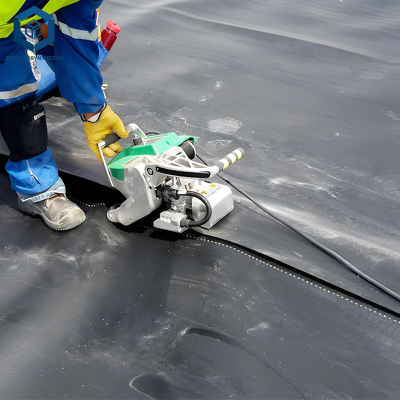
Leakage Risk: Implement double-seam welding and non-destructive testing.
UV Exposure: Specify certified carbon black content and OIT values.
Subgrade Damage: Install protective geotextile underlayment.
Risk Warnings and Mitigation Advice
Insufficient thickness may reduce long-term containment safety.
Poor welding control can cause seam failure under chemical stress.
Inadequate anchoring increases uplift and wrinkle formation.
Unverified recycled content may reduce chemical resistance.
Procurement and Selection Guide
Define wastewater composition and operating temperature
Select membrane thickness based on hydraulic head and design life
Confirm compliance with ASTM or equivalent standards
Choose smooth or textured surface based on basin geometry
Request batch-specific test reports and traceability records
Evaluate supplier experience in wastewater projects
Include welding, testing, and QA/QC procedures in contracts
Engineering Case Example
A municipal wastewater treatment plant expansion utilized a 2.0 mm HDPE geomembrane for wastewater treatment in aeration lagoons and sludge storage basins. The system achieved zero detectable leakage after commissioning and reduced long-term maintenance costs compared with concrete linings.
FAQ
Q1: Is HDPE suitable for aggressive wastewater?
A: Yes, it resists most acids, alkalis, and salts.Q2: What thickness is commonly used?
A: Typically 1.5–2.0 mm for treatment ponds.Q3: Can HDPE handle high temperatures?
A: It performs reliably up to about 60°C.Q4: How are seams tested?
A: By air pressure or vacuum box testing.Q5: Is UV protection necessary?
A: Yes, for exposed wastewater lagoons.Q6: Can HDPE be repaired on-site?
A: Yes, using extrusion or patch welding.Q7: Does it require concrete protection?
A: Not always, but protection may be used in high-traffic areas.Q8: How long does HDPE last?
A: Often 30–50 years with proper installation.Q9: Is recycled HDPE acceptable?
A: Only if performance and chemical resistance are verified.Q10: Can it be used in anaerobic tanks?
A: Yes, when designed for gas and chemical exposure.
Call to Action
For wastewater-specific technical data, project quotations, or engineered lining solutions, submit your project requirements to receive detailed recommendations.
E-E-A-T Author Credentials
This article is authored by a civil and environmental materials engineer with over 15 years of experience in wastewater infrastructure, geomembrane specification, and EPC project delivery.