HDPE Geomembrane Cost for Landfill Project Guide
HDPE Geomembrane Cost for Landfill Project – Engineering Cost Analysis Guide
Product Definition
HDPE geomembrane is a high-density polyethylene impermeable liner used as the primary containment barrier in landfill systems. The hdpe geomembrane cost for landfill project depends on thickness, resin grade, surface type, project scale, installation method, and compliance with environmental regulations.
Technical Parameters and Specifications
The hdpe geomembrane cost for landfill project is closely related to technical performance requirements defined in municipal solid waste (MSW) and hazardous waste landfill standards.
| Property | 1.5 mm | 2.0 mm | 2.5 mm | Test Standard |
|---|---|---|---|---|
| Density | ≥0.940 g/cm³ | ASTM D1505 | ||
| Tensile Strength at Yield | 22 kN/m | 29 kN/m | 37 kN/m | ASTM D6693 |
| Puncture Resistance | 480 N | 640 N | 800 N | ASTM D4833 |
| Carbon Black Content | 2.0–3.0% | ASTM D4218 | ||
| OIT (Std) | ≥100 min | ASTM D3895 | ||
| Roll Width | 5m – 8m | Factory Standard | ||
For base liner systems, 1.5 mm and 2.0 mm are most commonly specified. Thickness selection significantly impacts hdpe geomembrane cost for landfill project calculations.
Structure and Material Composition
Polymer Resin: Virgin HDPE resin (PE100 grade)
Carbon Black: UV resistance additive (2–3%)
Antioxidants: Long-term thermal stability
Surface Type: Smooth or textured (single/double side)
Optional Layers: Conductive layer for leak detection
Virgin resin and high OIT values are critical for long-term landfill containment, directly influencing hdpe geomembrane cost for landfill project budgeting.
Manufacturing Process
Raw Material Mixing: HDPE resin blended with carbon black and stabilizers.
Extrusion: Flat die or blown film extrusion lines.
Thickness Control: Automatic gauge monitoring system.
Surface Texturing (if required): Nitrogen embossing technology.
Cooling & Rolling: Controlled cooling for dimensional stability.
Quality Testing: Tensile, puncture, OIT, and density tests.
Packaging: Wrapped with protective film for export.
Modern 7–8 meter wide extrusion lines reduce seam quantity on-site, lowering installation labor cost in large landfill projects.
Industry Comparison
| Material | Thickness | Service Life | Relative Cost Level |
|---|---|---|---|
| HDPE Geomembrane | 1.5–2.5 mm | 20–50 years | Moderate |
| LLDPE Geomembrane | 1.0–2.0 mm | 15–30 years | Slightly Lower |
| PVC Liner | 1.0–2.0 mm | 10–20 years | Variable |
| Clay Liner | 600mm+ | Variable | High Installation Cost |
Although clay liners may appear economical in raw material terms, installation and compaction costs often exceed the hdpe geomembrane cost for landfill project per square meter.
Application Scenarios
EPC Contractors: Municipal solid waste landfills
Environmental Developers: Hazardous waste containment
Engineering Consultants: Double-liner systems
Distributors: Regional supply for infrastructure tenders
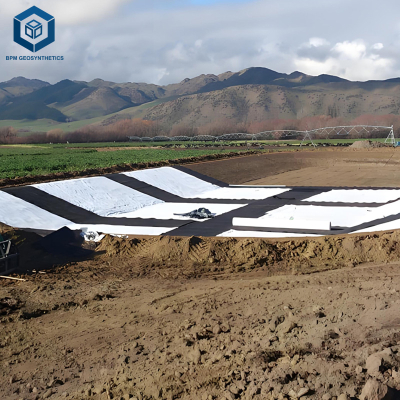
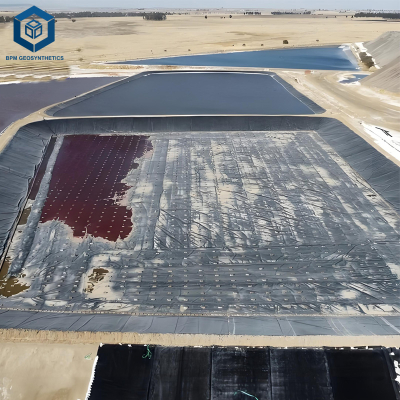
Primary applications include landfill base liner, leachate pond lining, final cover systems, and temporary waste containment cells.
Core Pain Points and Solutions
Budget Uncertainty: Resin price fluctuation → Lock price with quarterly supply contracts.
Seam Failure Risk: Poor welding → Require certified welding technicians and vacuum testing.
Thickness Mismatch: Delivered below tolerance → Inspect roll thickness on-site.
Logistics Cost: Large volume shipments → Optimize 40HQ loading plans.
Risk Warnings and Avoidance
Do not select liner thickness based solely on lowest hdpe geomembrane cost for landfill project.
Verify compliance with GRI-GM13 or equivalent specification.
Ensure proper subgrade preparation to avoid puncture damage.
Minimize prolonged UV exposure before cover placement.
Procurement Selection Guide
Confirm regulatory requirements and design standards.
Select appropriate thickness (1.5mm vs 2.0mm vs 2.5mm).
Determine smooth or textured surface requirement.
Calculate total liner area including overlaps (3–5%).
Request factory test reports and third-party certificates.
Evaluate welding and installation cost separately.
Compare FOB vs CIF pricing structure.
Conduct pilot welding trials before mass installation.
Engineering Case Study
Project: 120,000 m² Municipal Solid Waste Landfill Cell
Liner Type: 2.0 mm smooth HDPE geomembrane
Total Material: 126,000 m² (including overlap allowance)
Installation Duration: 45 days
Welding Method: Dual-track hot wedge welding
Result: Passed air channel pressure testing and spark testing; long-term leakage rate below regulatory threshold.
The hdpe geomembrane cost for landfill project accounted for approximately 35–45% of the total liner system budget, excluding earthwork.
FAQ – HDPE Geomembrane Cost for Landfill Project
What thickness is most common?
2.0 mm for MSW landfill base liners.Does textured liner cost more?
Yes, typically 5–15% higher due to embossing process.How many square meters per roll?
Typically 350–800 m² depending on thickness and width.Is virgin resin mandatory?
For landfill applications, yes.What affects cost most?
Thickness and resin market price.How long is service life?
20–50 years depending on exposure.Can installation cost exceed material cost?
Yes, especially in complex terrain.Is third-party inspection required?
Often mandatory for public projects.What welding method is standard?
Hot wedge dual-track welding.Does wider roll reduce cost?
Yes, fewer seams reduce labor cost.
Request Quotation or Technical Documentation
To obtain a detailed hdpe geomembrane cost for landfill project evaluation, please provide thickness, surface type, total required area, destination port, and project timeline. Formal quotation, technical data sheet, and sample material can be supplied upon request.
E-E-A-T Authoritative Statement
This article is prepared by a geosynthetics engineering consultant with more than 15 years of landfill containment project experience, supporting EPC contractors and environmental infrastructure developers across Asia, the Middle East, and Africa. All specifications reflect internationally recognized testing standards and field installation practices.