Geomembrane price per square meter
Geomembrane price per square meter refers to the unit-area cost of polymeric liner materials used for containment, waterproofing, and environmental protection in civil and industrial engineering. Pricing reflects material type, thickness, quality standards, manufacturing process, and project-specific technical requirements rather than simple commodity value.
Technical Parameters and Specifications
Understanding geomembrane price per square meter requires evaluating core technical parameters that directly influence cost and performance.
Material Types: HDPE, LLDPE, PVC, EPDM
Thickness Range: 0.5 mm – 3.0 mm
Density (HDPE): ≥ 0.940 g/cm³
Tensile Strength: 15–28 kN/m (depending on thickness)
Elongation at Break: ≥ 600–700%
Tear Resistance: ≥ 200 N
Puncture Resistance: ≥ 400 N
UV Resistance: Carbon black content 2.0–3.0%
Surface Options: Smooth or textured (single/double)
Compliance Standards: ASTM, ISO, EN, GRI
Structure and Material Composition
The internal structure of a geomembrane plays a decisive role in determining geomembrane price per square meter.
Polymer Base Layer: Virgin or controlled-grade polyethylene or PVC resin
Carbon Black: Enhances UV stability and weather resistance
Antioxidant Additives: Improve long-term thermal and oxidative stability
Optional Textured Surface: Increases interface friction for slope applications
Homogeneous Sheet Structure: Ensures uniform mechanical performance
Manufacturing Process
1. Raw Material Qualification
Resin selection directly affects geomembrane price per square meter. Certified virgin resin and additive packages increase cost but ensure compliance and durability.
2. Compounding and Blending
Automated gravimetric dosing systems ensure precise formulation of resin, carbon black, and antioxidants.
3. Extrusion Forming
Flat-die or blown-film extrusion produces sheets with controlled thickness and width tolerances.
4. Cooling and Calibration
Calendering and controlled cooling stabilize dimensions and prevent residual stress.
5. Quality Control and Testing
Mechanical, physical, and aging tests are performed per batch, contributing to higher but reliable geomembrane price per square meter.
6. Rolling and Packaging
Sheets are rolled, labeled, and packaged to maintain traceability and prevent transport damage.
Industry Comparison
| Material Type | Typical Thickness | Relative Price Level | Durability | Main Applications |
|---|---|---|---|---|
| HDPE Geomembrane | 1.0–2.5 mm | Medium | Very High | Landfills, mining, wastewater |
| LLDPE Geomembrane | 0.75–2.0 mm | Medium–High | High | Ponds, canals, reservoirs |
| PVC Liner | 0.5–2.0 mm | Low–Medium | Moderate | Decorative ponds, roofs |
| EPDM Rubber | 1.0–1.5 mm | High | High | Landscape water features |
Application Scenarios
Distributors and Wholesalers: Evaluating cost-performance balance for regional markets
EPC Contractors: Budgeting liner systems for large-scale infrastructure
Engineering Consultants: Specifying materials aligned with performance and lifecycle cost
Project Owners: Managing total installed cost and long-term risk
Core Pain Points and Solutions
Unclear pricing structure: Break down geomembrane price per square meter by thickness and standard
Hidden quality trade-offs: Verify test reports and resin origin
Unexpected installation costs: Align material selection with welding and handling requirements
Short service life: Prioritize durability over lowest upfront price
Risk Warnings and Mitigation Measures
Selecting geomembranes solely based on low price per square meter can lead to premature failure, leakage, and regulatory non-compliance. Risks are mitigated through third-party testing, verified certifications, and lifecycle cost analysis rather than initial material price alone.
Procurement and Selection Guide
Define project function and environmental exposure
Specify required material type and thickness
Identify applicable standards and certifications
Request detailed quotations with test reports
Compare geomembrane price per square meter on equal specifications
Evaluate manufacturer quality management systems
Confirm logistics, packaging, and delivery terms
Plan installation method and seam testing
Engineering Case Example
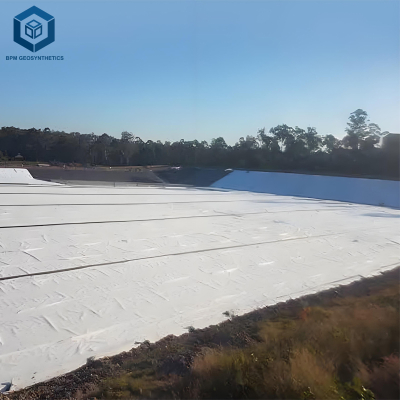
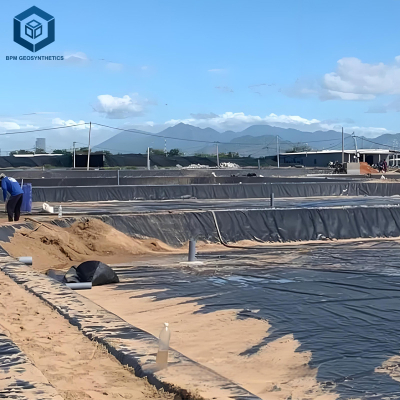
A wastewater treatment project required 1.5 mm HDPE geomembrane over 32,000 m². By standardizing specifications and sourcing directly from a certified manufacturer, the project achieved a competitive geomembrane price per square meter while meeting all mechanical and durability requirements. Post-installation testing confirmed full system integrity.
Frequently Asked Questions (FAQ)
What determines geomembrane price per square meter? Material, thickness, standards, and order volume.
Is thicker always more expensive? Yes, material consumption increases with thickness.
Does certification affect price? Certified products usually cost more but reduce risk.
Are textured geomembranes more expensive? Yes, due to additional processing.
How does order quantity influence price? Larger volumes typically reduce unit cost.
Is installation included in price per square meter? Usually not; material and installation are separate.
Can recycled materials reduce price? Sometimes, but often restricted in critical projects.
What is the most cost-effective material? HDPE offers strong durability-to-cost balance.
Does shipping affect final price? Yes, especially for international projects.
Should lifecycle cost be considered? Always, especially for environmental containment.
CTA – Request Pricing and Technical Support
To obtain an accurate geomembrane price per square meter for your project, request a formal quotation including specifications, certifications, and test reports. Technical datasheets and project samples are available upon request from qualified suppliers.
E-E-A-T Author Credentials
This article is written by professionals with extensive experience in geomembrane manufacturing, specification, and procurement for infrastructure and environmental projects. All technical content reflects established engineering practices and industry-recognized standards, ensuring reliability for B2B decision-makers.