geomembrane geotextile for landfill
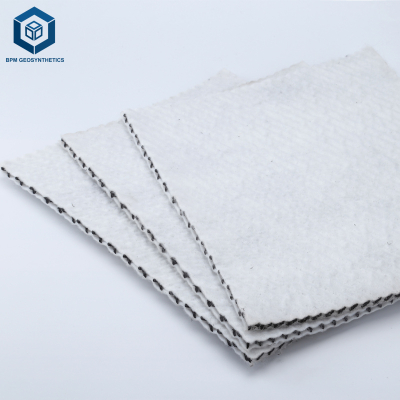
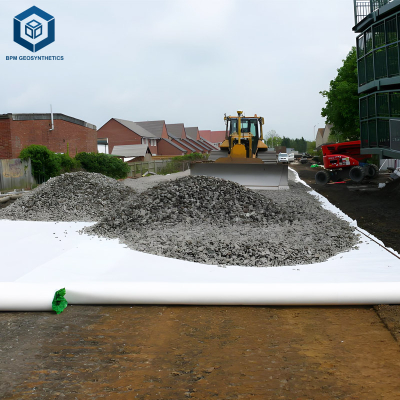
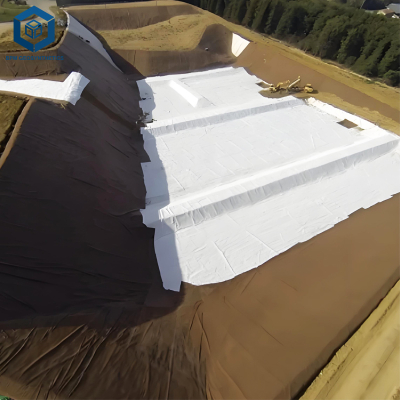
Geomembrane geotextile for landfill applications is a composite geosynthetic system combining an impermeable geomembrane layer with protective and reinforcing geotextiles. The system is engineered to control leachate migration, enhance mechanical stability, and ensure long-term environmental protection in municipal and industrial landfill facilities.
Technical Parameters and Specifications
Geomembrane Technical Specifications
Material type: HDPE (primary), LLDPE optional
Thickness range: 1.0 mm – 3.0 mm
Density: ≥0.94 g/cm³
Tensile strength: ≥15 MPa (ASTM D6693)
Elongation at break: ≥700%
Carbon black content: 2–3%
Hydraulic conductivity: ≤1×10⁻¹³ m/s
Geotextile Technical Specifications
Type: Nonwoven needle-punched geotextile
Mass per unit area: 300–1200 g/m²
Tensile strength: 8–30 kN/m
Puncture resistance: ≥1.5–5.0 kN
Permittivity: ≥0.5 s⁻¹
Structure and Material Composition
Typical Landfill Liner Configuration
Protective geotextile (top layer): Shields geomembrane from waste loading damage
Primary geomembrane: Acts as the main impermeable barrier
Cushion geotextile (bottom layer): Protects against subgrade puncture
Drainage layer (optional): Facilitates leachate collection and pressure relief
Manufacturing Process
1. Raw Material Preparation
Virgin polyethylene resin and high-strength polymer fibers are selected based on mechanical performance, chemical resistance, and durability requirements defined by landfill engineering standards.
2. Geomembrane Extrusion
HDPE geomembranes are produced using flat-die or blown-film extrusion lines. Process controls ensure uniform thickness, density, and surface texture for welding performance.
3. Geotextile Production
Nonwoven geotextiles are manufactured through fiber opening, carding, needle punching, and thermal bonding to achieve controlled strength and permeability.
4. Quality Control and Testing
Finished products undergo tensile, puncture, thickness, and permeability testing, ensuring compliance with ASTM and ISO landfill liner requirements.
Industry Comparison
| System Type | Leak Control | Puncture Resistance | Typical Landfill Use |
|---|---|---|---|
| Geomembrane + Geotextile System | Very High | Very High | Municipal & hazardous waste landfills |
| Single Geomembrane | High | Moderate | Low-risk waste cells |
| Compacted Clay Liner | Moderate | High | Supplementary barrier |
Application Scenarios
Distributors: Supply certified liner systems to landfill projects
EPC Contractors: Design and construct complete landfill containment systems
Engineering Consultants: Specify liner materials based on regulatory risk assessments
Importers and Wholesalers: Source bulk geosynthetics for regional waste management infrastructure
Core Pain Points and Engineering Solutions
Leachate leakage risk: Use dual-layer geomembrane geotextile systems
Puncture from waste loads: Specify high-mass protective geotextiles
Seam integrity failure: Implement qualified welding and non-destructive testing
Uneven settlement: Employ geotextile reinforcement and subgrade preparation
Risk Warnings and Mitigation Measures
Improper installation, inadequate geotextile weight, or insufficient quality control can compromise landfill liner performance. Risk mitigation includes third-party testing, installer certification, and continuous on-site inspection during liner deployment.
Procurement and Selection Guide
Confirm landfill classification and regulatory requirements
Select geomembrane thickness based on waste type
Determine required geotextile mass for protection
Verify compliance with ASTM and ISO standards
Request factory test reports and certifications
Evaluate supplier experience in landfill projects
Plan installation supervision and QA/QC procedures
Engineering Case Application
A municipal landfill expansion project utilized a geomembrane geotextile for landfill system consisting of a 2.0 mm HDPE geomembrane and 800 g/m² nonwoven geotextiles on both sides. The system achieved effective leachate containment and mechanical durability under heavy waste loading conditions.
Frequently Asked Questions (FAQ)
Why is geotextile required in landfill liners? It protects geomembranes from puncture and stress.
What geomembrane thickness is typical? Usually 1.5–2.0 mm for municipal landfills.
Are double liners mandatory? Often required for hazardous waste facilities.
Can the system resist chemicals? Yes, HDPE offers strong chemical resistance.
Minimum geotextile weight? Commonly ≥300 g/m².
How are seams tested? Air pressure, vacuum box, or spark testing.
Expected service life? 30–50 years depending on conditions.
Is UV resistance important? Yes for exposed installations.
Can systems be customized? Yes based on landfill design.
Is third-party inspection recommended? Strongly recommended.
CTA – Request Quotation and Technical Support
For landfill-specific quotations, technical datasheets, compliance documentation, or engineering samples of geomembrane geotextile for landfill systems, contact qualified geosynthetics suppliers experienced in waste containment engineering.
E-E-A-T Author Credentials
This article is prepared by geosynthetics engineers and landfill containment specialists with hands-on experience in liner system design, material testing, and EPC project execution, ensuring reliable, authoritative guidance for professional B2B decision-makers.