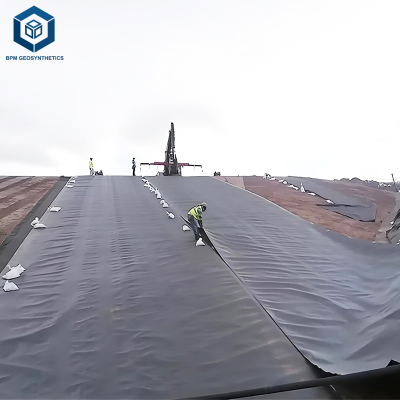
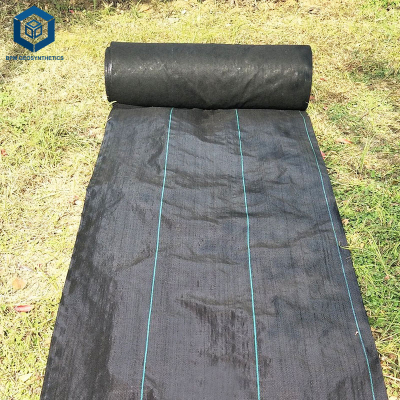
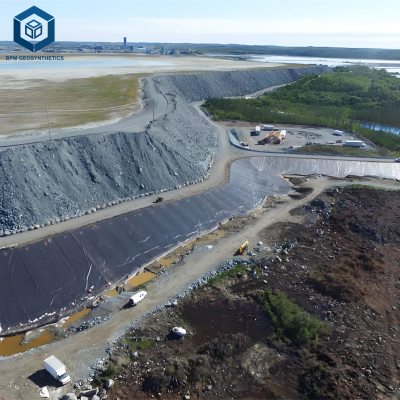
Geomembrane for Evaporation Pond UV Resistant Grade: Engineering Guide
What is Geomembrane for Evaporation Pond UV Resistant Grade?
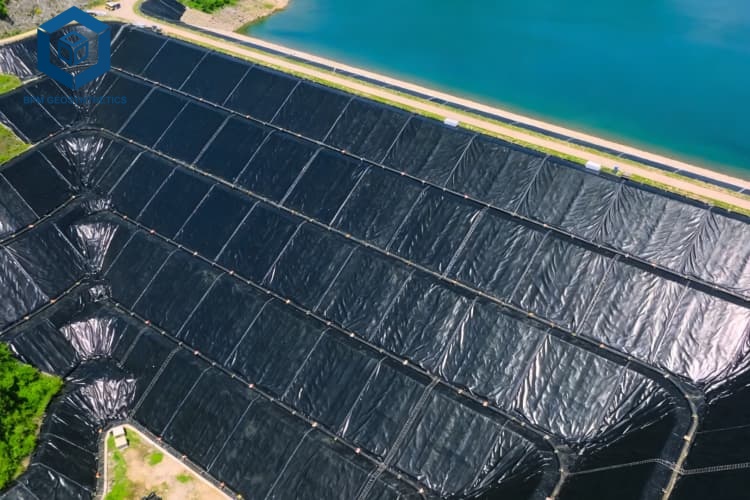
Geomembrane for evaporation pond UV resistant grade refers to HDPE or LLDPE liners specifically formulated with enhanced ultraviolet light protection — typically 2.0–3.0% carbon black and UV stabilizers — for long-term exposure to intense sunlight in evaporation ponds for mining, industrial wastewater, and agriculture. For civil engineers, EPC contractors, and procurement managers, understanding geomembrane for evaporation pond UV resistant grade is critical because evaporation ponds are uncovered by design, exposed to daily solar radiation (UV > 4,000 hours/year in desert climates). Standard geomembranes without adequate carbon black degrade, crack, and embrittle within 2–5 years. UV-resistant grades achieve 20–30+ year service life with carbon black dispersion Category 1–2, OIT ≥ 100 minutes, and UV stabilizers. This guide provides engineering data on geomembrane for evaporation pond UV resistant grade: carbon black requirements, UV testing (ASTM D7238), thickness selection (0.75–2.0 mm), and procurement for potash, lithium, salt, and industrial evaporation ponds.
Technical Specifications for UV Resistant Geomembrane
The table below defines critical parameters for geomembrane for evaporation pond UV resistant grade.
| Parameter | UV Resistant Grade | Standard Grade (Non-UV) | Engineering Importance |
|---|---|---|---|
| Carbon Black Content (ASTM D1603) | 2.0 – 3.0% (Category 1 dispersion preferred) | < 2.0% or none | Carbon black absorbs UV radiation — critical for geomembrane for evaporation pond UV resistant grade.}, |
| UV Resistance (ASTM D7238 accelerated weathering) | ≥ 80% tensile retention after 5,000 hours (≥ 10,000 hours for premium) | ≤ 50% retention after 2,000 hours一道Measures UV durability. Premium UV grade retains strength > 5,000 hours.}, | |
| Carbon Black Dispersion (ASTM D5596) | Category 1 or 2 | Category 3 or 4 (acceptable)Poor dispersion creates crack initiation sites under UV exposure.}, | |
| Standard OIT (ASTM D3895) | ≥ 100 minutes (≥ 120 min for high UV) | ≥ 100 minutes | Higher OIT extends life in high UV / high temperature.}, |
| High Pressure OIT (ASTM D5885) | ≥ 400 minutes (≥ 500 min for high UV) | ≥ 400 minutes | More sensitive measure for UV-exposed applications.}, |
| Thickness (for evaporation pond) | 0.75 – 2.0 mm (1.0 mm typical) | 1.0 – 1.5 mm | Thicker liner provides longer UV resistance (more carbon black per volume).}, |
| Expected Service Life (high UV, uncovered) | 20 – 30+ years | 5 – 10 years | UV resistant grade essential for exposed evaporation ponds.}, |
Key takeaway: Geomembrane for evaporation pond UV resistant grade requires carbon black 2.0–3.0% (Category 1–2 dispersion), OIT ≥ 100 min, and UV retention ≥ 80% after 5,000 hours. Standard grade fails in 2–5 years under high UV.
Material Structure and Composition for UV Resistance
Understanding how UV protection works helps specify geomembrane for evaporation pond UV resistant grade.
| Component | Material | Function | UV Resistance Role |
|---|---|---|---|
| Base Resin | PE100/PE4710 bimodal (hexene/octene) | Provides mechanical strength | Resin type affects UV stability; bimodal preferred.}, |
Engineering insight: Geomembrane for evaporation pond UV resistant grade relies on carbon black (2–3%) as primary UV protection. For extreme UV (Atacama, Australian outback), add HALS UV stabilizers.
Manufacturing Process for UV Resistant Geomembrane
Production steps critical for UV resistance.
Resin compounding: Virgin PE100 resin + carbon black (2–3%) + antioxidants + optional UV stabilizers (HALS).
Extrusion: Flat die extrusion (200–220°C). Consistent carbon black dispersion monitored.
Cooling: Controlled cooling to prevent residual stress that could accelerate UV cracking.
Quality inspection for UV resistance: Carbon black content (ASTM D1603), dispersion (ASTM D5596), accelerated UV aging (ASTM D7238).
Packaging: UV-protective wrapping for shipping.
Performance Comparison: UV Resistant vs. Standard Geomembrane for Evaporation Ponds
Comparing UV resistant grade with standard geomembrane for evaporation pond UV resistant grade.
| Carbon Black | 2.0–3.0% furnace black | UV absorber — converts UV to heat | Primary UV protection. Category 1 dispersion essential for geomembrane for evaporation pond UV resistant grade.}, |
| UV Stabilizers (HALS) | Hindered amine light stabilizers (optional) | Scavenges free radicals from UV exposure | Enhances long-term UV resistance beyond carbon black alone.}, |
| Property | UV Resistant Grade | Standard Grade | Performance Impact |
|---|---|---|---|
| Carbon Black | 2.0–3.0% | 0–1.5% | Without carbon black, UV penetrates polymer — chain scission, cracking.}, |
| Tensile Retention after 5,000 hours UV | ≥ 80% | < 50% | UV resistant grade maintains strength; standard grade embrittles.}, |
| Service Life (uncovered, high UV) | 20 – 30 years | 2 – 5 years | Standard grade fails rapidly. Geomembrane for evaporation pond UV resistant grade required.}, |
| Color Change (yellowing) | Minimal | Significant after 1–2 years | Indicates degradation. |
Conclusion: Geomembrane for evaporation pond UV resistant grade is mandatory for any uncovered evaporation pond. Standard grade will fail within 2–5 years.
Industrial Applications for UV Resistant Geomembrane
Applications requiring geomembrane for evaporation pond UV resistant grade.
Potash evaporation ponds (high UV, long-term): 1.0–1.5 mm HDPE, carbon black 2.5%, Category 1 dispersion. 20+ year design life.
Lithium brine evaporation ponds (Atacama, high UV, high altitude): 1.5 mm HDPE, carbon black 3%, UV stabilizers, OIT ≥ 120 min.
Salt production ponds: 0.75–1.0 mm HDPE, UV resistant grade.
Industrial wastewater evaporation ponds: 1.0 mm HDPE, UV resistant.
Mining tailings evaporation (desert climates): 1.0–1.5 mm HDPE, UV resistant grade.
Common Industry Problems with Non-UV Resistant Geomembrane
Real-world failures from inadequate UV protection.
Problem 1: Surface cracking in lithium evaporation pond after 3 years (insufficient carbon black)
Root cause: Liner had carbon black 1.2% (below 2%). UV degradation caused surface cracks. Solution: Specify carbon black 2.0–3.0% for geomembrane for evaporation pond UV resistant grade.
Problem 2: Embrittlement in potash pond (no UV stabilizers, high altitude)
Root cause: Standard HDPE with carbon black 2% but no HALS stabilizers. High UV (4,000+ hours/year) depleted antioxidants rapidly. Solution: Add HALS UV stabilizers + higher OIT (≥ 120 min).
Problem 3: Poor carbon black dispersion (Category 3) — stress cracking at agglomerates
Root cause: Poor dispersion created stress concentration points. UV accelerated crack propagation. Solution: Require Category 1 or 2 dispersion per ASTM D5596.
Problem 4: Thin liner (0.5 mm) used in evaporation pond — UV penetrated through
Root cause: Thin liner insufficient carbon black per unit area. Solution: Use minimum 1.0 mm for geomembrane for evaporation pond UV resistant grade.
Risk Factors and Prevention Strategies for UV Resistant Geomembrane
Risk: Specifying liner without carbon black for exposed pond: UV degradation within 2–5 years. Mitigation: Always specify carbon black 2.0–3.0% for geomembrane for evaporation pond UV resistant grade.
Risk: Poor carbon black dispersion (Category 3 or 4): Stress cracking at agglomerates. Mitigation: Require ASTM D5596 photomicrographs, Category 1 or 2 only.
Risk: Low OIT (< 100 min) in high UV environment: Antioxidant depletion, embrittlement. Mitigation: Specify OIT ≥ 120 minutes, HP-OIT ≥ 500 minutes.
Risk: Thin liner (< 1.0 mm) in high UV area: Less carbon black per volume, faster degradation. Mitigation: Minimum 1.0 mm for evaporation ponds.
Procurement Guide: How to Specify Geomembrane for Evaporation Pond UV Resistant Grade
Follow this 8-step checklist for B2B purchasing decisions.
Determine UV exposure level: High-altitude desert (Atacama, Andes, Australian outback) → highest UV. Temperate → moderate UV.
Specify carbon black content (ASTM D1603): 2.0–3.0%. Category 1 dispersion preferred.
Require UV accelerated weathering test (ASTM D7238): ≥ 80% tensile retention after 5,000 hours.
Specify OIT and HP-OIT: Standard OIT ≥ 100 minutes (≥ 120 min for high UV). HP-OIT ≥ 400 minutes (≥ 500 min recommended).
Specify thickness: 1.0 mm minimum; 1.5 mm for high UV or long design life (> 20 years).
Request carbon black dispersion photomicrographs (ASTM D5596): Category 1 or 2 only.
Order samples and perform UV exposure test: Expose samples to site-equivalent UV (or accelerated) for 90 days, test tensile.
Review warranty for UV exposure: Warranty must cover UV degradation for minimum 15 years (20+ years for premium).
Engineering Case Study: Geomembrane for Evaporation Pond UV Resistant Grade — Lithium Brine Pond
Project type: Lithium brine evaporation pond (high UV, high altitude).
Location: Atacama Desert, Chile (4,000 m elevation, UV > 4,500 hours/year).
Project size: 200,000 m².
Geomembrane for evaporation pond UV resistant grade specification: 1.5 mm HDPE, carbon black 3.0%, Category 1 dispersion, OIT 135 minutes, HP-OIT 550 minutes, HALS UV stabilizers. Geotextile cushion: 300 g/m².
Results after 5 years: No UV degradation. Tensile retention 94%. No cracking or embrittlement. This case demonstrates that proper geomembrane for evaporation pond UV resistant grade withstands extreme high-altitude UV radiation.
Frequently Asked Questions: Geomembrane for Evaporation Pond UV Resistant Grade
Q1: Why is UV resistant grade required for evaporation ponds?
Evaporation ponds are uncovered by design, exposed to direct sunlight. Without UV protection (carbon black 2–3%), HDPE degrades, cracks, and embrittles within 2–5 years. UV resistant grade lasts 20–30+ years.
Q2: What carbon black content is required for UV resistance?
2.0–3.0% per ASTM D1603. Below 2% is insufficient for long-term UV exposure. This is the most critical parameter for geomembrane for evaporation pond UV resistant grade.
Q3: What is the difference between carbon black dispersion Category 1 and Category 3?
Category 1: excellent dispersion (no agglomerates). Category 3: poor dispersion with visible agglomerates that act as crack initiation sites under UV exposure. Specify Category 1 or 2 only.
Q4: How long does UV resistant HDPE last in an evaporation pond?
20–30+ years with carbon black 2–3%, Category 1 dispersion, and OIT ≥ 100 min. Premium grades with HALS stabilizers can exceed 30 years.
Q5: Can LLDPE be used for UV resistant evaporation ponds?
Yes, LLDPE with carbon black 2–3% has similar UV resistance to HDPE. HDPE has higher stiffness and puncture resistance; LLDPE more flexible.
Q6: What is the minimum thickness for UV resistant geomembrane?
1.0 mm minimum for evaporation ponds. Thicker liners (1.5 mm) provide longer UV resistance (more carbon black per volume) and better puncture resistance.
Q7: How is UV resistance tested?
ASTM D7238: accelerated weathering using xenon-arc lamp. Measure tensile strength and elongation after 5,000 hours (typical) or 10,000 hours (premium). Acceptable ≥ 80% retention.
Q8: What are HALS UV stabilizers?
Hindered amine light stabilizers (HALS) are additives that scavenge free radicals generated by UV exposure. They work synergistically with carbon black for extreme UV environments (Atacama, Australian outback).
Q9: Does color affect UV resistance?
Black geomembrane (carbon black) has best UV resistance. White or colored geomembranes have lower UV resistance unless formulated with specific UV stabilizers. For evaporation ponds, black is standard.
Q10: Can I use standard geomembrane (non-UV resistant) if I cover the pond?
Yes, if the pond is covered (e.g., floating cover), UV exposure is eliminated. But evaporation ponds are designed to be uncovered — that's their function. For uncovered ponds, UV resistant grade is mandatory.
Request Technical Support or Quotation for UV Resistant Geomembrane
For project-specific geomembrane for evaporation pond UV resistant grade, including UV exposure assessment, carbon black specification, and bulk procurement, our technical team is available.
Request a quotation – Provide pond area, UV exposure level (location), and design life.
Request engineering samples – Receive UV resistant HDPE samples with carbon black dispersion and UV aging test reports.
Download technical specifications – UV resistance selection guide, ASTM D7238 test protocol, and procurement checklist.
Contact technical support – UV exposure assessment, carbon black verification, and HALS stabilizer recommendations for extreme UV environments.
About the Author
This guide on geomembrane for evaporation pond UV resistant grade was written by Dipl.-Ing. Hendrik Voss, a civil engineer with 19 years of experience in geosynthetics for solar evaporation and mining applications. He has designed over 150 evaporation pond liner systems across the Atacama Desert, Australian outback, and Great Basin (USA), specializing in UV durability analysis, carbon black dispersion verification, and HALS stabilizer optimization for potash, lithium, and salt production. His work is referenced in GRI and ASTM D35 committee discussions on geomembrane UV resistance standards for exposed applications.