What is Harga Geotextile Non Woven?
Harga geotextile non woven is a term that describes the costs of non-woven geotextiles, an essential type of geosynthetic material largely used in the fields of civil engineering, construction and environmental protection, among others. In contrast to woven geotextiles through fiber interlacing, non-woven ones are constituted by the mechanical (needle-punching), thermal or chemical bonding of synthetic fibers (mainly polypropylene (PP) and polyester (PET)) This creates a porous, flexible fabric that has excellent filtration, drainage, separation and erosion control properties.
This case study defines, explains manufacturing processes, highlights key properties, lists factors affecting prices, gives real applications, compares prices and gives project specific pricing examples of non woven geotextiles to serve as a useful tool for engineers, contractors and procurement teams to get a good grasp of and optimize harga geotextile non woven in their projects.
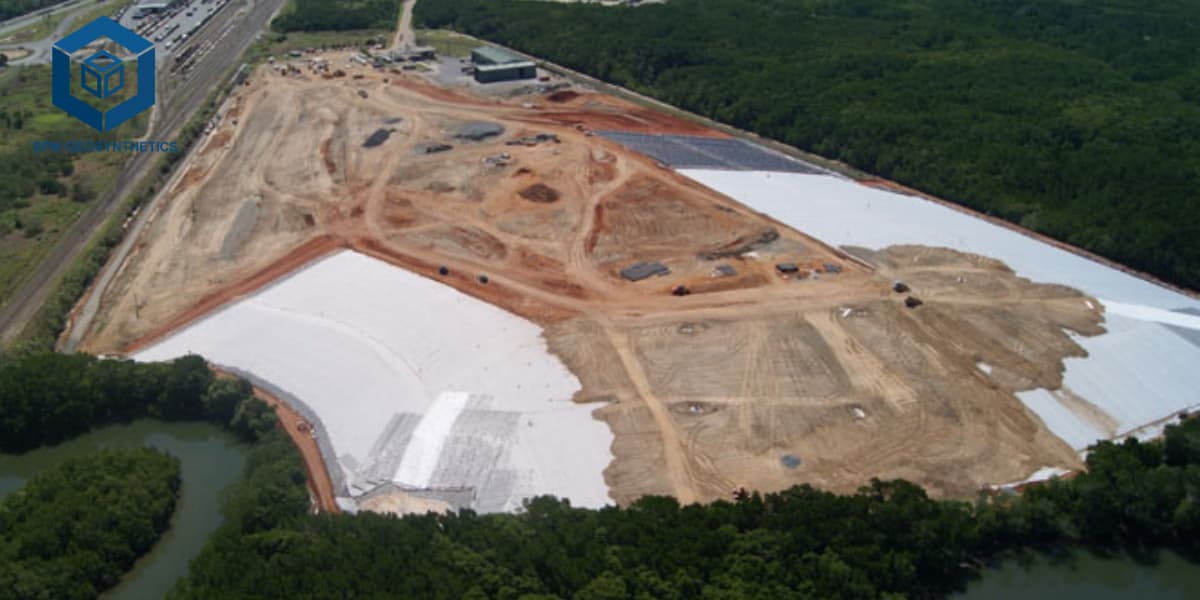
1. What is Geotextile Non Woven?
Nonwoven geotextiles are porous synthetic fabrics produced from polypropylene (PP), polyester (PET) or other polymers. Differing from woven geotextiles, they are made by mechanically bonding (e.g. needle-punching or thermal treatment), which gives them a felt-like surface. These products are broadly recognized in civil engineering for various purposes such as soil stabilization, filtration, drainage, and erosion control.
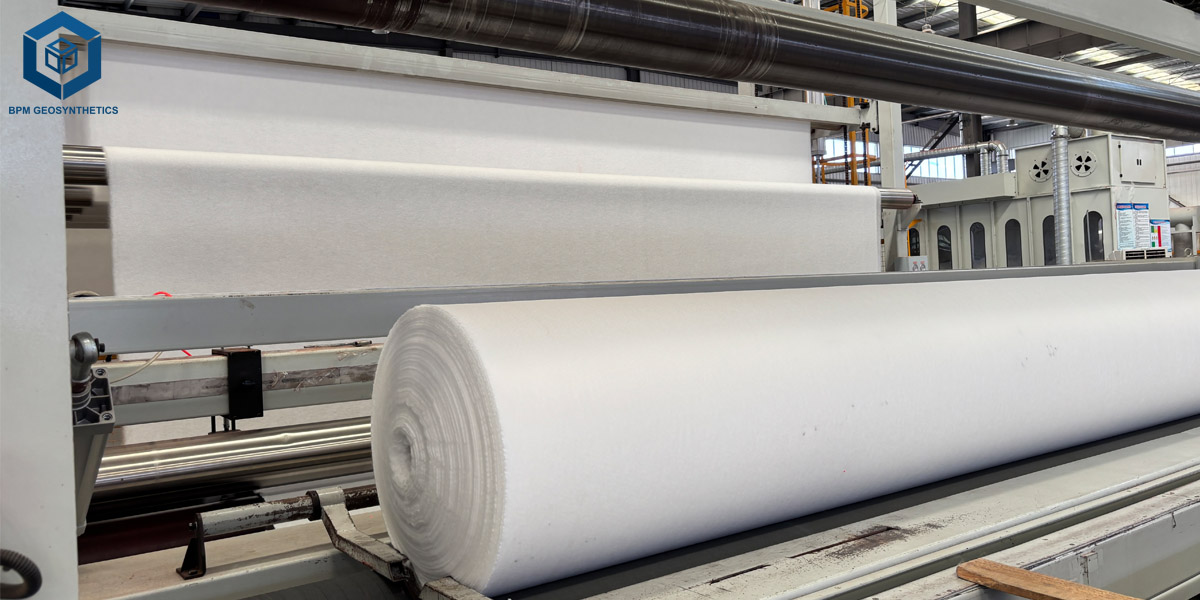
Non woven geotextile fabric is engineered fabrics composed of randomly oriented synthetic fibers bonded together without traditional weaving.
1.1 The Two Dominant Production Methods are:
1.1.1 Needle-punching
This method is the most widespread and involves the use of barbed needles to mechanically interlock fibers, thereby creating a strong, porous structure. The nonwoven geotextile fabric resulting from this process are highly permeable and possess good tensile strength. E.g. generally suitable for practically all types of applications.
1.1.2 Thermal Bonding
Here, fibers are heated to their melting point and then pressed together in order to fuse at the contact points. The new fabric is consequently characterized by a higher stiffness and an improved dimensional stability. Thermal bonding is the type of bonding most frequently applied to house industrial non woven geotextile membrane.
1.2 Main Characteristics and Functional Benefits
Non woven filter fabric deliver certain needs based on their performance which in turn affects pricing and the proper choice of application. Important features are:
1.2.1 High Filtering Ability
80% and up in filtration, enabling through-flow of water whilst entrapping the soil particles, thus eliminating the clogging problem of drainage system.
1.2.2 Permeability
The hydraulic conductivity of these geotextiles typically ranges between 50 and 150 liters per square meter per second (L/m²/s), which is more than enough for facilitating the drainage of water in road construction, landfills and embankments.
1.2.3 Tensile Strength
Ranges from 10 to 400 kN/m depending on the weight, which enables the geotextiles to reinforce the planting of soil and stabilization.
1.2.4 Durability
Non woven geotextile drainage fabric can withstand the attack of various chemicals, radiations of the UV, and living organisms. Depending on the material and the type of the coating, the service life can be as long as 20-50 years.
1.2.5 Flexibility
Not a hassle to be applied to an uneven surface and installation efforts will be much reduced along with the potential cut in labor costs.
In fact, these advantages are responsible for the use of non woven geotextile landscape fabric in locations where their fabrication results in a net saving of 20-30% compared to non woven geotextile filter fabric, largely due to the need for double the tensile strength in woven geotextile and the resulting cost difference which leaves non-wovens as the less expensive option. This then has contributed to why non-woven geotextiles dominate approximately 65% of global geotextile market.
2. Major Elements Impacting "Harga Geotextile Non Woven"?
The price of non woven geotextile can be drastically different from one another, even for the same product, as it depends on many technical features, materials, or market aspects. If potential buyers know these parameters, they will be able to make decisions centered on a combination of cost-effectiveness and the quality of performance.
2.1 Material Composition
2.1.1 Virgin vs. Recycled Polymers:
Geotextiles consisting of pure polypropylene (PP) or polyester (PET) are significantly stronger in terms of tensile strength, longer-lasting, and more resistant to UV light. They are, therefore, better suited for long-term and engineered solutions of high importance. Typically, their price range is $0.40–$2.90/m². Conversely, more or less 30–50% less expensive non woven needle punched geotextile is those which have been fabricated from recycled materials and so are considered an economic solution for projects with limited budgets. On the flip side, their reduced life and instability under extreme environmental conditions are among their weaknesses.
2.1.2 Additives:
Additives like UV stabilizers, anti-aging agents, or oxidation inhibitors are incorporated to make the materials highly resistant to effects of sunlight, chemicals, and other factors of nature. Such modifications not only help the materials withstand degradation for a long time but also increase their costing by approximately 10–15%.
2.2 Technical Specifications
2.2.1 Weight (GSM):
The strength and purpose of non woven geo fabric is largely determined by their weight. Fabrics with lower weights (100–200 GSM) are cheaper, roughly $0.15–$0.50/m², and can be used for simple separation or filtration works. On the contrary, heavier weights (400–800 GSM) are also designed to give additional mechanical strength, puncture resistance, and load-bearing capability, which are the reasons they are used in the construction of infrastructure and works of heavy nature and are priced in the range of $0.80–$2.50/m².
2.2.2 Thickness and Flow Rate:
Nonwoven drainage fabric with bigger thickness, e.g. 3 mm, are mostly used in drainage and filtration where high permeability and long-lasting are two major requirements. Such items usually do not exceed $0.25–$1.50/m² but the price depends mainly on the characteristics of performance like water flow and pore size.
2.3 Production Methods
2.3.1 Staple Fiber vs. Filament:
Staple fiber needle-punched geotextiles hold the highest market share owing to their economical price and also this range covers $0.18–$0.60/m² and these products are suitable for the majority of civil engineering purposes. However, filament geotextiles made by spunbond or hot-rolled method have additional features such as higher tensile strength, good uniformity, and longevity. Normally these premium products cost a lot more (approx. $0.40–$2.90/m²) and are used where highly specialized engineering environments exist.
2.4 Market Dynamics
2.4.1 Order Volume:
Price changes are deeply affected by the quantity of purchase. Massive orders like 10,000+ m² may witness a reduction of 10–30% per unit due to scale advantages in both production and logistics.
2.4.2 Regional Variations:
There are major differences in prices depending on the region. For instance, the prices are down in Southeast Asia ($0.10–$1.00/m²) basically because the labor and manufacturing costs are relatively lower but in Europe, due to higher wages, stringent regulations, and quality standards the prices are also high ($0.50–$3.00/m²).
2.5 Custom Specifications
Customizing the product in terms of specific width, length or enhanced performance can result in a price hike of 5–15%. And, for instance, geotextiles that have been given a surface coating for UV resistance or possess anti-aging properties, or highly efficient filtration features will naturally be priced on the higher side owing to added processing and material costs. Especially, long-term outdoor requirement UV-resistant PET geotextile may roughly be 10% pricier than the regular ones.
2.6 Market and Logistics
Factors which are outside one's control such as fluctuations in raw material prices (especially PP and PET whose prices depend on oil), supply-demand situations and cost of transportation have very vital impact on pricing. The cost of shipping, duties, and efficiency of logistics all can play an important role if the final price is to be judged. However, prices in Southeast Asia are generally 10–15% less than those in North America mainly because of the lower production and logistics costs making this region extremely competitive for worldwide sourcing.
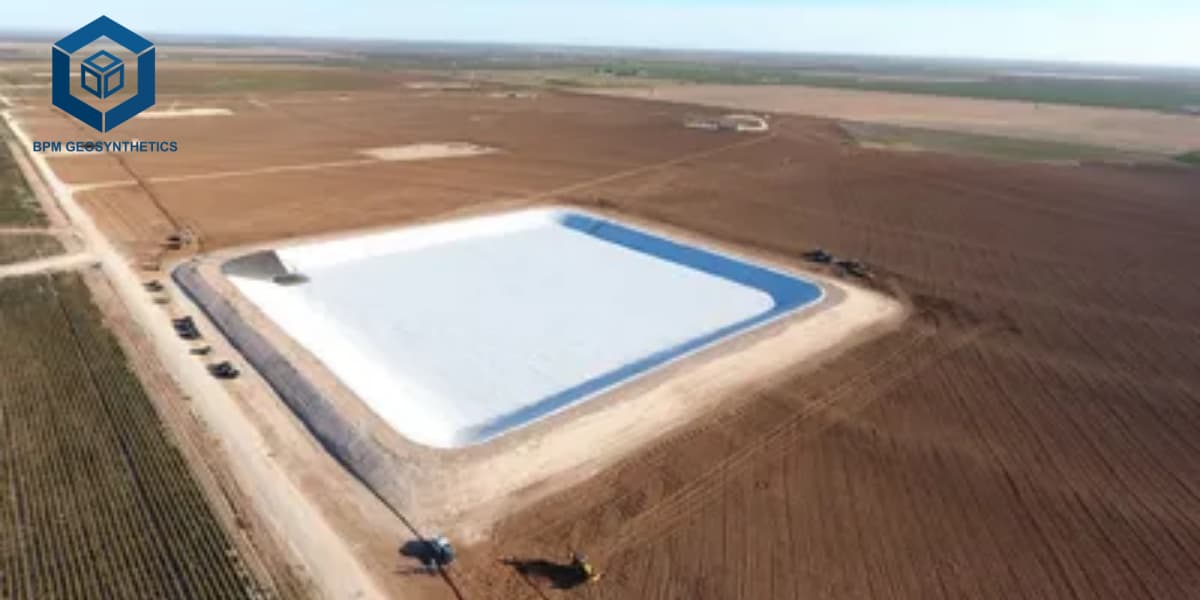
3. Case Study: Geotextile Non Woven in Infrastructure Projects
Real-world benefits of needle punched geotextile incorporation in improving the perforance, durability, and cost-effectiveness of a wide range of infrastructure and environment projects are revealed.
Project 1: Bangalore Airpoduced life and instability under extreme environmental conditions are among their weaknesses.
- Specifications:
A 200 GSM polyester (PET) non-woven geotextile was selected for its high tensile strength, durability, and resistance to long-term mechanical stress, with an approximate cost of $0.60/m².
- Outcome:
The installation significantly improved load distribution and structural stability, resulting in a 40% reduction in rutting and surface deformation. Additionally, the runway’s service life was extended by approximately 15 years, reducing the need for frequent repairs and lowering long-term maintenance costs. This demonstrates the effectiveness of geotextiles in high-load transportation infrastructure.
Project 2: Jakarta Flood Management System (Indonesia)
- Application:
In this project, non-woven geotextile was applied for drainage and filtration in riverbank reinforcement systems. It allowed water to pass through while preventing soil particles from being washed away, thereby stabilizing embankments during heavy rainfall.
- Specifications:
A 150 GSM polypropylene (PP) non-woven geotextile was used due to its excellent permeability, flexibility, and cost-efficiency, with an estimated price of $0.35/m².
- Outcome:
The geotextile effectively enhanced drainage capacity and protected the riverbanks, leading to a 60% reduction in soil erosion, especially during intense monsoon seasons. This contributed to improved flood control, reduced sediment loss, and enhanced long-term stability of the riverbank structures.
Project 3: Landfill Liner System in Malaysia
- Application:
Non-woven geotextile was installed as a protective and drainage layer within the landfill liner system. It served to cushion the geomembrane, prevent punctures from sharp objects, and facilitate leachate drainage and collection.
- Specifications:
A 300 GSM needle-punched non-woven geotextile was chosen for its high puncture resistance and durability, with a typical cost of $0.80/m².
- Outcome:
The use of geotextile significantly improved the safety and efficiency of the landfill system, achieving a 50% reduction in puncture risks to the geomembrane liner. This not only enhanced environmental protection by preventing leakage but also lowered maintenance and repair costs, ensuring long-term operational reliability.
Conclusion
Harga geotextile non woven is a dynamic metric shaped by material, weight, process, volume, specifications, and market factors. Non-woven geotextiles, with their superior filtration, drainage, and cost-effectiveness, are indispensable in modern infrastructure. For project success:
- Match GSM to application: Use lightweight (80–200 GSM) for landscaping, medium (200–400 GSM) for roads/landfills, and heavy (400+ GSM) for coastal/dam projects.
- Leverage bulk purchasing: Order ≥10,000 m² to secure 10–30% discounts.
- Prioritize material suitability: Choose PP for cost-sensitive drainage projects and PET for long-term, high-durability infrastructure.
- Factor in total cost of ownership: While higher GSM geotextiles have a higher upfront harga, their extended service life reduces long-term maintenance costs.
By understanding these dynamics, stakeholders can make informed decisions to optimize harga geotextile non woven, ensuring project efficiency, durability, and cost-effectiveness.
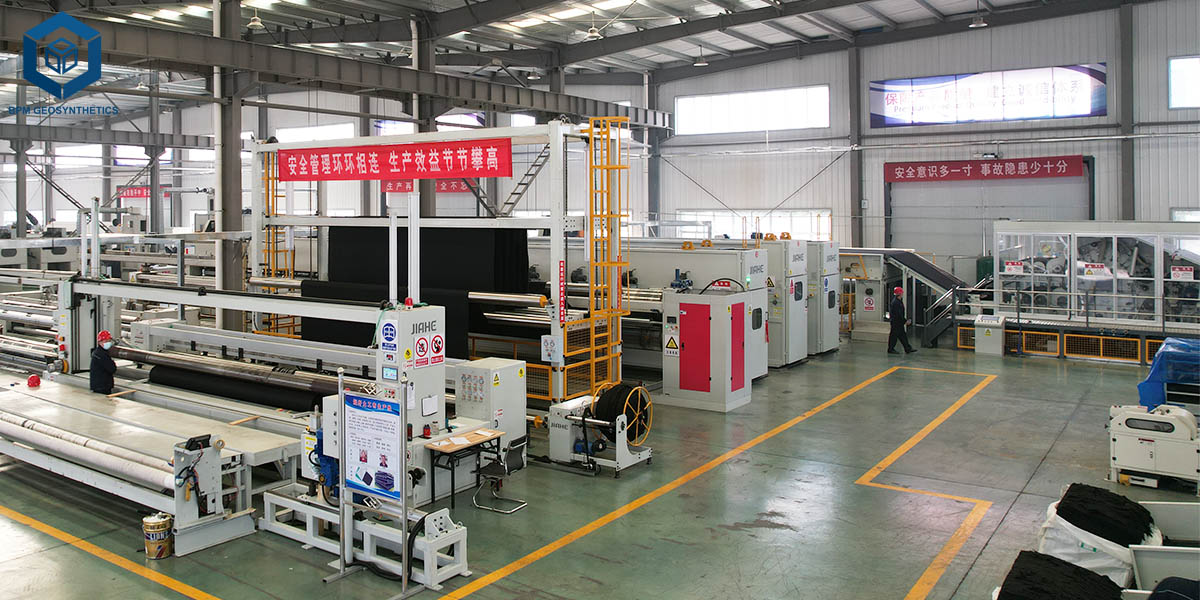
As for geotextile non woven manufacturer of The Best Project Material Co., Ltd.(BPM Geosynthetics) already developing more than 20years , BPM always been committed to the productions , research and development , sales and service of geotechnical materials . with high quality products and professional sales and after sales teams .BPM has passed the ISO9001 quality management system , ISO14001 environmental management system , ISO45001 occupational health system certification , and passed Soncap , SAAO and BV certification and SGS and intertek tests , BPM Geosynthetics have reached the world leading level . can widely used in aquaculture soil erosion resistance .drainage systems , mining etc . BPM are willing to become your partners with high cost performance , innovative geomembrane and geosythetic products , excellent quality and perfect after sale service.
Join BPM Geosynthetics , win our future .