What is Geogrid Mesh Retaining Wall ?
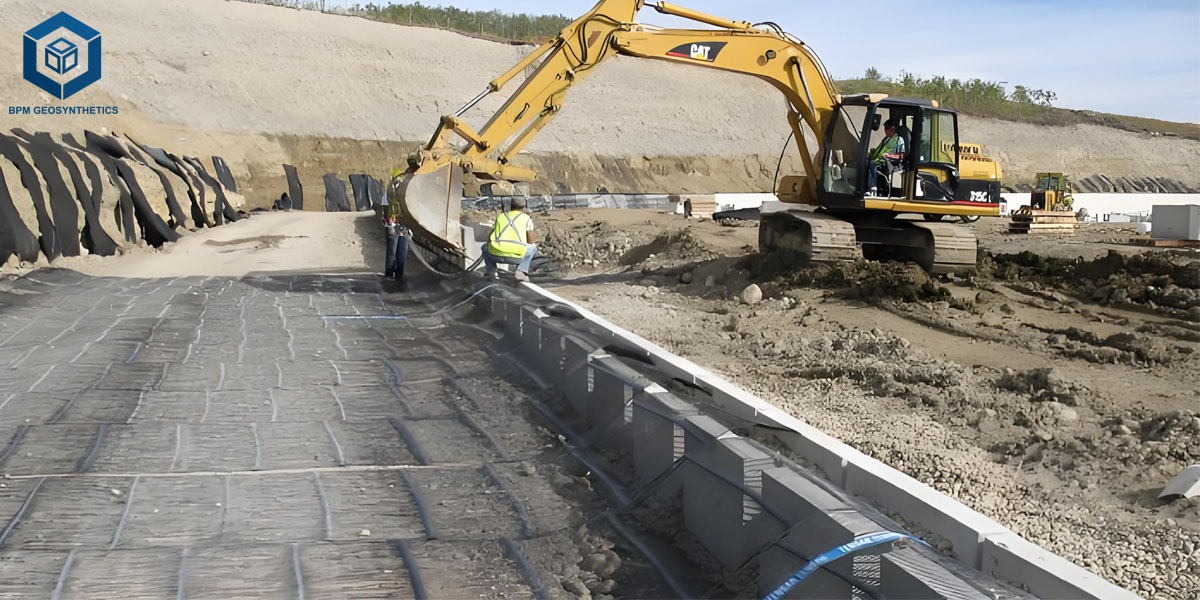
Geogrid mesh retaining wall is a type of reinforced structure that uses geogrid mesh to stabilize the soil and prevent lateral movement. It typically consists of geogrid materials, backfill soil, and a facing system. The geogrid interacts with the soil to form a composite material that can resist the forces exerted by the retained earth, enhancing the overall stability and load - bearing capacity of the retaining wall.
1. What is Geogrid Mesh Retaining Wall?
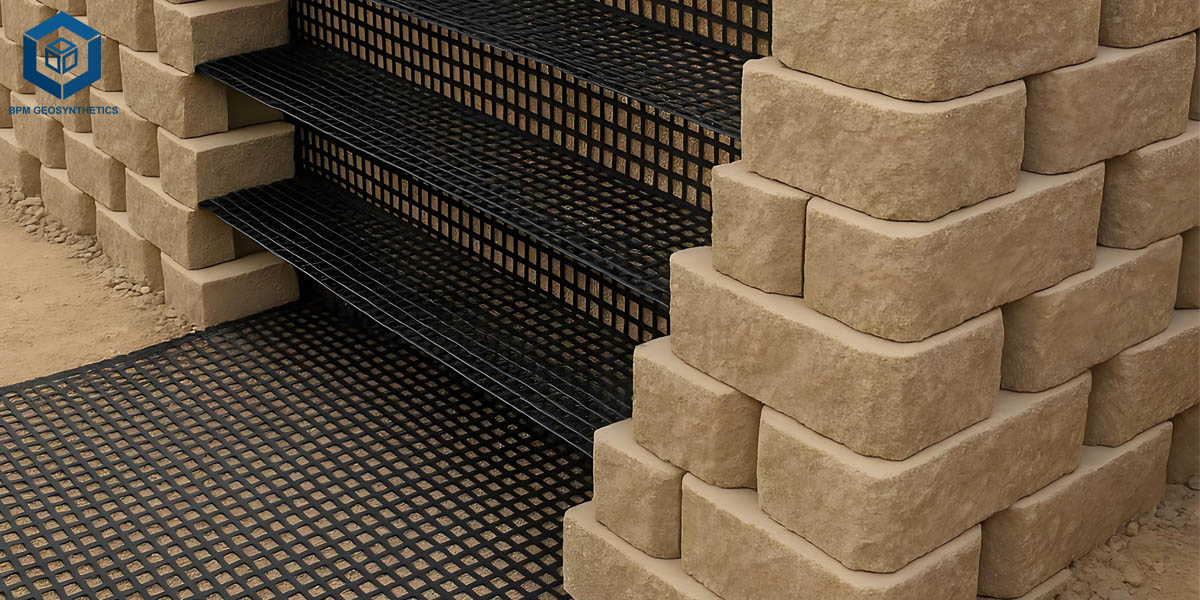
Geogrid mesh retaining wall, more accurately termed a Mechanically Stabilized Earth (MSE) Wall, is a composite structure comprising three key components:
1.1 Reinforcement (The Geogrid)
This is the pivotal element. Retaining wall grid is synthetic polymer meshes (typically made from polyester, polypropylene, or high-density polyethylene) with large apertures. They are engineered with high tensile strength and designed to form a mechanical interlock with the soil particles. Their primary function is not to hold the soil back, but to become one with it, creating a coherent, reinforced mass.
1.2 Soil Backfill (The Reinforced Mass)
A select, free-draining granular fill material (e.g., crushed rock or sand) is compacted in layers around the geogrid material. The apertures of the geo grid wall lock onto this fill, creating a composite material that is stronger and more stable than the native soil.
1.3 Facing (The Wall Element)
The facing provides a neat, finished appearance and prevents erosion of the soil at the face. This can be modular concrete blocks (most common for this application), precast concrete panels, gabions, or even wrapped geotextiles for a vegetated face.
2. What Characteristics of Geogrid Mesh Retaining Wall ?
2.1 High Structural Stability & Load-Bearing Capacity
The geogrid mesh is the core reinforcement component, and its interaction with backfill soil forms a "composite soil structure" that fundamentally improves stability.
It disperses lateral earth pressure. The geo grid near me’s tensile strength resists the horizontal thrust of retained soil, preventing wall body tilting or cracking.
Geogrid bears additional loads. It can stably support surcharges like vehicles, buildings, or storage sheds (e.g., the 60 kPa shed surcharge in the Cajamar, Brazil project).
It enhances seismic performance. In high-seismic-intensity areas (such as the 6–9 degree zone of the Qinghai-Tibet Railway), the flexible connection between gravel geogrid and backfill reduces damage from seismic waves.
2.2 Cost-Effective & Time-Saving Construction
Compared with traditional rigid retaining walls (e.g., concrete gravity walls), it has obvious advantages in construction efficiency and cost control.
It reduces material consumption. It eliminates the need for large amounts of concrete or steel; the main materials (geogrid + backfill) are low-cost and easy to obtain.
It shortens the construction period. The assembly-type operation (e.g., block-faced or plate-faced systems) avoids complex on-site pouring, cutting the construction time by 30%–50% in many cases.
Geogrid lowers later maintenance costs. The geogrid (especially high-density polyethylene or polyester types) is corrosion-resistant and aging-resistant, requiring almost no regular maintenance (the Qinghai-Tibet Railway walls have operated stably for years without major repairs).
2.3 Flexible Design & Environmental Friendliness
Its design can be adjusted according to site conditions, and it has minimal impact on the ecological environment.
It adapts to complex terrains. It can be built on sloped, narrow, or soft-soil sites (e.g., the Chengdu-Kunming Railway 复线 used it in mountainous sections with limited space).
Geo grid mesh reduces land occupation. Compared with traditional walls, it has a smaller "footprint"—the Qinghai-Tibet Railway project used it to save grassland and wetland areas.
It integrates with aesthetics. The facing system (concrete plates, blocks, etc.) can be customized with colors or textures, balancing functionality and landscape (e.g., the "most beautiful MSEWs" in Cajamar, Brazil).
2.4 Durable & Weather-Resistant
The material properties of uniaxial geogrid ensure the long service life of the retaining wall.
It resists harsh environments. It is unaffected by humidity, salinity (suitable for coastal areas), or extreme temperatures (from the low-temperature plateau of the Qinghai-Tibet Railway to high-temperature tropical regions).
Geogrid prevents soil erosion. The geogrid slope stabilization restricts the movement of backfill particles, avoiding soil loss caused by rainwater scouring or wind erosion.
3. What Function of Geogrid Mesh Retaining Wall ?
Geogrid mesh retaining walls are engineered systems that combine high-strength geosynthetic materials with soil mechanics principles to provide structural reinforcement and stability,Below is a detailed breakdown of their key functions, supported by technical insights and practical applications:
3.1 Structural Reinforcement of Soil
3.1.1 Stress Distribution
Geogrids (e.g., uniaxial or biaxial) are embedded within the soil mass to redistribute lateral earth pressure. Their high tensile strength (e.g., 80–200 kN/m for HDPE geogrids ) transfers loads across a larger area, reducing localized stress concentrations and preventing wall deformation.
3.1.2 Soil Interlocking
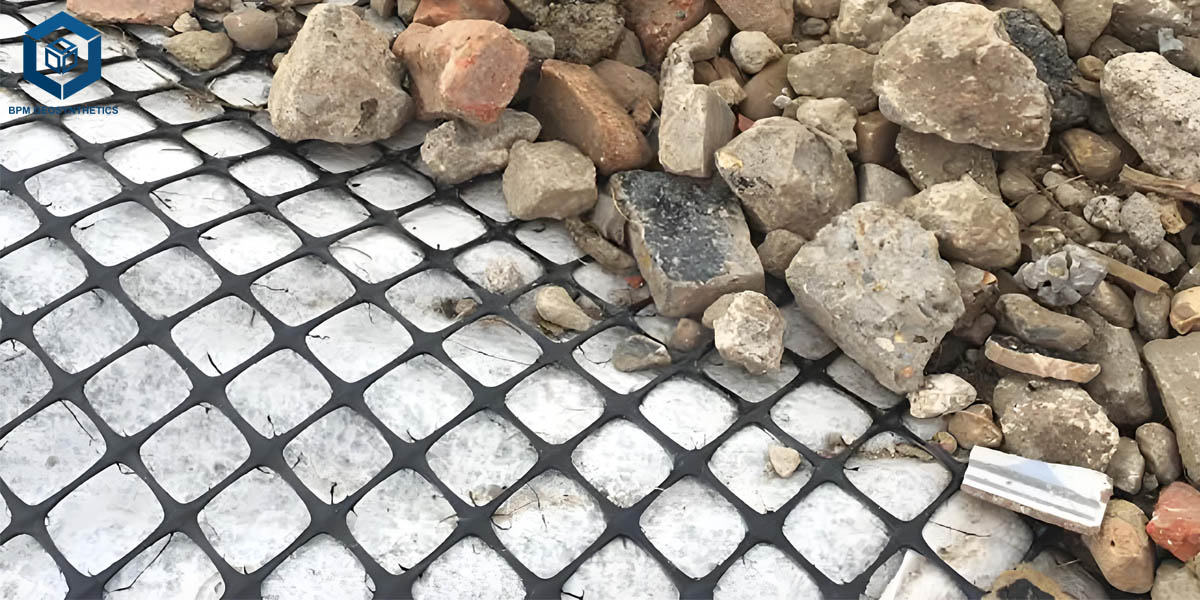
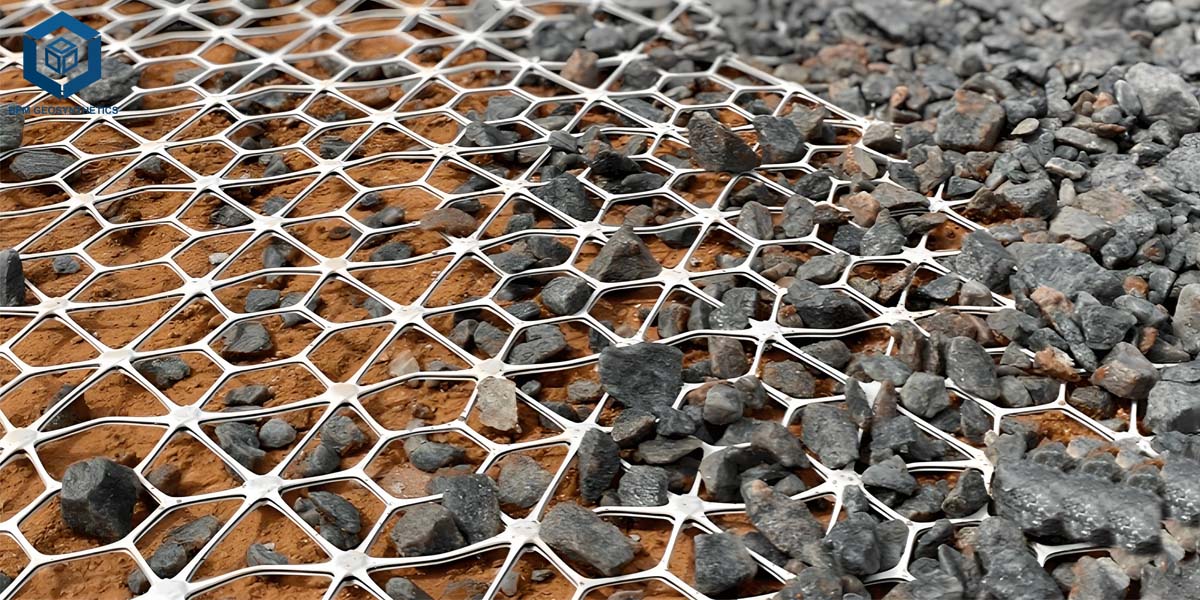
The geogrid erosion control pattern (e.g., square or diamond-shaped apertures) creates a mechanical bond with soil particles, enhancing cohesion and shear strength. This is critical in loose or cohesionless soils like sand or gravel
3.1.3 Layered Reinforcement
Multi-layer geogrid installations (e.g., at 0.5–1 m intervals) provide progressive reinforcement, mitigating differential settlement and improving overall load-bearing capacity
3.2 Control of Settlement and Differential Settlement
3.2.1 Load Spreading
By distributing vertical loads (e.g., from highway embankments or building foundations) over a broader soil base, geogrids minimize uneven settlement. For example, in soft clay foundations, geogrids reduce settlement by up to 40% compared to conventional methods
3.2.2 Stabilizing Expansive Soils
In regions with expansive clay, geogrids limit heave and shrinkage cycles by confining soil movement and improving drainage
3.3 Erosion and Water Management
3.3.1 Vegetation Integration
Geogrids serve as a root anchorage system for vegetation, stabilizing slopes and preventing erosion. This is common in highway embankments and railway cuttings
3.3.2 Drainage Enhancement
Perforated geogrids or combined geocomposite systems (geogrid + geotextile) facilitate water drainage behind retaining walls, reducing hydrostatic pressure and pore water accumulation
3.4 Economic and Construction Efficiency
3.4.1 Material Savings
By replacing traditional concrete or masonry walls, geogrid systems reduce material costs by 30–50%. For instance, a 15 m-high geogrid wall costs ~₹1.2 million vs. ₹1.8 million for a concrete alternative
3.4.2 Faster Installation
Modular geogrid panels and pre-fabricated mesh allow rapid deployment, minimizing project timelines. This is advantageous in urban areas with traffic constraints
3.5 Seismic and Wind Resistance
3.5.1 Energy Dissipation
Geogrid mesh absorb seismic energy through elongation and deformation, reducing wall rupture risks. Finite element simulations show that geogrid-reinforced walls achieve a factor of safety (FoS) >1.5 under seismic zone III conditions
3.5.2 Wind Load Mitigation
In coastal or high-wind regions, geo grid driveway enhance lateral stability against wind-induced surges, particularly in retaining walls supporting light structures
3.6 Environmental Sustainability
3.6.1 Reduced Land Use
Geogrid walls enable steeper slopes (e.g., 1:0.5 vs. 1:1.5 for conventional walls), preserving land for green spaces or infrastructure
3.6.2 Recyclability
HDPE and polyester geogrids are 100% recyclable, aligning with circular economy principles
3.7 Versatility in Complex Terrain
3.7.1 Adaptive Design
Geogrid retaining wall accommodate irregular geometries (e.g., curved walls) and varying soil types (clay, silt, gravel) through adjustable layering and anchoring techniques
3.7.2 Retrofit Applications
Used to stabilize aging retaining walls or rehabilitate unstable slopes without full demolition
Conclusion
The Characteristics and function stands as a testament to the engineering superiority and practical benefits of geogrid mesh retaining walls. By transforming unstable soil into a coherent, reinforced mass, this technology provided a safe, economical, and sustainable solution to a complex geotechnical problem. reinforcement have become the industry standard for a wide range of applications, from highway embankments and bridge abutments to commercial and residential landscaping. Their flexibility, strength, and cost-effectiveness make them an indispensable tool in the modern civil engineer's arsenal.
As for geogrid mesh retaining walls manufacuturer of BPM already developing more than 20years , The Best Project Material Co., Ltd.(BPM Geosynthetics)always been committed to the productions , research and development , sales and service of geotechnical materials . with high quality products and professional sales and after sales teams. BPM Geosynthetics has passed the ISO9001 quality management system , ISO14001 environmental management system , ISO45001 occupational health system certification , and passed Soncap , SAAO and BV certification and SGS and intertek tests , BPM geomembrane have reached the world leading level . can widely used in aquaculture soil erosion resistance .drainage systems , mining etc . BPM are willing to become your partners with high cost performance , innovative geomembrane and geosythetic products , excellent quality and perfect after sale service , join BPM , win our future.