What is Geocell Erosion Control?
Geocells (also known as Cellular Confinement Systems, or CCS) are three-dimensional, honeycomb-like geosynthetic structures formed by ultrasonically welding high-strength, perforated HDPE (high-density polyethylene) strips. When expanded on-site, they create interconnected cells that are filled with topsoil, gravel, or aggregate. Geocell erosion control is an eco-friendly slope protection technique that utilizes three-dimensional lateral confinement to stabilize the infill material, thereby resisting soil displacement caused by rainfall runoff, wind, wave action, and shallow slope failure.
Unlike rigid concrete retaining walls or stone riprap, geocells offer a flexible and permeable protection solution. Their perforated cell walls allow for water infiltration and the penetration of plant roots; once vegetation is established, the roots intertwine with the geo cell grid to form a composite "structure-plus-vegetation" erosion control system. This dual mechanism provides both immediate mechanical protection and long-term ecological restoration capabilities, making the technology widely applicable in projects such as highway embankments, open-pit mine slopes, tailings dams, riverbanks, and reservoir perimeters.
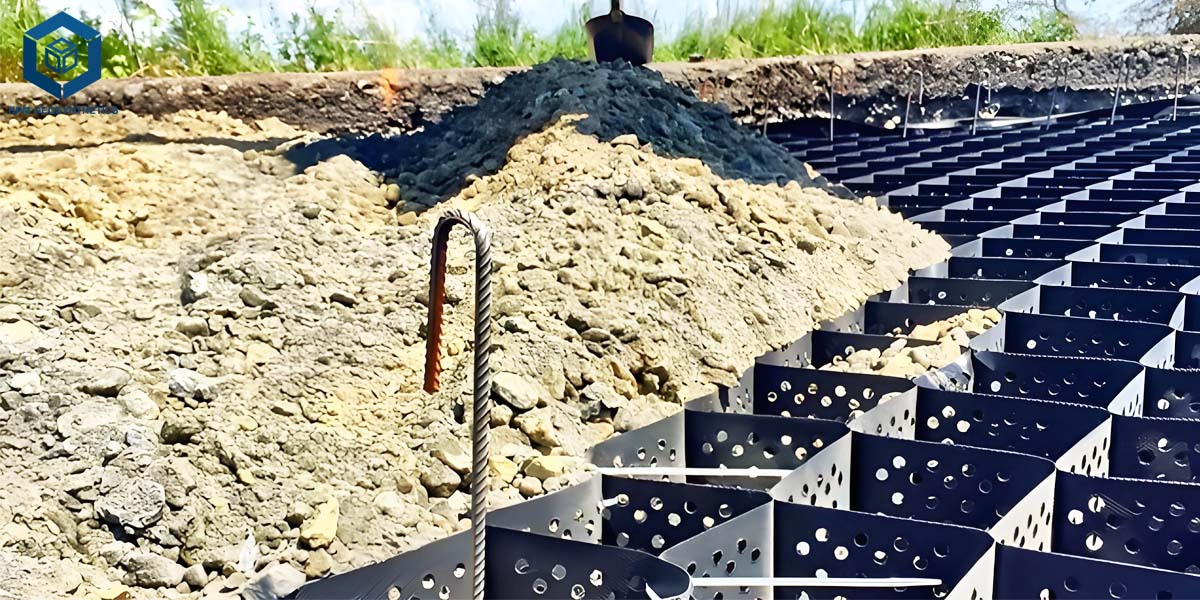
1. What is Geocell Erosion Control?
Three core engineering effects enable geocells to mitigate slope erosion efficiently.
1.1 Lateral confinement effect.
Each independent honeycomb cell locks infill materials and prevents lateral movement of soil particles. On bare slopes, rainwater easily washes away loose soil and creates rills and gullies. Geocells for erosion control divides the continuous slope surface into thousands of independent soil units. Even under concentrated surface flow, soil inside each cell cannot migrate freely, eliminating sheet erosion and gully formation fundamentally.
1.2 Runoff buffering effect.
The staggered cell structure cuts continuous water flow, reduces flow velocity and dissipates hydraulic energy. Slow-moving rainwater gains sufficient time to infiltrate into subsoil, lowering surface runoff volume and erosive power.
1.3 Vegetation synergistic reinforcement.
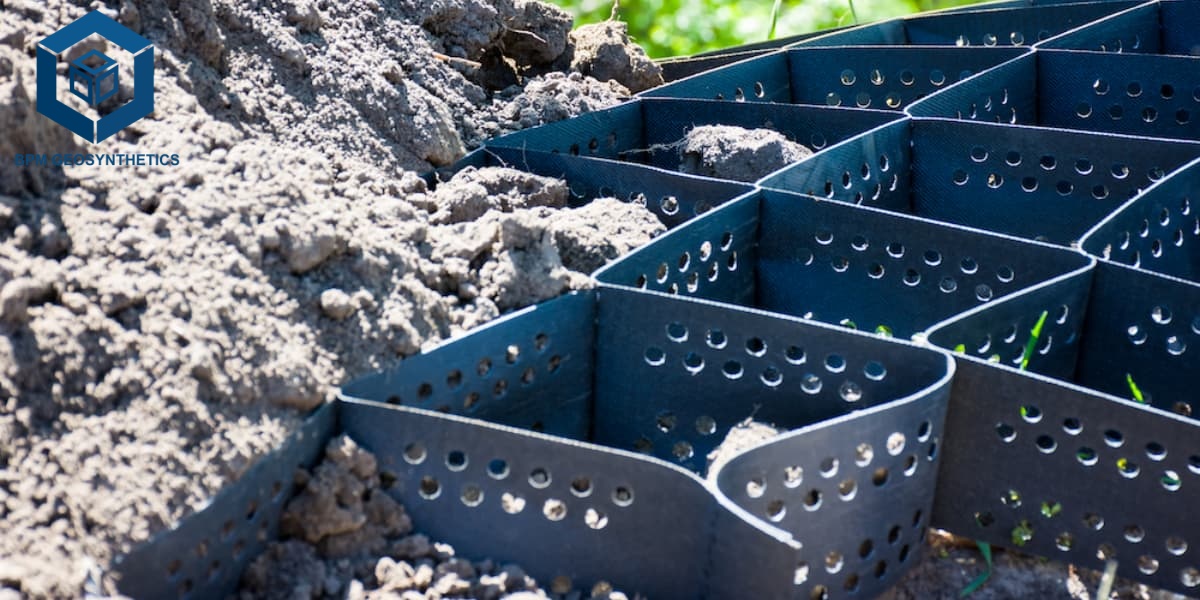
Geocell slope erosion control cavities provide stable growth space for grass and shrubs. As plant roots extend through geocell perforations and weave across adjacent cells, a robust root network binds soil masses. The combination of artificial geosynthetic reinforcement and natural vegetation greatly extends service life and reduces long-term maintenance costs.
Common geocell specifications for erosion control range from 75 mm to 200 mm in height. UV-stabilized HDPE geocell adapts to harsh tropical climates such as Burkina Faso, resisting ultraviolet radiation, oxidation and corrosion in acidic or alkaline mine soil.
2. What Characteristics of Geocell Erosion Control?
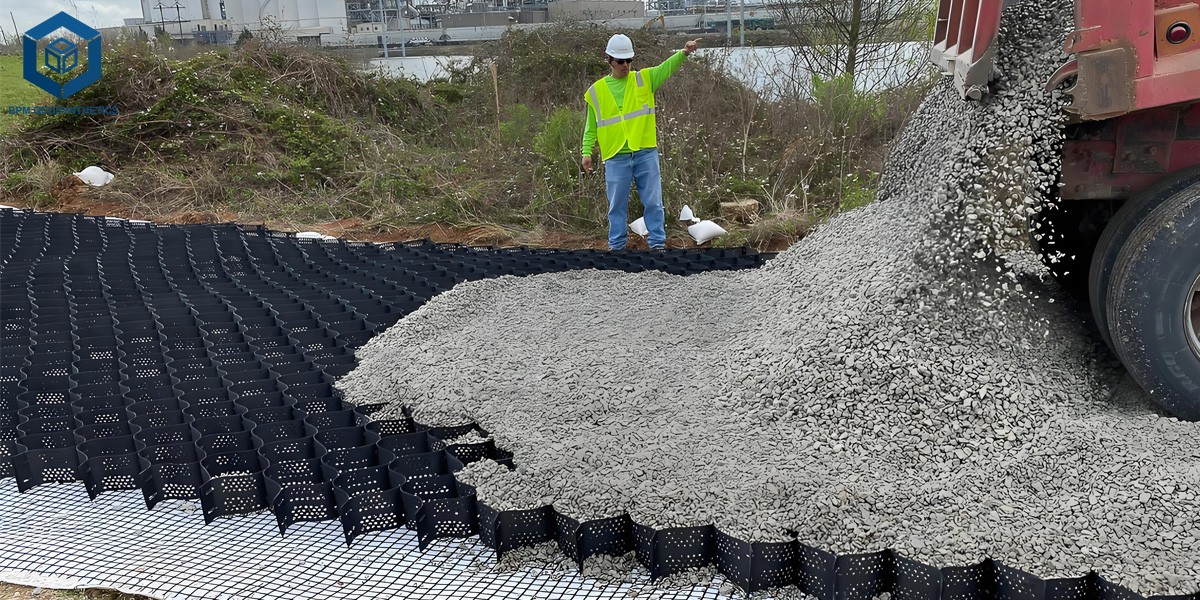
Geocell, also known as the cellular confinement system (CCS), is a three-dimensional honeycomb geosynthetic material made of high-density polyethylene strips welded together. When deployed on slopes, it forms stable cell units filled with soil, gravel or planting medium. Thanks to its unique structural design, geocell erosion control shows multiple outstanding characteristics for slope erosion control, which makes it widely used in mine waste rock slopes, road embankments, river banks and tailings perimeter protection.
2.1 Three-dimensional Lateral Confinement Ability
The core characteristic of geocell erosion control is three-dimensional confinement. After unfolding, independent honeycomb cells divide the continuous slope surface into numerous closed small units. The cell walls restrict horizontal and vertical displacement of filling materials. Rainfall runoff cannot wash away soil particles freely, effectively preventing sheet erosion, rill erosion and gully formation on bare slopes. Unlike flat geotextiles that only provide surface isolation, geocell locks infill firmly and improves the overall shear strength of the slope surface.
2.2 Good Flexibility and Adaptability to Terrain
Geocell material features excellent flexibility. It can fit uneven slope surfaces, curved river banks and irregular mine terrains without prefabrication. The flexible structure can withstand slight foundation settlement, deformation and temperature changes, avoiding cracking problems commonly seen in rigid protection such as concrete or stone pitching. For open-pit mine slopes with complicated topography in West Africa, this characteristic greatly lowers the difficulty of construction.
2.3 Ecological Compatibility and Synergy with Vegetation
Perforated HDPE geocell allows water infiltration and root penetration. Cells can be filled with topsoil for sowing grass and shrubs. Plant roots will grow through geocell holes and interlock across adjacent cells. Finally, the geocell framework combines with plant root networks to build a permanent “artificial structure + natural vegetation” anti-erosion system. It realizes slope stabilization and ecological restoration at the same time, helping mining companies meet local environmental rehabilitation requirements.
2.4 Convenient Transportation and Fast On-site Construction
Geocell HDPE is folded and packed before delivery, occupying very little container space and cutting ocean freight costs. On construction sites, workers simply unfold, anchor and fill the panels. No large heavy machinery is required. Compared with rock revetment, it shortens construction cycles significantly, which is critical for remote mining projects with limited local construction equipment.
2.5 Durability for Harsh Tropical Environments
High-quality geocells for erosion control is added with carbon black and anti-UV additives. It can resist strong tropical ultraviolet radiation, oxidation, and slight acid-alkali corrosion from mine soil. Under normal outdoor conditions in West Africa, qualified HDPE geocell can maintain stable performance for decades. It has strong resistance to long-term alternating dry and rainy seasons.
2.6 Outstanding Economic Benefits
Geo geocell allows engineers to use local on-site soil as infill instead of transporting expensive qualified rock aggregates over long distances. It greatly reduces raw material and transportation expenses, especially for mines located far from quarries. In most slope protection projects, the total comprehensive cost of geocell erosion control is lower than traditional hard protection solutions.
2.7 Permeable Structure Reduces Hydrostatic Pressure
The open-cell and perforated design enables free drainage. Rainwater seeps into the subsoil smoothly instead of accumulating on the slope surface. This reduces pore water pressure inside the slope and lowers the risk of shallow landslides triggered during concentrated rainy seasons.
3. Key Specifications and Selection Guide for Geocell Erosion Control
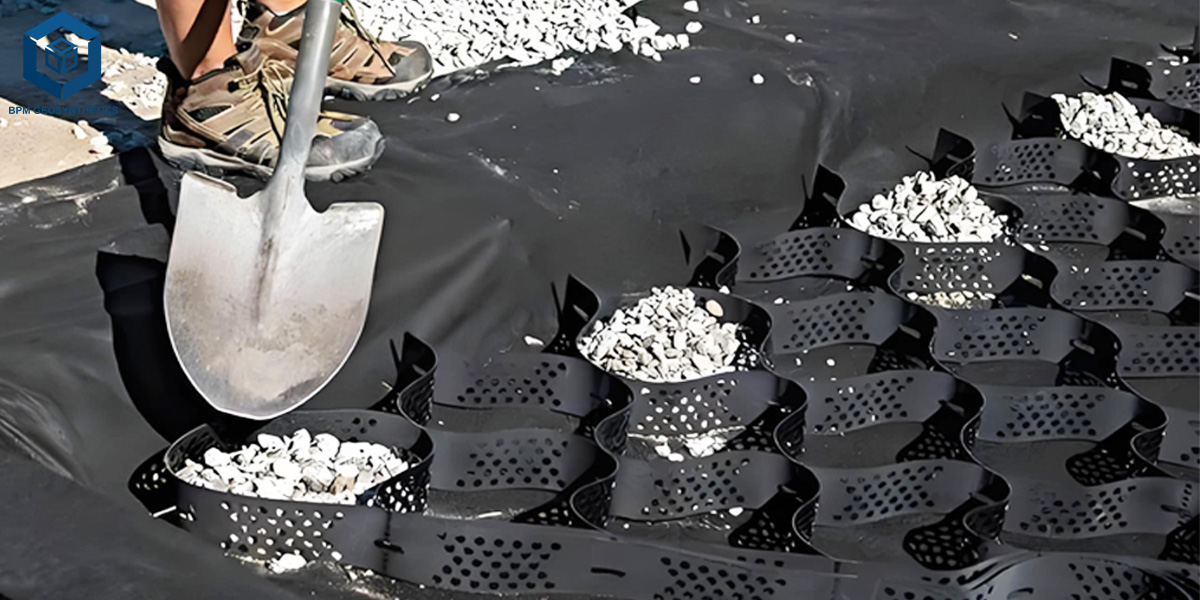
Selecting the correct geocell specifications is critical to ensuring long-term slope stability, optimizing hydraulic performance, and controlling overall project costs. Engineers and procurement teams must evaluate key physical and mechanical parameters based on site-specific slope gradients, hydraulic shear stresses, and local soil conditions.
3.1 Cell Height Selection (75 mm to 200 mm)
Cell height dictates the depth of the confinement layer and directly influences the structural resistance against surface runoff and sliding forces.
3.1.1 75 mm – 100 mm Height:
Best suited for mild to moderate slope angles (≤1 : 1.5 or <30℃) subject to low-to-medium rainfall runoff. Ideal for standard road embankments, vegetative landscaping, and shallow channel linings.
3.1.2 150 mm – 200 mm Height:
Recommended for steep slopes (1 : 1 or > 45℃), high-flow channels, mine tailings facilities, and critical infrastructure. The deeper confinement capacity locks larger aggregate sizes or thicker topsoil layers, offering higher shear resistance against deep-seated erosion and gravity-induced soil creep.
3.2 Welding Distance and Expanded Cell Area (330 mm to 880 mm)
Welding distance (the spatial interval between ultrasonic weld lines when collapsed) determines the dimension of individual open cells once expanded.
3.2.1 Short Welding Distance (330 mm – 400 mm):
Yields smaller expanded cells. Smaller cells maximize lateral confinement pressure per unit area, making them highly effective for fine-grained soils, silts, or steep slope faces where high cohesion and tight lockup are needed.
3.2.2 Large Welding Distance (600 mm – 880 mm):
Yields larger open cells. This configuration is ideal for flatter terrain, large-sized gravel/rock infills, or bulk earthworks where fast installation and lower cost per square meter are prioritized.
3.3 Cell Wall Perforation and Permeability (11% – 16% Perforation Rate)
Modern high-density polyethylene (HDPE) geocells feature engineered textured surfaces and patterned perforations along the cell walls.
3.3.1 Hydraulic Relief & Hydrostatic Pressure Reduction:
A standard perforation area of 11% to 16% ensures rapid lateral water movement between adjacent cells. This prevents water logging and significantly decreases pore pressure buildup during intense rainfall.
3.3.2 Vegetation Root Interlocking:
The multi-hole layout provides continuous pathways for plant roots to penetrate horizontally across cell walls. Over time, the root network weaves through the geocell matrix, transforming the artificial grid into a self-reinforcing, biologically integrated slope protection composite.
3.4 Tensile Strength and Seam Peel Strength
Mechanical integrity under severe structural load determines whether a geocell system will withstand long-term gravitational pull and environmental stress.
3.4.1 Ultimate Tensile Strength:
Qualified HDPE strips typically exhibit a minimum tensile strength of ≥ 20 MPa to 26 MPa (ASTM D638). High tensile capacity prevents wall tearing under heavy aggregate impact or soil surcharge.
3.4.2 Seam Peel Strength (Ultrasonic Weld Integrity):
The welded seam is the most vital structural link. Industry standard recommendations mandate seam peel strengths exceeding 140 N/cm to 142 N/cm of cell depth (ISO 13426-1 / ASTM D4595). High seam integrity ensures the honeycomb network does not delaminate under cyclic thermal expansion, heavy downpours, or seismic shaking.
Conclusion
Geocell erosion control technology is a mature and sustainable geosynthetic engineering solution that balances structural stability, ecological restoration, and economic efficiency. By utilizing a three-dimensional grid structure to confine soil and incorporating vegetation cover, the technology provides reliable erosion protection for slopes, mine waste piles, access road embankments, and hydraulic structures. For mining and infrastructure projects, geocells serve as a compelling alternative to traditional rigid slope protection methods, enabling project owners to control construction costs while meeting environmental restoration requirements.
About BPM Geosynthetics
As a leading geocell manufacturer, The Best Project Material Co., Ltd. (BPM Geosynthetics) has been developing geosynthetic solutions for over 20 years. BPM Geosynthetics has always been committed to the production, research and development, sales, and service of geotechnical materials. Supported by high-quality products along with professional sales and after-sales teams, BPM Geosynthetics has obtained ISO9001 Quality Management System, ISO14001 Environmental Management System, and ISO45001 Occupational Health and Safety System certifications. Furthermore, BPM Geosynthetics products have passed SONCAP, SASO, and BV certifications, as well as rigorous testing by SGS and Intertek.
In particular, BPM Geosynthetics's 60 mil HDPE Liners have reached a world-leading standard, making them widely applicable in aquaculture, soil erosion control, drainage systems, mining, and other engineering projects. BPM Geosynthetics is eager to become your trusted partner by offering high cost-performance, innovative geomembrane and geosynthetic products, exceptional quality, and comprehensive after-sales service.