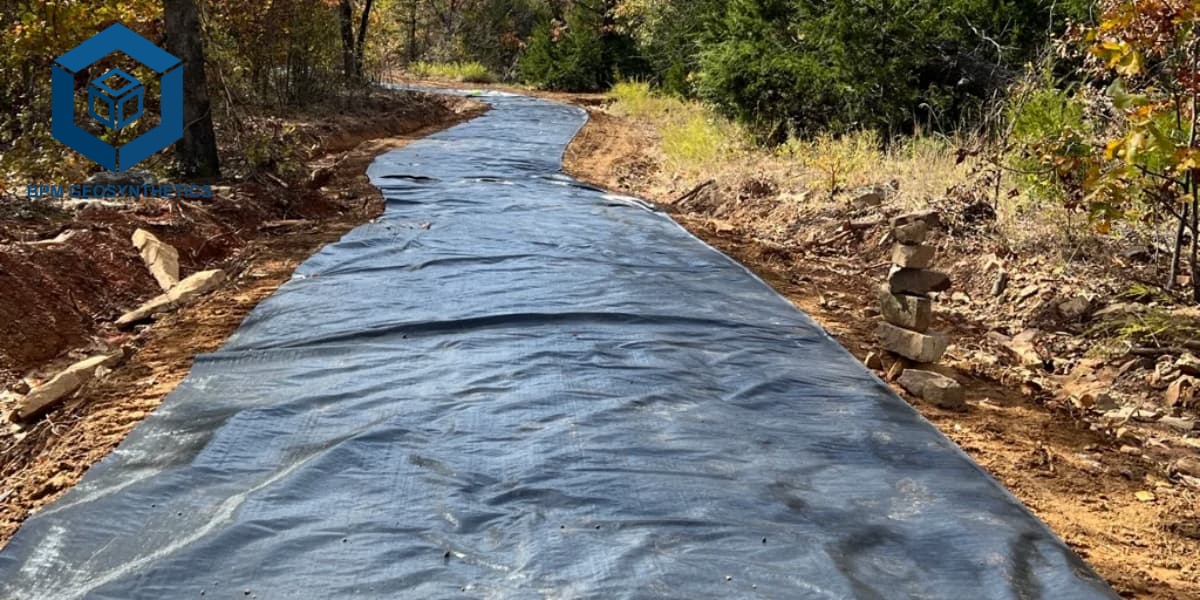
Ultimate Guide to Woven Geotextile Fabric for Driveway
BPM Geosynthetics’s geotextile fabric stabilizes driveways by separating soil from aggregate to avoid mixing while enabling smooth drainage. Woven and non-woven geotextiles optimize load distribution and resist soil erosion, extending driveway service life by preventing potholes and ruts. Our high-strength geotextiles can bear heavy loads while maintaining water permeability, which is essential for stable subgrade conditions. During installation, the fabric needs proper overlapping and firm anchoring to form an integrated continuous stabilizing layer. Selecting geotextiles with suitable weight and permeability ratings according to local soil and climate conditions delivers optimal performance. BPM Geosynthetics woven geotextile fabric for driveway provides customized solutions that balance cost and long-term performance, making gravel driveways more durable and lowering long-term maintenance needs.
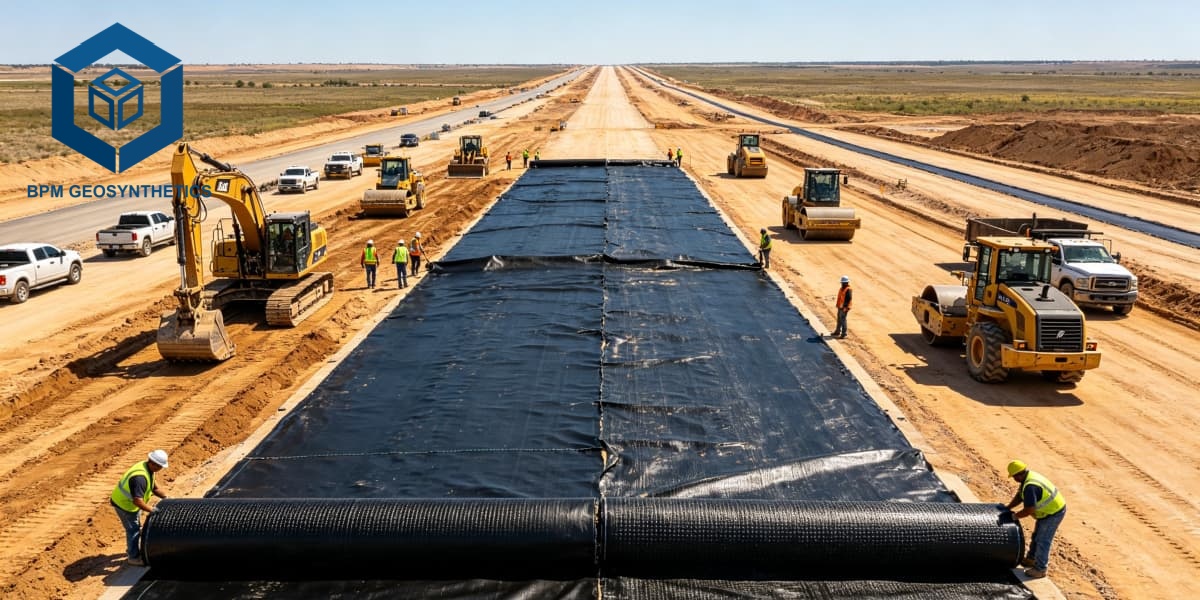
1. What is Woven Geotextile Fabric for Driveway?
BPM Geosynthetics geotextile fabric is a tough synthetic construction material designed to stabilize ground, stop soil erosion and facilitate underground drainage. It is made of synthetic fibers, mainly polypropylene or polyester. Both materials are modified to withstand heavy loads and extreme weather for a long service life.
BPM Geosynthetics geotextiles have multiple types with exclusive features and application scenarios. The three primary types of geotextile fabric: woven, non-woven, and knitted.
1.1 Woven Geotextile Fabric
BPM Geosynthetics woven geotextile fabric is produced by interweaving synthetic fibers into a grid pattern. It features the highest tensile strength among all geotextile types and fits projects requiring high strength and durability. It is widely used in road construction, erosion control and retaining wall projects.
1.2 Non Woven Geotextile Fabric
By contrast, BPM Geosynthetics nonwoven geotextile fabric is manufactured by bonding synthetic fibers with heat and pressure. It boasts wide application coverage including soil stabilization, drainage and filtration, and is commonly applied in landscaping, underground drainage systems and erosion control.
1.3 Knitted Geotextile Fabric
BPM Geosynthetics knitted geotextile fabric is made by interlocking synthetic fibers via knitting machines. It is flexible and lightweight, with integrated drainage, filtration and reinforcement functions. It is mostly used for embankment stabilization, landfill drainage and slope erosion control.
2. The Importance of Ground Stability Woven Geotextile Fabric for Driveway
Ground stability is a core factor in construction, especially vital for driveways. Stable subgrade can bear heavy loads and constant vehicle traffic to prevent soil shifting and erosion. On the contrary, unstable ground will lead to driveway damage or failure, higher maintenance costs and even potential safety hazards.
3. Factors Affecting Ground Stability for Woven Geotextile Fabric for Driveway
Multiple factors influence ground stability and determine the service life and durability of driveways. The most common influencing factors are listed below:
3.1 Woven Geotextile Fabric for Driveway - Soil Type
Soil type is a core factor affecting ground stability. Soils of different compositions carry different load-bearing capacities, and some soil types are more vulnerable to erosion and displacement. For instance, clay soils have low bearing capacity and tend to shrink and swell, triggering ground instability. Sandy soils have higher load-bearing capacity yet are more likely to erode and shift.
3.2 Woven Geotextile Fabric for Driveway - Water Content
Soil moisture content is another critical factor for ground stability. Excessive water softens soil and reduces its bearing capacity, resulting in instability. On the contrary, insufficient water causes soil shrinkage, dryness and cracks, which also lead to soil movement and unstable ground.
3.3 Woven Geotextile Fabric for Driveway - Weight of Vehicles
The weight of vehicles using the driveway is another key consideration. Long-term heavy loads compact underlying soil and cause settlement and soil displacement. Over time, depressions and other damages will appear on the driveway, raising maintenance costs continuously.
3.4 Woven Geotextile Fabric for Driveway - Climate
Climate also affects ground stability. Extreme weather such as heavy rain, snow and freeze-thaw cycles will erode and shift soil and cause ground instability. Mild and stable weather conditions help maintain intact subgrade structures.
3.5 Woven Geotextile Fabric for Driveway – Vegetation
Vegetation like trees and plants impacts ground stability as well. Tree roots penetrate soil and destroy driveway foundations, leading to soil displacement and instability. Besides, removing vegetation directly triggers soil erosion and weakens the supporting subgrade.
- Standard selection steps:
First, clarify specific project conditions and requirements, including project scale, design service life, environmental conditions, etc. Second, select proper BPM Geosynthetics geotextile types matching the requirements, such as anti-seepage geotextiles, reinforced geotextiles and so on. Third, confirm detailed performance standards based on the selected type, including tensile strength, elongation, permeability and other indicators. Finally, evaluate material cost and cost-performance to choose economical BPM Geosynthetics geotextiles that fully meet project standards.
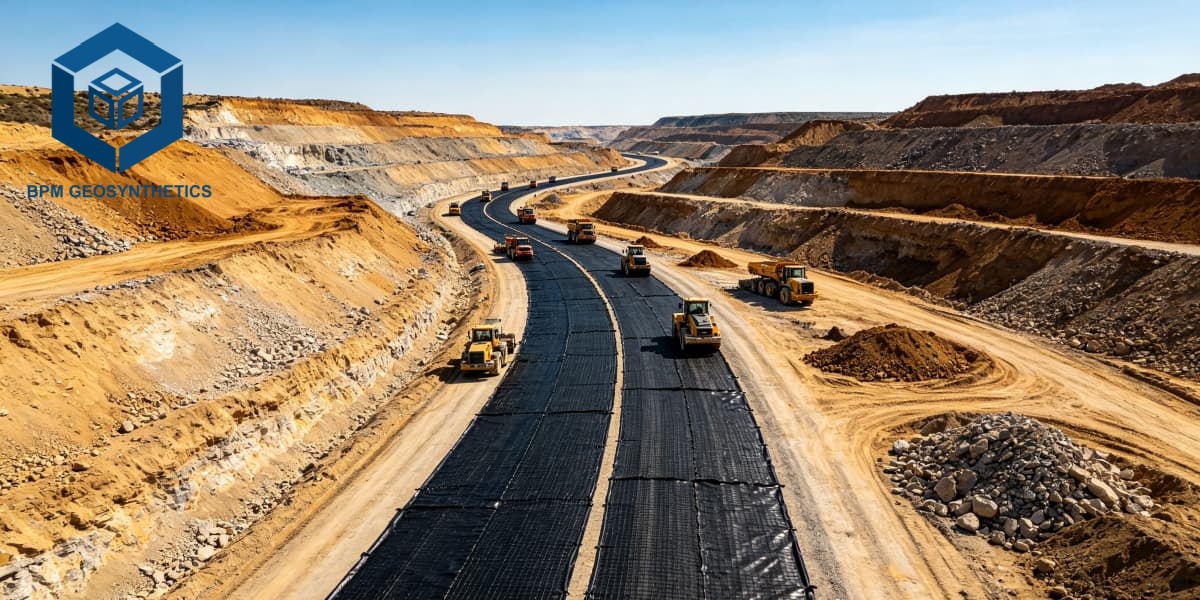
4. How to Choose the Best Woven Geotextile Fabric for Driveway?
When selecting a woven geotextile fabric for a driveway project, you are essentially choosing an underground stabilization insurance policy. The woven driveway fabric acts as a separation barrier that prevents your clean gravel or aggregate from sinking into the soft subgrade soil beneath it, while simultaneously distributing the heavy weight of vehicles.
To pick the absolute best option for your specific project, look closely at the following critical technical factors.
4.1 Grab Tensile Strength
Grab tensile strength measures the amount of force (in pounds) the woven geotextile fabric can handle before it tears or breaks. For driveways, you need a woven geotextile tough enough to survive both the installation process (dumping heavy rock) and the daily stress of vehicular traffic.
4.1.1 Light Duty (150–200 lbs):
Suitable for standard residential driveways with light passenger cars and stable underlying soil.
4.1.2 Heavy Duty (200–315+ lbs):
Essential for driveways that will host heavy delivery trucks, RVs, construction equipment, or if you are building over soft, muddy clay. Class 1 (315 lbs) is the gold standard for maximum durability.
4.2 Water Flow Rate and Permeability
While woven geotextiles are primarily chosen for their strength and stabilization capabilities, they still need to allow water to pass through so hydrostatic pressure doesn't build up beneath the driveway.
Look for a flow rate of at least 4 to 15 gallons per minute per square foot (gpm/ft²).
If your property suffers from severe drainage issues or standing water, you may need a high-flow woven geotextile membrane (often technically called a monofilament or high-performance woven) to ensure water drains away rapidly without washing out the subgrade.
4.3 Puncture and Tear Resistance
During installation, sharp, crushed angular gravel will be dumped directly onto the fabric and compacted with heavy machinery. If the geotextile underlayment punctures easily, its ability to separate the soil from the aggregate is compromised.
Check the CBR Puncture Resistance rating (measured in pounds). For high-stress driveways, a rating of 900 lbs or higher ensures the fabric won't rip when heavy stones are compacted on top of it.
4.4 Material Composition and UV Resistance
The longevity of the woven driveway fabric depends entirely on what it is made of and how it handles environmental exposure before it is covered.
4.4.1 Polypropylene:
The most widely used material because it is highly resistant to chemical rotting, naturally occurring soil acids, and alkalis.
4.4.2 UV Stabilization:
Ensure the fabric is UV-stabilized (typically offering around 70% to 80% resistance after 500 hours of direct sunlight exposure). While it will eventually be buried, it needs protection while sitting exposed on the job site during construction.
4.5 Roll Dimensions and Project Waste
To minimize seams and overlapping—which can create weak points in your driveway structure—choose roll sizes that closely match your driveway's footprint.
Standard rolls often come in widths of 12.5 feet or 15 feet.
- Pro Tip: Always account for a 12-to-18-inch overlap at the seams when calculating how much fabric to buy. If the subgrade soil is exceptionally soft or wet, increase the seam overlap to 24 inches to prevent separation under heavy loads.
Summary Checklist for Driveway Success:
For a standard, worry-free residential driveway, look for a woven polypropylene fabric featuring a 200 to 315 lb grab tensile strength, a CBR puncture resistance over 900 lbs, and a water flow rate of around 10 gpm/ft².
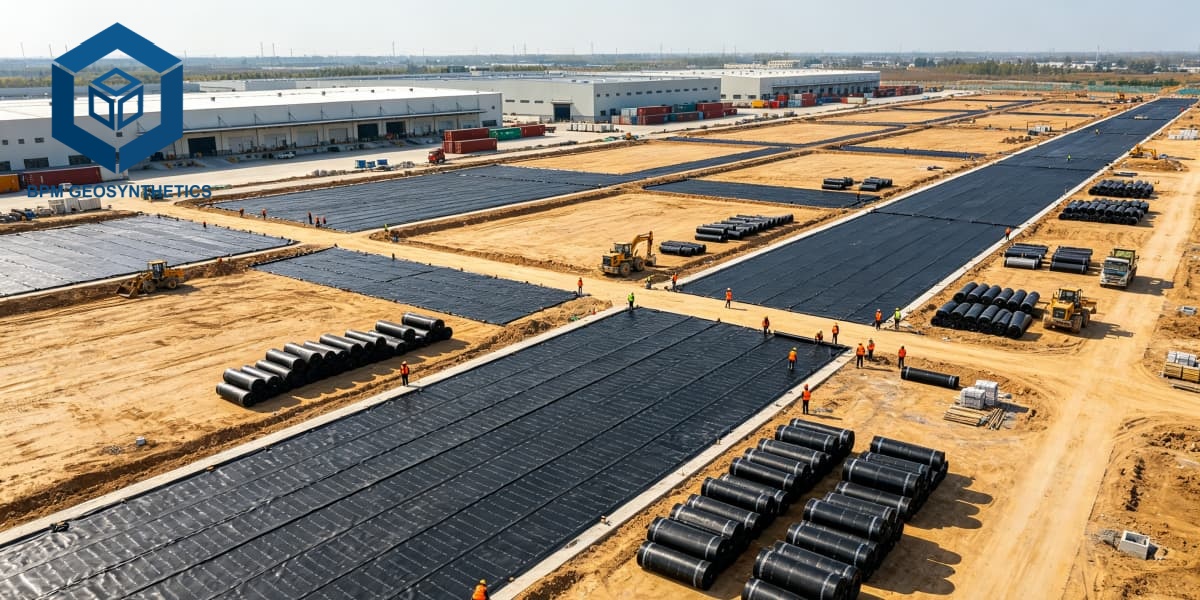
5. Step-by-Step Installation Guide for Woven Geotextile Fabric for Driveway
Even the highest-quality BPM Geosynthetics woven geotextile will fail if it is installed incorrectly. To create an unbroken, high-strength stabilization layer, follow this professional installation sequence:
5.1 Subgrade Preparation and Excavation
Clear the driveway path of all topsoil, vegetation, large rocks, and debris. Excavate to the depth required by your driveway design (typically 4 to 8 inches for residential use). Compact the raw subgrade soil thoroughly using a vibratory plate compactor or roller before laying down any material.
5.2 Unrolling and Positioning the Fabric
Roll out the BPM Geosynthetics woven geotextile fabric directly over the compacted soil. Pull the fabric taut to eliminate any wrinkles, folds, or loose waves.
5.3 Correct Seam Overlapping and Anchoring
When joining multiple rolls together, overlap the edges strictly according to your soil conditions:
- Firm Soil: 12 to 18 inches of overlap.
- Soft Soil / Wet Clay: 24 inches of overlap.
- Securement: Use steel landscape staples, pins, or sandbags every 5 to 10 feet along the seams to anchor the fabric firmly. This prevents the layers from shifting or pulling apart when the aggregate is dumped.
5.4 Aggregate Placement and Compaction
Dump the gravel or crushed stone directly onto the fabric, but never drive construction equipment or delivery trucks directly on the bare geotextile.
- Always dump the aggregate ahead of the trucks and spread it out to a minimum thickness of 4 to 6 inches before driving over it.
- Compact the aggregate layer thoroughly to finish the driveway surface.
6. Conclusion: The Smart Path to a Maintenance-Free Driveway
Building a driveway is a significant investment in time and money. While the gravel, pavers, or asphalt on the surface get all the attention, it is what lies beneath that determines whether your driveway lasts for decades or fails within a few seasons.
Skipping an underlayment is the most common reason gravel driveways develop deep ruts, sinkholes, and structural issues. By spending a tiny fraction of your overall project budget on a high-quality woven geotextile fabric for driveway, you create a permanent barrier that preserves your aggregate base, optimizes load distribution, and keeps your subgrade completely stable.
7. Final Recommendation: Choosing the Right BPM Geosynthetics Solution
To get the absolute best performance and maximum durability out of your driveway project, follow these final engineering recommendations based on your specific application:
7.1 For Standard Residential Driveways:
Choose BPM Geosynthetics Woven Geotextile Fabric (200 lbs grab tensile strength). It delivers the ideal balance of cost-efficiency and heavy-duty separation for regular passenger cars, SUVs, and standard soil conditions.
7.2 For Heavy-Duty Commercial or Soft Clay Applications:
Upgrade to BPM Geosynthetics Class 1 Woven Fabric (315+ lbs grab tensile strength). This high-strength variant is highly recommended if your driveway will regularly host heavy delivery trucks, RVs, and construction machinery, or if you are building over soft, muddy, or high-plasticity clay soils.
7.3 For High-Drainage / High-Runoff Areas:
If your project faces severe drainage issues but still requires heavy structural reinforcement, consider a high-performance BPM Monofilament Woven Geotextile. This specialized option ensures water flows away rapidly without compromising the subgrade structural integrity.
- Take the Next Step: Don't let your aggregate sink into the mud. Contact the The Best Project Material Co., Ltd. (BPM Geosynthetics) Team Today for custom sizing options, bulk pricing data, or technical guidance tailored precisely to your project's local soil and climate conditions.