Ultimate Guide to Geotextiles for Erosion Control
Introduction
Erosion is a serious problem. It damages land. It destroys infrastructure. It pollutes waterways. Soil loss costs billions yearly. Construction sites face high risks. Slopes are vulnerable. Shorelines erode rapidly.
Geotextiles offer effective solutions. They are synthetic fabrics. They control erosion effectively. They stabilize soil surfaces. They promote vegetation growth. They reduce maintenance costs.
This guide covers everything about geotextiles for erosion control. We explain types and functions. We show selection criteria. We provide installation tips. We include specification tables. All products referenced are from BPM Geosynthetics. BPM Geosynthetics is a leading manufacturer. Our geotextiles for erosion control meet global standards.
1. What are Geotextiles for Erosion Control?
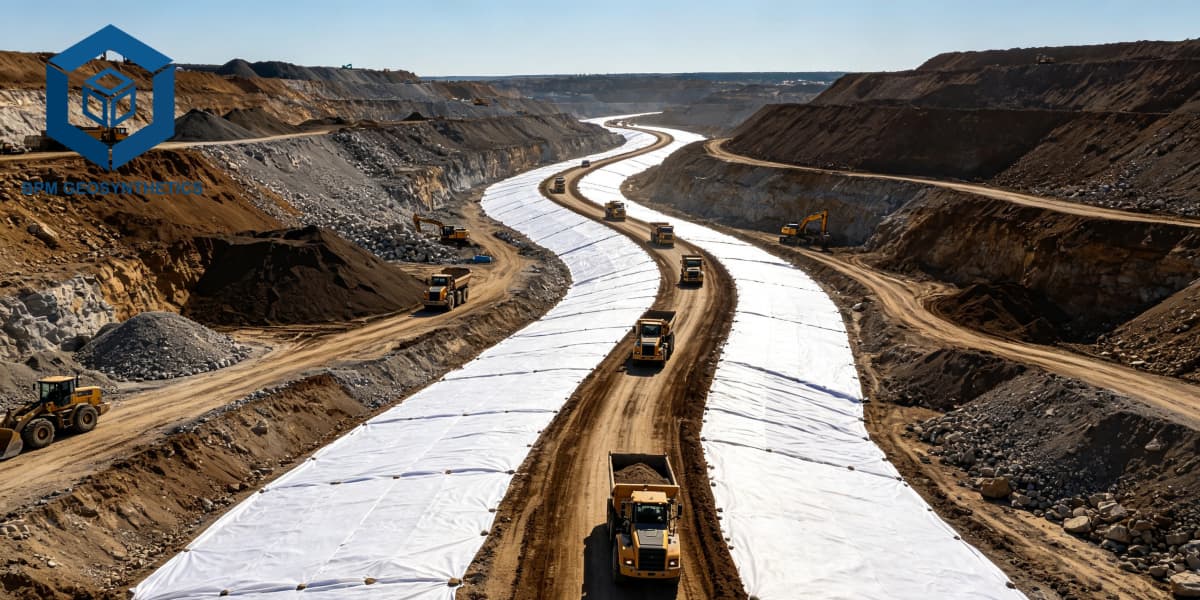
Geotextiles are permeable fabrics. They are made from polypropylene or polyester. They are designed for soil interaction. They perform multiple functions.
For erosion control, geotextile fabric for erosion control act as protective layers. They cover exposed soil surfaces. They absorb rainfall impact. They reduce runoff velocity. They trap sediment particles. They allow water infiltration. They prevent surface crusting.
These materials are versatile. They work on slopes. They protect channel banks. They stabilize coastal areas. They cover landfill caps. They support green infrastructure.
BPM Geosynthetics manufactures specialized erosion control geotextiles. Each product targets specific site conditions.
2. How Geotextiles for Erosion Control?
Geotextiles control erosion through several mechanisms.
2.1 Surface Protection
Geotextiles cover bare soil. They shield against raindrop impact. Raindrop energy is dissipated. Soil particles remain intact. Surface sealing is prevented.
2.2 Runoff Reduction
Geotextiles slow water flow. They create micro-roughness. Flow velocity decreases. Sediment transport capacity drops. Soil detachment reduces significantly.
2.3 Sediment Trapping
Geotextiles soil erosion control act as filters. They capture moving soil particles. Sediment accumulates on surfaces. Clear water passes through. This prevents downstream pollution.
2.4 Vegetation Support
Many geotextiles promote plant growth. They retain moisture. They protect seeds. They provide root anchorage. Vegetation then provides long-term protection.
2.5 Slope Stabilization
Geotextile reinforce soil surfaces. They add tensile strength. They resist shallow sliding. They increase factor of safety. This is critical on steep slopes.
3. Types of Geotextiles for Erosion Control
Different geotextile types suit different erosion scenarios.
3.1 Woven Geotextiles
Woven geotextiles are manufactured by weaving yarns. They have high tensile strength. They have small apertures. They are durable and stable.
- Advantages:
High strength
Good dimensional stability
Excellent for reinforcement
Resistant to puncturing
- Limitations:
Lower permeability
Less conformable to uneven surfaces
- Best for: High-flow channels, steep reinforced slopes, heavy sediment loads.
3.2 Non Woven Geotextiles
Non woven geotextiles are made by bonding fibers. They use heat or needle-punching. They are thick and porous. They have high filtration capacity.
- Advantages:
High permeability
Excellent filtration
Conforms to irregular surfaces
Good for drainage applications
- Limitations:
Lower tensile strength
More susceptible to UV damage
- Best for: Sediment filtration, drainage blankets, vegetated slopes, temporary erosion control.
3.3 Biodegradable Erosion Control Fabrics
These are made from natural fibers. Materials include jute or coir. They degrade over time. They support vegetation establishment.
- Advantages:
Environmentally friendly
Supports rapid vegetation
No removal required
Cost-effective for temporary use
- Limitations:
Short service life
Lower initial strength
Susceptible to rot
- Best for: Permanent vegetation establishment, ecological restoration projects.
3.4 Compost Filter Socks
These are tubular geotextiles. They contain composted materials. They act as perimeter controls. They filter sediment from runoff.
- Advantages:
Easy to install
Effective sediment capture
Improves soil quality
Supports plant growth
- Limitations:
Requires regular maintenance
Bulkier to transport
- Best for: Construction site sediment control, check dams, inlet protection.
4. Key Properties of Geotextiles for Erosion Control
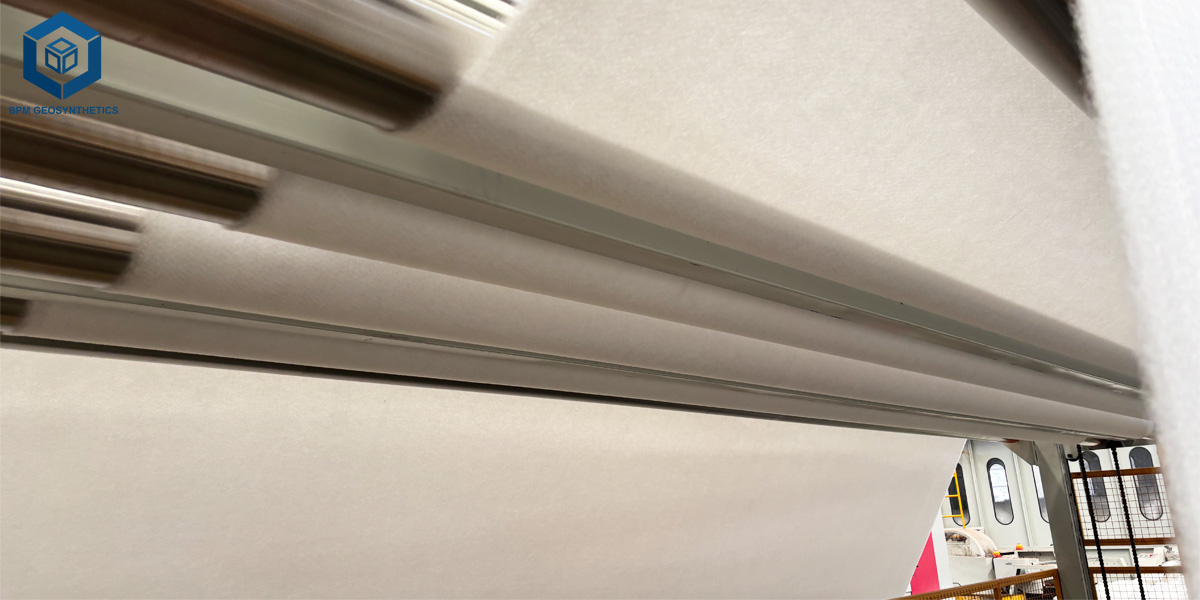
Understanding properties guides proper selection.
4.1 Tensile Strength
This measures resistance to breaking. Higher strength suits high-stress areas. Steep slopes need strong fabrics. High-flow channels need durability.
4.2 Permeability
This measures water flow through fabric. Higher permeability aids drainage. It prevents hydrostatic buildup. It maintains soil stability.
4.3 Aperture Size (O95)
This is the effective opening size. It controls particle retention. Proper sizing prevents piping. It ensures sediment capture.
Puncture Resistance
This resists damage from sharp objects. Installations encounter rocks and debris. High resistance ensures longevity.
4.4 UV Resistance
Sun exposure degrades fabrics. UV stabilizers extend life. Longer exposure requires higher protection.
4.5 Weight (g/m²)
This indicates fabric density. Heavier fabrics are stronger. Lighter fabrics are more flexible. Weight affects handling and cost.
4.6 Roll Dimensions
Width and length affect coverage. Standard widths range 2 to 6 meters. Lengths vary by product. Consider installation efficiency.
5. BPM Geosynthetics Geotextiles for Erosion Control Specifications Table
The table below summarizes BPM Geosynthetics products for erosion control. Use it for quick comparison.
Property | BPM Woven EC | BPM Non-Woven EC | BPM Heavy-Duty EC | BPM UV-Stabilized EC | BPM Biodegradable EC | BPM Compost Sock EC |
Material | Polypropylene | Polyester/Polypropylene | Polypropylene | Polypropylene | Jute/Coir | Polypropylene |
Fabric Type | Woven | Non-woven | Non-woven | Woven | Natural fiber | Tubular knit |
Weight (g/m²) | 150-450 | 100-300 | 300-600 | 200-500 | 300-700 g/m² | 150-250 |
Tensile Strength (kN/m) | 10-35 | 5-15 | 15-40 | 12-30 | 3-8 | 2-5 |
Permeability (cm/s) | 0.01-0.1 | 0.1-0.5 | 0.05-0.2 | 0.01-0.1 | 0.1-0.3 | 0.05-0.2 |
Aperture O95 (mm) | 0.15-0.30 | 0.07-0.20 | 0.10-0.25 | 0.15-0.30 | 0.20-0.50 | 0.10-0.20 |
UV Resistance | Moderate | Low-Moderate | Moderate | High | Low (degrades) | Moderate |
Typical Roll Width (m) | 2.0-4.0 | 2.0-5.0 | 2.0-4.0 | 2.0-4.0 | 1.0-2.0 | 0.3-0.6 |
Primary Erosion Function | Reinforcement | Filtration & Drainage | Heavy slope protection | Long-term exposed areas | Vegetation support | Sediment capture |
Service Life (years) | 10-20 | 5-10 | 10-20 | 15-25 | 1-3 | 2-5 |
Data based on BPM Geosynthetics product testing and industry standards. Actual values vary by specific product grade.
6. Application Areas of Geotextiles for Erosion Control
6.1 Highway Slopes and Embankments
Road cuts and fills erode easily. Water runs off pavement. It concentrates on slopes. Geotextile fabric protect these areas. They prevent shallow landslides. They allow grass establishment. BPM woven fabrics work well here. They provide strength and stability.
6.2 Riverbanks and Channel Linings
Flowing water erodes banks. Scour removes soil. Non woven geotextile fabric armor surfaces. They resist hydraulic forces. They protect against scour. Non-woven fabrics provide filtration. They prevent soil migration. They maintain bank integrity.
6.3 Coastal Shorelines
Wave action causes erosion. Tides and storms intensify damage. Geo fabric stabilize shorelines. They reduce wave energy. They trap sand. They support dune vegetation. Heavy-duty products perform best. UV resistance is critical.
6.4 Construction Sites
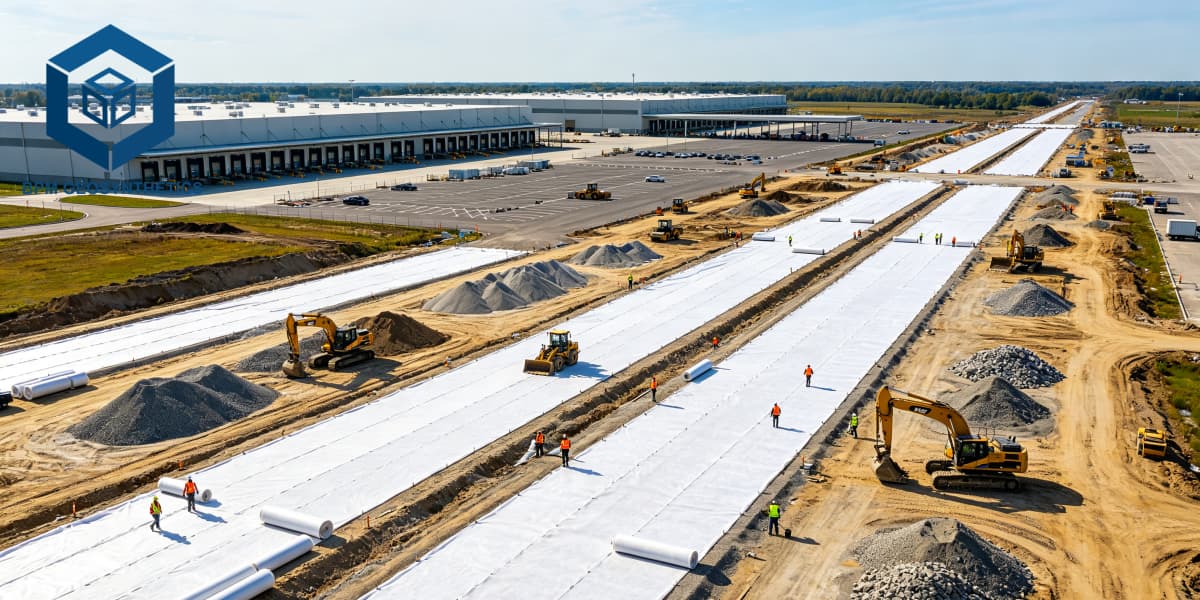
Bare soil is highly erodible. Sediment runoff pollutes waterways. Regulations require controls. Non woven geotextile provide perimeter protection. They capture sediment. They allow clean water discharge. Compost socks are popular. They are quick to deploy.
6.5 Landfill Caps and Covers
Landfills need erosion protection. Caps prevent water infiltration. Geotextiles cover final surfaces. They support vegetation. They reduce maintenance. UV-stabilized fabrics suit exposed areas.
6.6 Golf Courses and Parks
Erosion damages recreational areas. Slopes need stabilization. Drains need protection. Nonwoven geotextile fabric solve these problems. They are invisible after vegetation grows. They provide lasting results.
6.7 Mining Reclamation
Mined land is barren. Erosion is severe. Geofabric aid reclamation. They stabilize spoil piles. They promote revegetation. They reduce environmental liability.
7. Benefits of Using BPM Geosynthetics Geotextiles for Erosion Control
7.1 Proven Performance
BPM Geosynthetics products undergo rigorous testing. We verify tensile strength. We check permeability. We test UV resistance. We ensure dimensional stability. Quality is consistent.
7.2 Cost-Effective Solutions
Erosion repairs are expensive. Geotextile drainage fabric prevent damage. They reduce maintenance needs. They extend asset life. Initial costs are quickly recovered. Long-term savings are substantial.
7.3 Environmental Protection
Erosion damages ecosyGstems. Sediment suffocates aquatic life. Geotextile filter fabric trap sediment. They filter pollutants. They promote green cover. They support biodiversity.
7.4 Ease of Installation
BPM Geosynthetics geotextiles are easy to handle. They are lightweight. They are flexible. They cut easily. They require minimal equipment. Installation is fast. Labor costs are reduced.
7.5 Durability
Our fabrics resist environmental stress. They withstand freeze-thaw cycles. They resist chemical attack. They maintain strength. They perform reliably for years.
7.6 Technical Support
BPM Geosynthetics provides expert assistance. We help with product selection. We offer design guidance. We provide installation manuals. We answer technical questions.
8. Installation Best Practices of Geotextiles for Erosion Control
8.1 Site Preparation
Remove vegetation and debris. Grade the surface smoothly. Fill voids and holes. Compact loose soil. Ensure stable subgrade.
8.2 Roll Placement
Store rolls on clean surfaces. Protect from UV exposure. Use covers for long storage. Limit stacking height. Handle rolls carefully.
8.3 Laying the Fabric
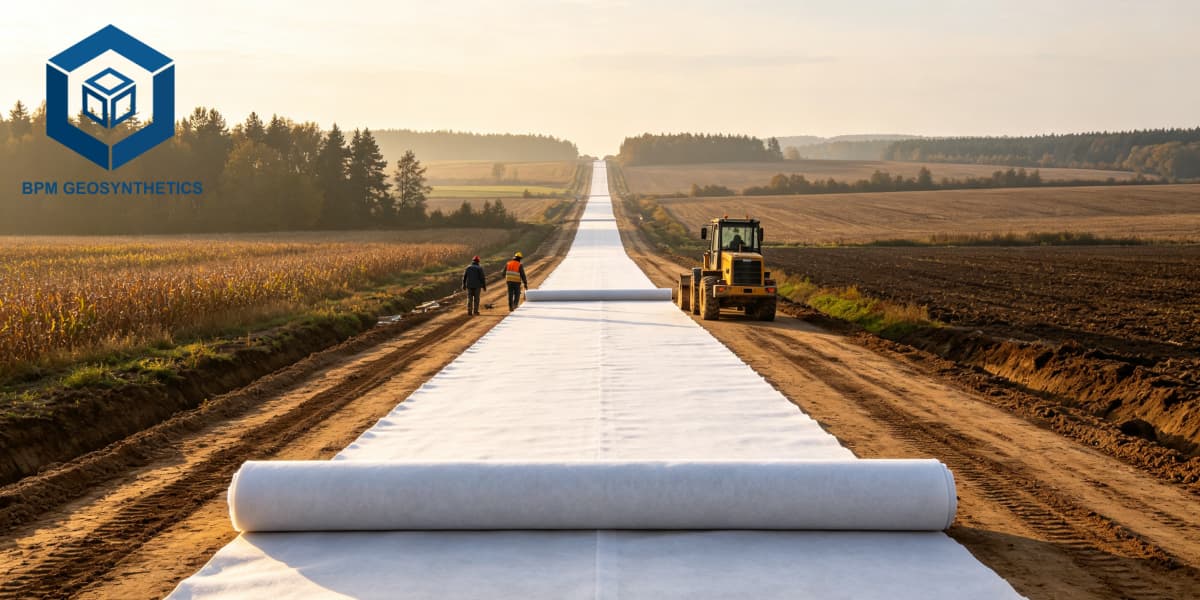
Unroll in the planned direction. Place fabric taut. Avoid wrinkles and folds. Allow slight relaxation. Overlap edges properly.
8.4 Securing the Fabric
Use staples or pins. Place anchors at intervals. Space anchors 0.5 to 1.0 meters. Secure edges firmly. Check tension regularly.
8.5 Overlap and Seaming
Minimum overlap is 0.3 meters. Use sewing for continuous seams. Stitch with appropriate thread. Seal seams if required. Ensure full coverage.
8.6 Covering and Protection
Cover immediately with soil or mulch. Place aggregate if specified. Protect from vehicle traffic. Inspect for damage. Repair any tears promptly.
8.7 Vegetation Establishment
Select appropriate seed mix. Apply seed and fertilizer. Water regularly. Monitor growth. Allow roots to establish. Vegetation provides long-term protection.
9. Geotextiles for Erosion Control Common Mistakes to Avoid
9.1 Incorrect Selection
Choosing wrong type reduces effectiveness. Match fabric to site conditions. Consider slope angle and soil type. Evaluate flow velocities. Consult experts if uncertain.
9.2 Poor Installation
Improper laying creates gaps. Gaps allow erosion. Overlaps must be adequate. Anchoring must be secure. Follow manufacturer guidelines.
9.3 Inadequate Overlap
Overlaps are critical. Water flows under short overlaps. Minimum 0.3 meters is required. Increase overlap on steep slopes. Use additional anchoring.
9.4 Ignoring UV Exposure
Sunlight degrades unprotected fabrics. UV stabilizers extend life. Cover fabric promptly. Limit exposure before cover. Use UV-resistant grades for long exposure.
9.5 Delayed Covering
Exposed fabric is vulnerable. Wind lifts edges. Sun damages material. Foot traffic causes punctures. Cover within 48 hours.
10. Comparing Geotextiles to Other Erosion Control Methods
10.1 Geotextiles vs. Riprap
Riprap uses large stones. It is effective but expensive. It requires heavy equipment. It provides habitat. Geotextile fabric under gravel is cheaper. They are easier to install. They support vegetation better. They are lighter to transport.
10.2 Geotextiles vs. Silt Fencing
Silt fences are temporary. They are commonly used on sites. They have limited capacity. They require frequent maintenance. Geotextiles are more durable. They offer longer service life. They handle higher flows.
10.3 Geotextiles vs. Hydroseeding
Hydroseeding is quick and green. It works on stable slopes. It fails on steep slopes. Rain washes seeds away. Non woven filter fabric protect seeds. They prevent washout. They ensure vegetation establishment.
10.4 Geotextiles vs. Concrete Linings
Concrete is permanent and strong. It is also expensive. It prevents infiltration. It increases runoff. Geo textile material is more sustainable. They allow infiltration. They support ecosystems. They cost less.
11. Geotextiles for Erosion Control Environmental Considerations
Geotextiles support sustainable practices.
11.1 Reducing Sediment Pollution
Sediment is a major pollutant. It harms fish and plants. Non woven geotextile filter fabric trap sediment. They prevent downstream damage. They protect water quality.
11.2 Supporting Vegetation
Vegetation stabilizes soil. It absorbs water. It provides habitat. Geotextile stabilization fabric aid plant growth. They create favorable microclimates. They improve success rates.
11.3 Using Biodegradable Options
Natural fiber geotextiles decompose. They add organic matter. They improve soil fertility. They are eco-friendly. They suit sensitive sites.
11.4 Lowering Carbon Footprint
Geo filter fabric reduce material usage. They minimize excavation. They lower transport needs. They reduce construction impacts. They support green infrastructure.
12. Geotextiles for Erosion Control Cost Analysis and ROI
Erosion control geotextiles provide excellent returns.
12.1 Initial Costs:
Material costs vary by type
Installation costs are moderate
Preparation costs are minimal
12.2 Savings Achieved:
Reduced sediment clean-up
Lower repair expenses
Less regulatory fines
Minimized downtime
Extended infrastructure life
12.3 Typical Payback Period:
Most projects recover costs in 1-2 years
Long-term savings exceed 10x initial investment
Vegetation reduces long-term maintenance
13. Geotextiles for Erosion Control Case Study Example
A highway project faced severe slope erosion. The slope was 35 degrees. Soil was silty sand. Heavy rains caused failures.
BPM Geosynthetics nonwoven geotextile was selected. It was placed on prepared slopes. It was covered with topsoil. Seed was applied. Vegetation grew within 60 days.
- Results after two years:
Zero slope failures
Full grass cover established
No sediment runoff observed
Maintenance costs reduced by 80%
Project life extended by 15 years
This demonstrates BPM Geosynthetics effectiveness.
Conclusion
Erosion is a critical challenge. It damages land and property. It costs money and resources. Geotextiles provide effective control.
BPM Geosynthetics offers comprehensive solutions. Our geotextiles suit various applications. From woven to non-woven fabrics. From biodegradable to UV-stabilized types. Each product is engineered for performance.
Proper selection is essential. Consider site conditions. Match fabric properties. Follow installation guidelines. Ensure long-term success.
Invest in BPM Geosynthetics geotextiles. Protect your slopes and shorelines. Reduce maintenance costs. Support environmental sustainability. Achieve lasting erosion control.
Contact The Best Project Material Co., Ltd. (BPM Geosynthetics) today. Our experts will assist you. We provide technical support. We offer quality products. We ensure project success.