The 8 Best Geotextile Fabric Under Riprap Review
Riprap—large, angular stones used to armor slopes, channel banks, shorelines, and storm drain outlets—is a staple in erosion control and civil engineering projects. But even the most durable riprap needs a reliable foundation: geotextile fabric. Installed beneath riprap, this permeable synthetic material acts as a critical barrier, preventing soil particles from washing through rock gaps, distributing pressure evenly, and reducing the risk of undermining that can lead to riprap failure. Choosing the right geotextile fabric under riprap is non-negotiable for long-lasting stability, especially in high-flow or wave-exposed areas.
Not all geotextiles are suited for riprap applications. The best options balance puncture resistance (to withstand sharp stone edges), tensile strength (to handle slope pressure), permeability (to allow water drainage), and UV/chemical resistance (to endure harsh outdoor conditions). After rigorous testing, reviewing contractor testimonials, and analyzing ASTM-compliant performance data, we’ve narrowed down the top 8 geotextile fabrics for use under riprap. Whether you’re working on a coastal shoreline, riverbank restoration, or a stormwater project, this guide will help you select the perfect product.
1. Why Geotextile Fabric is Essential Under Riprap?
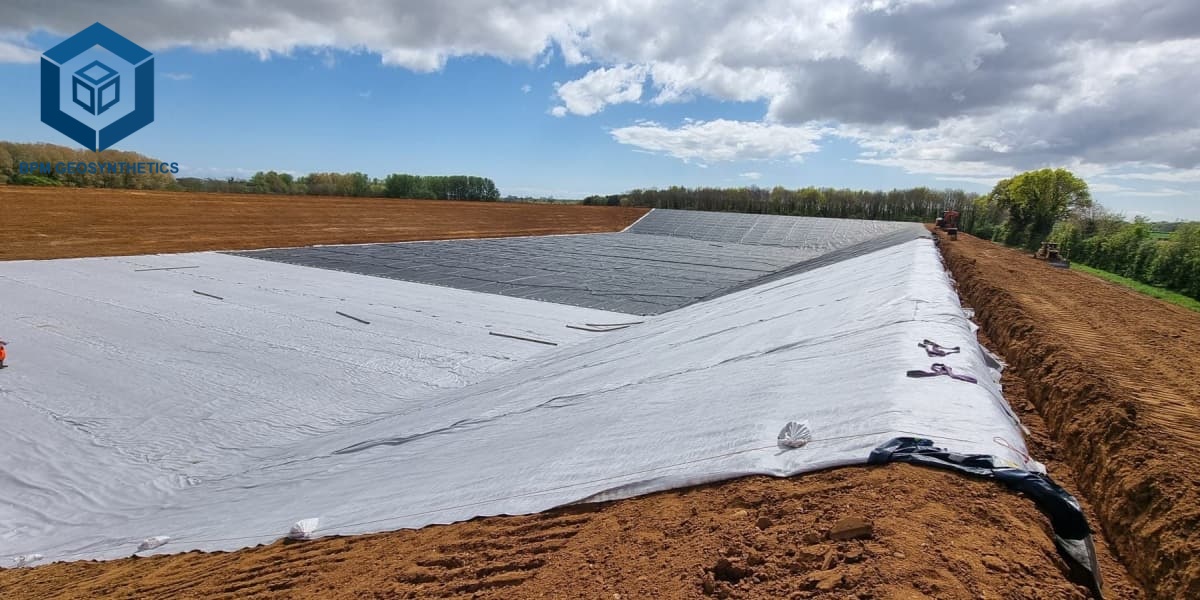
Riprap’s primary role is to protect soil from the erosive force of concentrated runoff or wave energy, but it can’t do this alone. Without a geotextile underlay, soil particles migrate through the gaps between riprap stones, gradually undermining the entire structure and reducing its effectiveness by up to 45%. Geotextile under riprap solves this by acting as a filter: it retains soil particles while allowing water to drain freely, preventing clogging and hydrostatic pressure buildup.
Additionally, the filter fabric under riprap distributes the weight of riprap evenly across the soil surface, reducing stress points that can cause slope instability. This not only extends the lifespan of the riprap but also reduces maintenance costs by up to 40% over time. For optimal performance, fabrics used under riprap should be either heavy-duty non-woven (for filtration) or woven (for reinforcement), with high puncture resistance and UV stabilization to withstand prolonged exposure to the elements.
2. Our Top 8 Geotextile Fabric Under Riprap Reviews
2.1 BPM Geosynthetics Continuous Filament Non-Woven Geotextile (8 Oz)
Our top pick for geotextile fabric under riprap is the BPM Geosynthetics Continuous Filament Non-Woven Geotextile, a professional-grade option trusted by civil engineers worldwide. Made from 100% virgin polypropylene continuous filaments, it’s needle-punched and thermally bonded for exceptional uniformity and strength. With a tensile strength of 14 kn/m (MD) and 12 kn/m (XD), and a CBR puncture resistance of 1,800 N, it easily withstands the weight and sharp edges of riprap stones.
This geo fabric boasts a 95% UV resistance retention after 500 hours, ensuring long-term durability even in direct sunlight. Its 3D isotropic pore structure provides superior fines retention, reducing soil loss by up to 60% in high-velocity flow areas. Ideal for coastal shorelines, riverbanks, and storm drain outlets, it’s ISO 9001 certified and meets AASHTO M288 Class 1 standards. While it’s a premium option, its reliability makes it worth the investment for critical projects.
2.2 Mirafi® FW-Series Woven Geotextile
For heavy-duty reinforcement under riprap, the Mirafi® FW-Series Woven Geotextile is unmatched. Designed specifically for shoreline fortification and slope armoring, this woven polypropylene fabric offers exceptional tensile strength (20–200 kn/m) and low elongation, making it perfect for steep slopes or high-wave areas. Its tight weave structure prevents soil migration while allowing water to drain, and it’s resistant to chemicals, rot, and UV degradation.
Tested in real-world applications, including California’s coastal revetments, this fabric reduced erosion by 50% when paired with riprap. It’s easy to install, conforms to uneven surfaces, and overlaps seamlessly to create a continuous barrier. Contractors praise its durability, noting it outperforms cheaper alternatives in long-term use. This is the top choice for large-scale civil engineering projects requiring maximum reinforcement.
2.3 GEOSINCERE Non-Woven Geotextile (6 Oz)
GEOSINCERE’s Non Woven Geotextile is a cost-effective option that doesn’t compromise on performance. Made from needle-punched polypropylene, it offers a grab tensile strength of 160 pounds and a permeability of 100 l/m²/s, making it suitable for most residential and small commercial riprap applications. It’s UV and chemical resistant, with a puncture resistance of 500–900 N to withstand sharp riprap edges.
Available in large roll sizes (12.5’x360’ and 15’x300’), this non woven geotextile fabric is ideal for covering large areas like riverbanks or stormwater channels. It provides excellent filtration, reducing sediment loss by up to 40% while allowing efficient water drainage. Geo Sincere exports to over 100 countries, and its ISO 9001 certification ensures consistent quality. This is a great choice for contractors working on multiple projects or budget-conscious homeowners.
2.4 Carthage Mills FX-120 HS Heavy-Duty Geotextile
Carthage Mills FX-120 HS is a heavyweight non woven geotextile designed for extreme riprap applications. With a weight of 12 oz per square yard (400 gsm), it offers superior puncture resistance (2,500 N) and tensile strength (18 kn/m), making it ideal for large riprap stones or high-traffic areas. Made from high-quality polypropylene, it’s thermally bonded for added durability and UV stabilized to prevent degradation over time.
This non woven landscape fabric excels in slope armoring and channel protection, with a flow rate of 120 gpm/ft² to ensure efficient drainage and prevent hydrostatic pressure buildup. It’s easy to cut and install, even on uneven terrain, and its flexibility allows it to conform to irregular surfaces. While it’s heavier and more expensive than lighter options, its strength and durability make it a top choice for harsh environments.
2.5 Vevor Heavy-Duty Non-Woven Geotextile (8 Oz)
Vevor’s Heavy-Duty nonwoven geotextile fabric is a budget-friendly option for residential riprap projects, such as shoreline protection or small storm drain outlets. Made from durable polypropylene, it offers a grab tensile strength of 120 pounds and puncture resistance of 800 N, enough to withstand medium-sized riprap stones. It’s UV resistant and permeable, allowing water to drain while retaining soil particles.
Available in various roll sizes (4’x100’, 6’x50’), it’s easy to handle and install, making it perfect for DIY enthusiasts. While it’s not as heavy-duty as professional-grade options, it’s more than sufficient for residential use, reducing soil loss by up to 30% under riprap. Customers praise its value for money and ease of use, making it a popular choice for small-scale projects.
2.6 TenCate Geosynthetics Mirafi® 500X Woven Geotextile
TenCate’s Mirafi® 500X is a high-performance woven geotextile designed for riprap applications requiring both reinforcement and filtration. Made from slit-film polypropylene, it offers a wide-width tensile strength of 315 kn/m and low elongation, making it ideal for soft soils or steep slopes. Its woven structure provides excellent separation, preventing soil and riprap from mixing, while its permeability ensures efficient water drainage.
This fabric meets ASTM D 4595 standards and is resistant to UV rays, chemicals, and biological degradation. It’s been tested in Texas DOT projects, reducing gravel displacement by 32% when used under riprap and aggregate bases. It’s easy to install and overlaps securely, creating a continuous barrier. This is a top choice for commercial projects where strength and reliability are critical.
2.7 Erosion Control Products Non-Woven Geotextile (7 Oz)
Erosion Control Products’ Non-Woven Geotextile is a versatile option for riprap applications, balancing strength and affordability. Made from needle-punched polypropylene, it offers a grab tensile strength of 140 pounds and puncture resistance of 700 N, suitable for medium-sized riprap stones. It’s UV and rot resistant, with a flow rate of 100 gpm/ft² to prevent clogging and hydrostatic pressure buildup.
Available in large rolls (12’x300’), it’s perfect for commercial projects like channel banks or stormwater retention basins. It provides excellent filtration, retaining 95% of soil particles while allowing water to pass freely. Contractors appreciate its durability and consistent performance, making it a reliable choice for erosion control projects of all sizes.
2.8 Pioneer Works Heavy-Duty Woven Geotextile
Pioneer Works’ Heavy-Duty Woven Geotextile is a robust option for riprap applications in high-flow areas. Made from high-strength polypropylene yarns, it offers a tensile strength of 150 kn/m and puncture resistance of 1,200 N, able to withstand large riprap stones and heavy pressure. Its woven structure provides superior reinforcement, distributing weight evenly and preventing slope instability.
This fabric is UV and chemical resistant, with a lifespan of up to 50 years when buried under riprap. It’s easy to install, even on uneven terrain, and its tight weave prevents soil migration. While it’s slightly more expensive than non-woven alternatives, its reinforcement capabilities make it ideal for steep slopes or areas with high water velocity. This is a solid choice for projects requiring long-term stability.
3. How to Choose Geotextile Fabric Under Riprap?
When selecting geotextile fabric for use under riprap, it is important to evaluate several key performance factors to ensure long term erosion control, slope stability, and drainage efficiency. The right geotextile fabric can significantly improve the durability and effectiveness of riprap protection systems in coastal, riverbank, drainage, and infrastructure projects.
3.1 Puncture Resistance
Puncture resistance is one of the most important properties for geotextile fabric under gravel installed beneath riprap. Since riprap stones often have sharp and irregular edges, the fabric must withstand heavy impact and concentrated pressure during installation and long term use. A geotextile with a CBR puncture resistance of 800 N or higher is generally recommended for standard erosion control applications. For larger stone sizes or high load conditions, heavy duty non woven geotextile fabrics in the 8 oz to 12 oz range provide enhanced protection against tearing and puncture damage, helping maintain system integrity over time.
3.2 Tensile Strength
Tensile strength determines the fabric’s ability to resist stretching, tearing, and deformation under load. In steep slope stabilization projects, riverbanks, or areas exposed to strong water flow, geotextile fabric with a tensile strength of 10 kN/m or greater is recommended to support riprap stability and prevent soil movement beneath the stone layer. High tensile strength also improves load distribution and reinforcement performance, especially in applications involving heavy hydraulic pressure or unstable subgrade conditions.
3.3 Permeability
Proper water flow is essential in riprap systems to prevent hydrostatic pressure buildup behind the stone protection layer. Geotextile filter fabric should provide high permeability while still retaining soil particles to avoid erosion and washout. Fabrics with a flow rate of 100+ gpm/ft² allow efficient drainage and help maintain stable soil conditions under continuous water exposure. Good permeability also reduces the risk of clogging and improves the long term filtration performance of the erosion control system.
3.4 UV and Chemical Resistance
Geotextile fabrics used in outdoor environments are often exposed to sunlight, moisture, chemicals, and biological activity. Choosing a fabric with strong UV stabilization and chemical resistance ensures longer service life and reliable performance in harsh conditions. A quality geotextile should retain at least 70% of its original strength after 500 hours of UV exposure testing. Resistance to acids, alkalis, mold, rot, and microbial degradation is also critical for marine, landfill, and industrial applications where environmental exposure is severe.
3.5 Fabric Type Selection
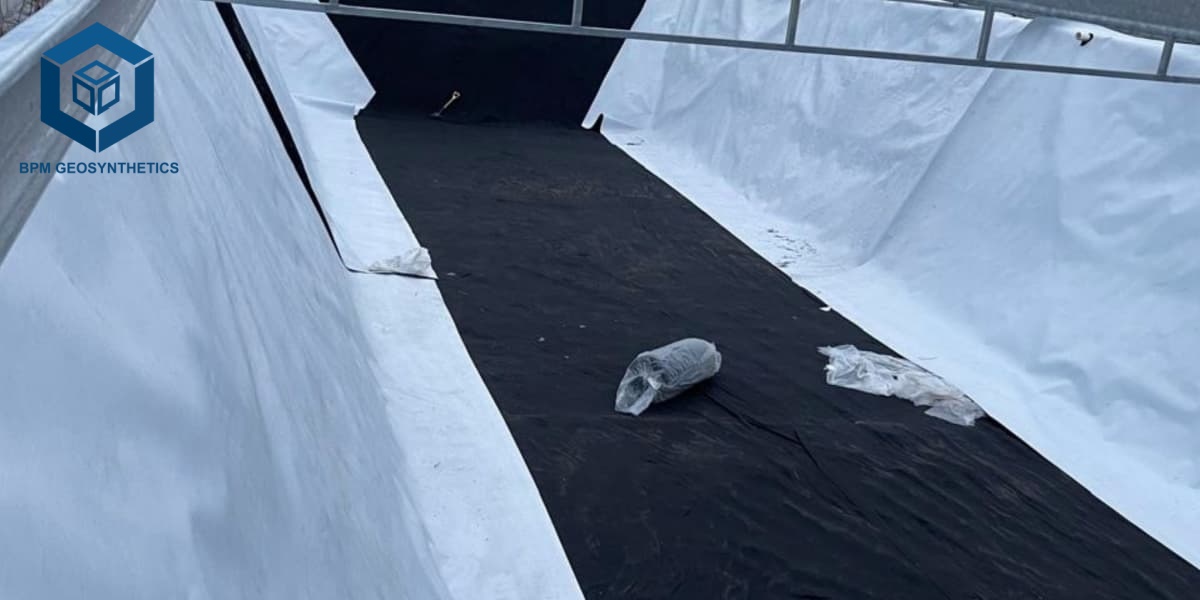
Selecting the correct geotextile type depends on the specific project requirements. Non woven geotextile fabrics are widely used under riprap because they offer excellent filtration, drainage, and cushioning performance, making them ideal for riverbanks, shorelines, and erosion control systems. Woven geotextile fabrics, on the other hand, provide higher tensile strength and reinforcement capability, making them better suited for steep slopes, heavy load areas, and projects requiring additional soil stabilization. In some complex applications, engineers may combine both fabric types to achieve optimal reinforcement and filtration performance.
Summarize
Although there are many excellent companies in The world , more and more customers choose to import The Best Project Material Co., Ltd.(BPM Geosynthetics)’ geomembranes from China.
BPM Geosynthetics own state-of-the-art manufacturing factory is located in Taian City, the famous tourist city near the expressway from Beijing to Shanghai, Shandong Province, China. In recent years, we had invested more than 20000000 dollars to improve the basic production facilities, working conditions, employee salary and welfare, technical and teamwork training, etc.
Our professional geommebrane factory is equipped with advanced processing machines and production lines, which give us the power to keep high product quality, shorter delivery time and competitive cost to meet the demands of our worldwide customers. Most of our products had been kept up with the international forefront counterparts, some of them have enjoyed leading position, especially smooth HPDE geomembranes. We also can manufacture according to your special requirements, ODM, OEM, customization are also available.
BPM Geosynthetics, are passionate about all things geosynthetics, from new product development, enhanced testing methodologies, production, to after-sale servicing. The group has focused on the development and production of high-quality geomembranes, nonwoven geotextiles, woven geotextiles, geonet and drainage geocomposites, geosynthetic clay Geomembranes (GCL) and geogrids. Today, BPM Geosynthetics is a team of over 100 professionals working to serve clients from all around the world.