How Much Does A HDPE Geomembrane Cost?
HDPE geomembrane is a high-density polyethylene impermeable liner widely used in environmental containment and hydraulic engineering. It functions as a barrier layer that prevents liquid or gas migration in applications such as landfills, mining tailings, water reservoirs, and aquaculture ponds.
Technical Parameters and Specifications
The cost of a HDPE geomembrane is strongly influenced by thickness, density, mechanical properties, and international standards compliance. Procurement teams usually evaluate these parameters before determining how much a HDPE geomembrane costs for a project.
| Parameter | Typical Value | Relevant Standard |
|---|---|---|
| Thickness | 0.5 mm – 3.0 mm | ASTM D5199 |
| Density | ≥ 0.94 g/cm³ | ASTM D1505 |
| Tensile Strength | ≥ 15 kN/m | ASTM D6693 |
| Elongation at Break | ≥ 700% | ASTM D6693 |
| Puncture Resistance | ≥ 480 N | ASTM D4833 |
| Carbon Black Content | 2.0–3.0% | ASTM D4218 |
Structure and Material Composition
Understanding material composition is essential when analyzing how much a HDPE geomembrane costs, as raw material quality directly affects durability and price.
High-density polyethylene resin – Primary impermeable material with high chemical resistance.
Carbon black additive – Provides UV protection and increases service life.
Antioxidants – Prevent thermal degradation during long-term exposure.
Stabilizers – Improve resistance to environmental stress cracking.
Optional textured surface – Enhances friction performance for slope applications.
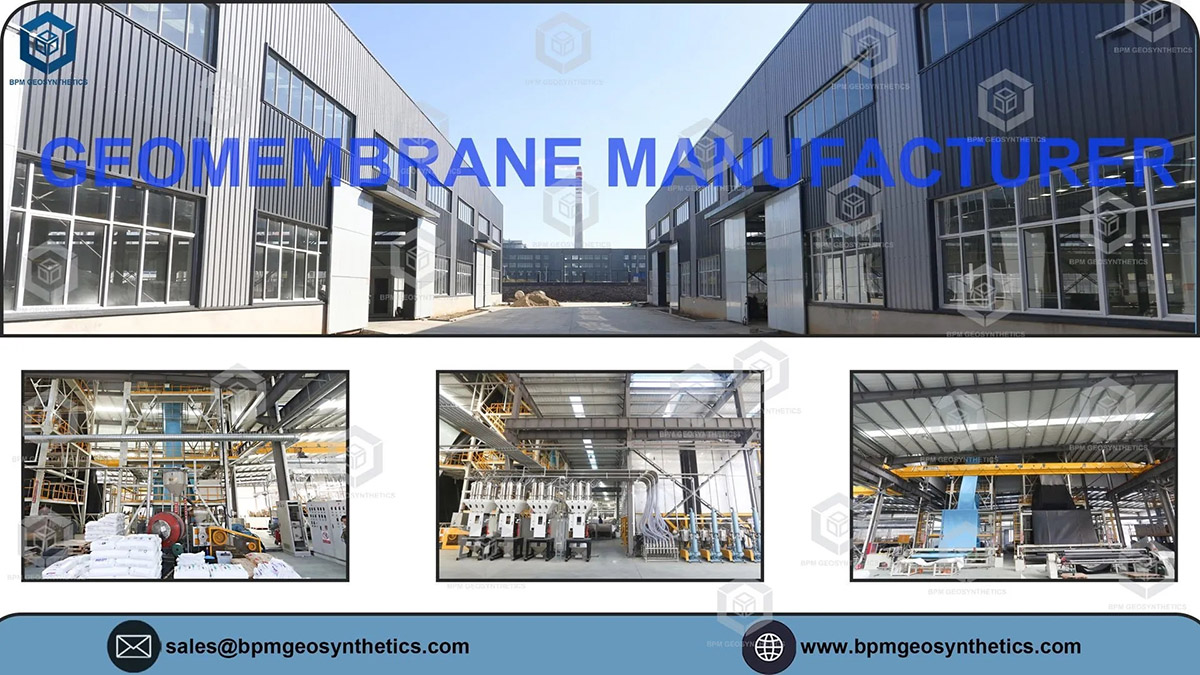
Manufacturing Process
The manufacturing method has a direct impact on performance and therefore on how much a HDPE geomembrane costs in engineering procurement.
Raw Material Preparation – Virgin HDPE resin mixed with carbon black and stabilizers.
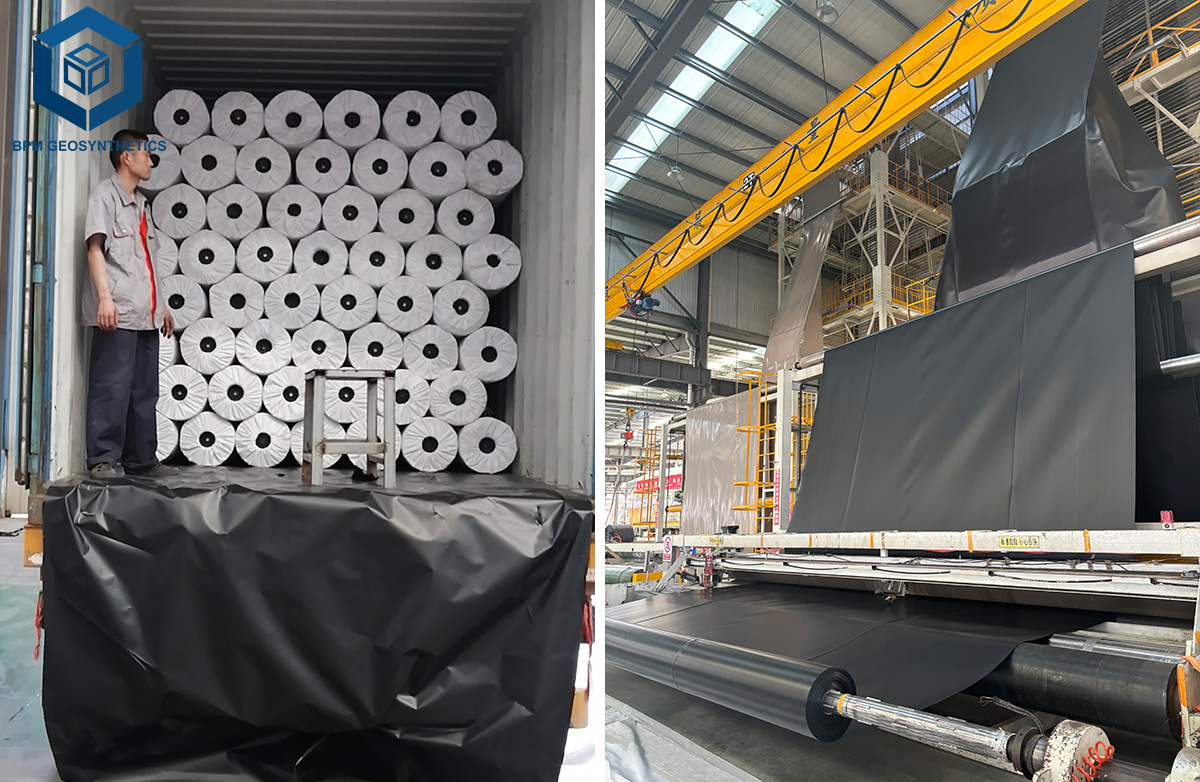
Extrusion Process – Material is melted and processed through flat die extrusion equipment.
Calendering and Thickness Control – Precision rollers maintain uniform thickness.
Cooling Stage – Controlled cooling ensures dimensional stability.
Quality Inspection – Includes tensile testing, thickness measurement, and visual inspection.
Roll Packaging – Large rolls typically 5–8 meters wide and 50–100 meters long.
Industry Material Comparison
| Material | Typical Thickness | Service Life | Relative Cost | Main Applications |
|---|---|---|---|---|
| HDPE Geomembrane | 0.75–2.5 mm | 20–50 years | Medium | Landfills, mining, reservoirs |
| LDPE Geomembrane | 0.5–2.0 mm | 10–20 years | Lower | Temporary containment |
| PVC Liner | 0.5–1.5 mm | 8–15 years | Medium | Ponds, decorative water features |
| Concrete Lining | 80–150 mm | 30+ years | High | Permanent hydraulic structures |
Application Scenarios
Cost analysis is usually conducted during project planning. The question “how much does a HDPE geomembrane cost” commonly arises in the following engineering sectors.
Landfill containment systems for municipal waste projects
Mining heap leach pads and tailings storage facilities
Industrial wastewater treatment ponds
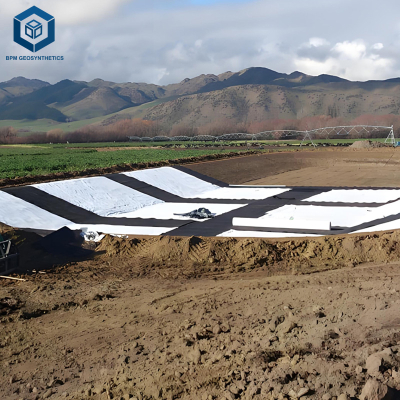
Agricultural irrigation reservoirs
Aquaculture pond lining systems
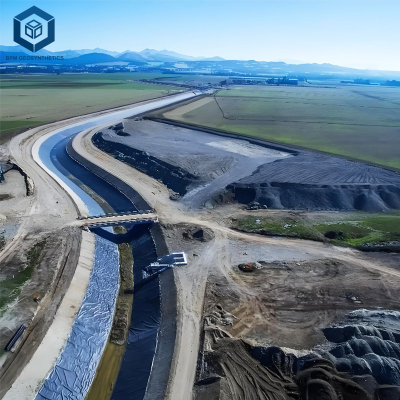
Canal and water conservation infrastructure
Key Cost Drivers and Engineering Solutions
The final answer to how much a HDPE geomembrane costs depends on several technical and logistical factors.
Thickness specification – Thicker liners increase material consumption but improve durability.
Surface type – Textured geomembranes typically cost 10–20% more than smooth liners.
Project size – Large-scale projects benefit from lower per-square-meter pricing.
Installation complexity – Welding, slope work, and anchoring systems increase project cost.
Risk Warnings and Avoidance Recommendations
Avoid selecting thickness below engineering requirements to reduce short-term costs.
Ensure suppliers provide laboratory test reports and certification.
Confirm compatibility with chemical exposure in mining or industrial applications.
Verify installation contractor qualifications for geomembrane welding.
Procurement and Selection Guide
Engineering buyers evaluating how much a HDPE geomembrane costs should follow a structured procurement process.
Define containment requirements and environmental conditions.
Select appropriate geomembrane thickness based on engineering design.
Confirm compliance with ASTM or GRI industry standards.
Evaluate supplier production capacity and quality control.
Request installation guidelines and welding procedures.
Compare total project cost including transport and installation.
Engineering Case Example
A municipal wastewater reservoir project required a containment liner covering 35,000 m². Engineers selected a 1.5 mm HDPE geomembrane to meet long-term durability requirements.
Material procurement cost averaged approximately $2.1–$3.4 per m², depending on supplier and order volume. Installation and welding increased the total system cost to approximately $4.5–$7.0 per m². The final system achieved complete hydraulic containment and is expected to operate for more than 25 years.
Frequently Asked Questions
1. How much does a HDPE geomembrane cost per square meter?
Typical material cost ranges between $1.5 and $4.5 per m² depending on thickness and order volume.
2. What thickness is most commonly used?
1.0 mm to 1.5 mm is commonly used for reservoirs and aquaculture ponds.
3. Why does thickness affect price significantly?
Thicker liners require more raw material and provide higher puncture resistance.
4. Does surface texture increase cost?
Yes, textured geomembranes generally cost more due to additional manufacturing steps.
5. What is the lifespan of HDPE geomembrane?
Properly installed liners can last 20–50 years depending on environmental conditions.
6. Is installation included in the material price?
Material and installation are typically quoted separately.
7. How wide are standard rolls?
Common roll widths range from 5 to 8 meters.
8. Can HDPE geomembrane resist chemicals?
Yes, it provides strong resistance to acids, alkalis, and many industrial chemicals.
9. What welding method is used?
Hot wedge welding and extrusion welding are standard installation methods.
10. How do large projects reduce cost?
Bulk procurement and optimized panel layout reduce material waste and logistics costs.
Request Technical Information or Quotation
Engineering buyers evaluating how much a HDPE geomembrane costs may request detailed specifications, laboratory reports, installation guidance, and project quotations. For procurement discussions, provide project area, required thickness, and installation conditions to receive accurate pricing and technical recommendations.
Author Expertise (E-E-A-T)
This article was prepared by an engineering consultant with more than ten years of experience in geomembrane material selection, containment system design, and environmental infrastructure projects. The information reflects common industry practices used by EPC contractors, infrastructure developers, and engineering procurement teams.