Handling Heavy Geomembrane Rolls on Construction Sites
The safe and efficient handling of heavy geomembrane rolls is a critical operational challenge on large-scale containment projects. Handling heavy geomembrane rolls on construction sites requires a combination of appropriate lifting equipment, trained personnel, and well-defined procedures to prevent damage to the material and ensure worker safety. This guide provides a comprehensive engineering analysis of best practices for handling heavy geomembrane rolls, covering equipment selection, site logistics, handling techniques, and safety protocols. For site engineers, procurement managers, and EPC contractors, mastering the handling of heavy rolls is essential for maintaining material integrity, optimizing installation productivity, and ensuring a safe work environment.
What is Handling Heavy Geomembrane Rolls on Construction Sites
Handling heavy geomembrane rolls on construction sites refers to the systematic process of moving, positioning, and maneuvering large-format geomembrane rolls—typically weighing 1,000 to 4,000 kg—within the project site environment. This process encompasses receiving, staging, transporting to the installation area, and positioning for deployment. In the engineering context, heavy roll handling involves site logistics planning, equipment selection (forklifts, cranes, roller dollies), and the development of safe working procedures. For procurement and project management, efficient handling of heavy rolls directly impacts installation productivity, material quality, and site safety, making it a critical element of project planning and execution.
Technical Specifications of Geomembrane Rolls
Understanding the physical characteristics of geomembrane rolls is essential for handling heavy geomembrane rolls on construction sites. The following table outlines the key specifications and their impact on handling.
| Parameter | Typical Value | Handling Significance |
|---|---|---|
| Roll Weight | 500 – 4,000 kg (1,100 – 8,800 lbs) | Determines required lifting equipment capacity and site logistics. |
| Roll Diameter | 0.8 – 1.8 m (2.6 – 5.9 ft) | Affects handling clearances and storage spacing. |
| Roll Width | 4.0 – 8.0 m (13 – 26 ft) | Requires adequate site access and maneuvering space. |
| Core Diameter | 150 – 250 mm (6 – 10 in) | Critical for core lifting; must match lifting beam or fork attachments. |
| Core Material | Steel or heavy-duty PVC | Steel cores provide better support for heavy rolls. |
| Center of Gravity | Centered on roll axis | Affects lifting stability; misalignment can cause tipping. |
Equipment for Handling Heavy Geomembrane Rolls
Effective handling heavy geomembrane rolls on construction sites requires a range of specialized equipment. The following table details the key equipment types and their applications.
| Equipment | Specification | Application |
|---|---|---|
| Forklift with Roll Clamp | Capacity: 3,000 – 6,000 kg; padded jaws | Lifting and moving rolls horizontally; clamp pressure must be controlled to avoid surface damage. |
| Lifting Beam (Core Lifting) | Adjustable length; inserts through core | Lifting rolls vertically or for precise positioning; preferred method for heavy rolls. |
| Mobile Crane | Capacity: 5 – 20 tonnes; with spreader bar | Lifting rolls over obstacles or into position on slopes. |
| Roller Dollies | V-shaped cradle with wheels | Moving rolls horizontally across the site without lifting equipment. |
| Slings and Edge Protectors | Wide fabric slings (min 300mm) | Used with cranes; edge protectors prevent cutting into the wrap. |
| Ground-level Positioners | Hydraulic or manual jacks | Lifting rolls for positioning at the deployment point. |
Step-by-Step Handling Procedure
The following procedure outlines the best practices for handling heavy geomembrane rolls on construction sites:
Pre-handling Inspection: Inspect the roll for any existing damage. Check the packaging and the core for integrity. Document the roll number and condition.
Site Access Assessment: Ensure the access route is clear of obstacles, is level, and has adequate load-bearing capacity for the handling equipment.
Equipment Selection: Select the appropriate lifting equipment based on the roll weight, site conditions, and the distance to the deployment area.
Lifting from the Core: For heavy rolls, always lift from the core using a lifting beam. This prevents damage to the geomembrane surface.
Transport to Deployment Area: Move the roll slowly and steadily. Avoid sudden stops or turns. Use spotters to guide the operation.
Positioning for Deployment: Lower the roll onto the ground-level positioner or directly into the deployment cradle. Ensure the roll is stable and oriented correctly.
Post-handling Inspection: Inspect the roll again for any handling-related damage. Document any issues.
Performance Comparison: Handling Methods
For site managers, the following comparison highlights the advantages and disadvantages of different handling methods for handling heavy geomembrane rolls on construction sites.
| Method | Efficiency | Risk of Damage | Equipment Cost | Training Required | Typical Applications |
|---|---|---|---|---|---|
| Core Lifting (Beam + Crane/Forklift) | High | Low | Moderate-High | High | Heavy rolls, long distances, precise positioning |
| Forklift with Roll Clamp | Moderate-High | Moderate (Risk of surface indentation) | High | Moderate-High | Medium rolls, standard site conditions |
| Roller Dolly (Manual) | Low-Moderate | Low (If used on smooth surfaces) | Low | Low | Short distances, flat ground, small to medium rolls |
| Vacuum Lifter | Moderate | Low (If properly maintained) | High | Moderate | Smooth rolls, clean surfaces |
Safety Considerations
Handling heavy geomembrane rolls on construction sites presents significant safety risks that must be managed:
Lifting Hazards: Heavy rolls can cause serious injury if not properly secured. Use certified lifting equipment and inspect rigging before each lift.
Roll Instability: Rolls can roll or tip unexpectedly. Use chocks or supports to secure rolls during handling and storage.
Crushing and Pinch Points: Keep personnel clear of the roll's path. Use spotters and clear communication.
Slip and Trip Hazards: Ensure the handling area is clean and dry. Remove debris from the access route.
Equipment Maintenance: Regularly inspect and maintain all handling equipment to prevent mechanical failure.
Common Industry Problems and Engineering Solutions
Even with proper procedures, issues can arise. The following are four common problems related to handling heavy geomembrane rolls on construction sites and their engineering solutions.
Problem: Roll shifting during transport, causing damage.
Root Cause: Inadequate securing on the transport vehicle or uneven terrain.
Solution: Use chocks and straps to secure the roll during transport. Choose the shortest, smoothest route.Problem: Surface indentations from forklift clamps.
Root Cause: Clamp pressure is too high or clamp pads are worn.
Solution: Use clamps with padded jaws and adjust the pressure to the minimum required. Inspect pads regularly.Problem: Difficulty maneuvering rolls in tight spaces.
Root Cause: Inadequate site access planning.
Solution: Plan the site layout with roll handling in mind. Use smaller rolls or split shipments if access is limited.Problem: Damage to the roll edge from slings.
Root Cause: Using narrow slings that concentrate force on the edge.
Solution: Use wide fabric slings (minimum 300mm) and add edge protectors under the slings.
Risk Factors and Prevention Strategies
Implementing effective handling heavy geomembrane rolls on construction sites requires proactive risk management:
Risk: Improper Equipment Selection. Prevention: Assess the roll weight and site conditions before selecting equipment.
Risk: Operator Error. Prevention: Provide training on proper handling techniques. Conduct daily pre-shift safety briefings.
Risk: Environmental Exposure. Prevention: Avoid handling in high winds or wet conditions. Protect the roll from mud and dust.
Risk: Subfloor Issues. Prevention: Ensure the handling and deployment area is level and stable.
Procurement Guide: Specifying Handling Requirements
For procurement managers, specifying handling requirements as part of the project planning ensures that handling heavy geomembrane rolls on construction sites is properly addressed:
Traffic Load Evaluation: Assess the site access and the expected number of roll movements.
Specification Verification: Include handling requirements in the material purchase order.
Certifications: Require that all lifting equipment has current inspection certificates.
Supplier Capability: Evaluate the supplier's ability to provide handling instructions and on-site support.
Quality Control: Specify that handling is part of the receiving and installation quality plan.
Sample Testing: Not applicable.
Warranty Evaluation: Review the warranty terms for handling-related damage.
Engineering Case Study: Heavy Roll Handling on a Landfill Project
Project Type: Municipal Solid Waste Landfill Base Liner Installation
Location: Eastern United States
Project Size: 30 hectares of 2.0mm HDPE liner
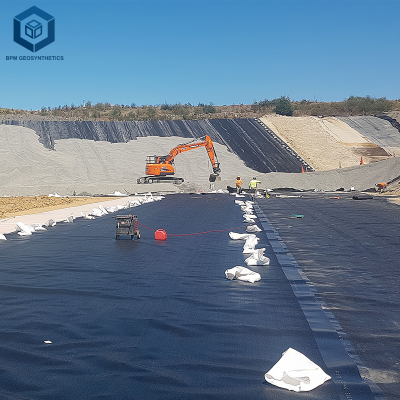
Product Specification: Handling heavy geomembrane rolls on construction sites was a major logistical challenge due to the site's limited access and the weight of the rolls (up to 2,800 kg).
Challenge: The project site had a single access road with a sharp turn, and the installation area was 500 meters from the storage area. The ground was uneven and became muddy after rain.
Implementation: A detailed handling plan was developed. A 5,000 kg forklift with padded roll clamps was used for horizontal transport. A mobile crane was used to lift rolls onto the ground-level positioners. The access road was graded and covered with gravel to prevent mud issues. All handlers received training on safe lifting techniques.
Results and Benefits: All 120 rolls were handled without any damage to the geomembrane. The project remained on schedule, and there were no safety incidents related to roll handling. The handling plan was documented and became a standard procedure for future projects.
FAQ Section
What is the safest way to handle heavy geomembrane rolls?
What equipment is needed for handling heavy geomembrane rolls?
Can a forklift with standard forks be used to move geomembrane rolls?
What is the maximum weight of a geomembrane roll that can be handled manually?
How should rolls be positioned for deployment?
What are the risks of handling heavy rolls in windy conditions?
How can I prevent damage to the roll surface during handling?
What training is required for handling heavy geomembrane rolls?
What should I do if a roll is damaged during handling?
How can site layout be optimized for heavy roll handling?
Request Technical Support or Quotation
Optimizing handling heavy geomembrane rolls on construction sites is essential for project safety and efficiency. Our engineering team provides application-specific guidance and on-site training.
Request a detailed handling plan customized for your project.
Request on-site training for handling equipment operators.
Download technical datasheets for handling equipment.
Request a consultation on site layout and logistics planning.
About the Author
This guide was developed by a team of senior engineers and B2B technical consultants with extensive experience in geosynthetics installation, materials handling, and large-scale EPC projects across the mining, waste management, and infrastructure sectors. Our expertise spans from material logistics to field deployment, ensuring that procurement and engineering decisions are grounded in technical reality and industry best practices.