Export HDPE Liner to Middle East Project: Engineering Guide
What is Export HDPE Liner to Middle East Project?
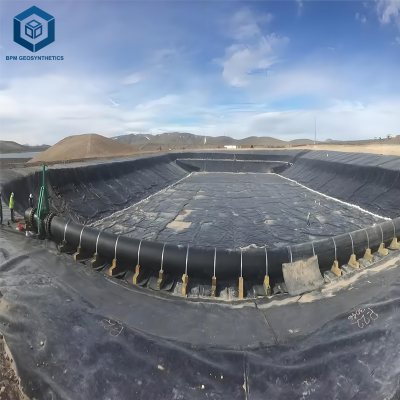
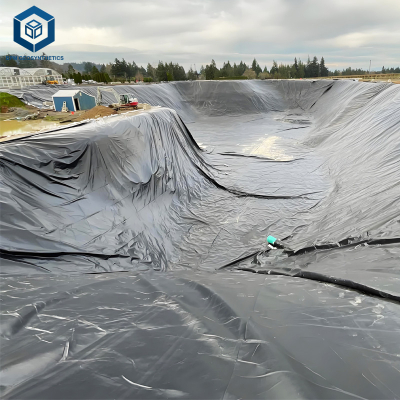
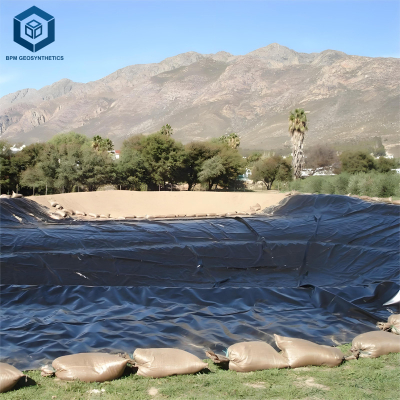
Export HDPE liner to Middle East project refers to the international supply of high-density polyethylene geomembrane for large-scale containment applications in Gulf Cooperation Council (GCC) countries — including Saudi Arabia, UAE, Qatar, Kuwait, Oman, and Bahrain. For procurement managers, EPC contractors, and project developers, understanding export HDPE liner to Middle East project is critical due to extreme environmental conditions: ambient temperatures up to 50°C, high UV radiation (> 4,000 hours/year), saline groundwater, and large-scale infrastructure projects (landfills, desalination ponds, mining, tailings dams). Key specifications: GRI GM13 compliance, UV resistance (carbon black 2–3%, dispersion Category 1), high OIT (≥ 100 min, HP-OIT ≥ 400 min), and high PENT (≥ 500 hours) for long-term durability. This guide provides engineering data on export HDPE liner to Middle East project: material selection for hot climates, shipping logistics (40 ft containers, lead time 6–12 weeks), documentation (certificate of origin, Gulf认证), and procurement for landfill, industrial wastewater, and mining projects.
Technical Specifications for Export HDPE Liner to Middle East Project
The table below defines critical parameters when exporting HDPE liner to Middle East projects.
| Parameter | Middle East Specification | Standard (Temperate) | Engineering Importance | |
|---|---|---|---|---|
| Carbon Black Content (ASTM D1603) | 2.0 – 3.0% (Category 1 dispersion) | 2.0 – 3.0% | High UV radiation in Middle East requires maximum UV protection. Category 1 dispersion essential.}, | |
| Standard OIT (ASTM D3895) | ≥ 100 minutes (≥ 120 min recommended) | ≥ 100 minutes | High temperatures accelerate antioxidant depletion. Higher OIT extends service life.}, | |
| High Pressure OIT (ASTM D5885) | ≥ 400 minutes (≥ 500 min recommended) | ≥ 400 minutes | More sensitive measure for high-temperature service.}, | |
| PENT Stress Crack Resistance (ASTM F1473) | ≥ 500 hours (≥ 800 h recommended) | ≥ 500 hours | Thermal cycling and high stress require higher PENT.}, |
| Thickness | 1.5 – 2.0 mm (1.5 mm standard; 2.0 mm for high head) | 1.0 – 1.5 mm | Middle East projects often specify 1.5 mm minimum due to harsh conditions.}, |
| Roll Width (for shipping efficiency) | 5 – 7 m (optimized for 40 ft containers) | 5 – 8 m | 7 m width maximizes container loading (6 rolls per 40 ft).}, |
| UV Resistance (accelerated weathering) | ≥ 80% tensile retention after 5,000 hours UV | ≥ 80% after 3,000 hours | Extended UV exposure in Middle East requires higher UV stability.}, |
Key takeaway: Export HDPE liner to Middle East project requires enhanced UV resistance (carbon black Category 1), higher OIT (≥ 120 min recommended), and PENT ≥ 800 h for hot climate durability.
Material Structure and Composition for Export HDPE Liner to Middle East Project
Understanding material requirements for Middle East conditions when exporting HDPE liner.
| Component | Material | Middle East-Specific Requirement | |
|---|---|---|---|
| Base Resin | PE100/PE4710 bimodal (hexene/octene) | Higher PENT (≥ 800 h) recommended for thermal cycling.}, | |
| Carbon Black | 2.0–3.0% furnace black, Category 1 dispersion | Highest UV protection. Poor dispersion causes cracking under intense sun.}, | |
| Antioxidant Package | Primary + secondary (hindered phenol + phosphite) | Higher OIT (120+ min) for high-temperature service (50°C+ ambient).}, |
Engineering insight: When you export HDPE liner to Middle East project, specify carbon black dispersion Category 1 (not just Category 2). Poor dispersion leads to stress cracking under intense UV.
Manufacturing Process: Quality Control for Export HDPE Liner to Middle East Project
Production steps critical for Middle East-bound HDPE liner quality.
Resin compounding: Use virgin PE100 resin with enhanced antioxidant package (OIT ≥ 120 min).
Extrusion: Flat die extrusion with online thickness monitoring. Thicker liner (1.5–2.0 mm) for Middle East projects.
Cooling: Controlled cooling to prevent residual stress that could cause cracking under thermal cycling.
Quality inspection: Full GRI GM13 testing plus accelerated UV aging (ASTM D7238) for Middle East conditions.
Packaging for export: UV-protective wrapping, steel strapping, edge protectors. Labels must include export documentation.
Performance Comparison: HDPE Liner Grades for Export HDPE Liner to Middle East Project
Comparing different specification levels for Middle East projects.
| Specification Level | Carbon Black Dispersion | OIT (min) | PENT (hours) | Expected Life (Middle East) | Suitable for Export? |
|---|---|---|---|---|---|
| Standard GRI GM13 | Category 2 | ≥ 100 | ≥ 500 | 10–15 years | Minimum acceptable |
| Middle East Enhanced | Category 1 | ≥ 120 | ≥ 800 | 20–25 years | Recommended for export HDPE liner to Middle East project. |
| Premium (high-temp) | Category 1 | ≥ 150 | ≥ 1,000 | 25–30+ years | For extreme conditions (desert, high head, hazardous waste) |
Conclusion: For export HDPE liner to Middle East project, specify enhanced grade: Category 1 carbon black, OIT ≥ 120 min, PENT ≥ 800 h.
Industrial Applications for Export HDPE Liner to Middle East Project
Typical Middle East projects requiring HDPE liner export.
Municipal solid waste landfills (Saudi Arabia, UAE, Qatar): 1.5–2.0 mm HDPE, GRI GM13, enhanced UV resistance.
Industrial wastewater treatment ponds (petrochemical, desalination): 1.5 mm HDPE, chemical-resistant.
Mining heap leach pads (phosphate, gold): 1.5 mm HDPE, high PENT for acidic conditions.
Desalination brine ponds: 1.5–2.0 mm HDPE, high UV resistance, saline exposure.
Potable water reservoirs: 1.0–1.5 mm HDPE with NSF/ANSI 61 certification.
Oil and gas secondary containment: 1.5 mm HDPE, chemical-resistant.
Common Industry Problems When Export HDPE Liner to Middle East Project
Real-world issues to avoid during export HDPE liner to Middle East project.
Problem 1: UV degradation (cracking) within 5 years — inadequate carbon black
Root cause: Carbon black dispersion Category 2 or 3 used. Middle East UV (4,000+ hours/year) accelerated cracking.
Engineering solution: Specify Category 1 carbon black dispersion. Request ASTM D5596 photomicrographs with Category 1 classification. This is critical for export HDPE liner to Middle East project.
Problem 2: Low OIT leads to embrittlement after 8 years (high ambient temperature)
Root cause: OIT < 100 minutes. High temperatures (50°C+) depleted antioxidants rapidly.
Solution: Specify OIT ≥ 120 minutes, HP-OIT ≥ 500 minutes for Middle East projects.
Problem 3: Shipping delays — container availability, port congestion
Root cause: Jebel Ali, Dammam, Hamad ports experience congestion. Solution: Book shipping 4–6 weeks in advance. Use experienced freight forwarder. Add 2–4 weeks buffer in schedule when you export HDPE liner to Middle East project.
Problem 4: Customs clearance delays (missing documentation, Gulf认证)
Root cause: Missing certificate of origin, SASO (Saudi), ESMA (UAE), or other local certifications.
Solution: Obtain required Gulf认证 before shipping. Work with local customs broker. Include documentation checklist in procurement.
Risk Factors and Prevention Strategies for Export HDPE Liner to Middle East Project
Risk: Supplier not familiar with Middle East UV requirements: Ships standard Grade 2 carbon black. Mitigation: Specify Category 1 carbon black dispersion in purchase order. Request test report.
Risk: Resin supply chain disruption (PE100 shortage): Delays production. Mitigation: Choose supplier with in-house resin inventory (≥ 500 tonnes).
Risk: Shipping damage during ocean transit (roll deformation, UV wrap tear): Container humidity, rough handling. Mitigation: Specify steel cores, edge protectors, steel strapping, desiccant bags.
Risk: Local regulations change (new Gulf standards): Non-compliance at customs. Mitigation: Engage local regulatory consultant. Verify current requirements before shipping.
Procurement Guide: How to Export HDPE Liner to Middle East Project
Follow this 8-step checklist for B2B purchasing decisions.
Determine project location and local regulations: Saudi (SASO), UAE (ESMA), Qatar (QGBCM), Kuwait (KOWS), Oman (DGSM).
Specify enhanced material grade: Carbon black Category 1, OIT ≥ 120 min, HP-OIT ≥ 500 min, PENT ≥ 800 hours.
Request GRI GM13 test reports with Category 1 dispersion photomicrographs.
Optimize roll dimensions for container shipping: 7 m width × 100–120 m length maximizes 40 ft container loading (6 rolls per container).
Obtain required Gulf certifications: Certificate of origin, SASO/SABER (Saudi), ESMA (UAE), or equivalent.
Book shipping with experienced freight forwarder: Jebel Ali (DXB), Dammam, Hamad ports. Allow 4–6 weeks ocean transit from Asia.
Arrange customs clearance in advance: Use local customs broker. Prepare documentation (commercial invoice, packing list, bill of lading, certificate of origin, test reports).
Include insurance for ocean transit: 1–2% of CIF value covers damage or loss.
Engineering Case Study: Export HDPE Liner to Middle East Project — Saudi Landfill
Project type: Municipal solid waste landfill liner (Saudi Arabia).
Location: Riyadh, Saudi Arabia (ambient 45°C, high UV).
Project size: 150,000 m², 1.5 mm HDPE.
Export HDPE liner to Middle East project specification: Enhanced grade: Category 1 carbon black, OIT 128 min, HP-OIT 520 min, PENT 850 hours. Roll dimensions: 7 m × 110 m (770 m²/roll). 195 rolls shipped in 33 × 40 ft containers.
Logistics: Shipped from China to Jeddah Port (5 weeks). Local customs clearance with SASO certification (1 week). Total lead time: 14 weeks (8 weeks production + 6 weeks shipping/customs).
Results after 3 years: No UV degradation (visual inspection). Surface intact, no cracking. OIT retention 92%. This case demonstrates that proper export HDPE liner to Middle East project specification ensures long-term performance in harsh desert conditions.
Frequently Asked Questions: Export HDPE Liner to Middle East Project
Q1: What is the minimum UV protection required for Middle East HDPE liner?
Carbon black content 2.0–3.0% with Category 1 dispersion (ASTM D5596). Category 2 or 3 is insufficient for Middle East UV levels (> 4,000 hours/year).
Q2: What OIT is recommended for export HDPE liner to Middle East project?
Standard OIT ≥ 120 minutes (ASTM D3895), High Pressure OIT ≥ 500 minutes (ASTM D5885). Higher than GRI GM13 minimum of 100/400 minutes.
Q3: How long does shipping take from Asia to Middle East ports?
Ocean transit: 4–6 weeks from China/India to Jebel Ali (UAE), Dammam (Saudi), or Hamad (Qatar). Add 2–4 weeks for production and 1–2 weeks for customs clearance. Total lead time: 8–12 weeks.
Q4: What certifications are required to export HDPE liner to Saudi Arabia?
SASO (Saudi Standards, Metrology and Quality Organization) and SABER (electronic platform for product safety). Certificate of origin required. Some projects require GRI GM13 compliance.
Q5: Can I use standard (temperate climate) HDPE liner in Middle East?
Not recommended. Standard HDPE with Category 2 carbon black and OIT 100 min may experience UV cracking within 5–8 years. Specify enhanced grade for export HDPE liner to Middle East project.
Q6: What is the typical container loading for HDPE liner rolls?
40 ft HC container: 6 rolls of 7 m × 100–120 m (4,200–5,040 m²). 2.0 mm liner reduces m² per container (heavier rolls). 1.5 mm liner: ~5,000 m² per container.
Q7: Is textured HDPE required for Middle East projects?
Textured recommended for slopes > 3H:1V. Smooth acceptable for base liners. Textured adds 1–3 weeks to lead time and 10–20% to cost.
Q8: What PENT value is recommended for high-temperature service?
Minimum 500 hours per GRI GM13. For Middle East (50°C ambient), specify PENT ≥ 800 hours for safety margin.
Q9: How to prevent roll damage during ocean transit to Middle East?
Specify steel cores (3 or 6 inch), edge protectors, steel strapping (4–6 straps), UV wrap, and desiccant bags in container. Inspect upon arrival.
Q10: What is the typical cost premium for export HDPE liner to Middle East project vs. standard?
Enhanced grade (Category 1 carbon black, higher OIT) adds 5–10% to material cost. Shipping adds €2–4/m². Total premium 10–20% vs. local supply in temperate regions.
Request Technical Support or Quotation for Export HDPE Liner to Middle East Project
For assistance in export HDPE liner to Middle East project, including specification development, Gulf certification, logistics coordination, or supplier selection, our technical procurement team is available.
Request a quotation – Provide quantity (m²), thickness, local port, and required certifications (SASO/ESMA).
Request engineering samples – Receive HDPE samples with Category 1 carbon black dispersion and OIT test reports.
Download technical specifications – Middle East material specification guide, shipping logistics checklist, and Gulf certification requirements.
Contact technical support – Supplier verification, certification assistance, and logistics coordination for export HDPE liner to Middle East project.
About the Author
This guide on export HDPE liner to Middle East project was written by Dipl.-Ing. Hendrik Voss, a civil engineer with 19 years of experience in geosynthetics and international logistics. He has managed over 50 HDPE liner export projects to Middle East countries (Saudi Arabia, UAE, Qatar, Kuwait, Oman), specializing in UV-resistant material specification, Gulf certification compliance, and container logistics for landfill, mining, and water containment projects. His work is referenced in GRI and ASTM D35 committee discussions on geomembrane export standards for hot climates.