What is Geotextile Price Per Square Meter?
1. Introduction
Sometimes it's quite hard to pinpoint a single question among those that most concern engineers, procurement professionals, and project managers. One such question can be: "What is the geotextile price per square meter?" To those who have ever been involved in buying such materials, the result hardly ever comes out as a single, crystal-clear number. Prices may vary from mere pennies a square meter for plain, basic products, to several dollars a square meter for premium, high-performance units.
This extensive guide aims at uncovering the mystery of geotextile price by highlighting the major cost-causing factors, showing updated market figures for various types of products, and discussing three case studies through which we show how knowledgeable buyers handle this complicated situation. Regardless of whether your requirement is for a large infrastructure project or just a small-scale erosion control work, getting to grips with the details of geotextile pricing will help you make wise, cost-saving decisions.
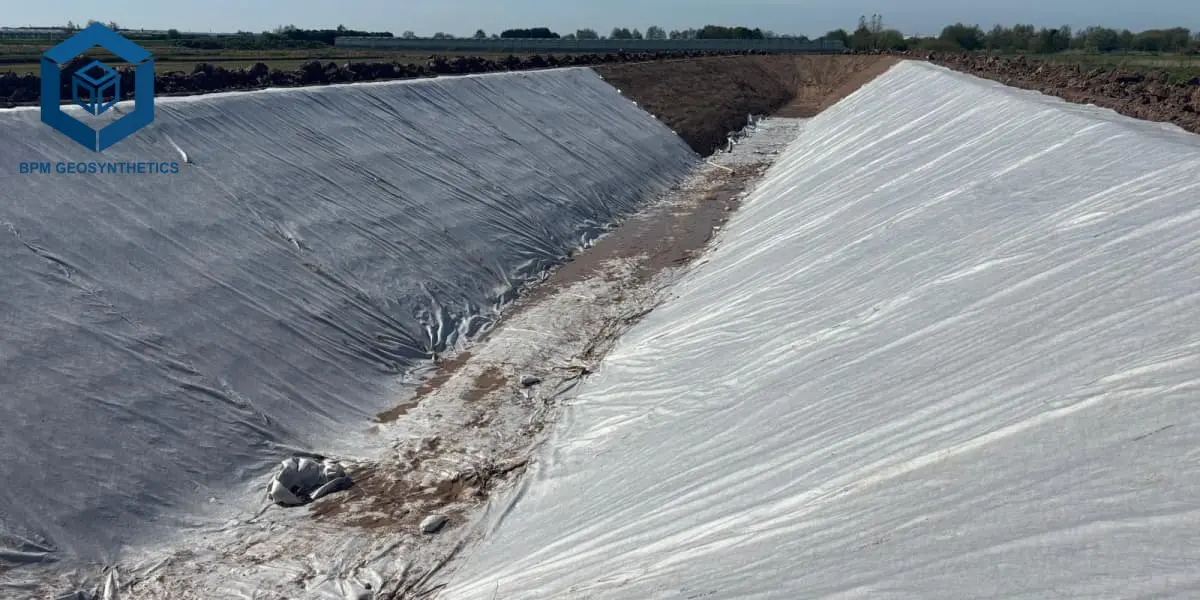
2. Understanding the 2 Main Geotextile Categories
Before we get to prices, let us first pinpoint the key difference that is mainly responsible for the price variations between woven and non-woven geotextiles.
2.1 Non Woven Geotextiles
Non woven geotextiles are made by needle-punching or heat-bonding synthetic fibers (usually polypropylene or polyester) to each other to get a felt-like membrane with a soft texture. It is the most popular type, making up about 60–65% of the worldwide demand .
2.1.1 Main Roles:
Filtration, drainage, separation
2.1.2 Common Uses:
- French drains and trench drains
- Gravel driveways and walkways
- Retaining wall backfill
- Landscaping and weed barriers
- Erosion control blankets
2.1.3 Cost Range (Non-Woven per m²):
$0.15–$5.40 depending on weight and quality
2.2 Woven Geotextiles
Woven geotextiles come from interlacing polypropylene or polyester threads that have been previously drawn to very high tensile strength on a loom, resulting in a sheet-like structure that resembles a normal fabric. Permeability is much lower but tensile strength is way higher.
2.2.1 Main Roles:
Reinforcement, stabilization, soil separation under load
2.2.2 Common Uses:
- Unpaved roads and access roads
- Railroad subgrade stabilization
- Retaining walls and embankments
- Parking areas and crane pads
- Heavy-load foundation reinforcement
2.2.3 Price Range (Woven per m²):
$3.20–$7.50 depending on tensile strength
3. Key Factors That Drive Geotextile Price Per Square Meter
The very first step in effective sourcing is to know the elements that determine price. The following are those that exert the highest pressure on per square meter cost.
3.1 Weight (Mass per Unit Area)
Among all the characteristics weight, the amount of material in a given area, usually expressed in grams per square meter (GSM) or ounces per square yard (oz/yd²), is unquestionably the main influencer of geotextile pricing. More heavy-duty geo fabric use up more raw material and at the same time provide better durability, puncture resistance, and load-bearing capacity.
3.1.1 Typical Price Change by Weight (Non-Woven):
| Weight (GSM) | Approx. oz/yd² | Typical Applications | Price Range per m² |
100–135 | 3–4 | Light drainage, weed barriers | 1.30–3.00 |
150–180 | 4.5–5.5 | French drains, light roads | 2.40–5.20 |
200–250 | 6–7.5 | Road subgrade, trench drains | 3.80–8.10 |
300–350 | 9–10 | Heavy drainage, landfill protection | 5.90–11.80 |
400–450 | 12–13 | Heavy protection, tailings filtration | 9.15–17.20 |
- Main take-away: An addition of 50 GSM commonly results in the increase of the unit price by about $0.85–$2.15 based on bulk market prices
3.2 Material Type: Polypropylene (PP) vs. Polyester (PET)
Each type comes with its own cost factors:
- Polypropylene (PP): Usually cheaper, the material also exhibits great resistance to chemicals while being very economical. This is the most common choice for drainage and separation applications .
- Polyester (PET): Because of its extremely high tensile capacity and very good resistance to creep over time, the price of the material can be around 10-25% higher than that of PP. It is a material, often resorted to, for those applications which involve heavy loads or where reinforcement is necessary.
3.3 Manufacturing Quality: Staple vs. Continuous Filament
Not all nonwoven geotextile fabric is created equal. Continuous filament non-wovens—manufactured using spunbond technology—offer higher strength and consistency than staple fiber (cut fiber) products, commanding higher prices.
3.4 Order Volume (MOQ and Bulk Discounts)
Volume is perhaps the most negotiable factor in geotextile pricing. Suppliers offer dramatically different pricing based on order quantity:
| Order Volume | Typical Price Premium/Discount |
Sample (1–10 m²) | 60–150% above bulk price |
Small project (100–500 m²) | 30–60% above bulk price |
Truckload (10,000–50,000 m²) | Baseline (reference price) |
Container (50,000+ m²) | 10–20% below baseline |
As one supplier notes, "Small-quantity retail rolls... usually cost 60–150% more" than full truckload quantities.
3.5 Additional Features and Customization
Specialized features add to base pricing:
- UV Stabilization: Carbon black or UV inhibitor additives add $0.10–$0.50 per m²
- Color Customization: Non-standard colors incur additional charges
- Reinforced Edges: Adds 5–15% to base price
-Custom Roll Lengths/WidtHS: Varies by supplier
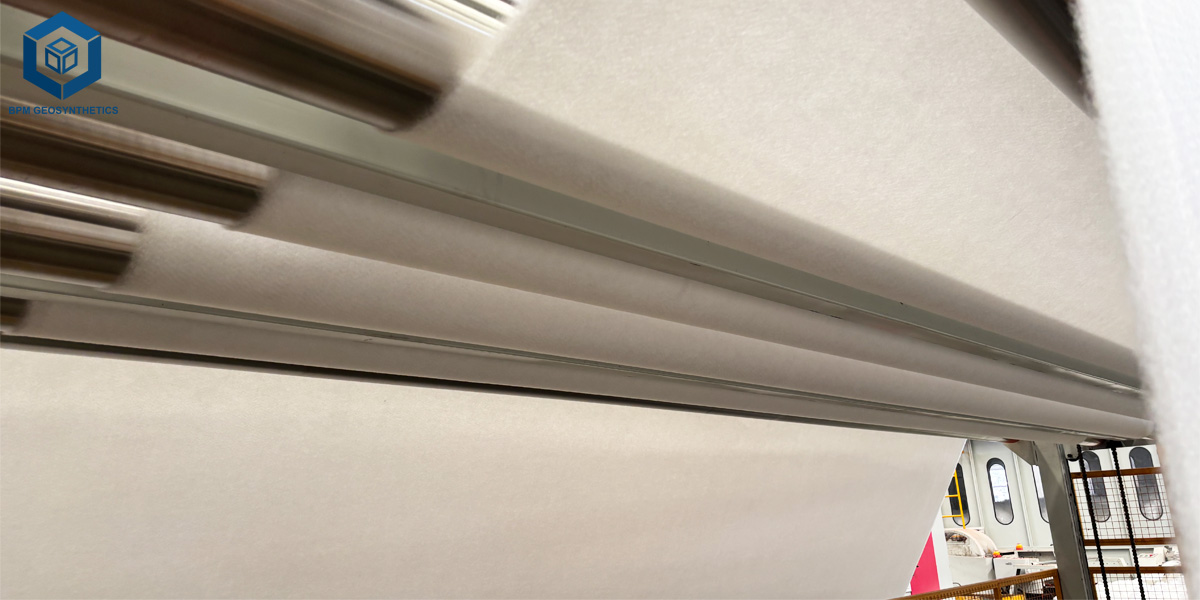
4. Geotextile Price Per Square Meter - Current Market Price Overview (2025–2026)
The following tables represent current market pricing based on manufacturer and supplier data from 2025–2026.
4.1 Non Woven Geotextile Pricing by Weight
| Weight (GSM) | Price Range per m² (Bulk) | Typical Brand Equivalents |
100–135 | 1.30–3.00 | Propex Geotex 401, TenCate 140N |
150–180 | 2.40–5.20 | Mirafi 180N, Geotex 501 |
200–250 | 3.80–8.10 | Geotex 601/701 |
300–350 | 5.90–11.80 | Geotex 801/1001, Mirafi 1100N |
400–450 | 9.15–17.20 | Heavy Mirafi/Solmax grades |
Prices shown are approximate delivered costs for full truckload quantities to most continental locations.
4.2 Woven Geotextile Pricing by Type
| Woven Type | Weight (GSM) | Tensile Strength (kN/m) | Price Range per m² | Common Applications |
Slit-film woven | 150–200 | 10–20 | 3.00–7.00 | Light stabilization |
High-strength woven | 200–300 | 20–50 | 5.90–15.10 | Unpaved roads, crane pads |
Monofilament woven | 200–400 | 15–35 | 4.85–11.80 | Drainage + separation in wet conditions |
4.3 Supplier Price Comparison (Actual Market Data)
Analysis of active suppliers reveals significant price variation based on supplier strategy and capabilities:
| Supplier | Product | Price Range per m² | MOQ | Key Differentiator |
Shandong Luke Composite | Nonwoven Polyester 200GSM | $0.23–0.25 | 1,000 m² | ISO certified, 100% on-time delivery |
Tai'an Taidong | PP Nonwoven 120–150G | $0.16–0.72 | 600 m² | High reorder rate (38%) |
Taian Lin Yuan | Nonwoven PP/PET blend | $0.10–0.80 | 500 m² | Sub-1hr response time |
SHANDONG TINGNIU | Export-grade Nonwoven | $0.07–0.23 | 100 m² | Lowest entry price |
Huizhou Jinhaocheng | 300GSM Nonwoven | $0.39–0.48 | 5,000 m² | 5.0/5.0 quality rating, 98% on-time |
The Best Project Material | 300GSM Nonwoven | $0.37–0.50 | 10,000 m² | Fast turnaround for large contracts |
- Key Observation: The price spread between the lowest-cost supplier ($0.07/m²) and premium suppliers ($0.50–0.80/m²) can exceed 1,000%. This underscores the importance of balancing cost with quality and reliability requirements.
5. Case Study 1 – The 1,000 m² Access Road Project
5.1 Project Background
A civil contractor in Southeast Asia was going to build a 1,000 square meter unpaved access road for a rural infrastructure project. The road had to be able to carry light construction vehicles (CBR of subgrade: 2–3%) and therefore a geotextile drainage fabric for separation and stabilization was required.
5.2 Initial Sourcing Approach
The contractor first sent requests for quotations to five local suppliers. The quotations, however, showed a wide range in prices:
- Supplier A (Local Distributor): $1.20/m² for 150GSM non-woven
- Supplier B (Regional Wholesaler): $0.85/m² for material of the same specification
- Supplier C (Direct from Chinese Manufacturer): $0.22/m² FOB + shipping
5.3 Analysis and Decision
The contractor was aware that the $0.22/m² price offered by the manufacturer directly was very tempting but it was necessary to do a thorough checking. Carrying out the evaluation based on the supplier evaluation framework, they took into account:
5.3.1 Technical Compliance:
The manufacturer sent them ASTM test reports which confirmed that the 150GSM non-woven complied with project specs for tensile strength (≥8 kN/m) and permeability .
5.3.2 Order Volume:
Since the contractor was purchasing only 1,000 m², they were lower than the usual 5,000–10,000 m² MOQ which allows one to get the lowest bulk unit rates. But the supplier was still willing to provide them with the product at $0.22/m² .
5.3.3 Shipping and Logistics:
FOB China price does not include ocean freight, customs clearance, and inland delivery. So the contractor worked out the full landed cost:
- Product cost (1,000 m² × $0.22): $220
- Ocean freight (LCL): $350
- Customs/duties (estimated 10%): $22
- Inland delivery: $150
- Total landed cost: $742 → $0.74/m²
5.4 Outcome
The contractor made a deal with the direct manufacturer and the end cost of delivery was $0.74/m² which was a big difference from the price of $1.20/m² quoted by the local distributor. The project was delivered within the budget and the geotextile functioned as required.
5.5 Key Lesson
Lower unit price is the biggest advantage of sourcing directly from geotextile manufacturers but the buyer needs to include in their calculations the logistics, duties, and lead times. On the other hand, if the volume is small, then regional distributors might provide for better total landed cost once the shipping costs are added.
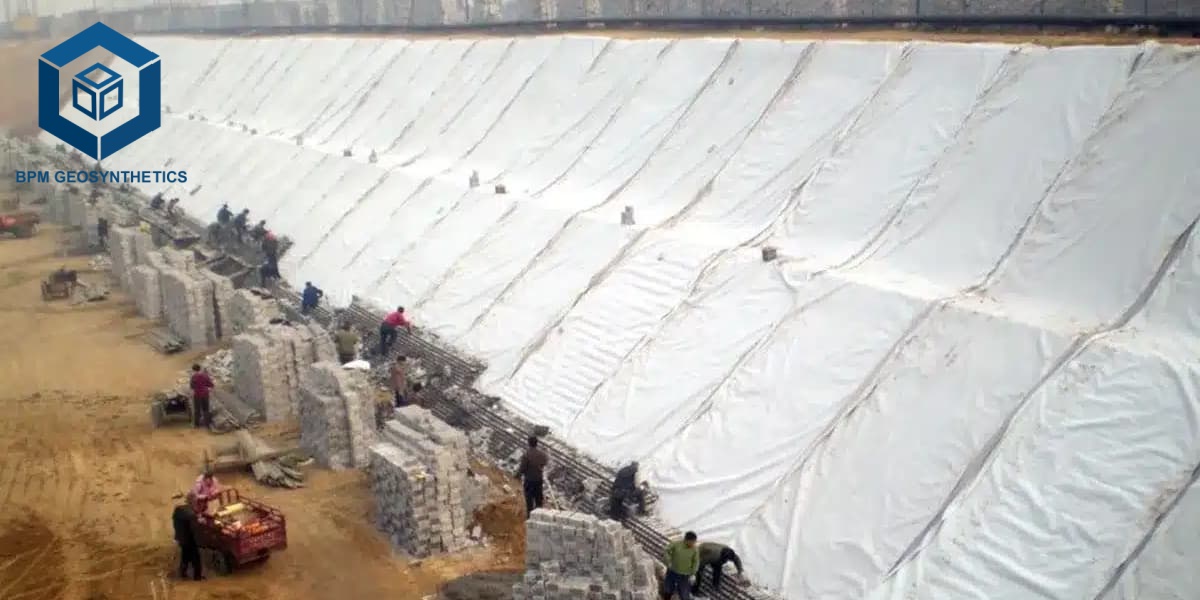
6. Case Study 2 – The 50,000 m² Highway Tender
6.1 Project Background
One of the departments of government in charge of roads and transportation was inviting bids for the construction of a highway extension which, among other things, was to use 50,000 square meters of high-strength woven geotextile (200GSM, minimum tensile strength 35 kN/m) for the stabilization of subgrade. The time allowed for delivery was very tight - only 60 days.
6.2 Tender Response Analysis
Three qualified suppliers submitted bids:
| Supplier | Price per m² | MOQ Capability | Delivery Lead Time | Quality Certifications |
Supplier X (Domestic) | $1.85 | Full volume available | 14 days | ISO 9001, CE |
Supplier Y (Regional) | $1.40 | Full volume available | 21 days | ISO 9001 |
Supplier Z (Chinese OEM) | $0.50 FOB | Full volume available | 45 days FOB + 14 days shipping | ISO 9001, test reports available |
6.3 Evaluation and Selection
They used a weighted decision matrix and the procurement team examined:
6.3.1 Price (40% weight):
The product cost of Supplier Z was the lowest set at $0.50/m², but when adding up ocean freight ($0.12/m²), duties ($0.05/m²) and inland transport ($0.03/m²) the total ended up at $0.70/m²—still 50% lower than Supplier X.
6.3.2 Delivery (30% weight):
The total lead time of 59 days from Supplier Z (45 days production + 14 days shipping) was just within the 60-day delivery window but didn’t allow any margin for delays. Supplier X, with a lead time of only 14 days, offered a lot more scheduling security.
6.3.3 Quality and Risk (30% weight):
Supplier X was well known and had a strong track record with similar government projects. Supplier Z had provided test reports but was not very well known to the agency’s quality assurance team.
6.4 Outcome
The agency selected Supplier Y (regional) at $1.40/m². While not the lowest price, this supplier offered the best balance of cost savings (24% below domestic) and acceptable delivery risk (21 days). The agency avoided the tight timeline risk associated with ocean freight from Asia.
6.5 Key Lesson
For time-sensitive, large-scale government projects, the lowest unit price may not represent the best value.Delivery reliability and quality assurance often justify paying a premium over the absolute lowest-cost source.
7. Case Study 3 – The Emergency Erosion Control Purchase
7.1 Project Background
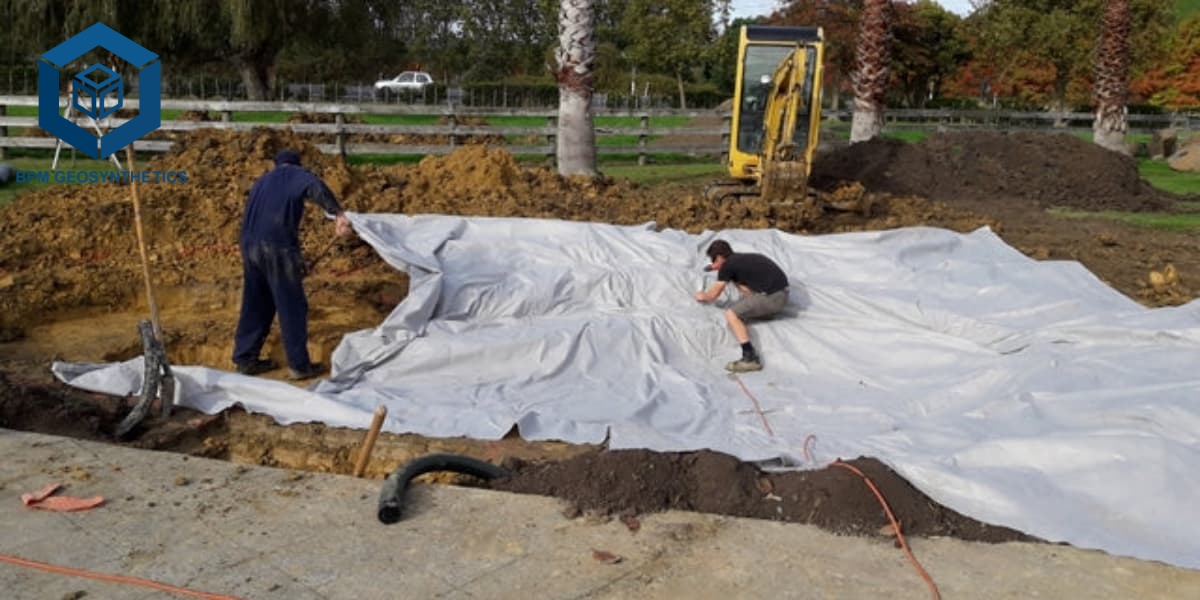
In an emergency situation a landscaping company in the Midwestern United States was given a contract to stabilize a 200 square meter slope with heavy rains the cause of eroding the slope that was threatening a residential area. The essential item was non woven 200 gsm geotextile for immediate use.
7.2 Urgent Procurement Challenge
The contractor did not have as much as 72 hours since the installation was scheduled for that day. So, overseas sourcing, as well as competitive bidding, were out of the question. The contractor had to be supplied the material without any delay.
7.3 Available Local Options
The contractor contacted three local suppliers:
| Supplier | Product | Price per m² | Availability | Delivery |
Big Box Retailer (Home Center) | 100GSM woven (mis-specified) | $2.15 | In stock | Immediate pickup |
Landscape Supply Yard | 150GSM non-woven | $1.95 | Limited stock (150 m²) | Same day pickup |
Specialty Geosynthetics Distributor | 200GSM non-woven | $3.25 | Full quantity available | Next day delivery |
7.4 Analysis
The big box retailer product was totally wrong (woven instead of non-woven) and the weight was also off (100GSM is insufficient to control erosion of a slope). The landscape supply yard was not able to provide the full amount. The specialty distributor was the correct specification but the price was nearly 5 times the market bulk price of $0.70/m².
7.5 Outcome
The contractor went ahead and bought from the specialty distributor at $3.25/m², resulting in a total payment of $650 for 200 square meters of material, whereas the bulk price would have been just $140. However, the emergency was taken care of, the slope was stabilized, and the contractor did not have to face the consequences of further erosion damage.
7.6 Key Lesson
In case of emergencies and very small quantities, one can end up paying very high prices—up to 3 to 5 times the bulk market prices. For non-urgent requisites, one of the best ways to minimize costs is through thorough planning and gathering the volume.
8. Regional Geotextile Price Per Square Meter Comparison and Market Trends
8.1 Geotextile Price Per Square Meter Variation by Manufacturing Region
China is still the biggest producer of geotextiles in the world, with major manufacturing hubs in the provinces of Shandong, Guangdong, and Henan. Chinese manufacturers usually give FOB prices 15–20% lower than Western ones owing to:
- Vertically integrated supply chains (from raw materials to finished products)
- Lower labor costs
- Export incentives from the government
- Very large-scale production
FOB Price Range from China (300GSM Non-Woven) is usually $0.36–$0.48 per square meter for container volumes.
8.2 Indian Market Pricing
Indian market exhibits a variety of price behavior. According to IndiaMART listings, non-woven geotextiles (100–600GSM) are priced around ₹20–25 per square meter, which means $0.24–0.30 per square meter at current exchange rates.
8.3 North American and European Pricing
Western market prices are significantly higher due to distribution markups, freight costs, and higher operating expenses. Typical retail and small-project pricing ranges from $1.50–5.40 per square meter for non-woven products.
9. Conclusion: Key Takeaways for Buyers
It is impossible to give a single answer to the question "What is geotextile price per square meter?" because prices vary from $0.07 to over $5.00 per square meter depending on weight, material type, order volume, and sourcing channel.
The three case studies featured in this guide point out key lessons:
- Getting factory direct (Case Study 1) gives the cheapest per-unit price but buyers must handle logistics and lead times themselves. The key to comparison is total landed cost, not FOB price.
- Government and time-sensitive projects (Case Study 2) naturally justify paying a premium for reliable delivery and a quality assurance that has been tested. The lowest bid is not necessarily the best value.
- Emergency purchases (Case Study 3) bear the highest premiums—sometimes as much as 3 to 5 times the bulk rates. Planning ahead is the best way to control the cost of such purchases.
The Best Project Material Co., Ltd.(BPM Geosynthetics) Final Recommendation: For most commercial and infrastructure projects, a 200–300GSM non-woven geotextile from a qualified Asian manufacturer represents the optimal balance of performance and cost, with typical landed prices of $0.50–1.00 per square meter for container quantities. Always request samples, verify test reports, and build lead time into project schedules to avoid expensive emergency premiums.