What is Geocell Fabric?
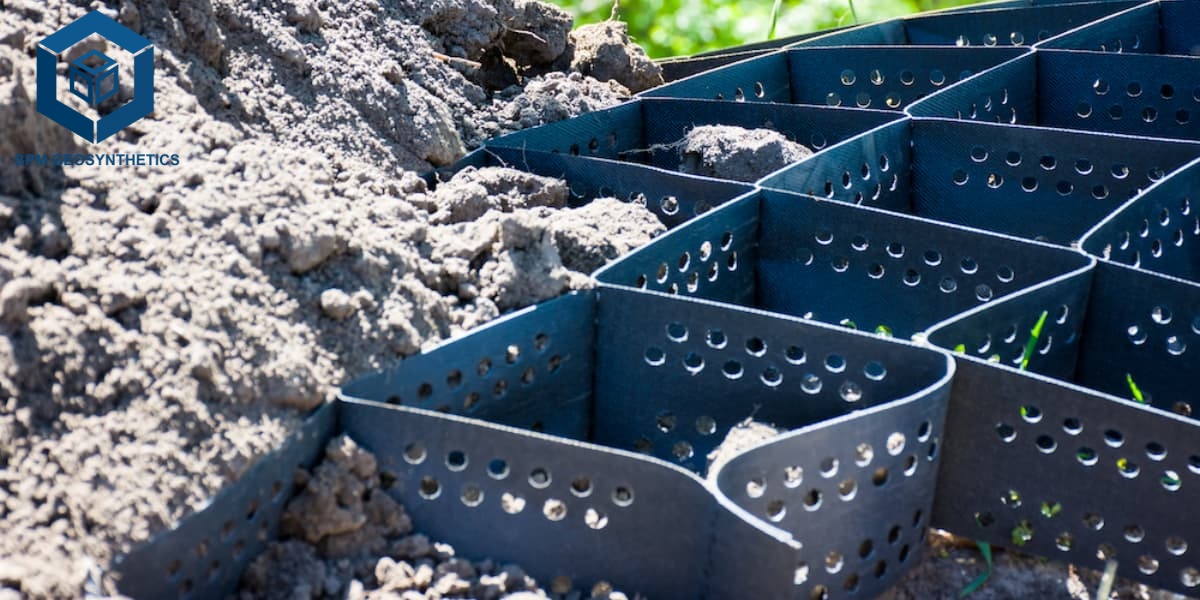
Geocell fabric is three-dimensional, cellular confinement systems made from polymeric materials like high-density polyethylene (HDPE), polypropylene (PP), or polyester (PET). When filled with soil, sand, or gravel, they create a stable matrix that distributes loads, reduces settlement, and enhances soil shear strength by 20–30% (Civil Engineering Journal). Key applications include:
- Road Construction: 50% of demand, reducing base thickness by 15–30%.
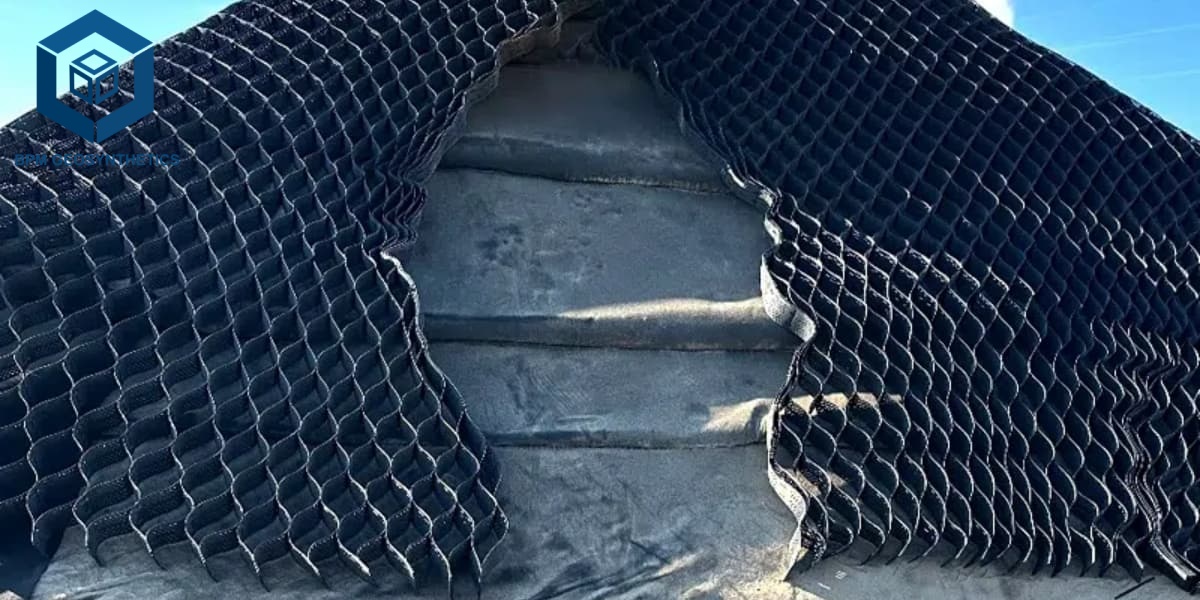
- Slope Protection: Cuts erosion by 40–60% on steep slopes .
- Retaining Walls: Improves stability by 25%, minimizing lateral movement.
- Channel Protection: Enhances hydraulic stability by 30% in stormwater systems.
1. Introduction to BPM Geocell Fabric
BPM high quality HDPE geocell is made of high density polyethylene (HDPE) and jointly welded by ultrasonic technology to ensure consistency, resistance to erosive forces. BPM geocells widely used in construction for erosion control, soil stabilization on flat ground, shorelines, steep slopes, multi-layered retaining walls, channel protection and structural reinforcement for heavy duty load support roads and earth retention. BPM Geosynthetics geocells enhance structural integrity while reducing material costs by up to 30% compared to traditional methods (pmarketresearch.com). As the global geocell market grows—valued at USD 741.97 million in 2024 and projected to reach USD 1,100 million by 2030 with a CAGR of 6.7% (Research and Markets, 2024)
1.1 Geocell Specification
Product Type |
Height (mm) |
Welding Distance (mm) |
Thickness (mm) | Tensile Strength of Welding Points (N/cm) |
Tensile Strength of Connection of Cells (N/cm) |
Tensile Strength at Yield of Each Sheet (MPa) |
Smooth and Not Perforated |
50≤H≤250 |
330≤A≤1000 |
1.0~1.4 |
≥100 |
≥120 |
≥20 |
Smooth and Perforated |
50≤H≤250 |
330≤A≤1000 |
1.0~1.4 |
≥100 |
≥120 |
≥20 |
Textured and Not Perforated |
50≤H≤250 |
330≤A≤1000 |
1.5~1.7 |
≥100 |
≥120 |
≥20 |
Textured and Perforated |
50≤H≤250 |
330≤A≤1000 |
1.5~1.7 |
≥100 |
≥120 |
≥20 |
1.2 Geocell Fabric Applications
1.2.1 Load Support
BPM Geocells provide a strong, stable base for roads, parking lots, and industrial yards. By evenly distributing vehicular and pedestrian loads, they prevent rutting, potholes, and uneven settlement, extending the lifespan of paved or unpaved surfaces while reducing the need for frequent maintenance.
1.2.2 Slope Protection
When installed on embankments or steep slopes, geocells create a reinforced matrix that locks soil in place. This significantly reduces surface erosion and soil displacement, ensuring long-term slope stability and protecting infrastructure from washouts or landslides.
1.2.3 Channel Protection
Geocells strengthen drainage channels, ditches, and stormwater systems by stabilizing the channel bed and banks. They resist erosion caused by flowing water under heavy rainfall or storm conditions, ensuring reliable hydraulic performance and reducing maintenance costs.
1.2.4 Vegetated Retaining Walls
BPM geocells can be integrated with soil and vegetation to construct reinforced retaining walls, including steepened slopes, gravity walls, or multi-layered soil structures. This combination enhances lateral stability, controls erosion, and supports the long-term growth of vegetation for environmentally friendly structural solutions.
1.2.5 Shorelines
Geocells provide effective protection for riverbanks, lakeshores, and coastal areas. By forming a three-dimensional confinement system filled with soil, sand, or gravel, they absorb wave energy, reduce surface erosion, and prevent soil loss due to water flow, offering a sustainable solution for shoreline stabilization.
2. Factors to Consider When Choosing Geocell Fabric in Road Construction
2.1 Geocell in Road Construction–Load – Bearing Requirements
For roads with mixed traffic (e.g., cars and medium trucks), BPM Geocells require balanced flexibility-strength and moderate dynamic modulus to handle frequent load changes while maintaining long-term stability. The design must resist cyclic deformation, especially in high-frequency traffic areas.
2.2 Geocell in Road Construction – Soil Conditions
The subgrade's geotechnical properties dictate BPM Geocell design requirements:
- In low-permeability clay, perforated geocells prevent pore pressure buildup.
- For loose gravel, high-friction/interlocking designs resist particle displacement.
- In expansive soils, flexible yet resilient geocells accommodate swelling-shrinkage cycles.
2.3 Geocell in Road Construction – Slope and Terrain
- Near-vertical (≥1:0.75): Ultra-high walls (≥200mm) and tight weld spacing (≤50mm) resist shear forces.
- Low-gradient (≤1:3): Shorter walls (≤100mm) and wider spacing (≥150mm) optimize cost and erosion control.
- Transitional (1:1 to 1:2): Hybrid designs with intermediate weld density and graded heights adapt to stress variations.
2.4 Geocell in Road Construction – Environmental Factors
- Arid/High-UV: UV-stabilized polymers (e.g., carbon-black HDPE) prevent photodegradation.
- Permafrost/Freeze-thaw: Cryogenic flexibility resists thermal cracking.
- Coastal/Saline: Corrosion-resistant alloys (e.g., galvanized coatings) mitigate chloride damage.
- Tropical/High-rainfall: Open-weave designs enhance drainage, reducing soil saturation.
3. How to Select Geocell Fabric for Road Construction?
Choosing the right geocell for road construction involves several important considerations. Thoroughly thinking them over will help you to achieve structural soundness, great performance over time, and also to save some money.
The main points of concern are the kind of polymer, the shape of the cells, how well they can carry loads and how well they can resist different environmental factors.
3.1 Polymer Material and Grade
One of the most reliable and versatile materials for geocells is high-density polyethylene (HDPE).They have strong resistance to cracking, chemical aging, and UV light exposure, so they can be installed even in very tough environments.If the polymers are made from top quality virgin material, it makes the weld stronger and makes the mechanical strength more uniform as well as the product itself stays its good quality for a longer time.
3.2 Cell Shape and Size
One of the major factors that determine how well the load is carried and the structural performance are the cell size and wall thickness.For roads that do not have a lot of traffic, smaller cells (50–100 mm) may do the job, while highways or industrial roads will require deeper cells (150–250 mm) so that the load can be spread more and the resistance to ruts increased.Also, suitable cell size enhances the interlocking with the fill material which in turn leads to a decrease of aggregate movement and surface deformation.
3.3 Load-Bearing Requirements
First of all, geocells should be strong enough to support the traffic loads, that is, cars, trucks, and other heavy vehicles.Those who are designed with high tensile strength are the ones that can resist not only shear stress but also cyclic deformation under repeated loading.With the right choice, you get to have the load evenly distributed, the subgrade settlement kept at a minimum, and the pavement life prolonged.
3.4 Environmental Resistibility
Geocells stabilized with UV protection can resist photodegradation in areas with a lot of sunshine or high UV.Chemical-resistant polymers are capable of withstanding the impact of de-icing salts, oils, or industrial runoff.On top of that, flexible designs are the ones who can handle soil swelling, freeze-thaw cycles, and other environmental stressors.
3.5 Installation and Infill
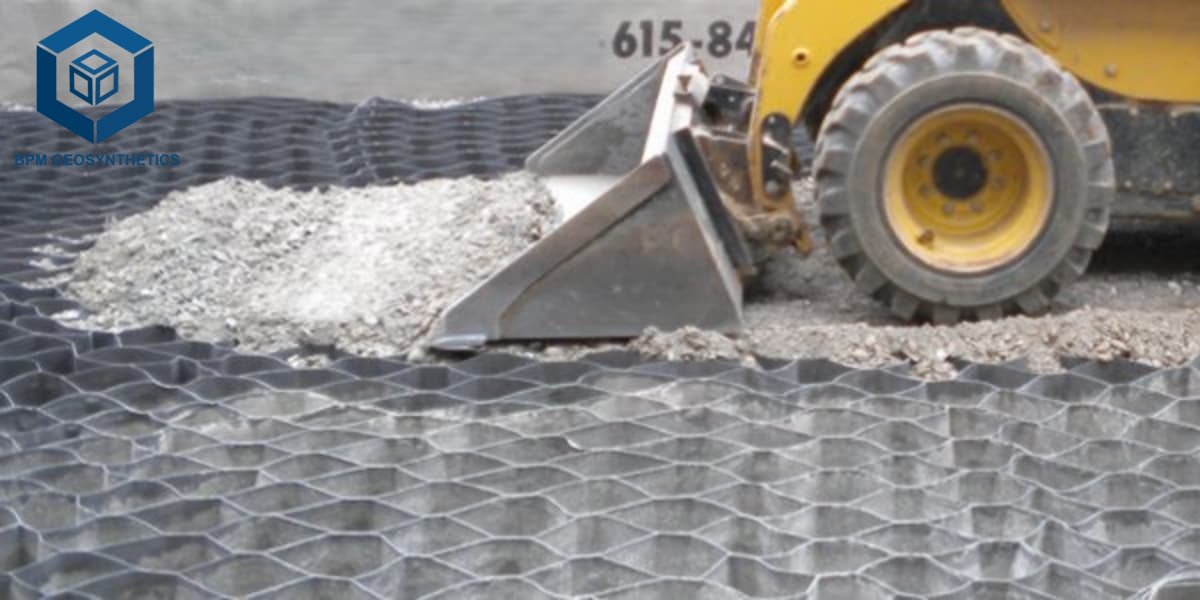
Those cells have to be correctly deployed, oriented, connected and then filled with compacted soil, gravel, or crushed stone.Also, enough compaction is needed to maximize the interlocking, enhance the load transfer and increase the structural performance.Next, sticking to the manufacturer’s guidelines will keep the product from being damaged during installation and the reliability of the structure will definitely be guaranteed for a long time.
3.6 Project-Specific Tailoring
BPM Geosynthetics offers products designed to fulfill the requirements of different projects, such as residential driveways, heavy-duty industrial roads, etc.Geocell customization enables the optimization of local soil conditions, traffic loads, and environmental challenges.Careful selection and efficient use will result in a strong and stable road base while the overall costs throughout the life will be kept at a minimum.
4. Types of Geocell Fabric in Road Construction and Their Applications
4.1 Perforated BPM Geocell Fabric
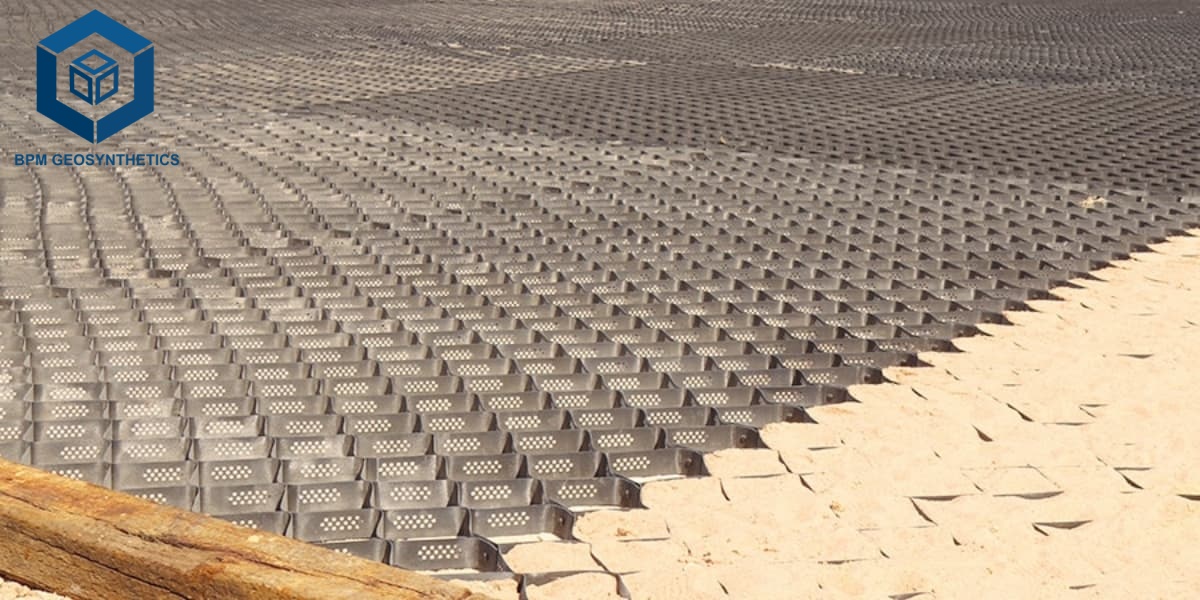
These geocells have regular holes in the cell walls, which can improve stress distribution and reduce deformation3. The integrity of the perforated BPM Geocells depends on the strength of the perforated strip and weld3. They are suitable for use in areas where water drainage and soil filtration are required, such as in roadbeds with high groundwater levels or in areas prone to water accumulation.
4.2 Non–Perforated BPM Geocell Fabric
Non – perforated BPM geocell erosion control have thick and smooth walls3. They are usually made of polymer sheets with a three – dimensional mesh structure formed by riveting or ultrasonic welding3. These geocells are more suitable for applications where soil confinement and load – bearing capacity are the main concerns, such as in the construction of embankments and retaining walls.
5. Quality and Certification of BPM Geocell Fabric
5.1 Material Quality
Insist on verifiable evidence that the BPM Geocells are made only from virgin high – density polyethylene. Virgin materials can ensure better weld stability and overall product quality. Avoid geocells made from recycled or low – quality materials, as they may have inferior mechanical properties and durability.
5.2 Manufacturer’s Experience and Warranty
Choose a manufacturer with extensive experience and a proven track record in the production of geocells1. A manufacturer with decades of experience is more likely to have a better understanding of the engineering principles and soil stabilization techniques involved. Also, check if the manufacturer offers a warranty on the BPM Geocells, which can provide you with some protection against potential quality issues.
5.3 Certification and Standards
Ensure that the BPM Geocells meet relevant international and national standards, such as ASTM or ISO standards. These certifications can provide assurance of the quality and performance of the geocells.
6. Installation and Maintenance of BPM Geocell Fabric
6.1 Installation
The installation of BPM Geocells should be carried out by trained professionals following the manufacturer’s instructions. The geocell slope should be properly laid out and connected, and the filling materials should be evenly distributed and compacted. Best geocell is also important to ensure that the installation site is properly prepared, with no sharp objects or debris that could damage the geocells.
6.2 Maintenance
Regular inspection of the installed BPM geocell material is necessary to ensure their proper functioning. Check for any signs of damage, such as tears or punctures, and repair or replace the damaged parts immediately. Also, monitor the performance of the geocell hdpe over time, especially in areas with high traffic or poor soil conditions, and make any necessary adjustments or reinforcements.
Conclusion
In conclusion, choosing the right BPM Geosynthetics Geocells for road construction requires a comprehensive consideration of various factors, including load – bearing requirements, soil conditions, slope and terrain, and environmental factors. By understanding the different types of geocells available, their applications, and the importance of quality and certification, you can make an informed decision that will ensure the long – term performance and durability of your road project. Additionally, proper installation and maintenance of the The Best Project Material Co., Ltd.(BPM Geosynthetics) Geocells are essential for maximizing their effectiveness and ensuring the safety and reliability of the road.