Ultimate Guide to Geo Grid for Retaining Wall
Nowadays, geo grid for retaining wall is a great engineering solution for high fills, weak foundations, and environmentally sensitive sites. Retaining walls in general are civil engineering structures aimed at resisting lateral soil pressure and providing safety and stability to the new terrain for various construction purposes. Geo grids (geogrids) as a type of polymer mesh have brought a new era of retaining wall design by improving soil strength, controlling deformation, and adding longevity to the walls.
Have you ever seen a very steep slope where massive concrete retaining walls were necessary or have you ever been scared by the price of a conventional gravity wall? Well, geogrid-reinforced soil retaining walls (MSE walls) are the "secret weapon" that will totally change your point of view. Besides saving money, this type of retaining wall will change your perception of a rigid, heavy building into a flexible, durable, and environmentally friendly earth structure. Today, acting as a perfect embodiment of this kind of solution, we have a 65 ft (20 m)-high retaining wall, which, after examining the ways geo grid for retaining wall operate, we'll analyze thoroughly.
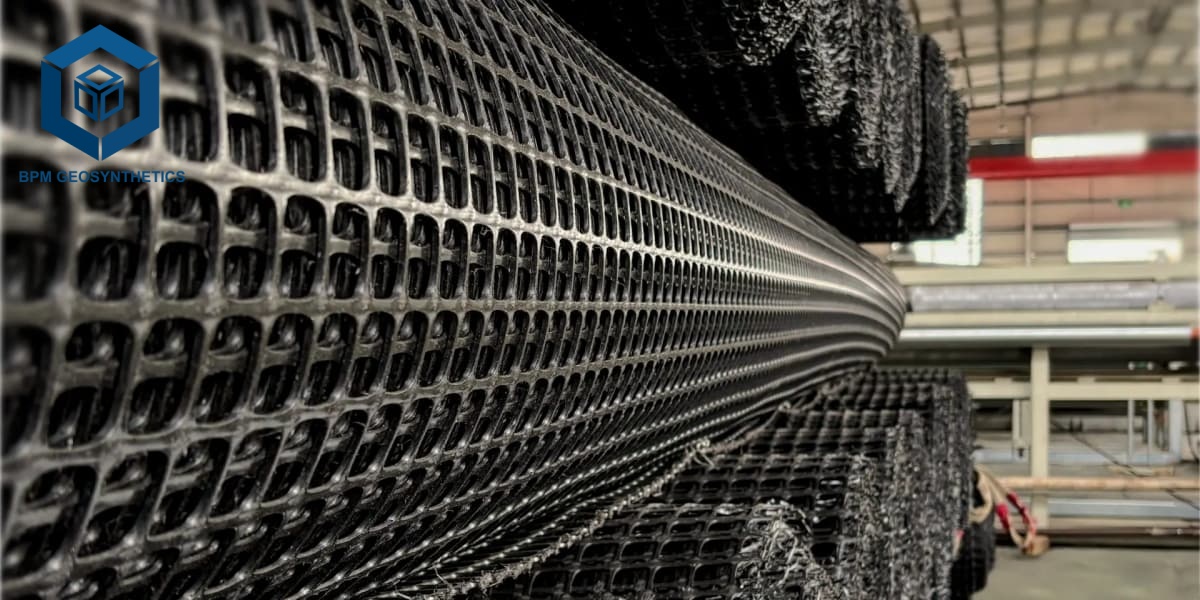
1. What is Geo Grid for Retaining Wall & How it Work?
Geo grids are engineered geosynthetics manufactured from polyester (PET), polyethylene (HDPE), or polypropylene (PP), featuring a rigid mesh structure with uniform apertures. They are constructed to have high strength in one direction (uniaxial) or equal strength in two directions (biaxial) and mainly serve two functions:
1.1 Interlock with Backfill:
By opening a path between soil or aggregate particles, the grid apertures hold the filling material, and thus a close "reinforced soil mass" develops able to take advantage of the weight of the soil in resisting the lateral earth pressure.
1.2 Stress Distribution:
By virtue of its very high-strength at the same time as it is very extensible, geogrids is capable of redistributing the soil loads and hence reducing the load at the wall face and the probability of slips or overturning.
Contrarily, a concrete cantilever wall with a concrete base plate anchored in the soil beyond the heel requires significant quantities of concrete and reinforcement, making geo grid reinforced walls the most cost-effective option on challenging, soft soils due to their flexibility and easier installation as well.
2. Key Design Considerations for Geo Grid for Retaining Wall
Implementing the design successfully depends not only on the consideration of geotechnical factors but also the very accurate observation of site conditions.
2.1 Soil Type
Sandy soils are quite beneficial for the geogrid retaining wall system due to their hardness and ability to generate friction. On the other hand, clay soils are prone to water retention resulting in pore pressure buildup and the subsequent instability of the wall. Additional measures for drainage and soil improvement need to be taken in such cases to secure the long-term performance and structural integrity of the wall.
2.2 Grid Selection
Choosing the right geogrid product is essential to ensure the safety and durability of the retaining wall. The most commonly-used uniaxial HDPE or PET geogrids for retaining walls have a tensile strength capacity ranging from 60 to 180 kN/m. Factors such as wall height, backfill material, and possible surcharge loading should guide the final decision. In the case of higher loads or taller walls, stronger reinforcement is mandatory to keep stability and minimize the risk of deformation.2.3 Layout & Spacing
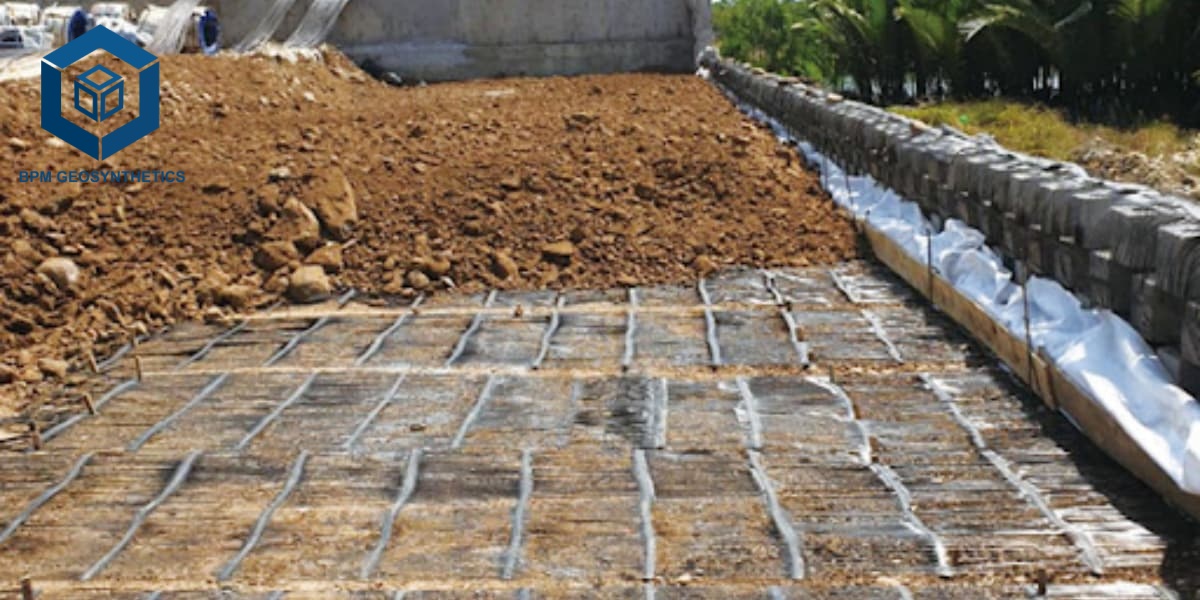
Correct layout is a critical part in ensuring efficient load transfer between the soil and the reinforcement layers. The geogrid retaining wall are supposed to be laid horizontally between the successive wall courses and stretched backward into the reinforced soil zone. Usually, the length of the geo grid wall that is embedded in the soil is 60–80% of the wall height. For retaining walls 3–6 m high, layer spacings are controlled at 30–50 cm in order to achieve balanced reinforcement and avoid localized failure.
2.4 Drainage System
First and foremost, a proper drainage system is the only solution to ensure that water does not accumulate behind a retaining wall. The various elements such as perforated drainage pipes, filter fabrics, and weep holes act in concert to effectively discharge hydrostatic pressure. Because water pressure leads to nearly half of the failures of retaining walls, appropriate drainage design will certainly strengthen the structural stability, reduce the load on the geogrid system, and prolong the life of the whole structure.
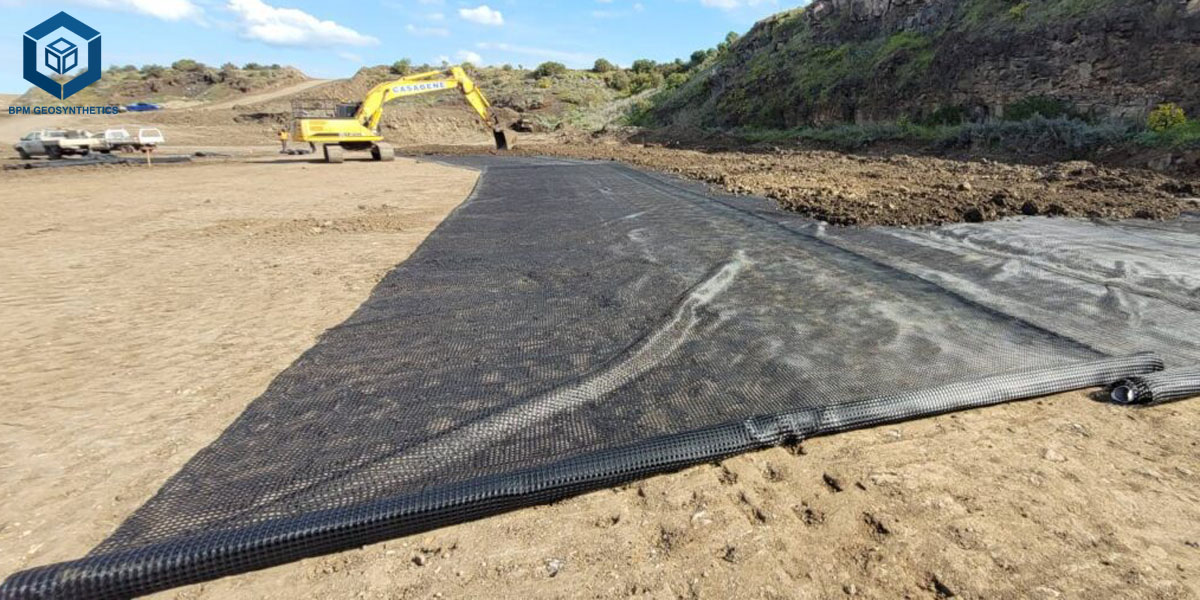
3. How to Building a Bulletproof Geo Grid for Retaining Wall?
Making a geogrid reinforcement for retaining walls is basically working on a layered sandwich. One needs to be very precise.
3.1 Foundation Preparation
It all revolves around the base. Dig out the ground and make it flat. Get rid of any living or weak material. Before laying the first layer of stone, make sure the leveling pad (typically 12–18 inches of crushed, well-graded stone) is compacted to a minimum of 95% Standard Proctor Density. This will prevent uneven settlement.
3.2 Grid Deployment
Lay the geogrid wall out so it is at a right angle to the wall face. Important Note: Make sure the main direction in which the geogrid is strongest in tension corresponds to the direction of the wall face (usually at a right angle). Where the rolls come one after the other, overlap them as indicated (normally 12–18 inches longitudinally) and fasten them with U-shaped steel pins.
3.3 Backfilling & Compaction
Put down proper granular backfill (like AASHTO No. 57 stone or clean sand) in layers of 6–12 inches. Before you move on to the next layer, be sure to compact the one before.Near the wall face, use walk-behind vibratory rollers and further back use heavy rollers.
3.4 Panel Installation & Connection
For the next layer of the facing elements (concrete blocks, segmental units, or wrapped face), place them. Fix the geogrid tails to the facing units by means of connection pins or simply put them into the block cores. This "sandwich" guarantees that the skin and the muscle move together.
3.5 Drainage (The Lifeline)
Do not overlook water. Set up a free-draining granular backfill zone (minimum 12–18 inch thickness) straight behind the facing. Using a non-woven geotextile wrapping prevents it from getting clogged. Hydrostatic pressure is the #1 killer of retaining walls; drainage gets rid of it.
4. Function for Geo Grid for Retaining Wall
4.1 Stability
With the help of geo grids, the stability of retaining wall systems can be greatly enhanced as they strengthen the soil mass behind the wall. In fact, they are so effective at counteracting the lateral earth pressures that they can prevent not only sliding and overturning of the wall but also excessive deformation of the soil. Undergoing proper design and installation, the reinforced retaining walls can limit maximum settlement to below 0.5 inches (12 mm), thus providing long-term structural integrity and safe operation under different load conditions.
4.2 Cost Efficiency
In comparison with rough reinforced concrete cantilever walls, the use of geo grid retaining wall systems may reduce the overall costs of the project by as much as 28%. The source of the savings is the use of less concrete, less excavation, simplified foundation preparation, and quicker installation. Many times, retaining wall geo grid turn out to be an economical solution that does not compromise the structural performance.
4.3 Durability
Constructed from top-notch PET or HDPE polymers, geogrid reinforced retaining wall provide outstanding resistance against rusting, chemical exposures, degradation by living organisms, and aging due to the environment. PET geo grids retain their tensile strength and structural capabilities for many years even under conditions such as wet, rainy, or corrosive soils, thus being a good option for long-term infrastructure use.
4.4 Load Resistance
With soil reinforcement, geo grid retaining walls can handle very heavy additional loads coming from areas such as roads, parking lots, and factories. When designed correctly, such walls can resist vehicle weights up to 400 kPa or even more, at the same time allowing only minimal soil movement and keeping the wall stable even after multiple loadings.
5. Key Advantages Over Traditional Methods
5.1 Flexibility
Geo grid retaining walls are very different from stiff concrete walls in that they are able to carry on functioning properly even after small movements of the ground or uneven settlements without showing signs of cracking or other major damages. This is why they work particularly well in conditions with very old, soft, or weak soils - basically environments where in-ground solutions may lead to very high costs.
5.2 Speed
Using geogrid reinforced soil retaining wall typically results in about 30% shorter construction times compared to building traditional concrete walls. Since the components are pre-made and can be put together quickly, it reduces the time the concrete has to cure, it lessens the number of workers needed, and it makes the whole process go smoothly, which is very helpful when there are presses to finish the construction at a certain time.
5.3 Sustainability
Those systems that use geo grid contribute greatly to a project having a smaller carbon footprint by virtue of dramatically cutting down on the quantities of concrete and steel involved. On top of that, many of the geo grids that are being used today come from polymers which are recyclable materials, thereby sustaining the earth and at the same time providing the users with high-quality engineering results.
6. Geo Grid for Retaining Wall Common Challenges & Solutions
6.1 Poor Soil Compaction
In the case of inadequate soil compaction, it is likely that the ground will settle much more than it should, that the ability of the soil to bear loads will be degraded, and that the feature of the wall could be altered. Hence, it is up to the builders to work with the very best compaction machines for heavy-duty work, carry out field density assessments on a regular basis, and confirm that each piece of the fill is in line with design standards. When encountering soils with high clay content, one can consider strengthening with lime or cement to achieve higher quality of compaction and strength.
6.2 Grid Slippage
A geogrid retaining wall reinforcement may slide in the soil structure if the anchoring is not done right or if the installation is not properly carried out. As a matter of fact, in order to avoid slippage, geogrids must be fastened tightly to retaining wall blocks or facing units with the use of elements such as approved clips, pins, or mechanical connectors. Proper tension should be carried through during the laying of the materials and the overlapping of joints, if the design specifications require so, should be at least 50%.
6.3 Water Damage
Retaining walls can be potentially compromised if their backsides become sites of water build-up since this would cause the development of hydrostatic pressure and a decrease in the strength of the soil, so leading to the wall giving way in one way or other. A very good draining system must be designed and installed to include perforated drainage pipes, geotextile filter fabric, drainage aggregates, and weep holes. Moreover, the contractors should not fill the back of the walls with water-rich mud, and they should make sure that the grading of the site is such that surface water is carried away from the walls.
Conclusion
Geo grid for retaining wall have redefined retaining wall construction, offering a cost-effective, durable, and flexible solution for stabilizing slopes of all heights and soil conditions. The 9m Australian case study proves that with proper design, material selection, and installation, geo grid-reinforced walls deliver long-term stability, even in challenging geotechnical environments. As infrastructure demands grow, geo grids will remain a cornerstone of modern retaining wall engineering—balancing performance, economy, and sustainability.
As for geogrid retaining walls manufacuturer of BPM Geosynthetics already developing more than 20years , The Best Project Material Co., Ltd.(BPM Geosynthetics) always been committed to the productions , research and development , sales and service of geotechnical materials . with high quality products and professional sales and after sales teams. BPM Geosynthetics has passed the ISO9001 quality management system , ISO14001 environmental management system , ISO45001 occupational health system certification , and passed Soncap , SAAO and BV certification and SGS and intertek tests, BPM Geosynthetics 60mil HDPE Liners have reached the world leading level . can widely used in aquaculture soil erosion resistance. drainage systems , mining etc. BPM Geosynthetics are willing to become your partners with high cost performance , innovative geomembrane and geosythetic products , excellent quality and perfect after sale service.
join BPM Geosynthetics, win our future.