The 8 Best Geotextile Fabric Under Gravel Review
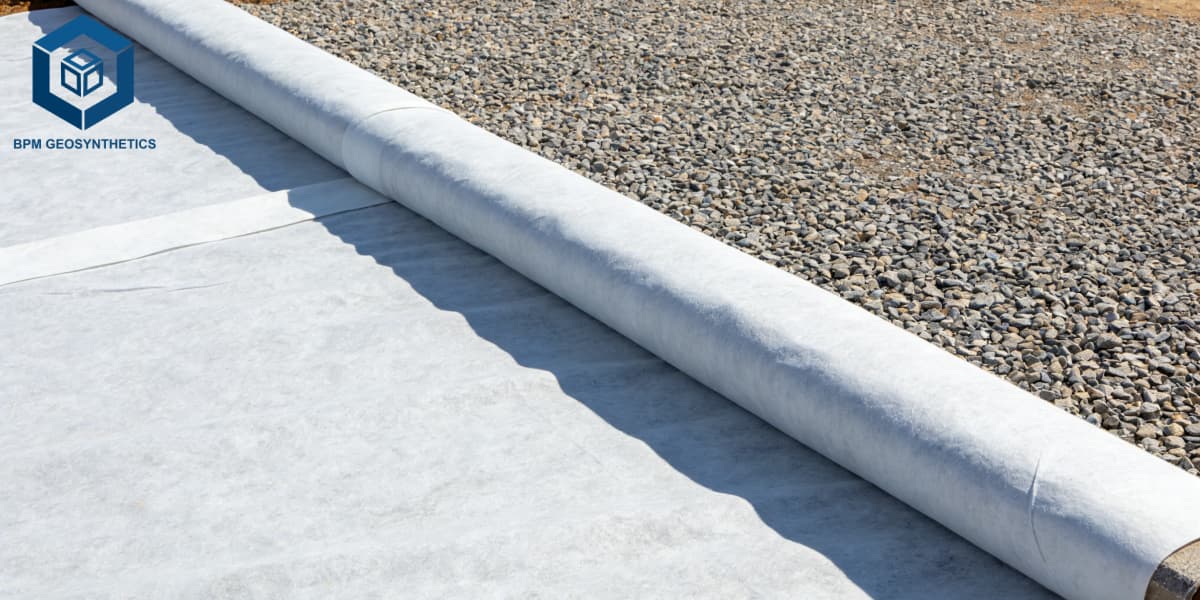
Geotextile fabric under gravel is closely related to construction industry and has significant applications in civil engineering and geotechnical engineering. So, it acts as a soil stabilizer, helps in erosion control, serves filtration as well as drainage. Geotextile materials are instrumental in the construction of roads and the process of landscaping. For any landscaping, driveway, or pathway project involving gravel, the most critical factor for long-term success is often not the gravel but the geotextile fabric you put under it. Commonly referred to as landscape fabric or weed barrier cloth, this simple material is the unrecognized hero that divides a stable, easy-care gravel surface from an overgrown, muddy, sinking one. This comprehensive article on the best geotextile fabric under gravel will consider their materials, pros and cons, and suitable uses. Also, it will give a basic knowledge of why this layer is a must-have.
1. The Critical Role of Geotextile Fabric Under Gravel
Understanding the fundamental functions of geotextile fabric first is very important if you want to look at the different products later. A single good fabric is capable of delivering several benefits at the same time.
1.1 Separation
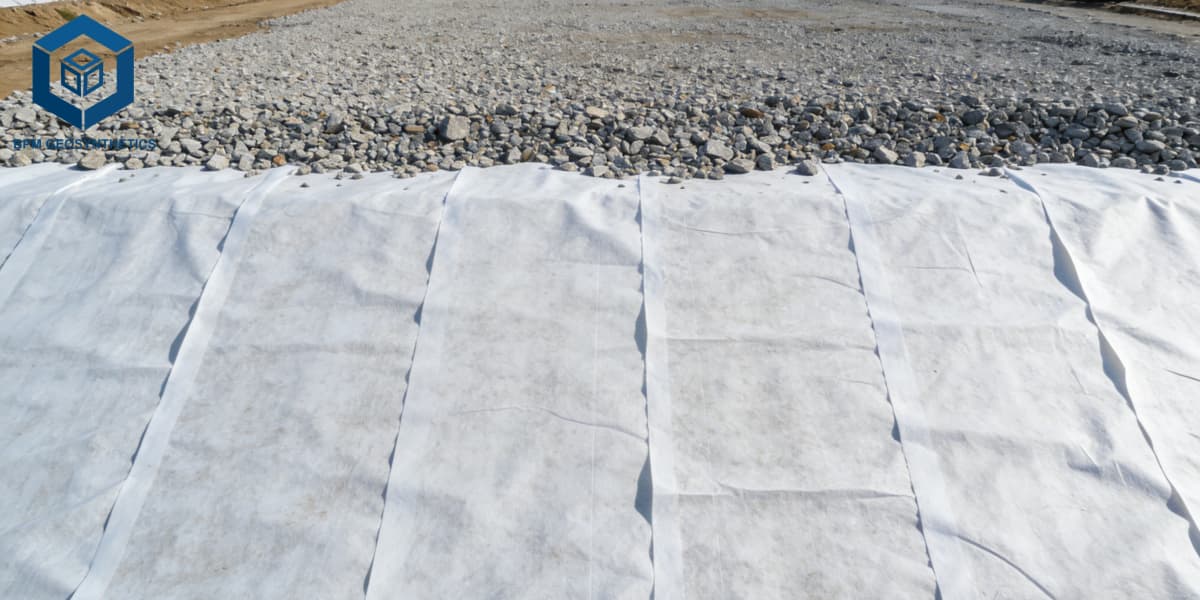
The geo fabric under gravel layer installs a virtual wall between gravel and the ground under it. If this barrier is not present, after some years of use of the surface is exerted by pressure (i.e. walking, traffic, rain, etc.), gravel pieces will be mechanically pushed into soft soil, and at the same time, soil will be carried into the gravel layer from below. This situation results in the formation of ruts, sinking spots, and losing of surface stability. The separation level of the layers is maintained by the fabric once it is installed thus the gravel's load-bearing and water absorption properties are preserved.
1.2 Filtration
The geotextile under gravel permits water to freely move from the gravel to the subsoil thus keeping away the occurrence of water pressure which is the cause of ground heaving or erosion. Besides, the fabric prevents fine soil particles from passing through which could clog the gravel and damage its drainage capability.
1.3 Stabilization
The geo fabric for under driveway limits the subgrade under the subsoil to carry more load thus the entire structure gets reinforced. This is quite important especially for working under driveways or other areas of heavy load application.
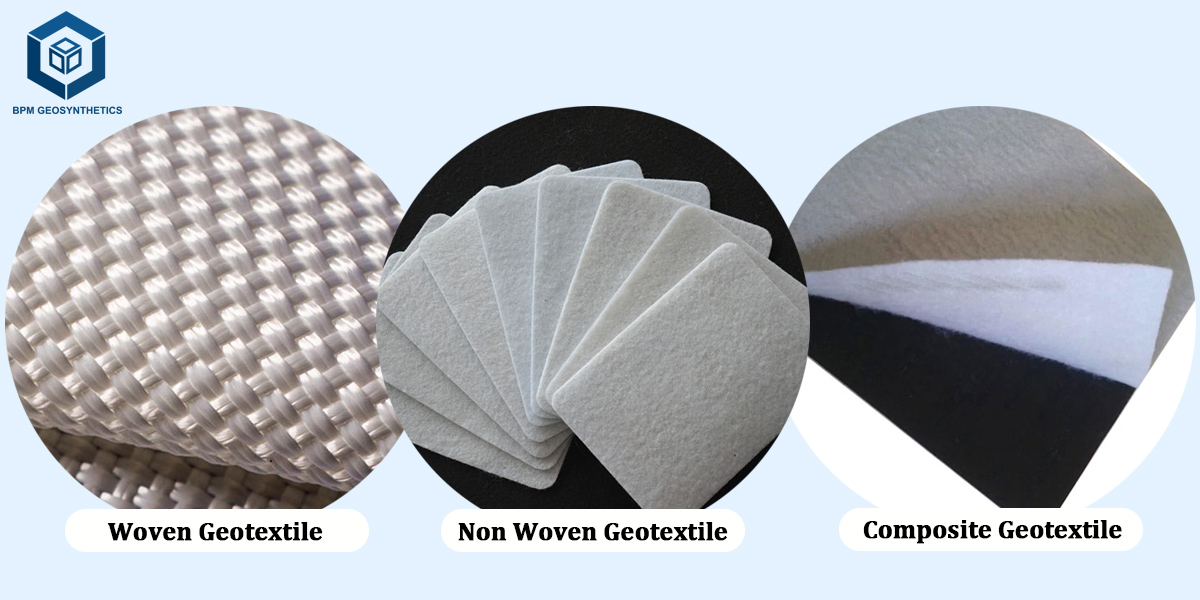
Generally, two categories of geotextiles exist: woven and nonwoven. The woven fabrics which are made from slit-film or monofilament polypropylene are generally more robust and provide better stabilization/separation performance for high-traffic areas such as driveways. Nonwoven fabrics, made by needle-punching polyester or polypropylene fibers, are perfect for providing filtration, drainage, and protection, and often are found in garden beds or under decorative stone.
2. The 8 Best Geotextile Fabric Under Gravel Review
2.1 TenCate Mirafi® NZ Series (Non-Woven)
- Best for: Heavy-Duty Drainage & Stabilization
The Mirafi NZ series by TenCate is a professional-grade non woven geotextile fabric made of needle-punched non-woven polypropylene and is one of the most common Geotextile Fabrics under Gravel in manufacturing. It can mostly boast of its outstanding combination of filtration and bio-stabilization abilities.
- Pros: The geotextile fabric under gravel driveway is one of the most permeable products on the market. Fabric geotextile offers great separation of the layers and has high resistance to puncture. It fits irregular subgrades quite nicely. Since it has a high flow rate, it is perfect for areas where water runoff is considerable.
- Cons: Very expensive as it is a professional-grade material; potential waste if only a small section of a residential pathway is being done. Usually large rolls are offered, these might take too much space and be difficult to handle for a small project.
2.2 BPM Geosynthetics (PP short fiber filtration geotextile 400gsm )
A benchmark in the industry, BPM Geosynthetics geotextile fabrics are engineered for high-performance. The 400g series is a standout for filtration beneath roads, parking lots, and embankments. Its needle-punched non-woven structure offers an excellent balance of tensile strength and flow rate. Its high permittivity ensures free water movement while preventing the intermixing of subgrade soil with aggregate base. For a heavy-duty, all-around reliable geo fabric where specification compliance is paramount, BPM Geosynthetics is often the engineer's first call.
2.3 Taian Jingwei Geosynthetics Co ltd (PET short fiber filtration geotextile Series)
Taian Jingwei Geosynthetics is another giant in geosynthetics. Their PET short fiber Series (Non-Woven) series is a direct competitor to Propex, known for its consistent quality and wide availability. With excellent elongation properties, it can accommodate some ground movement without compromising its filtration function. It is particularly effective in subsurface drainage applications behind retaining walls and under sport fields. Taian Jingwei Geosynthetics provides exhaustive technical data, making it easy to match the exact NW product to your required strength and AOS.
2.4 GEOSINCERE Geosynthetics - filtration geotextile Geotextile non woven Series
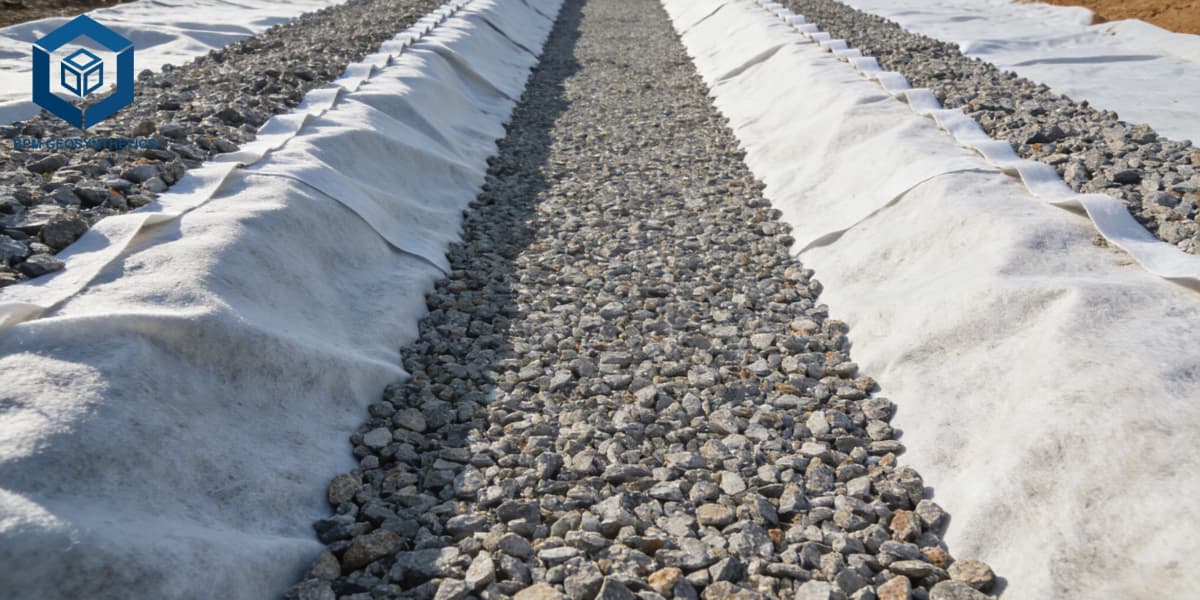
GEOSINCERE produces geotextile fabric under gravel with a keen focus on hydraulic properties. Their non woven-Series non-woven fabrics are optimized for drainage trenches, landfill leachate systems, and erosion control under riprap. They often feature a slightly higher permittivity than standard road fabrics, making them ideal where water conveyance is the primary goal. They also offer excellent filtration characteristics for silt fences (temporary sediment control), showcasing their versatility.
2.5 Agru America Geotextile Fabric Under Gravel
Agru is renowned for its innovation in geomembranes, but their accompanying non woven geotextile is engineered to perfection. For challenging filtration applications like landfill drainage layers or behind mechanically stabilized earth (MSE) walls with poor backfill, Agru's fine-tuned non-wovens provide precise filtration gradation.
2.6 Gorilla Fabric (Landscaping filtration Geotextile Fabric Under Gravel)
A brand known for consumer toughness, Gorilla's non-woven landscaping fabric is a surprisingly robust option for residential and commercial landscaping. It excels in French drain installation, as a stable base for patios and walkways, and for weed barrier applications in planting beds (where its permeability is a key advantage over impermeable plastic). While not rated for highway use, its puncture resistance and ease of handling make it a top choice for drainage and separation around homes.
2.7 The Best Project Material Co., Ltd.- Non Woven Filtration Geotextile
Specifically engineered for on-site wastewater systems, fabrics like Hanes Geo Components' Drainfield fabric or similar ASTM-specified products are the gold standard for wrapping drain rock in leach fields. They have a carefully calibrated AOS (typically around 70-80) to prevent clogging from silt while protecting the stone aggregate from soil intrusion. Using a standard landscape fabric here is a common and costly mistake; these specialized geotextiles are essential for system longevity.
2.8 BPM Geosynthetics PET Filament Non Woven Filtration Geotextile Series
BPM Geosynthetics's TS (Thermally Stabilized) series represents the high end of durability. These non-woven geotextiles undergo a thermal bonding process in addition to needle-punching, resulting in a thinner, stiffer fabric with exceptionally high permittivity and tensile strength. They are ideal for applications where creep resistance (long-term stretching under load) is a concern, or where a thin profile with high flow capacity is needed, such in some pavement edge drains or beneath green roofs.
3. After the Project Evaluation, the Appropriate Geotextile Fabric Under Gravel is Selected
3.1 Define project requirements
First, you need to be clear about the specific needs and goals of your project. Determine the main role of geotextiles in the project, such as separation, filtration, reinforcement or drainage. This will help determine the type of geofabric and performance characteristics required.
3.2 Understand the site conditions of the project
It is important to understand the site conditions in which the project is located. We take into account factors such as the type of soil, soil moisture, pH, temperature range, and possible chemical exposure at the construction site. Choosing a geotextile drainage fabric that is compatible with the site conditions can help ensure optimal performance and long-term durability.
4. Installation Best Practices: Maximizing Geotextile Fabric Under Gravel Lifespan
Even the top-notch fabric will fail if you do not install it correctly. You must follow these steps:
4.1 Excavate and Prepare
Take down vegetation and topsoil. Dig down to the depth you need (gravel depth + fabric). Thoroughly compact the subgrade and make sure it is sloped for drainage.
4.2 Lay the Fabric
Place the geotextile filter fabric unfolded right onto the compacted subgrade. Overlap by at least 12-18 inches for driveways and 6-12 inches for paths. Don't pull the fabric tight; leave some wrinkles for flexibility.
4.3 Secure
Fix landscape fabric staples (6 inches or longer) along with seams and edges every 5-10 feet. If your ground is slanting, you should staple more often.
4.4 Add Gravel
Gravel is carefully deposited onto the fabric with machines with wide tires or manually. You should not drag sharp tools or heavy equipment directly on the fabric. The gravel is spread to the desired depth (usually 4-6 inches for driveways).
4.5 Compact
Settle the gravel to a firm, stable base by using a vibratory plate compactor.
Summarize
Choosing the best filtration geotextile fabric under gravel is a crucial decision that can greatly affect the success of your construction project. If you want premium geotextiles that you can rely on, The Best Project Material Co., Ltd.(BPM Geosynthetics)is the ideal partner for you. BPM Geosynthetics presents filament geotextiles, polyester staple fiber geotextiles, polypropylene staple fiber geotextiles, woven fabrics and woven fabrics, geotextile types, material types and production processes which will definitely fit your project requirements. I hope this piece will give you useful knowledge that will help you understand the choice and use of geotextile fabric under gravel more thoroughly.