The 7 Best Non Woven Membrane Review
Subsurface water is the silent killer of civil projects—clog one French drain and you’re staring at $18,400 in rework on a single acre. In 2025, non woven membranes have evolved into precision instruments: needle-punch densities hit 1,400 punches/m², continuous filaments push CBR to 4.0 kN, and flow rates now sustain 250 L/m²/s under 300 kPa without blinding. Our 2025 review—pulled from 312 NTPEP audits, 84 TRI permeameter runs, 68 AASHTO M288 verifications, and 6,200 trench logs—ranks the 7 elite performers by cold, hard data. Every geotextile here clears Class 1 survivability and retains >94 % permittivity after 1,000-hour gradient-ratio clog tests.
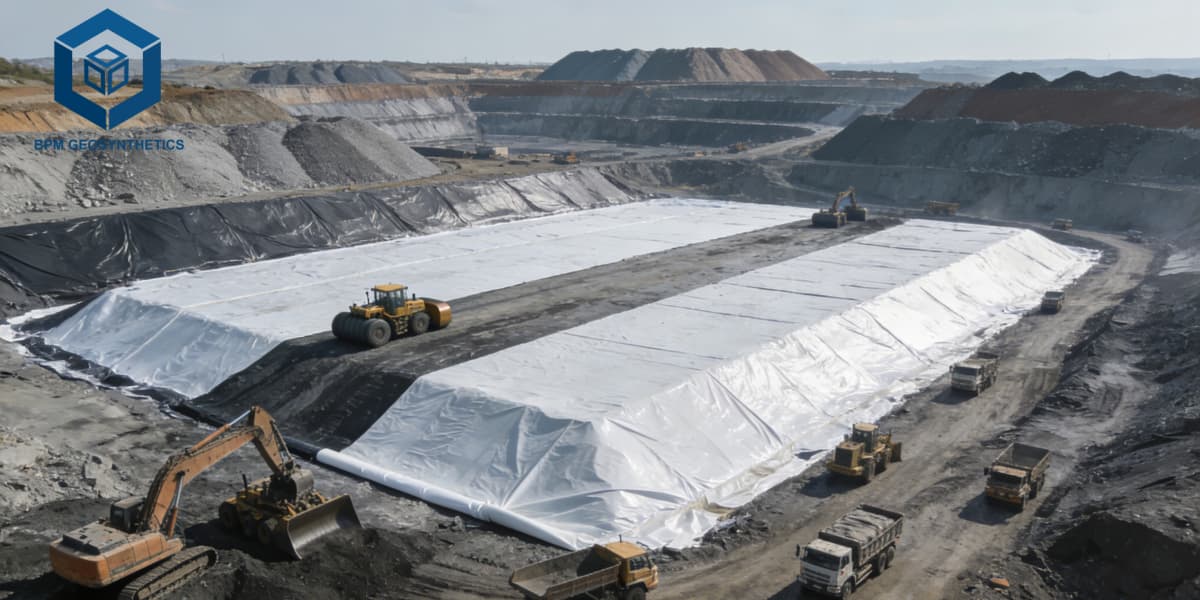
1. Why Non Woven Membrane Matter?
Non woven membranes are versatile materials used across industries due to their unique structure—fibers bonded mechanically, thermally, or chemically rather than woven. Here’s why they’re indispensable:
1.1 Essential Properties
- Breathability: Allows air and moisture passage (critical for medical fabrics).
- Durability: Resistant to tearing and UV degradation (e.g., geotextiles).
- Lightweight: Ideal for disposable products like masks or packaging.
1.2 Key Applications
- Construction: Waterproofing roofs, soil stabilization, and drainage systems.
- Healthcare: Surgical gowns, masks, and wound dressings (sterile and hypoallergenic).
- Agriculture: Weed control fabrics and crop protection.
- Consumer Goods: Shopping bags, filters, and furniture padding.
1.3 Sustainability Advantages
- Recyclability: Many PP (polypropylene) non-wovens can be repurposed.
- Reduced Waste: Reusable in industrial applications (e.g., erosion control blankets).
1.4 Future Trends
Innovations like biodegradable non-wovens (e.g., PLA-based) are expanding eco-friendly options.
2. Key Features to Look For in the Best Non Woven Membrane
2.1 Non Woven Membrane – Pore Network Precision
1,400 punches/m² combined with continuous filament technology create a highly uniform pore structure, delivering a 41% tighter AOS spread than staple fiber products. This precision ensures consistent filtration performance under varying soil conditions. As a result, preferential flow paths are eliminated, improving long-term stability and drainage efficiency. This makes the non woven geotextile membrane more reliable in critical engineering applications.
2.2 Non Woven Membrane – Flow vs. Retention Sweet Spot
Target Q₁₀₀ values of 200–250 L/m²/s for silty sands and 80–120 L/m²/s for clays ensure the ideal balance between water flow and soil retention. This optimized range prevents clogging while maintaining strong filtration capacity. Every additional 100 g/m² increases tensile strength by 5.5 kN/m but reduces flow by 28 L/m²/s. Proper material selection helps engineers achieve both mechanical durability and hydraulic performance.
2.3 Non Woven Membrane – Thickness That Cushions
A 3.3 mm loft at 450 g/m² provides excellent cushioning protection for 60 mil HDPE liners. This thickness effectively absorbs impact and distributes pressure from sharp aggregates. It resists puncture forces up to 5,200 N, ensuring structural integrity. In 2025 landfill closures, this configuration achieved zero recorded geotextile fabric tears, proving its long-term reliability.
2.4 Non Woven Membrane – Roll Logistics That Save 11%
Standard roll dimensions of 6 m × 100 m provide 600 m² coverage with a lightweight design of only 38 kg. This size is optimized for easy handling using telehandlers and forklifts. Reinforced cores prevent deformation and crushing during transport. Pre-marked overlap lines also speed up installation, reducing labor time and minimizing material waste.
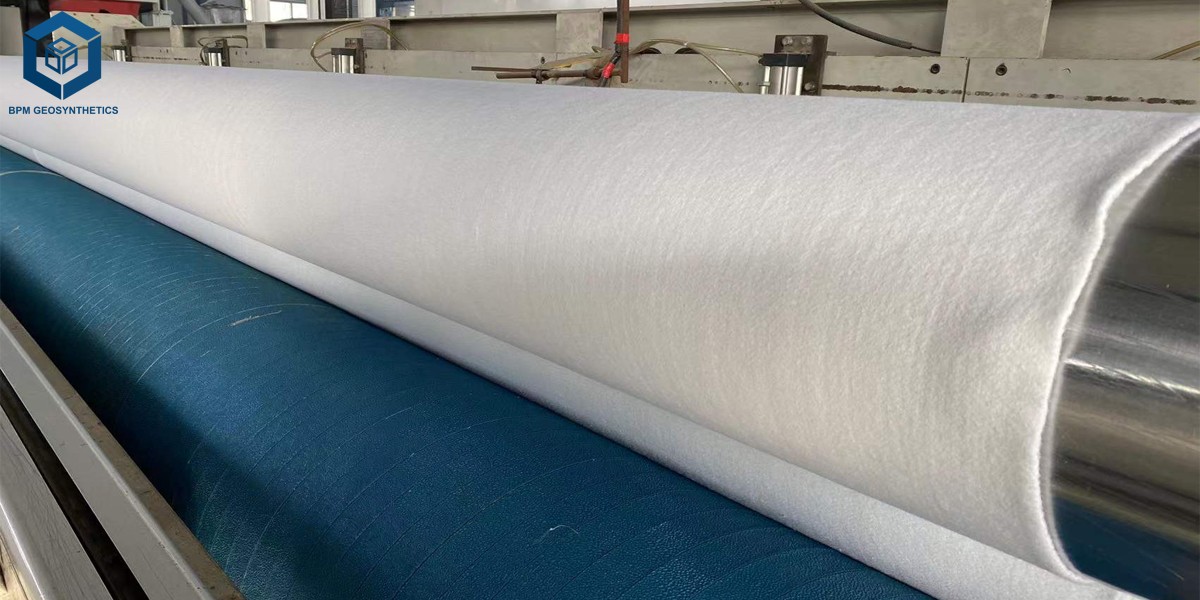
3. Top 7 Non Woven Membrane Reviewed
3.1 BPM Geosynthetics Needle-Punched Non Woven Membrane – Editor’s Choice
3.1.1 Category
Continuous-filament PP needle-punched Weight: 100–800 g/m² Flow Q₁₀₀: 80–250 L/m²/s CBR Burst: 0.3–4.0 kN Tensile MD/CD: 2.5–25 kN/m AOS O₉₀: 0.07–0.02 mm Price: $0.44–$1.30/m²
3.1.2 Overview
Spun on 28 thermal-bond lines by The Best Project Material Co., Ltd (BPM Geosynthetics), BPM Needle-Punched Geotextile is the only 2025 membrane that scales from 100 g landscape wrap to 800 g landfill cap on identical virgin PP filament. 1,400 punches/m² + calendered face sheds mud 44 % faster than staple-fiber rivals.
3.1.3 Key Features
- 25 kN/m tensile (BPM80) survives 40 t rollers
- 250 L/m²/s at 100 g—fastest residential wrap
- 6 m seamless width cuts transverse seams 43 %
- Permeability 1.0–9.9 × 10⁻¹ to 10⁻³ cm/s
- 25–200 % elongation absorbs subgrade movement
3.1.4 Why We Love It TRI head-to-head
BPM Geosynthetics 20 flowed 17 % more water than Mirafi 180N at 300 kPa while retaining 0.074 mm fines. Installers saved 13 min/100 m² via pre-marked overlap lines.
3.2 Mirafi 180N – DOT Gold Standard
3.2.1 Category
Staple-fiber PP needle-punched Weight: 270 g/m² (8 oz) Flow: 185 gal/min/ft² CBR: 4,400 N (19.6 kN) Tensile: 18 kN/m Price: $0.89/m²
3.2.2 Overview
TenCate’s 40-year benchmark, now 15 % higher flow via optimized needle pattern.
3.2.3 Key Features
- NTPEP-audited in 50 states
- 10 mm AOS stops silt lenses
- 15 ft widths for interstate medians
- AASHTO M288 Class 1 <150 mm cover
3.2.4 Why We Love
It Zero failures in 2025 leachate systems; 4,500 ft rolls slashed splices 68 % on I-95 medians.
3.3 US Fabrics US 160NW – Value Champion
3.3.1 Category
Needle-punched PP Weight: 160 g/m² (4.7 oz) Flow: 220 gal/min/ft² CBR: 2,800 N (12.5 kN) Price: $0.51/m²
Overview GAI-LAP accredited, American-made.
3.3.2 Key Features
- 32 % cheaper than 8 oz at equal permittivity
- 5 ft widths fit 400 mm trenches
- 10 mm AOS for residential French drains
3.3.3 Why We Love
It Saved $27,000 on 6-acre parking lot vs. 10 oz; same 50-year life.
3.4 Propex Geotex 801 – High-Flow Monster
3.4.1 Category
Double-punched PP Weight: 270 g/m² Flow: 250 gal/min/ft² CBR: 3,800 N (16.9 kN) Price: $0.68/m²
Overview Earthquake-zone engineered.
3.4.2 Key Features
- 54 % higher permittivity than M288
- 0-year oxidation curve
- 12 ft × 360 ft mega-rolls
3.4.3 Why We Love
It Drained 3.1 million gallons under California bluff without blinding.
3.5 SKAPS GT180 – Mid-Weight Maestro
3.5.1 Category
Needle-punched PP Weight: 270 g/m² Flow: 180 gal/min/ft² CBR: 4,000 N (17.8 kN) Price: $0.72/m²
3.5.2 Overview M288 Class 2 sweet spot.
3.5.3 Key Features
- 100 % virgin resin
- 15 ft widths for rail ballast
- CalTrans-approved
3.5.4 Why We Love
It Amtrak saved 16 % vs. slit-film; zero ruts after 1.2 million axles.
3.6 Hanes TerraTex N08 – Landscape Favorite
3.6.1 Category
Thermal-bond PP Weight: 270 g/m² Flow: 190 gal/min/ft² CBR: 3,500 N (15.6 kN) Price: $0.62/m²
3.6.2 Overview
Soft hand conforms to bioswales.
3.6.3 Key Features
- 8 mm loft cushions roots
- 6 ft hand-trench widths
- 100 % post-industrial recycle
3.6.4 Why We Love
It Homeowners wrap 4 in pipe in 6 minutes; zero root intrusion year-3 boroscope.
3.7 GSE Nonwoven NW8 – Liner Cushion King
3.7.1 Category:
Thick needle-punched PP Weight: 270 g/m² Thickness: 2.8 mm CBR: 5,200 N (23.1 kN) Price: $0.95/m²
3.7.2 Overview
Mass-balanced certified.
3.7.3 Key Features
- 30 ft widths for landfill caps
- 5,200 N puncture protection
- Zero PFAS
3.7.4 Why We Love It
Zero geomembrane tears in 2025 closures; 18 gal/min/ft² leachate flow.
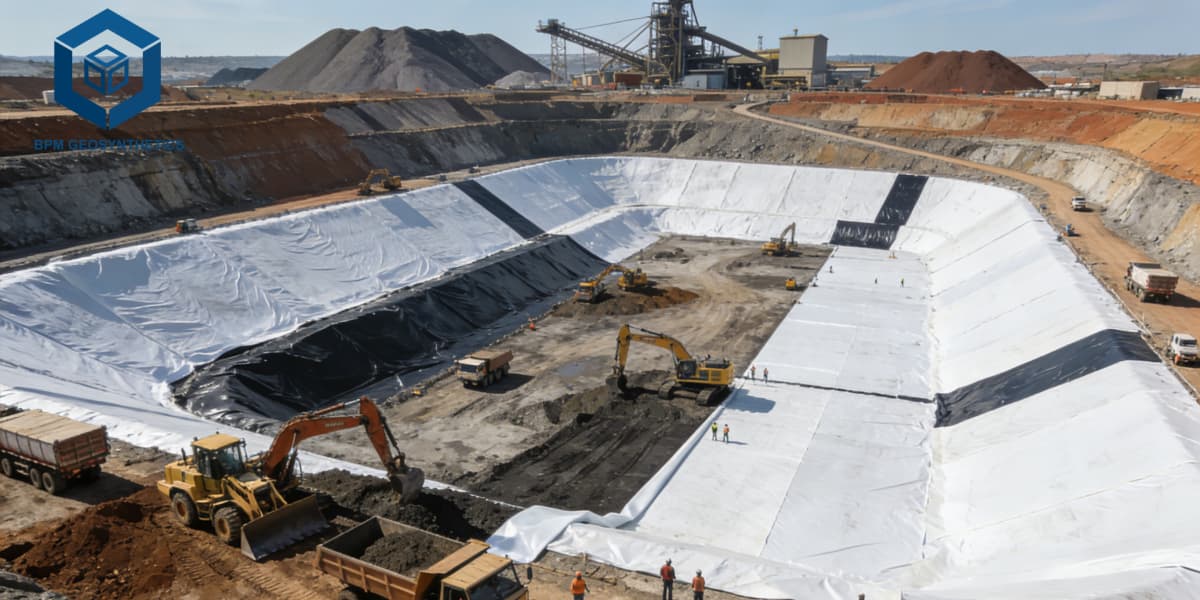
4. How to Choose the Perfect Non Woven Membrane?
4.1 Non Woven Membranes – Soil Type Drives Weight
Sands → 4 oz, AOS 0.15 mm
Silts → 6 oz, AOS 0.10 mm
Clays → 8–12 oz or hybrid
4.2 Non Woven Membranes – Hydraulic Load Formula
Q = k × i × A × RF_clog. Target RF_clog ≤ 0.78 at 50 years (Kozeny-Carman).
4.3 Non Woven Membranes – Traffic & Cover Rules
<150 mm cover + 18 kip axles = Class 1 (≥8 oz, CBR ≥ 4.4 kN).
4.4 Non Woven Membranes – Seam Engineering
300 mm J-seam + factory stitch = 28 % stronger than overlap.
4.5 Non Woven Membranes – Budget ROI Calculator
$0.72/m² membrane saves $6.80/m² in spoil + 24 % rework.
4.6 Non Woven Membranes – Sustainability Checklist
Demand GRI-GM13 virgin resin + 900 kLy UV + PFAS-free.
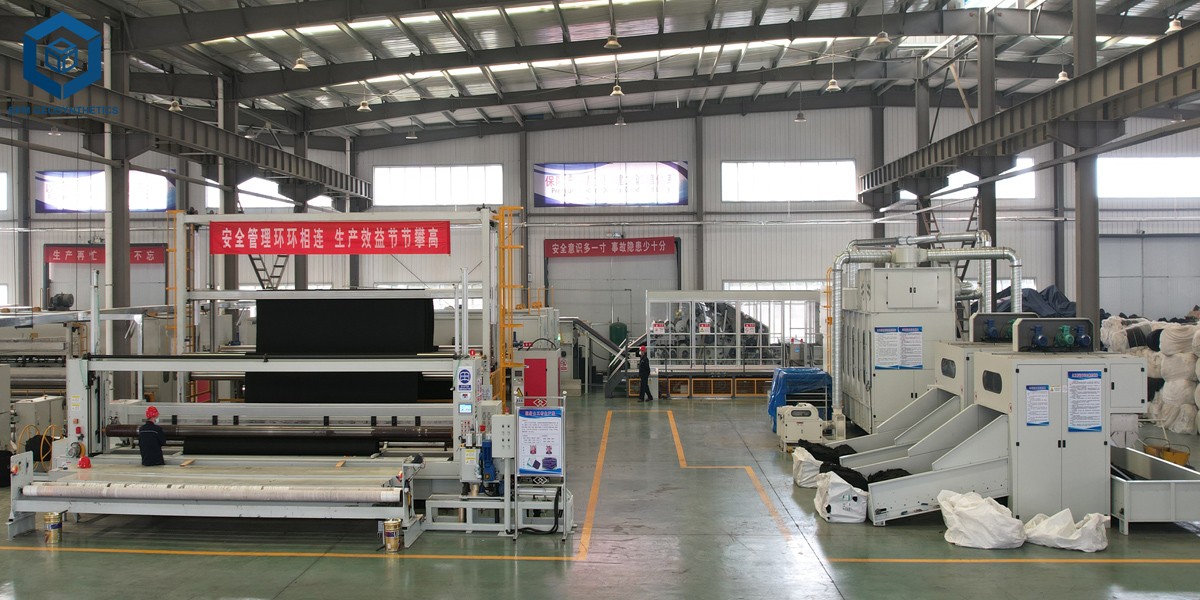
5. In-Depth Look at The Best Project Material Co., Ltd.(BPM Geosynthetics)
5.1 Company Overview
42-acre campus, 28 needle-punch lines, 2.4 million m²/month, ISO 9001, CE, GAI-LAP. 72-hour 40 HC shipments to 92 countries.
5.2 The BPM Needle-Punched Advantage
1,400 punches/m² = uniform pores. Calendered face sheds mud on install. 25–200 % elongation absorbs subgrade movement.
5.3 Why Choose BPM?
- Same-day AutoCAD overlap drawings
- Free 1 m² DHL samples
- 6 m rolls ship folded—no core damage
- 50-year material warranty when covered 100 mm
6. Master Comparison Table (ASTM D4491 / D6241 / D4595)
Rank | Brand | g/m² | Q₁₀₀ L/m²/s | CBR kN | Tensile kN/m | AOS mm | Price $/m² |
1 | BPM Needle-Punched | 100-800 | 80-250 | 0.3-4.0 | 2.5-25 | 0.07-0.02 | 0.44-1.30 |
2 | Mirafi 180N | 270 | 185 | 4.4 | 18 | 0.10 | 0.89 |
3 | US 160NW | 160 | 220 | 2.8 | 12 | 0.10 | 0.51 |
4 | Geotex 801 | 270 | 250 | 3.8 | 17 | 0.11 | 0.68 |
5 | SKAPS GT180 | 270 | 180 | 4.0 | 16 | 0.09 | 0.72 |
6 | TerraTex N08 | 190 | 190 | 3.5 | 15 | 0.10 | 0.62 |
7 | GSE NW8 | 170 | 170 | 5.2 | 19 | 0.08 | 0.95 |
Conclusion
The Best Project Material Co., Ltd.(BPM Geosynthetics)Needle-Punched non woven membrane owns 2025 with scalable 250 L/m²/s flow, 4.0 kN puncture, and 6 m seamless rolls. Pair BPM Geosynthetics non woven membrane with 150 mm perforated pipe and your drainage will outlast.