The 6 Best Geocell Material Review
Nowadays, in civil engineering, determining which geocell material to use is the first step that will affect the durability of a project, a structure's performance, and the overall costs. Geocells are 3D honeycomb confinement systems working primarily by strengthening weak soils through lateral confinement. However, there is a wide range in how well materials perform.
This work compares 6 popular geocell materials - from traditional HDPE to advanced Novel Polymeric Alloys (NPA) - in terms of tensile strength, weld peel strength, UV resistance, creep behavior, and suitability of usage. Whether the task is to reinforce subgrades of highways, stabilize slopes, or construct retaining walls, this manual is apt to provide a structural safety and sustainability balance.
1. What is Geocell Material?
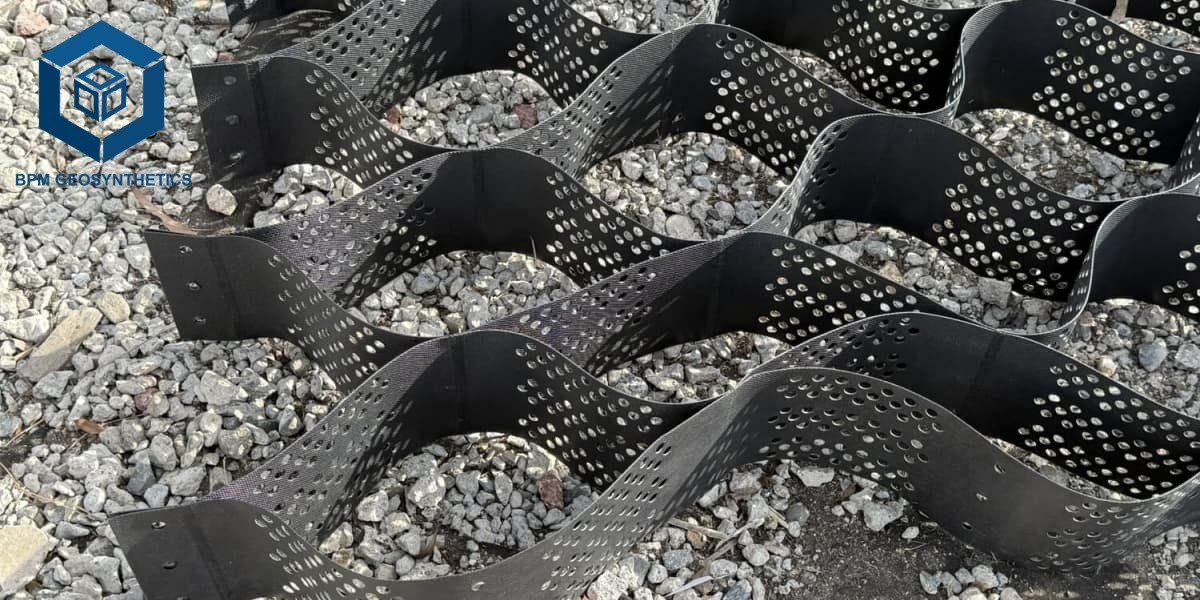
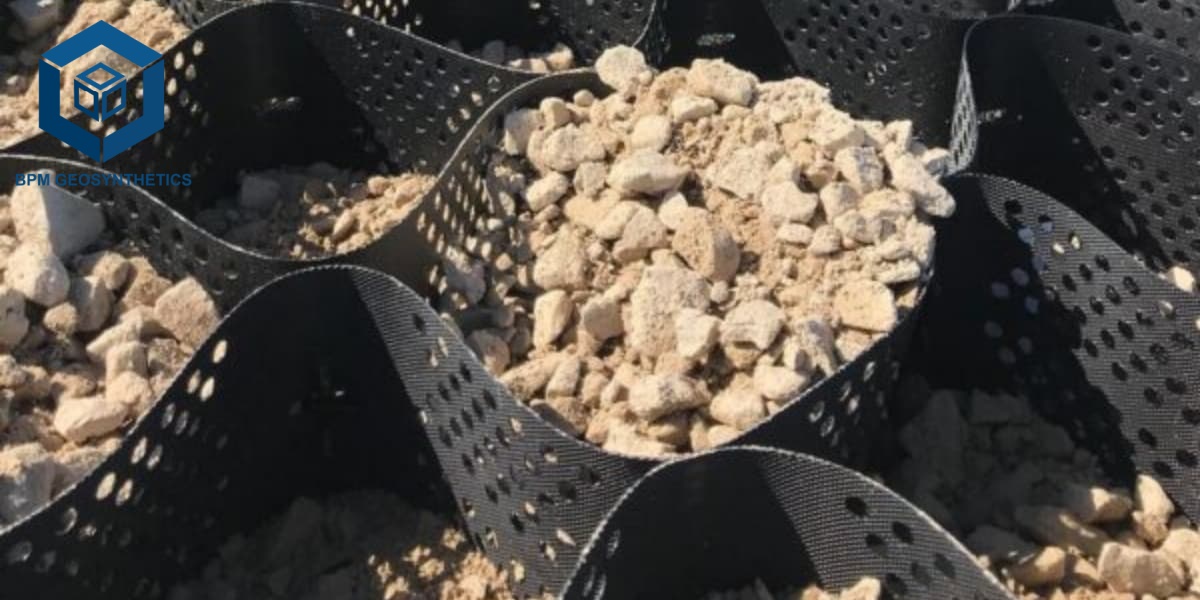
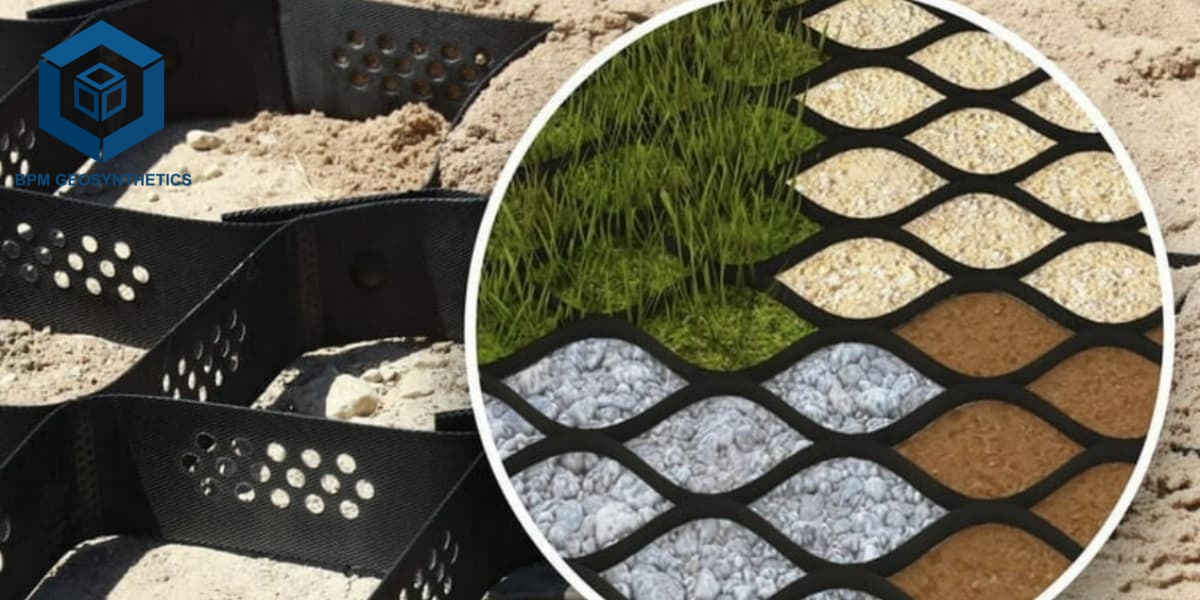
Geocell is a 3D honeycomb-like cellular confinement system made from connected polymer strips. Upon expansion at the site, these strips create a network of walls confining and supporting infill materials such as soil, gravel, sand, or concrete.
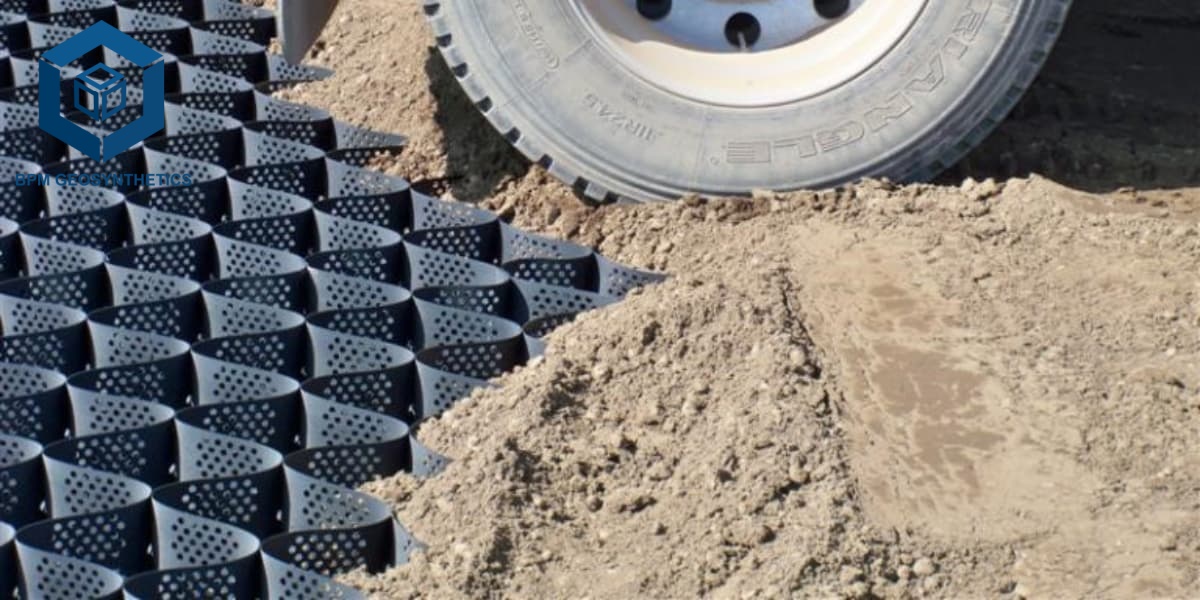
The principal idea behind the use of geocell erosion control technology is lateral confinement. By limiting the horizontal displacement of soil particles, the geo cell enhances the shear strength and the stiffness of the soil layer, resulting in a rigid mattress-like structure. This composite system helps in distributing heavy loads over a large area, prevents erosion, lessens rutting, and lowers the risk of structural failures. So, mechanically stabilized layers produced can withstand significantly greater loads than soils without reinforcement.
2. What Types of Materials are Used in Geocell Material?
2.1 High-Density Polyethylene (HDPE)
Being the most frequently used HDPE geocell material, HDPE is the world industry standard for various applications, such as road construction and slope protection.
2.2 Novel Polymeric Alloys (NPA)
NPA are considered as materials for the upgradation of plastic geocell products and they are designed specifically for overcoming the creep problem of regular HDPE. These high-performance materials are usually combinations of different polymers reinforced with nano-fibers or special resins.
2.3 Polypropylene (PP)
PP is sometimes the first choice when geocell structures require material with more rigidity but still at a lower price than the expensive alloys.
2.4 Woven/Non-Woven Polyester (PET)
A fraction of geocell systems employ high-tenacity polyester geotextiles instead of solid plastic sheets.
PET geocells are characterized by high tensile strength. Besides that, they are highly permeable and water can flow through the cell walls. Permeability is an advantage for drainage-critical applications. However, these fabric-based systems fundamentally differ from rigid-walled geocells and are usually used for specialized erosion control and drainage applications rather than for heavy load-bearing ones.
2.5 Recycled HDPE
Due to the ever-growing focus on sustainability, a few producers nowadays provide geocell materials made of recycled HDPE resins. The recycled HDPE geocells offer the environmental benefit of diverting plastic waste from landfills and they still have many of the features of virgin HDPE. However, the mechanical properties, especially tensile strength and long-term creep resistance, of these products may be marginally lower compared to the virgin material. These materials are most suitable for light-duty applications like pedestrian trails, landscape design, and temporary access roads where highest levels of structural performance are not the major requirement.
3. Which Geocell Material Offers the Best Balance Between Flexibility and Stiffness?
3.1 The Industry Benchmark: HDPE Geocell Material
High-Density Polyethylene (HDPE) has been largely acknowledged as the most reasonable compromise in the main focus of the general engineering works. It not only delivers enough hoop strength for confining the infill materials efficiently but also retains a very high level of ductility. This very rare feature, on the one hand, allows the geocells made from HDPE to mold to uneven subgrades, to take care of a few settlements and even to adapt to the contours of steep slopes, on the other hand, such a risk as the brittle fracture is completely excluded.
Due to its high flexibility, HDPE in road building and slope stabilization work is like a living thing that intimately hugs the ground beneath it, so there is no place for water to enter and cause erosion underneath. Besides, the driveway hdpe geocell material has enough capacity to bend a little under stress without breaking which is a reason why it is easy to handle and quite resistant when it is in use.
3.2 Structural Integrity: NPA and PP Geocell Material
3.2.1 Novel Polymeric Alloys (NPA):
This type of material is very close to the stiffness end of the spectrum. So, while by far they have the advantage in load-supporting capacity owing to the fact that they experience only minimal cell wall deformation even under heavy vehicular loading, they are at the same time the least flexible ones during installation. In fact, NPA geocells demand a higher degree of accuracy in subgrade preparation and are not very tolerant of surface irregularities.
However, in cases where preserving the exact level of the road surface is paramount, e.g., high-speed railway tracks or airport runways, this feature of stiffness turns to be a quite significant plus.
3.2.2 Polypropylene (PP):
PP has a higher degree of stiffness right from the beginning as compared to HDPE leading to a stronger touch but at the same time a greater opposition to instantaneous deformation.
Yet, along with the added rigidity, there come some compromises. At low temperatures, the stiffness of PP reaches such a level that the material becomes brittle, therefore, cracks may start to develop as a result of impacts or dynamic loading. For those projects that are executed in highly changing climates or areas which experience lots of freeze-thaw cycles, HDPE, which is much more flexible at low temperatures, generally offers better durability over time.
4. How Do Tensile Strength and Weld Peel Strength Compare?
4.1 NPA (Novel Polymeric Alloy): The Performance Leader
Since NPA is specialized for this kind of high-stress environment, its technical characteristics also bear the hallmark of this specialization.
4.1.1 Tensile Strength:
NPA is the strongest among all the geocell materials. Thanks to the special resins and reinforcing fibers used in the manufacture of NPA, it is capable of maintaining its strength even when subjected to light and long-duration loading. The high elastic modulus of the material is such that it strongly resists stretching which, in turn, guarantees that the geocell grid retains its design geometry even under very heavy wheel loadings.
4.1.2 Weld Peel Strength:
NPA outperforms others in terms of weld strength. The molecular bond made in the welds of NPA is so strong that it can withstand fatigue or in other words, the seams are very unlikely to fail even under the repetitive loads of very heavy vehicles, e.g. trucks, trains. It goes without saying that this type of resistance to fatigue is a very necessary attribute for infrastructure projects when a weld failure can even jeopardize the whole stabilized layer.
4.2 HDPE (High-Density Polyethylene): The Industry Standard
HDPE provides a level of strength that is reliable and meets most of the international standards (e.g., GRI-GS13), however, when compared to NPA, its absolute values are generally on the lower side.
4.2.1 Tensile Strength:
HDPE can yield strong and dependable tensile resistance but the fact is that compared to NPA it has a lower elastic modulus. What it basically means is that even though it is quite hard to break HDPE, the same material will undergo more stretching (creep) than NPA before it breaks. And creepage is sufficient to be incorporated in the designs of engineers for the major part of standard uses.
4.2.2 Weld Peel Strength:
HDPE welds are highly consistent because the material melts and bonds easily during manufacturing. The welding process for polyethylene is well-established and quality-controlled, resulting in dependable seam integrity. However, in extreme heat conditions, HDPE weld strength can decrease more significantly than alloy-based materials, requiring consideration for projects in very hot climates.
4.3 PP (Polypropylene): The Rigid Contender
PP is more rigid compared to HDPE, which results in high resistance to the initial stretching. Still, it has problems with the welding quality.
4.3.1 Tensile Strength:
When it comes to the force required to stretch PP, it's very high at the beginning. The material has a stiffer feel and secures the infill materials effectively under static loads.
4.3.2 Weld Peel Strength:
Different and sometimes problematic. Polypropylene has a reputation for being more challenging to weld ultrasonically than polyethylene. Although a perfectly manufactured PP weld can have a good strength, the weld itself is generally more brittle than those of HDPE. Due to this brittleness, PP welds may break suddenly upon a sharp impact or dynamic loading without yielding and stretching, which is a very critical failure mode in heavy-duty cases.
5. Which Geocell Material is Rated Highest for UV Resistance and Long-Term Durability?
5.1 UV Protection and Chemical Stability
For the most part, HDPE is considered as having the highest rating for the long-term environmental durability. Using 2% to 3% of carbon black during the manufacturing of HDPE geocells leads to the materials having extraordinary UV resistance. Because carbon black works as a very efficient UV absorber and stabilizer, HDPE geocells can be left to very strong sunlight for decades without any significant loss of their tensile strength or flexibility.
Moreover, HDPE is chemically inert, which offers another layer of defense against deterioration coming from highly acidic or alkaline soils, saltwater, and most chemical exposures present in civil engineering applications. This chemical stability means the material will neither become brittle nor degraded when exposed to corrosive subgrade soils or industrial contaminants.
5.2 Long-Term Performance in Harsh Climates
5.2.1 NPA for Creep Resistance:
In structural environments with heavy and long-lasting loads, NPA is considered the best because it can resist creep (permanent deformation) much better than HDPE. Although HDPE might slowly become deformed under the influence of heavy loads over a period of decades, NPA keeps its original geometry, thus providing a consistent load distribution during the entire design life.
5.2.2 Thermal Stability:
HDPE can be bent easily down to -40°C without breaking, whereas PP is more likely to break when subjected to cold temperatures. In situations with extreme temperature variations—hot summers and freezing winters—HDPE remains the benchmark for durability worldwide. Although NPA also stands up well to such temperature extremes, its main strength is in bearing heavy loads and not in thermal flexibility.
5.2.3 Recycled HDPE:
Even though it is good for the environment, recycled HDPE doesn't generally have as high UV resistance as the one obtained from a new material with carbon black at the optimal level. When the geocell is supposed to be left in the sun for a long time before the filling operation, using new HDPE or NPA of the highest quality would be the best option.
6. Which Geocell Material is Most Effective for Heavy-Duty Load Support?
6.1 Heavy-Duty Load Support: The Case for NPA Geocell Material
When it comes to heavy-duty load support applications such as highways, railways, industrial ports, mining haul roads, and airport runways, Novel Polymeric Alloys (NPA) is the most appropriate material choice.
6.1.1 Structural Rigidity and Creep Resistance:
Unlike the regular plastics, NPA has been specially designed and built to have an elastic modulus which is high. This quality or characteristic of the material guarantees that even under the permanent weight of heavy vehicles the geocell walls will not creep (permanently stretch). Properly retaining its original form, NPA yields to a rigid mattress effect which consequently very impressively increase the bearing capacity of soft subgrades. Particularly in the case of high-speed applications where even slight surface deformation can result in safety hazards or necessitate more frequent maintenance, this is very important.
6.1.2 Long-Term Service Life in Infrastructure:
NPA maintains structural integrity for over 50 years, even under high-frequency loading from heavy truck traffic or rail operations. Manufacturers offering NPA products often provide engineering performance guarantees for up to 75 years under specific geological and loading conditions, reflecting confidence in the material's long-term behavior.
6.2 HDPE for Moderate Heavy-Duty Applications
It is true that HDPE can be used for lighter roads and secondary highways very effectively; however, its characteristic of slightly deforming over a long period of time under continuous heavy loads makes it less suitable for primary high-speed infrastructure or heavy-tonnage installations where the accuracy of the road surface is very important. Still, in the case of moderate heavy vehicle traffic or when the budget is the main factor, HDPE is still a good and well-tested option.
6.2.1 Load Distribution:
In the process of load distribution through the confinement mechanism, HDPE geocells perform well; however, the walls of the cells may be deformed more under going inelastic loading than those of NPA. This level of deformation is acceptable for most commercial parking lots, access roads and secondary routes.
7. What Kind of Geocell Material Manufacturer Warranties or Certifications Are Available?
7.1 International Manufacturers: Certifications and Guarantees
7.1.1 Presto Geosystems (USA):
My generation of geocell technology belongs to them, and their GEOWEB series is certified under ISO 9001:2015 and bears the CE mark. According to Presto, the company’s performance data is verified by third-party laboratories, and an industry-leading limited warranty that particularly focuses on weld strength and material consistency is offered. Material performance in various applications will not be an issue as they have been in the market for a long time.
7.1.2 PRS Geo-Technologies (Israel):
When it comes to Neoloy high-performance polymeric alloy (NPA) geocells, PRS is the company that introduces ASTM D6992 (SIM) creep testing in their certification portfolio. Engineering performance guarantees are provided up to 75 years under specified geological condition and are reflecting the high-end nature of their NPA formulations. Their products have passed ISO standards and are mainly designed for high-load infrastructure applications.
7.2 Leading Chinese Manufacturing: BPM Geosynthetics
With a leading position in the industry, BPM Geosynthetics supplies places in more than 100 countries, running a complete system, in terms of quality management, that meets international standards.
7.2.1 Comprehensive Certification:
In addition to ISO 9001, ISO 14001, and OHSAS 18001, BPM Geosynthetics Manufacturing plant has been certified as well. Products are tested by internationally recognized bodies such as SGS, Intertek, and Bureau Veritas, which assures the compliance of products with ASTM standards. Using third-party verification is BPM’s method of showing material specifications and performance values accurately.
7.2.2 Warranty Commitment:
Among the products warranties, two covers are the most common ones and they are UV resistance and weld peel strength, where the warranty normally ranges from 2 to 10 years. Highway subgrade and slope stabilization projects, as BPM Geosynthetics production has been, have demonstrated a 99.5% quality qualification rate, by consistent production quality.
Conclusion
It boils down to the geographic and structural requirements of the project as to which geocell material is the best. At the time of ordering geocells, the first thing to keep in mind is the heaviest loading condition, don’t compromise environment consideration, and choose material which is backed by third-party testing and manufacturer warranties. In fact, the right material choice, when installed properly, can turn the weak soils into strong structural elements that will continue supporting civilization's infrastructure for many generations.
Contact Us - More information, please contact The Best Project Material Co., Ltd.(BPM Geosynthetics) Team.