How to Select HDPE Liner Thickness?
1. What is HDPE Liner?
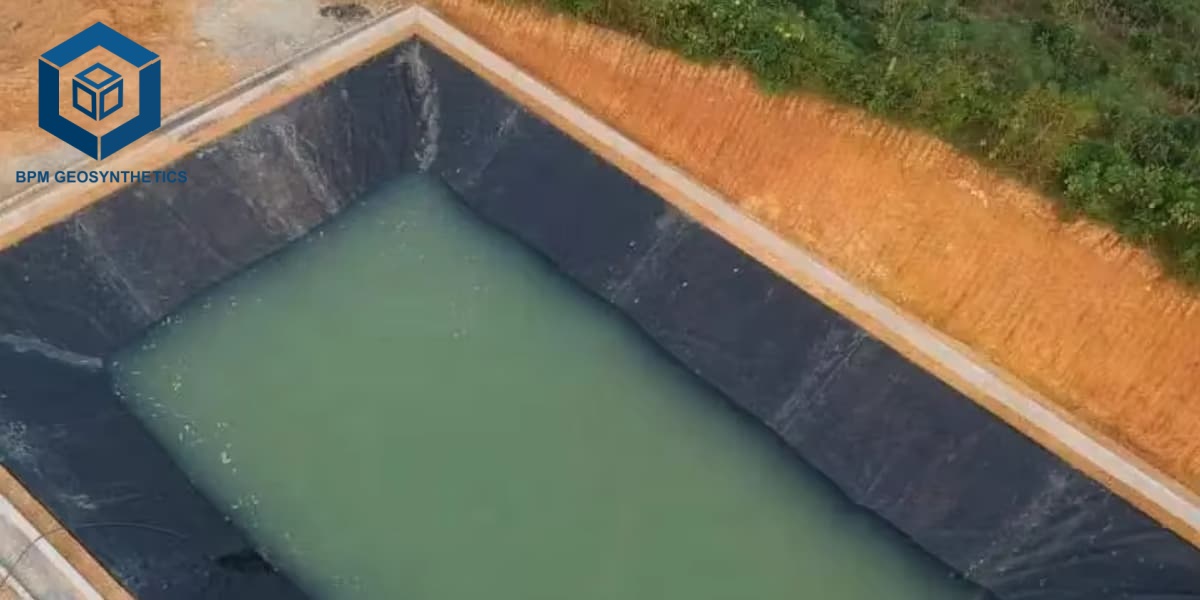
HDPE Liner, also known as HDPE Geomembrane, it is valued for its exceptional chemical resistance, durability, and impermeability. Its primary role is to prevent leaks and contamination, making it essential for applications such as landfill liners, mining heap leach pads, water containment ponds, and industrial wastewater treatment facilities. In short, it acts as a robust protective shield for soil and groundwater.
2. How Many HDPE Liner thickness?
Quick summary table
mm | mil | micron | Common Name |
0.3 | 20 | 300 | Very thin / temporary |
0.5 | 33 | 500 | Light-duty |
0.75 | 50 | 750 | Mid-range |
1.0 | 67 | 1000 | Standard-duty |
1.5 | 100 | 1500 | Heavy-duty (most common) |
2.0 | 133 | 2000 | High-strength |
2.5 | 167 | 2500 | Extra-thick |
3.0 | 200 | 3000 | Maximum thickness |
3. HDPE Liner Thickness Selection Factors
3.1 Subgrade Conditions
The subgrade conditions play an extremely important role in determining the performance and service life of the liner.
3.1.1 Loose, easy-to-punch soil - 30-40 mil:
Ideal for smooth, compacted clay or fine soil with very low inherent risk of puncturing.
3.1.2 Roughness of particles (sandy or gravelly) - 40-60 mil with a geotextile layered under the geomembrane:
Needs a cushioning or protection layer to safeguard against the projections of mineral particles and to lower the risk of puncture.
3.1.3 Sharp substrates (rocks or debris) - a minimum of 60 mil plus a geotextile on both sides:
Due to the sharp points and irregular shapes that can harm the geomembrane, a high degree of protection is required.
3.1.4 Older liner/concrete layer - 30-40 mil:
Mostly used as a secondary containment or a protective layer on top.
- Core message:
Proper subgrade preparation (sharp object removal, leveling, and compaction) is equally important as the selection of correct liner thickness.
3.2 Exposure & Environmental Stress
To some extent, climate and weather impact the performance and service life of a liner.
3.2.1 UV radiation:
Liner thickness of 40 mil minimum is needed for continuous outdoor exposure; for over 20 years exposure, 60 mil geomembrane is better to lower UV radiation degradation.
3.2.2 Very cold weather conditions:
A thickness lesser than 30-40 mil could lead to material becoming brittle and suffer cracking under freezing scenario.
3.2.3 Contact with chemicals:
Geomembrane liner above 60 mil thickness are generally required when exposed to aggressive chemicals in mining or industrial waste ponds to achieve chemical resistance and provide a safety margin.
The correct assessment of environmental stress enables consistent short to long-term performance of the liner.
3.3 Mechanical Stresses
The type and magnitude of mechanical loads dictate the puncture resistance and structural strength requirements.
3.3.1 Point loads:
Walking - 40 mil generally acceptable
Light machinery - 60 mil recommended for a larger margin of safety
Heavy vehicles - 80+ mil necessary to resist the impactful nature of heavy vehicle movement
3.3.2 Strength with regard to tension:
30 mil - about 200 lbs of tensile strength
60 mil - more than 400 lbs tensile strength; suitable for higher load cases
3.3.3 Pressure from water/hydrostatic pressure:
Up to a depth of 6 ft water - 30-40 mil
Depth of 10-20 ft - 40-60 mil
More than 20 ft - 60-80 mil advisable for long-term pressure stability
When carrying out mechanical design, one should always incorporate a safety factor against unforeseen loading situations.
3.4 Installation Method & Scale
Size of a project and installation situations definitely affect thickness determination.
3.4.1 Mini DIY projects (<500 sq ft):
20-30 mil okay for light duty uses like garden ponds or small containment areas.
3.4.2 Medium-sized projects (500-10,000 sq ft):
30-50 mil is a safe administration of both flexibility and durability.
3.4.3 Large industrial projects (acres scale):
60-120 mil frequently the range applied for mining, landfills and heavy-duty containment system works.
- Considerations on seaming:
Thickness of liners under 40 mil is much harder to be welded at a consistent level and require a very skilled hand for installation.
40-60 mil is almost always the desired range due to that it provides better welding stability and also stronger seams. As a result, leaks are much less prone to occur over time.
3.5 Summary Table (Quick Reference)
Factor | Key Consideration | Recommended Thickness |
Subgrade | Smooth vs. rocky | 30 mil → 60+ mil |
UV exposure | Full sun, 20+ years | 40–60 mil minimum |
Freezing climate | Brittle during install | 40+ mil recommended |
Chemical exposure | Acids, solvents, hydrocarbons | 60 mil+ |
Point loads | Foot traffic to heavy vehicles | 40 mil → 80+ mil |
Water depth | <6 ft → >20 ft | 30–40 mil → 60–80 mil |
DIY vs. industrial | Handling + seaming ease | 20–30 mil (DIY) → 60–120 mil (industrial) |
4. HDPE Liner Thickness by Application
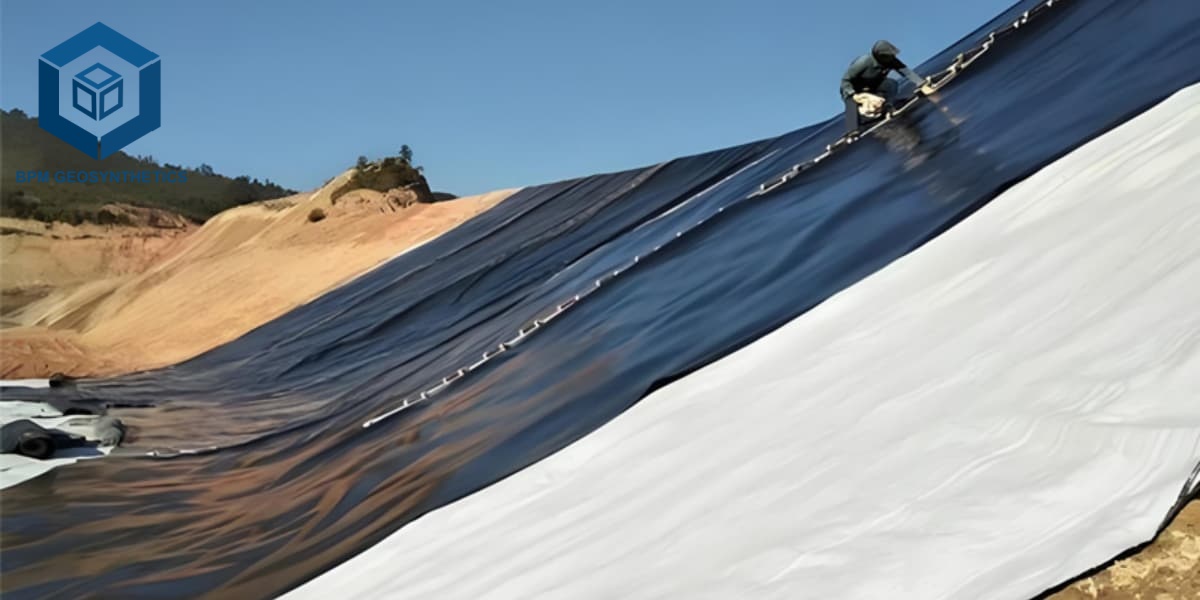
4.1 Aquaculture Pond - 40 mil (30-50)
Linings for aquaculture ponds have to be very tough so that they can cope with the continual presence of water, the biological operations involved as well as the work done on a day-to-day basis.
- Reason: Changing water levels, movements by the fish, handling equipment, aeration devices, UV rays and other elements contribute to physical stresses on the pond liner.
4.1.1 Lower thickness (30 mil):
Could work for seasonally used or smaller ponds which face only minimum mechanical stresses and that require only short service life liners.
4.1.2 Standard (40 mil):
Most of the time, commercial fish/shrimp farms choose this size because it is the right mix between durability and price.
4.1.3 Thick (50 mil):
Large aquaculture farms, uneven or rocky subgrades, and farms that operate for more than 10 years will benefit more from the puncture resistance and lifespan stability of this option.
4.2 Irrigation Dam - 40 mil (30–50)
To keep fertility, irrigation dams need a reliable waterproof membrane that can separate the crop from outside elements also these dams are subject to exterior factors such as sunlight and so on and so forth.
- Why: Experience moderate to deep water pressure (10–20 ft), UV exposure, soil settlement, and occasionally maintenance traffic.
4.2.1 Thin (30 mil):
Only for shallow reservoirs that are less than 10 ft deep and also the soil is well prepared and the slopes are gentle.
4.2.2 Standard (40 mil):
Regularly used as a cost-effective method of production for general irrigation dams.
4.2.3 Thick (50–60 mil):
These liners should be used for deep dams (20+ ft), when the farm is a high priority agricultural area, or when the subgrade is rocky in order to have higher puncture resistance and safety margin.
4.3 Mining Pond - 60–80 mil (up to 120)
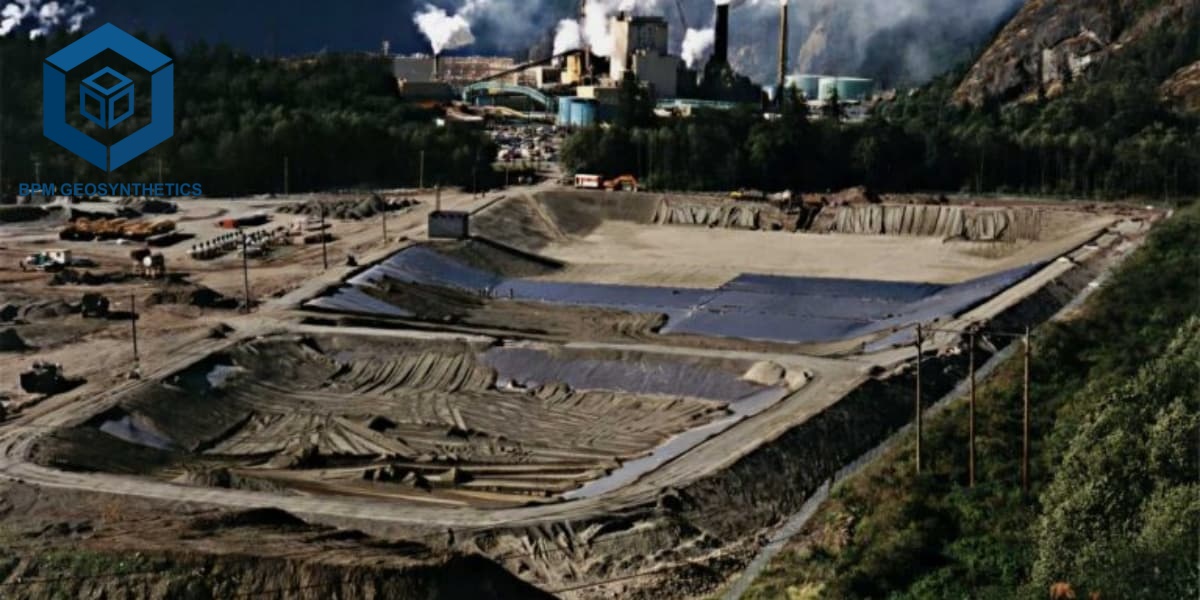
The mining sector is known for being very challenging to the HDPE liners since they are subjected to extreme chemical and mechanical stress at the same time we have heavy machinery in the mining sector.
- Why: Intense abrasion from tailings, large machines moving on the liner, the use of very aggressive chemicals both acidic and alkali and these liners must be able to cope with stability for a long time also seismic activities should be taken into account if the mining site is in a seismically active region
4.3.1 60 mil:
This is the right size for normal tailings ponds with moderate chemical exposure (pH 2–5) and operations being run under control.
4.3.2 80 mil:
It may be used for highly aggressive environments (pH <2), deep tailings ponds (>30 ft), and areas where there is a risk of mechanical stress or earthquakes and also regions that are prone to seismic activity.
4.3.3 100–120 mil:
Are used in the containment of materials that have a very high level of risk, facilities for permanent closure, and other long-term environmental protection projects that require the highest level of safety and durability.
4.4 Lagoon (Wastewater) - 40 mil (30–50)
Wastewater lagoons demand chemical resistance, as well as the capacity to deal with gas pressure resulting from the decomposition of organic matter.
- Why: Ammonia, hydrogen sulfide (H₂S), organic acids, the sun's UV rays, and the accumulation internally of gases from decomposition are all factors that come into play.
4.4.1 30 mil:
Best for residential or small-scale setups showing short service life (<5 years) and low chemical intensity.
4.4.2 40 mil:
Typical choice for municipal manure lagoons and standard wastewater treatment purposes.
4.4.3 50–60 mil:
Perfect for industrial wastewater treatment plants, the handling of high-strength organic waste, as well as projects that last longer than 20 years and additionally this size offers enhanced chemical resistance and the overall structural integrity can be relied upon without much worry.
4.5 Quick Table Reference:
Application | Thickness | Key Factors |
Aquaculture | 40 mil (30–50) | Harvest traffic, UV |
Irrigation Dam | 40 mil (30–50) | Water depth, UV |
Mining Pond | 60–80 mil (to 120) | Abrasion, chemicals, heavy equipment |
Wastewater Lagoon | 40 mil (30–60) | Chemicals, gas pressure |
5. HDPE Liner Thickness Decision Flowchart
5.1 Does the application involve heavy equipment or abrasion?
Yes: Start at 60 mil (Mining applications, tailings ponds, industrial operations with machinery)
No: Continue to next factor.
5.2 Is there aggressive chemical exposure (acids, cyanide, high-strength waste)?
Yes: 50–60 mil minimum (Lagoon systems, mining ponds, chemical containment areas)
No: Continue to next factor.
5.3 Is there regular foot traffic or animal access?
Yes: 40–50 mil (Aquaculture ponds, agricultural dams with livestock activity)
No: 30–40 mil (Irrigation dams without livestock, fire water ponds, clean water storage).
5.4 Is the pond depth over 20 ft?
Yes: Increase thickness by 10–20 mil above the base recommendation to handle higher hydrostatic pressure and long-term deformation risk
No: Standard thickness selection is sufficient.
5.5 Is the expected service life 20+ years?
Yes: Always select the higher end of the recommended thickness range to ensure long-term UV resistance, chemical stability, and puncture safety margin.
6. BPM Geosynthetics HDPE Liner Thickness: A Professional Overview
6.1 BPM Geosynthetics:
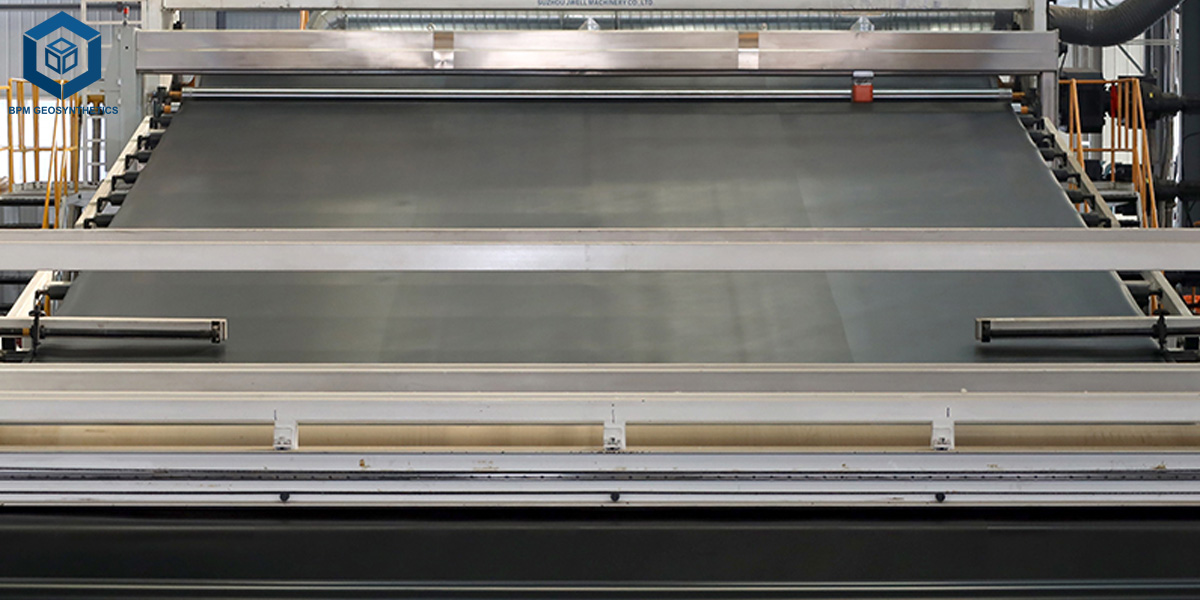
Founded in 2007 and headquartered in Tai‘an, Shandong, The Best Project Material Co., Ltd.(BPM Geosynthetics) has grown into one of the world’s largest geomembrane manufacturers. The company operates a 36,000 m² ISO-certified facility with over 160 professional staff and produces 80,000 tons annually. BPM Geosynthetics is a corporate member of the International Geosynthetics Society (IGS).
6.2 HDPE Liner Thickness Range
BPM Geosynthetics manufactures HDPE geomembranes in thicknesses from 0.2 mm to 3.0 mm (8–120 mil), with maximum roll width of 10 meters.
- Standard thickness increments include: 0.3 mm, 0.5 mm, 0.75 mm, 1.0 mm, 1.5 mm, 2.0 mm, and 3.0 mm. Production uses 4 blown film and calendering lines ensuring ±5% thickness control.
6.3 Technical Specifications
- Tensile Strength: 20–55 MPa (ASTM D6693)
- Elongation: 600–800%
- UV Resistance: 80% retention after 1,600 hours (ASTM D7238)
- Impermeability: 98% seepage prevention
6.4 Global Customer Recognition
BPM Geosynthetics exports to 81+ countries and has served over 5,000 customers worldwide . Verified customer feedback :
- Canada (July 2025): “Solved our packing problem very well and saved us money”
- Thailand (July 2025): “Very good quality, service is great”
- USA (July 2025): “Zero seepage, handles sunlight well, and still looks new”
6.5 AEO Customs Certification
BPM Geosynthetics has obtained Authorized Economic Operator (AEO) certification—China‘s national advanced customs credential. This “green passport” for international trade provides priority customs clearance, reduced inspection rates, and expedited processing across mutual-recognition countries.
6.6 CNAS Laboratory Certification
BPM operates a CNAS-accredited (China National Accreditation Service for Conformity Assessment) in-house testing laboratory. This certification validates the company’s capability to conduct standardized testing on raw materials, production processes, and finished products—ensuring every HDPE liner batch meets international quality benchmarks.
6.7 Quality Certifications
All BPM HDPE liners are certified to ISO 9001, ISO 14001, and tested by TRI,SGS, Intertek, with compliance to ASTM GRI-GM13 standards.
6.8 Thickness Selection Guide
Thickness | Typical Applications |
0.3–1.0 mm | Small ponds, temporary containment |
1.0–1.5 mm | Aquaculture, irrigation dams |
1.5–2.0 mm | Landfills, municipal wastewater |
2.0–3.0 mm | Mining heap leach pads, aggressive chemicals |
6.9 Key Advantages
2-day ASEAN delivery with 5-year warranty
$2 million annual R&D investment
20% puncture resistance improvement through innovation
The Best Project Material Co., Ltd.(BPM Geosynthetics) combines AEO-certified logistics, CNAS-validated quality control, and full-spectrum HDPE liner thickness options (0.2 mm–3.0 mm)—making them a trusted partner recognized by customers across North America, Southeast Asia, Europe, Africa, and the Middle East .