How Much is HDPE Dam Liner Price?
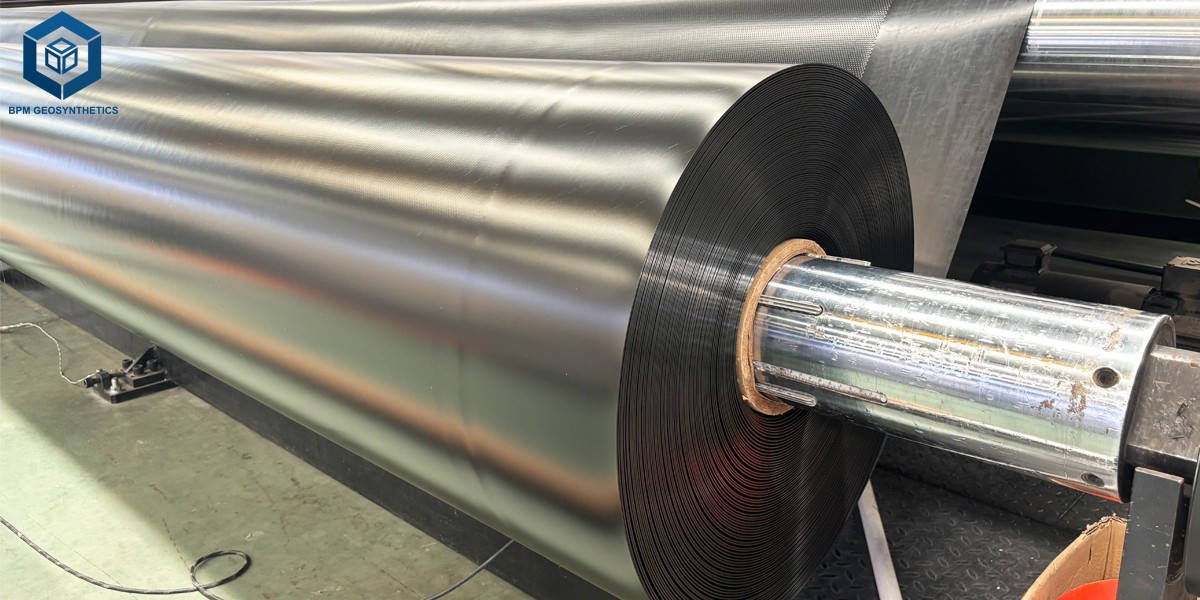
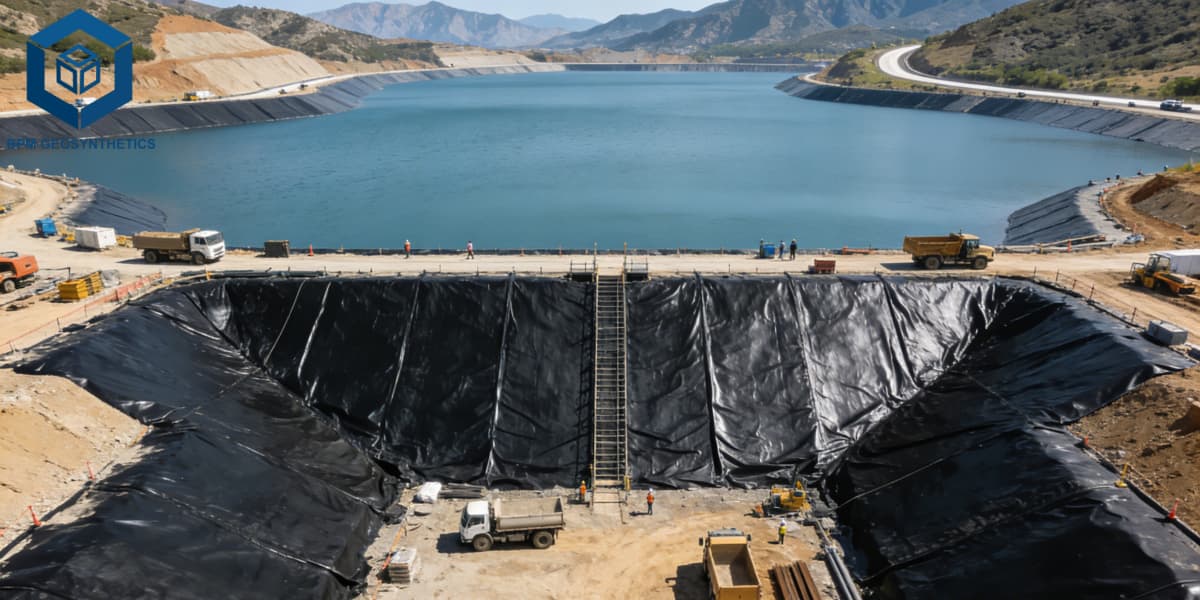
Dam Liner is a robust and impermeable geomembrane made of synthetic polymers such as high-density polyethylene (HDPE) or linear low-density polyethylene (LLDPE), serving as the cornerstone of modern water infrastructure. It effectively seals reservoirs, irrigation canals, and earth dams, preventing leakage losses exceeding 30% compared to unlined systems, while protecting groundwater from contamination. The global geomembrane market is projected to reach USD 2.61 billion in 2026 and grow at a compound annual growth rate (CAGR) of 6.61% to USD 3.6 billion by 2030 (Mordor Intelligence, 2026). Given the increasing scarcity of water resources, which affects 2.4 billion people (UN-Water, 2026), Dam Liner, which accounts for 25% of water management applications, is crucial for sustainable hydrology. These thermoplastic barriers are enhanced with 2-3% carbon black to improve their UV stability, exhibit a permeability coefficient below 1×10⁻¹² cm/s (ASTM D5887), a tensile strength of 20-40 kN/m (ASTM D6693), and a buried service life of 40-100 years. According to the benchmarks of the Geosynthetic Research Institute (GRI) (GRI-GM13, 2024), their impermeability efficiency is as high as 99.9%.
1. What is HDPE Dam Liner?
In hydraulic engineering terminology, dam liner is synonymous with reservoir geomembrane, referring to a flexible synthetic membrane with sophisticated design, used to form an impermeable enclosure within earth or concrete dams, thereby preventing hydraulic leakage and enhancing geotechnical stability. These liners are primarily extruded from high-density polyethylene (HDPE, with a density of 0.94–0.96 g/cm³) or linear low-density polyethylene (LLDPE, with a density of 0.92–0.94 g/cm³), exhibiting a fracture elongation of up to 400–800%, a joint shear strength ≥ 90% of the tensile strength of the sheet material (ASTM D6392), capable of withstanding differential settlements of up to 5% without cracking, and achieving a leakage reduction rate of up to 98% compared to unlined dams (USBR Design Standard No. 13, 2024). According to ASTM D5887, its hydraulic conductivity is as low as ≤1×10⁻¹² cm/s, and according to FHWA NHI-10-024 directive, its impermeability performance is 95% higher than that of compacted clay barriers. Additionally, the integration of geotextile liners (200–400 g/m²) can enhance puncture resistance by 30% (ASTM D6241).
1.2 Common Applications of HDPE Dam Liner
Dam Liners provide support for over 800 multinational water conservancy projects annually, with an estimated total area reaching 300 million square meters by 2026 (Persistence Market Research, 2026). Compared to concrete armor, Dam Liners offer numerous advantages, reducing lifecycle emissions by 40%–60% (Global Plastic Sheeting, 2024). The main application areas include:
1.2.1 Irrigation and Reservoirs
A 1.5–2.0 mm thick HDPE liner accounts for 40% of the total demand and can reduce evaporation by 25–35% in arid climates. For instance, a 2026-built irrigation dam in Kenya (56,000 square meters) adopted a 1.0 mm thick BPM HDPE liner, with a cost of $0.50 per square foot. While complying with ASTM D7465 standards, it saved $28,000 (25%) in water loss costs (BPM Geosynthetics Case Study).
1.2.2 Hydropower station reservoirs and flood control
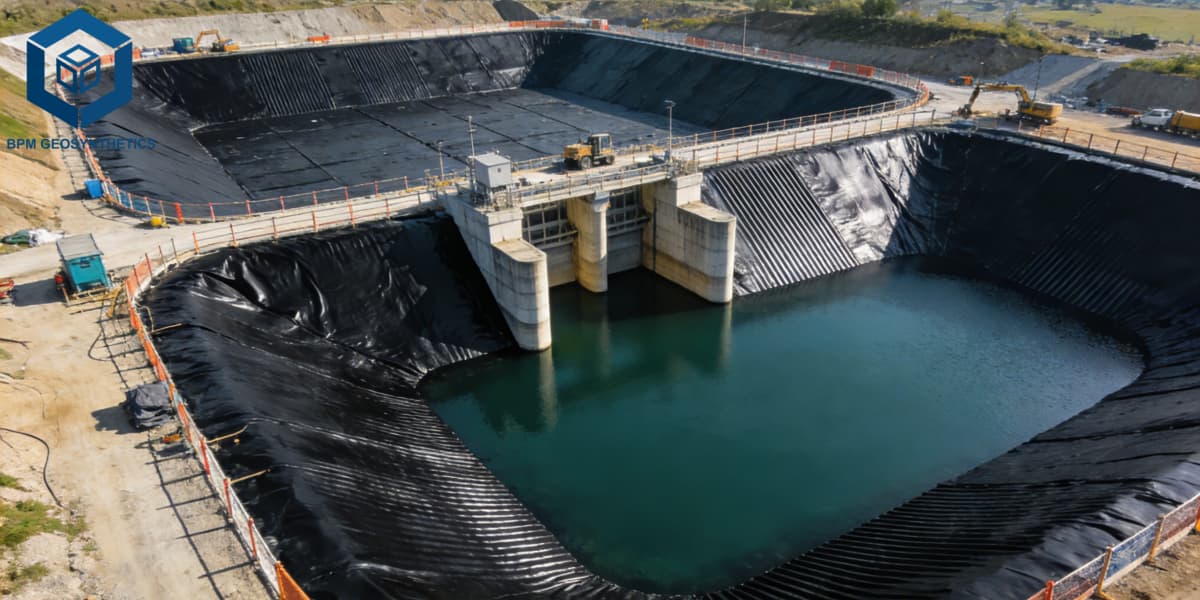
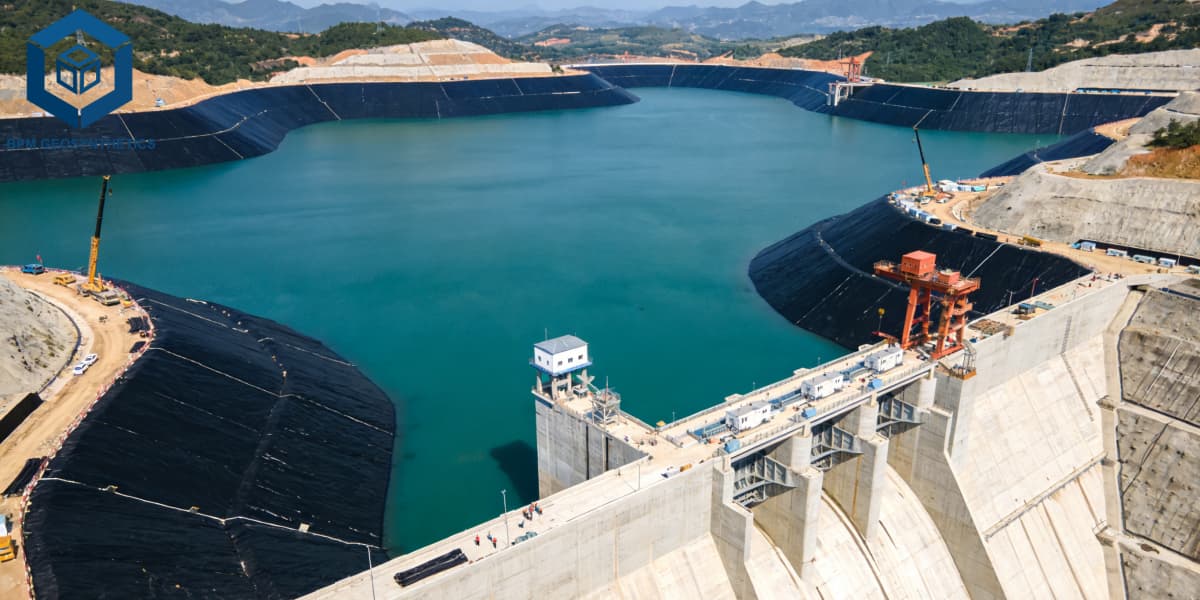
Textured liners (friction angle 25–30°) account for 30% of the total demand and are used to stabilize slopes with a 3H:1V gradient. According to a report by the United States Bureau of Reclamation (USBR) (Geofantex, 2026), in a pumped storage power station built in Peru in 2024, a 2.0 mm thick linear low-density polyethylene (LLDPE) material was used to cover an area of 40,000 square meters, with a unit price of $1.20 per square foot. Under an earthquake intensity of 0.3g, it can reduce scouring by 85%.
1.2.3 Mining tailings and wastewater dams
Using a 20% utilization rate, chemical inert high-density polyethylene (HDPE) (pH 1-14) is employed to contain wastewater, effectively preventing 99% of leachate migration. A gold mine in South Africa, completed in 2023, implemented a 1.5 mm thick composite material covering 75,000 square meters, with a unit price of $0.80 per square foot, thereby avoiding $150,000 in repair costs (PRS Canada).
1.2.4 Agricultural and aquaculture ponds
By utilizing 10% of the capacity and employing NSF-61 certified linings, a 20% increase in yield can be achieved without generating toxicity. In 2024, a tilapia farm in Queensland, covering an area of 15,000 square meters, installed 1.0 millimeter thick HDPE beneath the floor at a cost of $0.60 per square foot, resulting in a 30% reduction in aggregate usage (Presto Geosystems).
1.2.5 Environmental Remediation Dam
An emerging 5% niche market, GCL composite material (bentonite impregnated) meets the 90% adsorption rate requirement of the U.S. Environmental Protection Agency. The 2026 Toronto Stormwater Pond Project will utilize perforated mesh with a diameter of 8 millimeters for a 10,000 square meter dam body, priced at $0.70 per square foot, which will contribute to enhancing biodiversity (Layfield Group).
These prototypes have verified the sustainability of Dam Liner, and life cycle audits have shown that compared to rigid lining, their operating costs can be reduced by 20% to 30% (Grand View Research, 2026).
2. What is the HDPE Dam Liner Price?
In 2026, the price of dam liner is expected to range from $0.40 to $3.00 per square foot ($4.31 to $32.29 per square meter), based on the price of newly laid liners; while the price of the overall equipment, including laying, sewing, and liners, will rise to $0.60 to $6.50 per square foot, mainly due to fluctuations in petrochemical product prices, with an expected increase of 5% to 7% (BPM Geosynthetics, 2026). High-density polyethylene (HDPE) accounts for 70% of the market share due to its economy and durability, while linear low-density polyethylene (LLDPE) holds 20% of the market share due to its flexibility. Excluding peripheral equipment (geotextiles priced at $0.25 to $0.50 per square foot), the cost composition is as follows: resin (50% to 60%), extrusion (20%), and logistics (15%). Reservoirs with a water storage capacity exceeding 50,000 square meters can receive emission reduction discounts of 15% to 25% (Alibaba, 2026). For a 100,000 square meter reservoir, the total investment is between $40,000 and $300,000, but 25% of the cost can be recovered within 50 years through a 30% evaporation water saving rate.
2.1 Dam Liner Price - Material Type
Material classification contributes to a 40% to 50% price difference, which determines the relationship between initial investment and service life. High-density polyethylene (HDPE) has become the mainstream material due to its requirements for hydraulic performance.
2.1.1 High-density polyethylene (HDPE)
HDPE, 97.5% virgin polymer with 2.5% stabilizer added, priced from $0.40 to $2.50 per square foot ($4.31 to $26.91 per square meter), with 70% of the share remaining unchanged in the 2026 budget.
- Performance: Density: 0.94 g/cm³; Compressive Strength (ESCR) > 5,000 hours; Oil Immersion Time (OIT) > 150 minutes; Perforated type, with a drainage rate of 90%.
- Application: Reservoir (40%), Hydropower Generation (30%); Standard Pressure Head 1.5 mm.
- Advantages: service life of 40-100 years; evaporation reduction of 25-35%; compliance with GRI-GM13 standards.
- Cost Example: High-density polyethylene (HDPE) with a thickness of 1.5 millimeters has a unit price ranging from $1.00 to $1.50 per square foot. The total cost for 50,000 square meters is between $215,278 and $322,917, whereas the cost of concrete is $400,000 (U.S. Bureau of Reclamation, 2026).
In 2026, a dam in Kenya adopted 1.0mm thick HDPE, with a unit price of $0.50 per square foot. The total cost for 56,000 square meters was $120,000, and the water saving per minute was 25%.
2.1.2 Linear low-density polyethylene (LLDPE)
LLDPE has good flexibility and toughness, with a unit price ranging from $0.50 to $2.00 per square foot ($5.38 to $21.53 per square meter). It is suitable for 20% of irregular terrain, and 10% to 15% of terrain is lower than that of HDPE.
- Characteristics: Density: 0.92 g/cm³; Tensile Strength: 15–30 kN/m; Elongation: 800–1,000%; Service Life: 20–50 years.
- Application areas: aquaculture ponds (10%), flood control; typical thickness is 1.0 mm.
- Advantages: Consistency improvement by 200–300%; Compliance with NSF-61 fish safety standards; Easy to splice.
- Cost Example: For 1.0mm LLDPE with a unit price ranging from $0.80 to $1.20 per square foot, the total cost for 40,000 square meters would be between $129,167 and $193,750 (Layfield, 2026).
According to Geofantex, a factory in Peru can save 30% of its costs (equivalent to $75,000) by using LLDPE in 2024.
2.1.3 Polyvinyl chloride (PVC)
PVC is affordable, ranging from $0.30 to $1.50 per square foot ($3.23 to $16.15 per square meter), making it suitable for 5% of small dams.
- Performance: Elongation ranging from 200% to 400%; good adhesion; moderate UV resistance (10 to 20 years).
- Application: Temporary reservoir, small-scale irrigation.
- Advantages: Installation speed is increased by 15% to 25%; meets the 4H:1V standard.
- Cost example: For 0.75mm thick PVC, with a cost ranging from $0.50 to $0.90 per square foot, the total cost for 10,000 square meters would be between $5,382 and $9,688.
A subsidiary dam built in Chile in 2023 met the specification requirements at the lowest cost (HomeGuide, 2026).
2.1.4 Ethylene-propylene rubber (EPDM)
EPDM is an elastomeric material with a price range of $0.75-2.50 per square foot ($8.07-26.91 per square meter), suitable for 5% of the exposed area.
- Performance: Elongation rate 300-500%; ozone resistance; exposure resistance life 20-50 years.
- Applications: surface reservoirs, ecological dams.
- Advantages: Self-healing of punctures; 85% reduction in evaporation rate.
- Cost Example: For 1.14mm thick EPDM with a unit price ranging from $1.20 to $1.80 per square foot, the total cost for 20,000 square meters would be between $25,834 and $38,751.
A reservoir in the United Arab Emirates, completed in 2026, adopted EPDM, achieving an excellent water storage effect of 25%.
According to the ASTM D7864 standard, the fidelity of virgin resin can reach 95%, so a premium of 10%–20% is reasonable.
2.2 Dam Liner price - thickness
The thickness will affect the price by 20%–30% and impact its corrosion resistance
- 5mm (20 mils): $0.40-1.00/square foot; small irrigation, low hydrostatic pressure.
- 0-1.5 mm (40-60 mils): $0.80-2.00/square foot; standard reservoir, mining.
- 0-3.0 millimeters (80-120 mils): $1.50-3.00 per square foot; hydroelectric power generation, earthquake zone.
For every 0.5mm increase, the seismic performance improves by 30% (ASTM D4833 standard); the total cost of a 100,000 square meter dam with a thickness of 1.5mm and a unit price of $1.20 per square foot is $129,167 (BPM, 2026).
2.3 Dam Liner price - project scale
- Scale determines efficiency: prices for small projects (<10,000 square meters) range from $1.00 to $3.00 per square foot; prices for large projects (>100,000 square meters) range from $0.40 to $2.00 per square foot, with a 15-25% discount available.
- For small projects: a 20% surcharge on customs; for example, a 5,000 square meter reservoir with a price of $2.00 per square foot.
- Medium-sized project: 20,000-50,000 square meters; can save 10% of the cost.
- Large-scale projects: These are projects of significant size; for instance, a reservoir spanning 200,000 square meters, priced at $0.80 per square foot.
In 2024, a 75,000 square meter lining project at a mine in South Africa saved $37,500 (25%) through Production Rate Standardization (PRS).
2.4 HDPE Dam Liner Price - installation method and labor
The installation cost accounts for 30% to 50% of the total cost (ranging from $0.20 to $2.00 per square foot), depending on the installation method.
2.4.1 Installation method:
- Thermal wedge welding: $0.40 to $0.80 per square foot; weld integrity up to 99% (compliant with ASTM D6392 standard).
- Extrusion welding: USD 0.50 to USD 1.00 per square foot; texture lining overlap length >50 mm.
2.4.2 Manual/On-site:
- Hourly rate: $20 to $60; skilled workers can reduce the defect rate by 20%.
- Preparation work: compaction costs $0.20 to $0.60 per square foot.
- Terrain: A 15% increase in cost will be incurred due to slope.
A 50,000 square meter project in Kenya: material cost of $50,000 + installation cost of $25,000 = $75,000 (Homewyse, 2026).
2.5 HDPE Dam Liner Price - raw material quality
The difference in caliber leads to a 15-25% difference in service life.
2.5.1 Primary materials and recycled materials:
- Primary material: $0.60-2.50 per square foot; service life of 40-100 years; 25% defect rate.
- Recycled materials: USD 0.40-1.50/square foot; service life 10-30 years; emission reduction 12%.
Other factors can increase costs by 5-10% and extend the service life by 20%. In a 100,000 square meter project, using virgin HDPE can save more than $50,000.
2.6 Dam Liner price - transportation and logistics
The shipping fee ranges from $0.05 to $0.20 per square foot.
- Domestic: 5% to 10%; Asia: $0.05 per square foot.
- International: Tariff +10% to 15%; Sino-US: +8%.
- Coil material: Width ranging from 6 to 8 meters, with a 4:1 ratio after folding, reducing the volume by 75%.
- Importing 200,000 square meters: logistics cost of $10,000 (LinkedIn, 2024).
2.7 HDPE Dam Liner Price - maintenance and service life cost
- Annual: Inspection costs range from $500 to $5,000; repair costs range from $10,000 to $100,000.
- High-density polyethylene (HDPE): service life of 40 to 100 years; cost of 0.01 to 0.03 USD per square foot per year.
- LLDPE: service life of 20-50 years; performance 20% better than other materials.
The annual depreciation cost for 1.5mm HDPE is $0.02 per square foot, whereas for clay, it is $0.05 per square foot (U.S. Bureau of Reclamation, 2026).
3. Industry Trends Affecting the HDPE Dam Liner Price
Sustainability is imperative.the price of recycled HDPE is rising by 12% annually, reducing costs by 10-15%, while the mixed material maintains its performance (Future Market Insights, 2026).
3.1 Resin price fluctuations
Oil-related price fluctuations are expected to increase by 3-5%; bio-resin prices remain stable.
3.2 Innovative configuration
Sensor injection can reduce inspection times by half (+10-15%); nano-additives increase resistance by 20% (ScienceDirect, 2026).
3.3 Regulatory changes
The decrees issued by the U.S. Bureau of Reclamation and the Environmental Protection Agency have increased the bidding rate for certification by 8%.
3.4 Market expansion
The 34.5% market share in the Asia-Pacific region is driving the multinational market to grow at a compound annual growth rate (CAGR) of 6.5%, reaching $4.7 billion by 2032 (DataIntelo, 2026).
Conclusion
Determining how much an HDPE dam liner costs depends on factors such as thickness, roll width, site conditions, and project scale. While upfront investment is important, selecting a high-quality liner ensures long-term impermeability, chemical resistance, and structural integrity, ultimately reducing maintenance and replacement costs. For reliable performance in dam, reservoir, and water retention projects, BPM geomembranes stand out as a trusted choice. With superior durability, wide rolls for fewer seams, and tailored technical support, BPM liners provide cost-effective, sustainable, and long-lasting solutions for any containment application. Choosing The Best Project Material Co., Ltd.(BPM Geosynthetics)means not just buying a product, but securing peace of mind for decades of safe water management.