How Much Does Geocell Cost Per Square Meter?
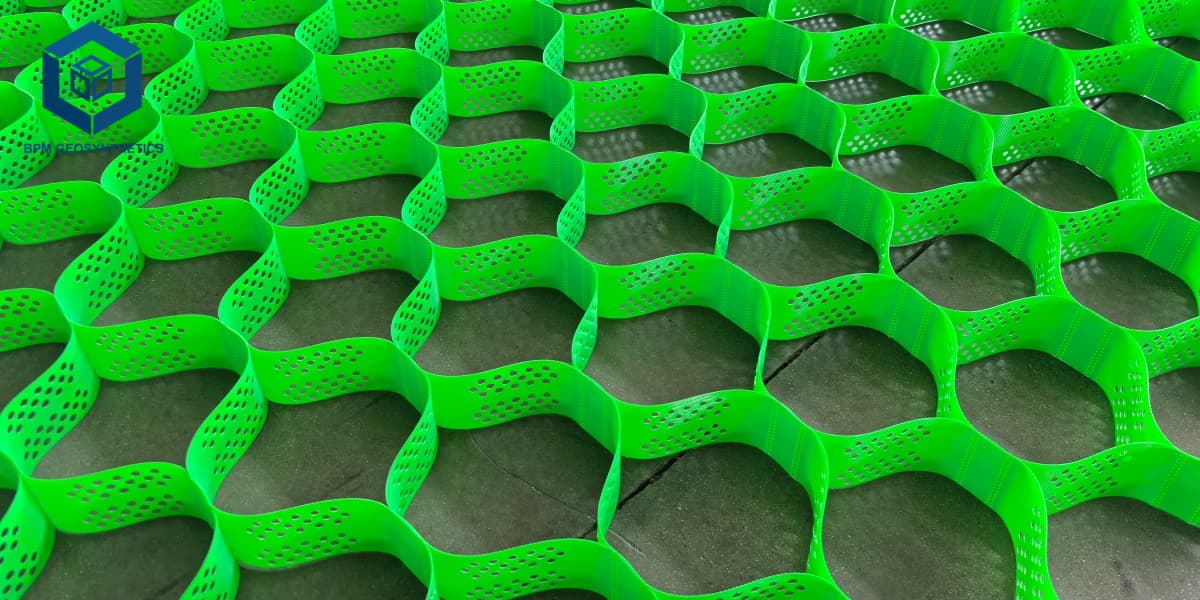
Geocells, also referred to as cellular confinement systems, are a geotechnical engineering breakthrough. These 3D honeycomb structures made of high-density polyethylene (HDPE), polypropylene (PP), or new polymeric alloys (NPA) play an important role in stabilizing soil, controlling erosion, distributing loads, and protecting slopes in civil engineering and environmental projects. Decision-makers have realized that knowing the geocell cost per square meter is crucial for optimizing budgets while guaranteeing long-term results.
In-depth investigation of geocell cost per square meter is done in this thorough guide using 2025 data from BPM Geosynthetics, market research firms, and industry case studies. We discuss different types of materials, size details, factors affecting prices, cost of various uses, and methods of smart purchasing to provide accurate, real-world, and data-supported information for projects dealing with road reinforcement, protecting slopes, retaining walls, and channel lining.
1. How Much Does Geocell Cost Per Square Meter?
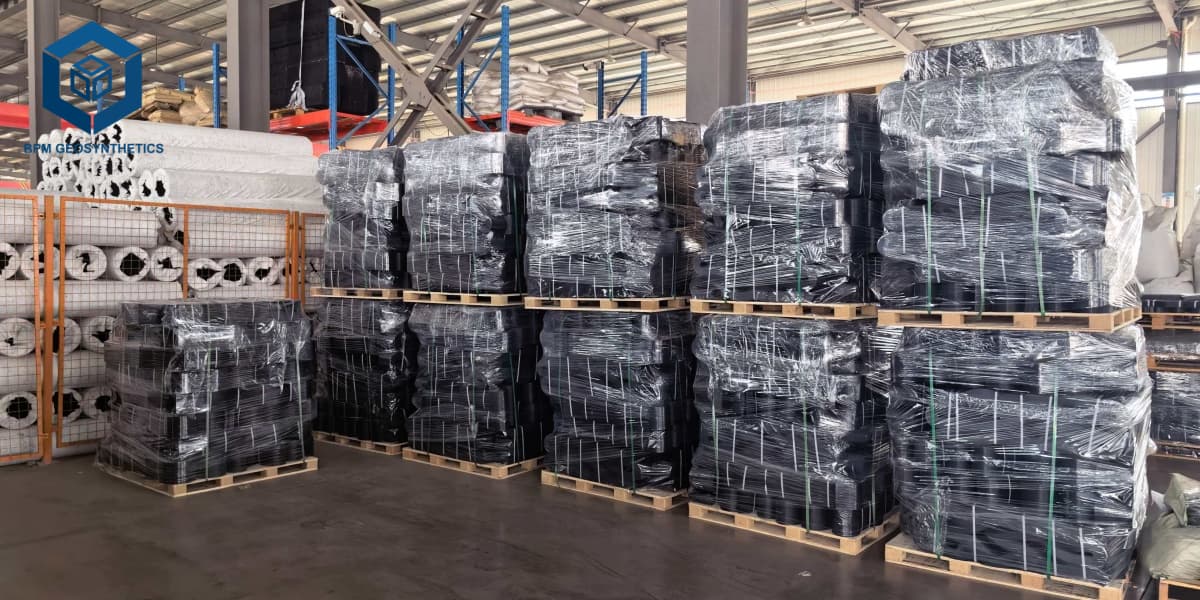
Geocell pricing per square meter in 2025 averages $0.50–$5.00 for material costs, with total installed costs reaching $4.30–$48.44 per square meter when including infill materials, labor, and site preparation . HDPE variants command 62.5% market dominance for their cost-durability equilibrium, while premium polyester and NPA options serve specialized high-load applications.
1.1 Geocell Cost Per Square Meter – Material Type
The choice of polymer material significantly impacts cost, lifespan, and performance characteristics:
1.1.1 High-Density Polyethylene (HDPE)
HDPE represents the industry standard, comprising 90–95% virgin polymer with 2–3% carbon black UV stabilizers .
- Cost Range: $0.50–$3.50 per square meter ($5.38–$37.67 per square meter converted)
- Market Share: 62.5% of global consumption
- Properties: Density 0.94 g/cm³; tensile strength 15–25 kN/m; ESCR >5,000 hours; OIT >150 minutes
- Lifespan: 50–100 years for buried applications; 75+ years for commercial installations
- Applications: Roadways (50% of demand), slope protection (37%), retaining walls
- Advantages: 30–50% aggregate reduction; chemical inertness (pH 2–12); perforated options for 90% drainage efficiency
- Cost Example: A 10,000 m² highway project using 150 mm HDPE geocell at $1.50–$2.50 per square meter totals $15,000–$25,000 for materials, compared to $32,292 for conventional concrete subgrade .
1.1.2 Polypropylene (PP)
PP offers a lightweight, cost-effective alternative for moderate-load applications .
- Cost Range: $0.40–$2.50 per square meter ($4.31–$26.91 per square meter)
- Market Share: 20% of applications
- Properties: Density 0.90–0.91 g/cm³; tensile strength 12–20 kN/m; 40–80 year buried lifespan
- Applications: Erosion control, channel lining, landscaping projects
- Advantages: 15–20% lower cost than HDPE; 20% emission reductions through recyclability; facile welding characteristics
- Cost Example: An 8,000 m² channel lining project using 100 mm PP geocell at $1.00–$1.80 per square meter totals $8,000–$14,400, achieving 25% cost savings over traditional methods .
1.1.3 Polyester (PET)
PET provides high-tensile strength for demanding structural applications .
- Cost Range: $1.00–$4.00 per square meter ($10.76–$43.06 per square meter)
- Market Share: 10% of specialized applications
- Properties: Modulus >100 kN/m; chemical resistance pH 1–14; 30+ years exposed lifespan
- Applications: Heavy-load retaining walls, landfill containment, mining haul roads
- Advantages: 300 kN/m tensile capacity; 95% shear stress reduction; superior dimensional stability
- Cost Example: A 3,000 m² retaining wall using 200 mm PET geocell at $2.50–$3.50 per square meter totals $7,500–$10,500, delivering 70% stability improvement .
1.1.4 Novel Polymeric Alloy (NPA)
NPA represents the premium tier for high-traffic infrastructure .
- Cost Range: $1.50–$4.50 per square meter ($16.15–$48.44 per square meter)
- Market Share: 5% of emerging applications
- Properties: Modulus >525 MPa; tensile strength >17 kN/m; rigid cell walls
- Applications: High-traffic roadways, airport runways, port facilities
- Advantages: 35% aggregate savings; 25% installation cost reduction; enhanced load distribution
- Cost Example: A 15,000 m² highway project using 150 mm NPA geocells at $2.00 per square meter totals $30,000, saving $100,000 (35%) compared to conventional methods .
2. Factors Affecting Geocell Cost Per Square Meter
Geocell prices vary based on multiple technical and commercial factors, contributing to the broad $0.50–$5.00 per square meter range. Below, we analyze these drivers with industry data.
2.1 Geocell Cost Per Square Meter – Cell Height and Dimensions
Cell height represents one of the most significant cost drivers, directly correlating with material volume and load-bearing capacity .
2.1.1 Height Specifications:
- 50–75 mm: $0.40–$1.50 per square meter; suitable for light pedestrian paths, landscaping, and surface erosion control
- 100–150 mm: $1.50–$3.00 per square meter; standard for roadways, parking areas, and moderate slopes
- 200–300 mm: $3.00–$4.50 per square meter; premium applications for retaining walls, heavy industrial loads, and steep slope stabilization
Each 50 mm increase in cell height typically adds 15–25% to material costs due to increased polymer consumption .
2.1.2 Cell Dimensions (Welding Distance):
- Small cells (320×287 mm): 5–10% cost premium but provide 25% better confinement for steep slopes
- Standard cells (445×445 mm): Balanced cost-performance for general applications
- Large cells (660×660 mm to 1000×1000 mm): 20–30% cost savings for large-scale projects with lower confinement requirements
2.2 Geocell Cost Per Square Meter – Sheet Thickness and Texture
Wall thickness and surface treatment significantly impact durability and pricing:
2.2.1 Thickness Grades:
- 1.0–1.1 mm: Economy grade; $0.50–$1.50 per square meter; suitable for temporary or light-duty applications
- 1.4–1.5 mm: Standard commercial grade; $1.00–$2.50 per square meter; optimal price-performance ratio
- 1.6–2.0 mm: Heavy-duty industrial grade; $2.00–$4.50 per square meter; 20–40% premium for high-load applications
2.2.2 Surface Texture:
- Smooth surface: Base pricing; adequate for standard confinement
- Textured/Perforated surface: 10–15% premium ($1.37–$5.24 per square meter); enhanced friction and drainage
- Ultrasonic welding: 8–12% premium; superior weld strength and durability
2.3 Geocell Cost Per Square Meter – Project Size and Order Volume
Scale economies play a crucial role in per-unit pricing :
2.3.1 Volume Tiers:
- Small orders (<1,000 m²): $2.00–$4.50 per square meter; 15–20% premium due to setup costs and lack of bulk discounts
- Medium orders (1,000–10,000 m²): Standard pricing $1.00–$3.00 per square meter
- Bulk orders (>10,000 m²): 10–20% discounts, reducing costs to $0.60–$2.00 per square meter
- Large projects (>50,000 m²): Custom pricing with 15–25% reductions; $0.40–$2.50 per square meter
- Case Study: A Chilean mining project utilizing 80,000 m² of HDPE geocells achieved $28,000 (20%) savings through volume procurement compared to standard pricing .
2.4 Geocell Cost Per Square Meter – Raw Material Quality
Virgin versus recycled resin content creates significant pricing and performance differentials :
2.4.1 Virgin HDPE/PP:
- Cost: $0.75–$3.50 per square meter
- Properties: 95% quality consistency; 50–100 year lifespan; 25% lower failure rates
- Certification: ASTM D4439, GRI-GC8, ISO 9001 compliance
2.4.2 Recycled Content:
- Cost: $0.40–$2.00 per square meter (10–20% savings)
- Properties: 20–50 year lifespan; 5–10% strength reduction; 12% lower carbon emissions
- Applications: Temporary structures, landscaping, non-critical load bearing
2.4.3 Additives and Treatments:
- UV stabilizers (carbon black): Standard inclusion; extends exposed lifespan to 20+ years
- Advanced UV inhibitors: 5–10% premium; additional 20% lifespan extension
- Chemical resistance additives: 5–15% premium for extreme pH environments
2.5 Geocell Cost Per Square Meter – Installation and Labor
Installation constitutes 30–50% of total project costs, ranging from $0.50–$2.00 per square meter depending on methodology and site conditions .
2.5.1 Installation Methodologies:
- Expansion and Anchoring: $0.30–$0.80 per square meter; manual expansion with staking at 1–2 m intervals; 95% adherence rate
- Layered Filling and Compaction: $0.40–$1.00 per square meter; mechanical compaction in 30 cm lifts
- Mechanical Installation: $0.80–$1.50 per square meter; specialized equipment for large projects
2.5.2 Labor and Site Dynamics:
- Skilled labor rates: $20–$60 per hour regionally; proficient crews reduce installation time by 20%
- Site preparation: $0.20–$0.50 per square meter for clearing and grading
- Topographic challenges: Steep slopes (>30°) add 15–25% to labor costs; rocky terrain adds 20–30%
- Urban vs. rural: Urban installations cost $1.00–$1.50 per square meter versus $0.50–$0.80 in rural areas
- Total Installation Example: A 10,000 m² roadway project might incur $10,000–$15,000 for materials and $8,000–$12,000 for installation, totaling $18,000–$27,000 ($1.80–$2.70 per square meter) .
2.6 Geocell Cost Per Square Meter – Geographic Location and Logistics
Regional variations significantly impact delivered costs :
2.6.1 Regional Price Variations:
- North America: $0.75–$3.50 per square meter material; high labor costs; BABA compliance premiums
- Europe: $0.80–$3.00 per square meter; stringent CE marking and quality standards add 10–15%
- Asia-Pacific: $0.40–$2.00 per square meter; major manufacturing hub with competitive local production
- Africa/Middle East: $0.60–$2.50 per square meter; variable local sourcing availability
2.6.2 Transportation and Logistics:
- Domestic shipping: 5–10% of material cost ($0.05–$0.20 per square meter)
- International shipping: $0.10–$0.40 per square meter; tariffs add 5–10%
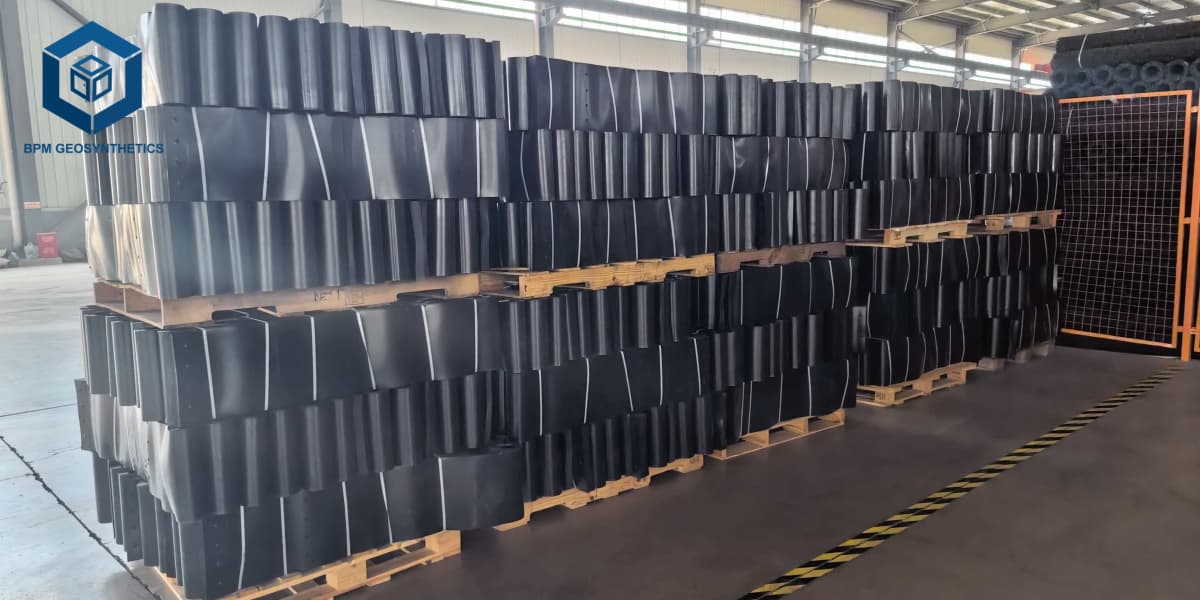
- Packaging efficiency: Collapsed panels achieve 4:1 volume reduction, minimizing freight costs by 75%
- Import Tariffs: China-to-US shipments incur 8% additional costs; regional trade agreements can reduce this by 3–5% .
2.7 Geocell Cost Per Square Meter – Certifications and Quality Standards
Certified geocells meeting ASTM D4439, GRI-GC8, or ISO 9001 standards cost 10–20% more ($0.60–$4.00 per square meter) but offer 95% quality assurance and reduce failure risks by 15–25% .
3. Geocell Cost Per Square Meter by Application Type
Different applications require specific specifications, resulting in varying total costs:
3.1 Roadways and Highway Subgrade Stabilization
Material Specifications: 100–200 mm height HDPE or NPA; textured surface; 1.4–1.6 mm thickness
3.1.1 Cost Breakdown:
- Material: $1.00–$2.50 per square meter
- Installation: $1.00–$1.50 per square meter
- Infill (aggregate): $0.80–$2.00 per square meter
- Geotextile separation layer: $0.20–$0.50 per square meter
- Total Installed Cost: $3.00–$6.50 per square meter
3.1.2 Case Study
A 2024 U.S. highway project utilized 200 GSM woven geotextile with 150 mm HDPE geocells across 10,000 m². Total material cost was $1.85 per square meter, reducing aggregate requirements by 90% and saving $50,000 per lane mile while extending road life by 20% .
3.1.3 Value Proposition
Geocell-reinforced roads achieve 30–50% reduction in base layer thickness and 20% lower maintenance costs over 50-year lifespan .
3.2 Slope Protection and Erosion Control
Material Specifications: 100–200 mm height; perforated HDPE or PP; vegetated or aggregate infill
3.2.1 Cost Breakdown:
- Material: $1.00–$2.00 per square meter
- Installation (steep slopes): $1.50–$2.50 per square meter
- Infill (topsoil/vegetation): $0.20–$0.50 per square meter
- Anchoring systems: $0.30–$0.60 per square meter
- Total Installed Cost: $3.00–$5.60 per square meter
3.2.2 Case Study
A California DOT project in the Sierra Nevada utilized 100 mm perforated HDPE geocells across 5,000 m² of erosion-prone slopes. At $4.00 per square meter total cost, the system prevented $200,000 in post-storm remediation costs .
3.2.3 Comparison
Geocell slope protection costs 50% less than gabion installations (CAN $25/m² vs. CAN $50/m² in Alberta, Canada) while providing superior vegetation establishment .
3.3 Retaining Walls and Structural Fill
Material Specifications: 200–300 mm height; high-strength HDPE, PET, or NPA; concrete or crushed stone infill
3.3.1 Cost Breakdown:
- Material: $2.00–$4.50 per square meter
- Installation: $2.00–$3.00 per square meter (structural placement)
- Infill (concrete): $4.00–$6.00 per square meter
- Drainage systems: $0.50–$1.00 per square meter
- Total Installed Cost: $8.50–$14.50 per square meter
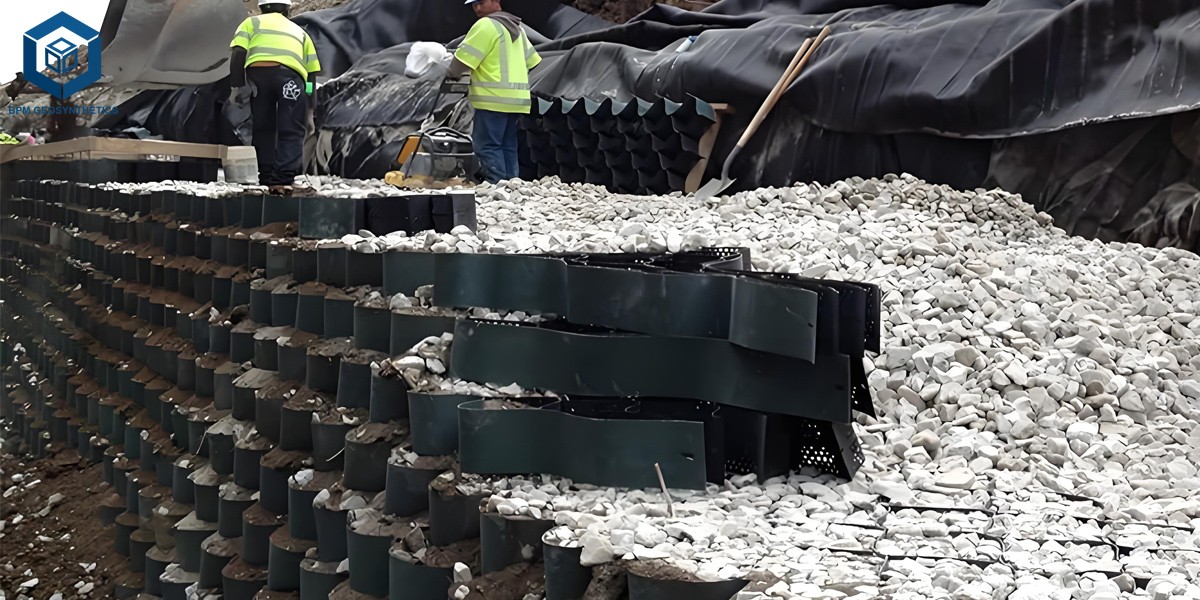
- Alternative Pricing: Retaining wall costs are often calculated per cubic meter: $149–$240 per cubic meter installed, depending on height and backfill requirements .
- Value Proposition: Geocell retaining walls cost less than 50% of equivalent reinforced concrete walls while allowing vertical construction on unstable soils .
3.4 Channel Lining and Shoreline Protection
Material Specifications: 100–200 mm height; UV-stabilized HDPE; gravel or concrete infill; geotextile underlayment
3.4.1 Cost Breakdown:
- Material: $1.50–$3.00 per square meter
- Installation (underwater/riparian): $2.00–$4.00 per square meter
- Infill (heavy aggregate): $1.00–$3.00 per square meter
- Geotextile: $0.30–$0.60 per square meter
- Total Installed Cost: $4.80–$10.60 per square meter
- High-Velocity Applications: For channels with flow velocities >3 m/s, concrete-infilled geocells reach $11.00–$54.00 per square meter but provide 800 kPa compressive strength
- Comparison: Geocell channel lining costs approximately 25% of equivalent riprap protection while providing better hydraulic performance .
3.5 Parking Areas and Light-Duty Surfaces
Material Specifications: 75–100 mm height; standard HDPE or PP; gravel or grass infill
3.5.1 Cost Breakdown:
- Material: $0.75–$1.50 per square meter
- Installation: $0.50–$1.00 per square meter
- Infill: $0.50–$1.50 per square meter
- Total Installed Cost: $1.75–$4.00 per square meter
- Eco-Friendly Option: Grass-paved parking using 100 mm geocells achieves permeable surface compliance at $2.00–$3.00 per square meter, compared to $5.00–$8.00 for permeable pavers .
4. How to Choose the Right Geocell?
Selecting geo geocell requires careful alignment of technical attributes with project requirements to achieve 97% efficacy and avoid $50,000–$200,000 in remediation costs .
- Assess Project Requirements
- Prioritize Quality and Certifications
- Evaluate Installation Needs
- Consider Long-Term Costs
- Compare Suppliers
5. Industry Trends Affecting Geocell Cost Per Square Meter in 2026
5.1 Sustainability Imperative
5.1.1 Recycled Content Growth
Recycled HDPE geocells now represent 12% annual market growth, offering 10–15% cost savings while maintaining 90% of virgin material performance . Hybrid formulations combining virgin and recycled content optimize cost-durability balance.
5.1.2 Carbon Footprint Reduction
Lifecycle assessments demonstrate 25–40% lower carbon emissions for geocell systems versus rigid concrete alternatives, increasingly valued in green procurement criteria .
5.1.3 Bio-Based Materials
Experimental bio-resins and biodegradable geocells for temporary applications (3–5 year lifespan) cost 15–20% less and eliminate removal costs .
5.2 Material Volatility and Supply Chain
5.2.1 Petrochemical Price Fluctuations
HDPE and PP prices tied to oil markets increased geocell costs by 5–8% in 2024; hedging strategies and long-term contracts stabilize pricing .
5.2.2 Regional Manufacturing Shifts
Growing manufacturing capacity in India and Southeast Asia is reducing Asia-Pacific pricing by 5–7% while improving availability .
5.2.3 Trade Policy Impacts
BABA (Build America Buy America) compliance adds 3–7% premium for U.S. federal projects but ensures domestic supply chain security .
5.3 Technological Innovation
5.3.1 Smart Geocells
Sensor-embedded geocells for real-time load monitoring and predictive maintenance cost 20–50% premium ($2.00–$7.50/m²) but reduce inspection costs by 15% .
5.3.2 Nano-Additives
Graphene and carbon nanotube additives enhancing puncture resistance by 20% and tensile strength by 15% command 10–15% price premiums .
5.3.3 Automated Manufacturing
Industry 4.0 extrusion and welding technologies are reducing labor costs by 10% and improving quality consistency, partially offsetting raw material increases .
5.4 Regulatory Evolution
5.4.1 Quality Standards Intensification
Updated ASTM and ISO standards for UV resistance and long-term dimensional stability are marginalizing low-quality suppliers and supporting premium pricing for certified products .
5.4.2 Environmental Compliance
EPA and EU regulations on microplastics and recyclability are driving adoption of certified, traceable virgin materials, adding 5–8% to compliant product costs .
Conclusion
The geocells market is projected to grow at 7.01% CAGR through 2032, driven by infrastructure modernization and sustainability imperatives . As recycled content options expand and manufacturing automation advances, cost-efficiency will continue improving while performance standards rise.
For project-specific quotes and technical guidance on selecting the optimal geocell system for your roadway, slope, channel, or retaining wall application, contact The Best Project Material Co., Ltd.(BPM Geosynthetics). Our ISO-certified product range and engineering support ensure optimal specification and cost-efficiency for your infrastructure investment.