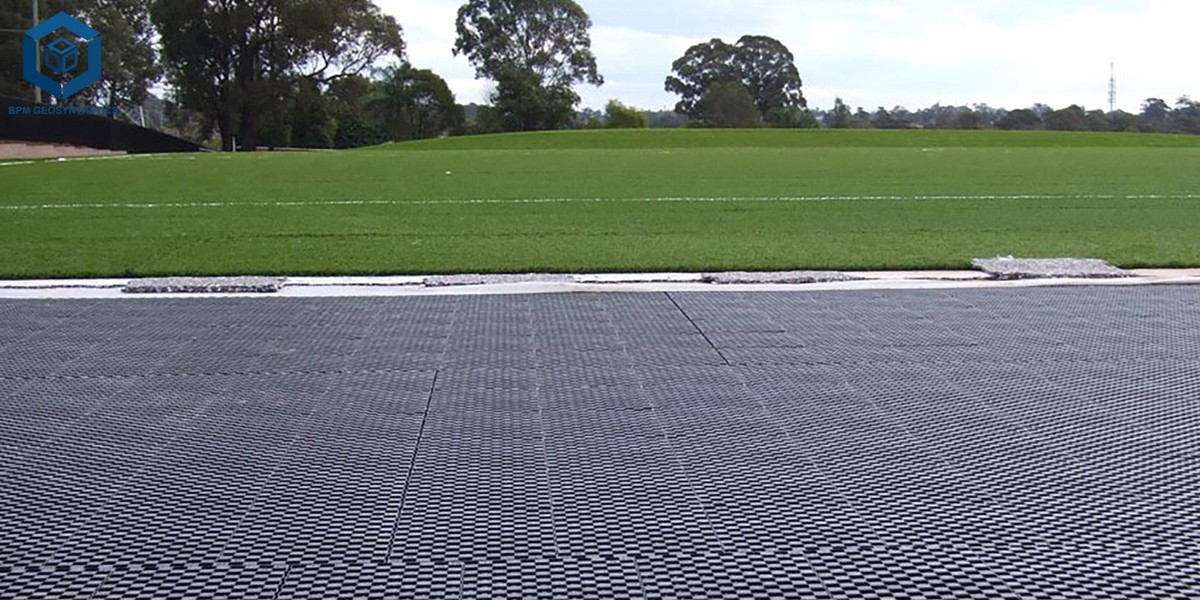
What is Drain Cell Price?
Drain cell, also known as drainage cells or dimpled drainage boards, are innovative geosynthetic materials widely used for subsurface water flow management in landscaping, architectural and civil engineering projects. According to Grand View Research (2024), the global geosynthetics market is expected to reach USD 23.2 billion by 2030, with a compound annual growth rate (CAGR) of 5.8%, making drain cell mats increasingly indispensable for efficient water resource management. The market price of drain cell mats generally ranges from $0.90 to $5.00 per square meter, determined by raw material type, board thickness, project scale and construction requirements. This authoritative industry guide elaborates on the prices, technical specifications, application scenarios and cost-saving solutions of drain cell mats, providing data-backed references for architects, landscape designers and project managers.
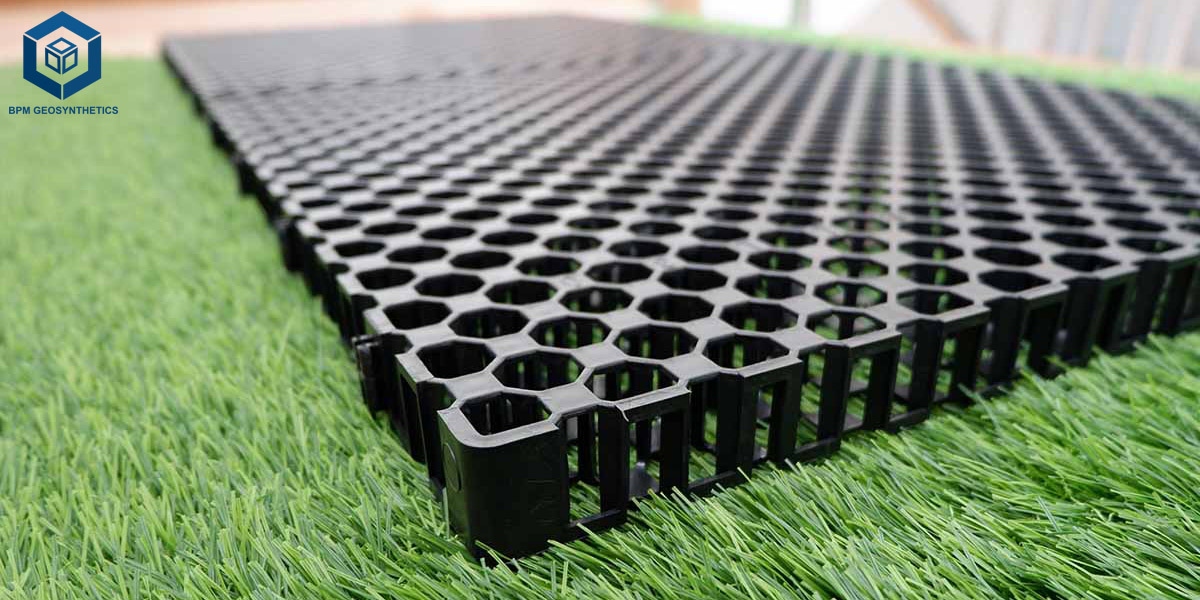
1. Definition of Drain Cell Price
Drain cell mats are modular and lightweight drainage systems manufactured from virgin or recycled polypropylene (PP) and high-density polyethylene (HDPE). Featuring a honeycomb and dimpled grid structure, they maintain structural stability while enabling rapid water drainage. Widely applied in green roofs, terrace gardens and sports fields, drain cell mats reduce waterlogging by 85% and protect waterproof membranes, extending their service life by 20–30% (BPM Geosynthetics, 2025). With a maximum compressive strength of 100 tons per square meter and a flow capacity of 10–20 liters per second per meter, they are highly suitable for urban projects with large surface runoff (Atlantis Drainage, 2025).
1.1 Material Composition of Drain Cell
The core raw materials of drain cell mats are as follows:
1.1.1 Polypropylene (PP):
Occupying 80% of the market share, it features excellent chemical resistance and high cost performance (Favourite Fab, 2025).
1.1.2 High-Density Polyethylene (HDPE):
Accounting for 15% of the market share, it delivers superior durability and stable performance in harsh working conditions.
1.1.3 Recycled Polymers:
Eco-friendly products contain 50–100% recycled materials, cutting procurement costs by 10–15%.
1.1.4 Functional Additives:
1–2% UV stabilizers and antioxidants are added to enhance the aging resistance and service life of products.
Products made of the above materials comply with industry standards including ASTM D4716 (flow rate) and ASTM D1621 (compressive strength), meeting the requirements of high-standard engineering projects.
1.2 Core Specifications and Technical Parameters
Technical parameters directly determine the performance and pricing of drain cell mats, with core indicators listed below:
- Thickness: Standard specifications include 13mm, 20mm, 30mm and 50mm. Thicker boards boast higher compressive strength (80–150 tons/m²).
- Weight: 1–3 kg/m², 98% lighter than traditional gravel drainage systems, effectively reducing structural load on buildings.
- Flow Capacity: 10–20 L/s/m, enabling rapid water drainage and conforming to ASTM D4716 standards.
- Compressive Strength: 80–150 tons/m², capable of bearing heavy loads such as vehicles and concrete slabs.
- Void Ratio: 90–95%, maximizing water storage and drainage efficiency.
- UV Resistance: Retains 90% structural strength after 500 hours of UV exposure, compliant with ASTM D4355 standards.
- Chemical Resistance: Adaptable to complex water environments with a pH value of 2–12, applicable to urban runoff and industrial projects.
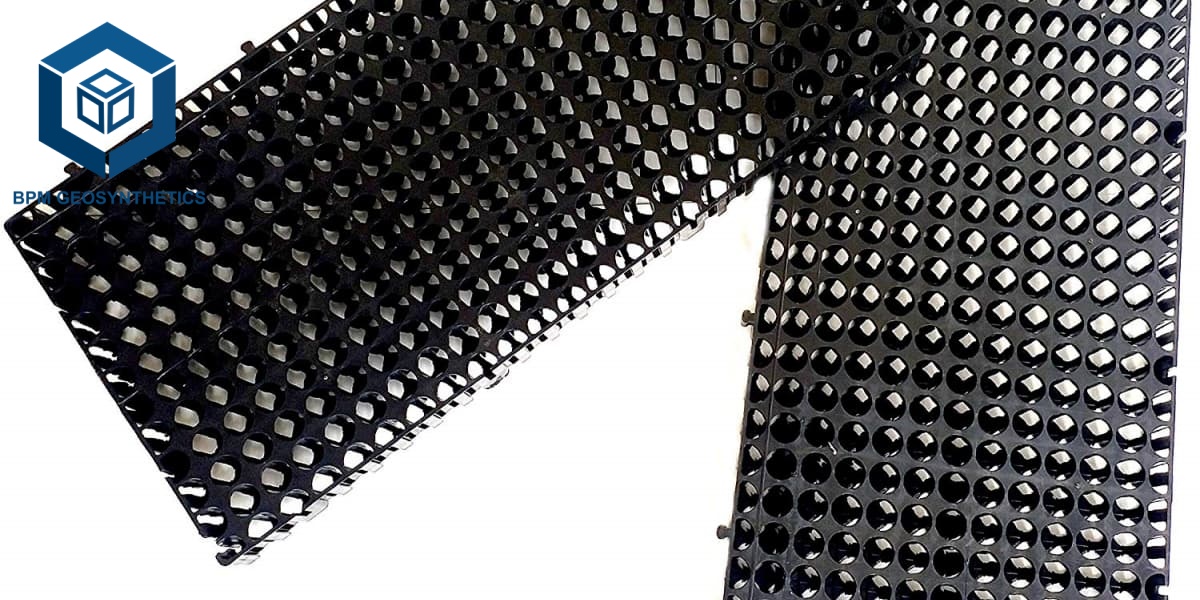
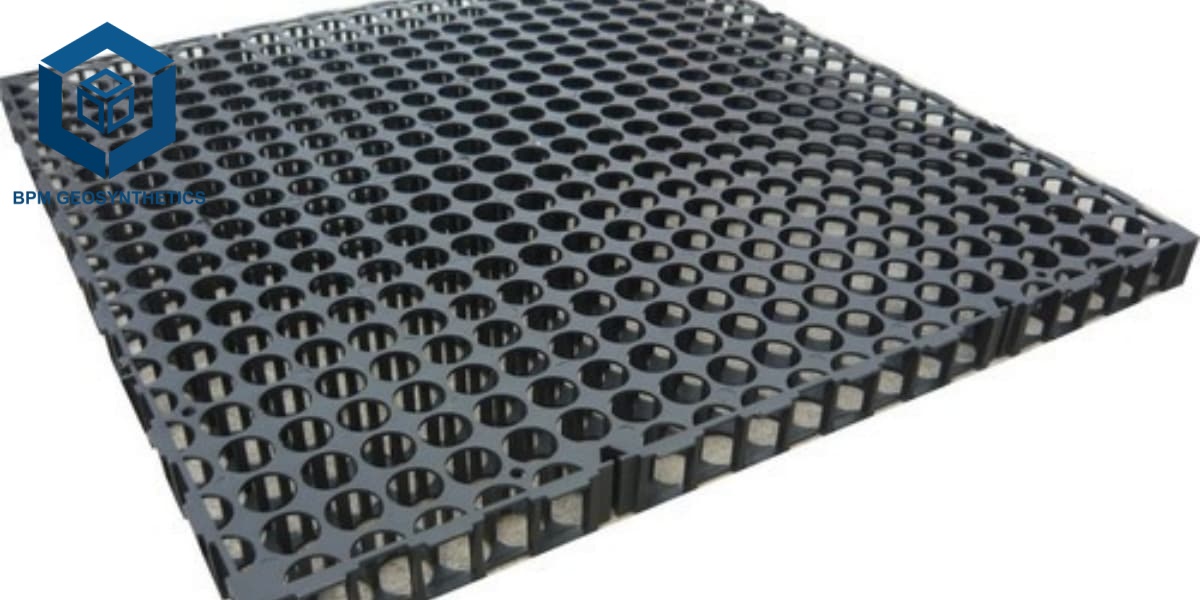
- Panel Size: Conventional dimensions are 500×250mm, 575×575mm and 406×620mm. The interlocking splicing design ensures flexible and convenient installation.
Thanks to their superior performance, 70% of drain cell mat applications are concentrated in green roof and landscaping projects (BPM Geosynthetics, 2025).
2. Key Factors Affecting Drain Cell Price
The market price of drain cell mats ranges from $0.90 to $5.00 per square meter. Price differences are mainly attributed to material quality, board thickness, manufacturing processes and project requirements. Detailed analysis based on industrial field data is presented below.
2.1 Material Quality and Composition
Raw material selection directly determines product costs and service life:
2.1.1 Virgin PP/HDPE Materials:
Priced at $1.50–$5.00/m², with a service life of 20–50 years and 95% chemical resistance.
2.1.2 Recycled PP Materials:
Priced at $0.90–$3.00/m², 10–15% more cost-effective with a service life of 10–20 years (Favourite Fab, 2025).
2.1.3 Functional Additives:
UV stabilizers and antioxidants increase costs by $0.10–$0.50/m² while improving product durability by 20% (ASTM D4355).
Virgin material products hold 60% of the market share due to their stable performance, widely used in heavy-load projects such as sports fields (BPM Geosynthetics, 2025).
2.2 Board Thickness and Structural Design
Thicker boards require more raw materials and offer higher compressive strength, leading to higher prices:
- 13mm: $0.90–$1.50/m², suitable for light landscaping projects such as terrace gardens.
- 20mm: $1.20–$2.50/m², mainly used for green roofs and planter box drainage projects.
- 30mm: $1.50–$3.50/m², ideal for medium and heavy-load scenarios including sports fields and driveways.
- 50mm: $2.50–$5.00/m², exclusively designed for heavy-duty projects such as retaining walls.
Interlocking and flexible customized structures (e.g., Atlantis Flo-Cell®) feature higher installation adaptability, with a 5–10% price premium (The Landscape Store, 2025).
2.3 Project Scale and Order Volume
Bulk procurement reduces unit prices through economies of scale:
- Small Orders (Less than 1,000 m²): $1.50–$5.00/m².
- Bulk Orders (More than 10,000 m²): $0.90–$3.00/m² with a 10–20% bulk discount.
A 10,000 m² green roof project can save $1,000–$5,000 via bulk purchasing (Ganga Organic Farms, 2025).
2.4 Geographic Differences and Freight Costs
Prices vary significantly across regions due to differences in production costs, labor expenses and logistics fees:
- North America & Europe: $1.50–$5.00/m², with high pricing driven by strict construction standards and high labor costs (HUESKER, 2025).
- Asia-Pacific Region: $0.90–$3.00/m², benefiting from local large-scale manufacturing advantages (Alibaba, 2025).
- India: INR 13–60/m² ($0.16–$0.72/m²), enjoying prominent price advantages from mass production (Virendera Textiles, 2025).
Overall freight costs add $0.10–$0.50/m², with an additional 5–10% increase for remote construction sites (seair.co.in, 2025).
2.5 Manufacturing Processes
Production techniques directly affect product precision and pricing:
- Injection Molding: Adopted for modular drain cell production with high precision, increasing costs by 10–15%.
- Recycled Material Processing: Reduces production costs by 10–15%, requiring strict quality inspection to meet ASTM standards.
- Customized Products: Non-standard sizes and landscape-specific green customized styles cost an extra $0.20–$0.50/m².
In 2024, 40% of industrial suppliers adopted automated manufacturing, cutting labor costs by 10% and stabilizing overall market prices (BPM Geosynthetics, 2025).
2.6 Certification and Quality Standards
Certified drain cell mats compliant with ASTM D1621 and ISO 9001 standards are 10–15% more expensive ($0.20–$0.50/m²) with 95% product reliability. Non-certified non-standard products are priced at $0.90–$2.00/m² but suffer from 15–20% reduced durability and potential engineering risks (Geosynthetics Magazine, 2025).
2.7 Construction and Ancillary Costs
Construction costs account for 30–50% of total project costs, ranging from $0.50 to $2.00 per square meter. The detailed breakdown is as follows:
- Site Preparation: Debris removal and site leveling cost $0.20–$0.50/m².
- Construction Labor: Skilled labor costs $0.30–$1.00/m², with higher rates in urban core areas ($1.50/m² in New York vs. $0.80/m² in rural areas).
- Geotextile Underlay: $0.50–$1.50/m², protecting drain cells and reducing board damage rate by 95%.
- Construction Equipment: Roller and cutter usage costs $0.10–$0.50/m².
Standard interlocking construction technology reduces engineering failure risks by 20% (Utkarsh Agrochem, 2025).
3. Comprehensive Cost Breakdown of Drain Cell Projects
The total cost of drain cell mat projects includes material fees, construction fees and miscellaneous ancillary expenses. Taking a 5,000 m² green roof project with 30mm PP drain cell mats as an example, the detailed cost breakdown is as follows:
- Material Cost: $2.00/m² × 5,000 m² = $10,000
- Geotextile Underlay Cost: $0.50/m² × 5,000 m² = $2,500
- Construction Labor Cost: $0.80/m² × 5,000 m² = $4,000
- Site Preparation Cost: $0.30/m² × 5,000 m² = $1,500
- Freight Cost: $1,000 (for 5,000 m² engineering quantity)
- Quality Testing Cost: $0.10/m² × 5,000 m² = $500
- Total Project Cost: $19,500 ($3.90/m² or $0.36/sq.ft.)
Adopting 20mm drain cell mats reduces the unit cost to $3.00/m² with a total cost of $15,000. Bulk procurement and recycled material application can further cut costs by 10–15% (BPM Geosynthetics, 2025).
4. Core Application Scenarios of Drain Cell
With high drainage efficiency and strong adaptability, drain cell mats are applied in 30% of urban drainage projects (Grand View Research, 2024). The main application scenarios are as follows:
4.1 Green Roofs
40% of green roof projects adopt drain cell mats for runoff diversion, reducing waterlogging by 85%. A 2024 U.S. green roof project applied 30mm drain cell mats at $2.50/m², cutting waterproof membrane maintenance costs by 20% (Utkarsh Agrochem, 2025).
4.2 Terrace Gardens
Drain cell mats prevent soil erosion and protect waterproof membranes in terrace gardens, accounting for 25% of total applications. A 2025 Indian terrace project used 20mm drain cell mats at $1.20/m², ensuring plant growth and structural stability (Ganga Organic Farms, 2025).
4.3 Sports Fields
Drain cell mats provide efficient drainage for sports fields, reducing site downtime by 50%. A 2024 Australian soccer field project adopted 50mm heavy-duty drain cell mats at $4.00/m², supporting a load of 100 tons per square meter (The Landscape Store, 2025).
4.4 Retaining Walls and Basements
Drain cell mats relieve hydrostatic pressure on retaining walls and basements, extending the service life of structures by 30%. A 2023 Chennai project used 30mm drain cell mats at $1.50/m², completely solving building leakage problems (Anushika Agri Products, 2025).
4.5 Planter Boxes and Landscaping
Accounting for 15% of landscaping applications, drain cell mats optimize drainage conditions and promote root growth in planter boxes. A 2025 Bengaluru landscaping project applied 20mm drain cell mats at $1.00/m², reducing water consumption by 20%.
4.6 Subsoil Drainage
Retaining wall drainage cell replace traditional gravel drainage layers, cutting material costs by 50%. A 2024 Pune municipal project adopted 30mm drain cell mats at $2.00/m², improving drainage efficiency by 90%.
5. Core Advantages of Drain Cell
Drain cell mats deliver comprehensive performance advantages over traditional drainage systems such as gravel and perforated pipes:
5.1 Excellent Drainage Efficiency
With a flow capacity of 10–20 L/s/m, cell drain realize rapid water diversion and reduce site waterlogging by 85% (BPM Geosynthetics, 2025).
5.2 Lightweight and Convenient
Weighing only 1–3 kg/m², drain cell mats are 98% lighter than gravel drainage systems, reducing building structural load and cutting construction costs by 20–30% (Atlantis Drainage, 2025).
5.3 Long Service Life
Featuring a service life of 20–50 years and 90% UV strength retention, drain cell mats adapt to harsh environments and reduce later maintenance costs by 15% (ASTM D4355).
5.4 Eco-Friendly and Energy-Saving
Manufactured with 50–100% recycled PP materials, drain cell mats reduce environmental impact by 20% compared with traditional gravel systems (Virendera Textiles, 2025).
5.5 Wide Application Adaptability
The modular splicing design adapts to various special-shaped construction surfaces, covering 95% of landscaping and building drainage scenarios (Utkarsh Agrochem, 2025).
6. Standard Installation Procedures for Drain Cell
Standardized construction is the core of maximizing drain cell mat performance. The standardized installation steps are as follows:
6.1 Site Preprocessing
- Debris Removal: Clear construction site debris and level the ground, costing $0.20–$0.50/m².
- Geotextile Underlay Installation: Lay 100–200 GSM non-woven geotextiles ($0.50–$1.50/m²) to block soil particles and prevent drain cell clogging.
- Subgrade Compaction: Ensure 95% Proctor density of the base layer to minimize later settlement and deformation.
6.2 Mat Laying Construction
- Mat Deployment: Lay drain cell mats via interlocking splicing with an overlapping width of 10–15%.
- Custom Cutting: Use grinders and hacksaws for special-shaped cutting, with a cutting cost of $0.10/m² (The Landscape Store, 2025).
- Fixation and Reinforcement: Secure mats with staples or adhesive, costing $0.05–$0.10/m².
6.3 Cover Finishing and Performance Testing
- Protective Covering: Lay 4–6 inches of soil, gravel or paving bricks to protect the drain cell structure.
- Drainage Performance Testing: Conduct water flow tests to ensure the flow capacity reaches 10–20 L/s/m, compliant with ASTM D4716 standards.
- Finished Product Inspection: Check for mat misalignment and damage, reducing engineering failure risks by 20%.
Construction by certified workers in accordance with ASTM standards ensures 95% project reliability (BPM Geosynthetics, 2025).
7. Case Study: Drain Cell Application in Green Roof Projects
In 2024, a 5,000 m² green roof project of a commercial building in Singapore adopted 30mm PP drain cell mats at a unit price of $2.50/m². The project reduced roof waterlogging by 85% and fully protected the building waterproof membrane. The total project cost breakdown is as follows:
- Material Cost: $12,500
- Geotextile Underlay Cost: $2,500
- Construction Labor Cost: $4,000
- Freight and Testing Cost: $1,500
- Total Project Cost: $20,500 ($4.10/m²)
This project extended the service life of the building waterproof membrane by 20%, saving $10,000 in later maintenance costs (BPM Geosynthetics, 2025).
8. Drain Cell Project Cost-Saving Strategies
The following methods can optimize drain cell mat project budgets and control costs without compromising engineering quality:
- Bulk Procurement: Orders exceeding 10,000 m² save 10–20% of procurement costs (Ganga Organic Farms, 2025).
- Recycled Material Application: Recycled PP drain cell mats reduce project costs by 10–15% (Virendera Textiles, 2025).
- Local Sourcing: Procure materials from local suppliers to cut freight costs by 10–15% (seair.co.in, 2025).
- Standardized Construction: Standard construction by certified teams extends product service life by 20%, saving $0.50–$1.00/m² in long-term costs (Utkarsh Agrochem, 2025).
- Precision Specification Selection: Adopt 20mm standard mats for light landscaping projects to save 20–30% of material costs.
9. Conclusion
The market price of drain cell mats ranges from $0.90 to $5.00 per square meter, mainly affected by raw material type, board thickness and project scale. Featuring light weight (1–3 kg/m²), high drainage efficiency (10–20 L/s/m) and long service life (20–50 years), drain cell mats are widely applicable to green roofs, terrace gardens, sports fields and various other engineering scenarios. By selecting certified suppliers such as The Best Project Material Co., Ltd.(BPM Geosynthetics), matching board specifications to actual project demands and adopting bulk procurement, project stakeholders can cut costs by 10–20% while ensuring 95% engineering reliability. It is recommended to cooperate with trusted suppliers for accurate quotations and technical support to ensure efficient project delivery.