Ultimate Guide to Geotextile Price
When planning a construction, landscaping, or environmental project, appreciation geotextile charge is necessary for making the proper fabric choice. Geotextiles are broadly used in street construction, soil stabilization, drainage, erosion control, and landfill purposes due to their strength, durability, and permeability. However, the price of geotextile can range considerably relying on elements such as material kind (woven, nonwoven, knitted), polymer cloth (PP, PET), weight, tensile strength, and meant application. By mastering what influences geotextile price, customers can higher consider quality, evaluate suppliers, and pick out the most good value answer for their projects. This information presents a complete overview of geotextile cost, masking key fee factors, application-specific requirements, and guidelines for selecting the proper geotextile at the quality value.
1. What is Geotextile?
Geotextile is permeable artificial fabric that play a fundamental function in civil engineering, construction, and environmental safety projects. They are specially manufactured from gorgeous polymers such as polypropylene (PP), polyester (PET), and high-density polyethylene (HDPE), which supply brilliant durability, chemical resistance, and lengthy provider life. By functioning as separators, filters, reinforcements, and safety layers, needle punched geotextile fabric drastically enhance soil overall performance and decorate the steadiness and sturdiness of engineering structures.
1.1 Geotextile can be labeled into a number of most important categories:
1.1.1 Woven Geotextile
Produced with the aid of weaving polymer fibers into a robust fabric, these woven geotextile provide excessive tensile electricity and are basically used for soil reinforcement, load distribution, and stabilization in street construction, highways, railways, and embankment projects. Their shape helps forestall soil mixing whilst retaining structural integrity below heavy loads.
1.1.2 Non-Woven Geotextile
Manufactured via needle-punching or thermal bonding, non woven geotextile have a felt-like texture and supply magnificent permeability. They are best for purposes involving filtration and drainage, such as subsurface drainage systems, protecting walls, land reclamation, and safety of geomembrane liner. Their capacity to permit water to ignore whilst blocking off soil particles prevents clogging and enhances hydraulic performance.
1.1.3 Knitted Geotextile
Though much less generally used, knitted geotextile is produced the use of specialised knitting techniques. They are chosen for purposes that require flexibility, elasticity, and light-weight strength, making them appropriate for area of interest makes use of in coastal safety and positive reinforcement applications.
1.1.4 Geocomposite
These are engineered merchandise that mix geotextiles with different geosynthetic materials, such as geogrid, geomembrane, or drainage cores, to obtain a couple of functions. Geocomposites are broadly utilized in landfill liners, erosion manipulate mats, and drainage layers, imparting each mechanical reinforcement and environment friendly liquid or fuel transmission.
1.2 Thanks to their versatility, geotextile is substantially utilized in a large vary of infrastructure and environmental projects
1.2.1 Geotextile for Road and Railway Construction
Used for soil stabilization, separation of subgrade layers, and reinforcement to lengthen the carrier existence of pavements and tracks.
1.2.2 Geotextile for Drainage Systems
Prevent soil particles from clogging drains whilst permitting water to skip freely, enhancing effectivity in agriculture, landscaping, and city infrastructure.
1.2.3 Geotextile for Landfills and Reservoirs
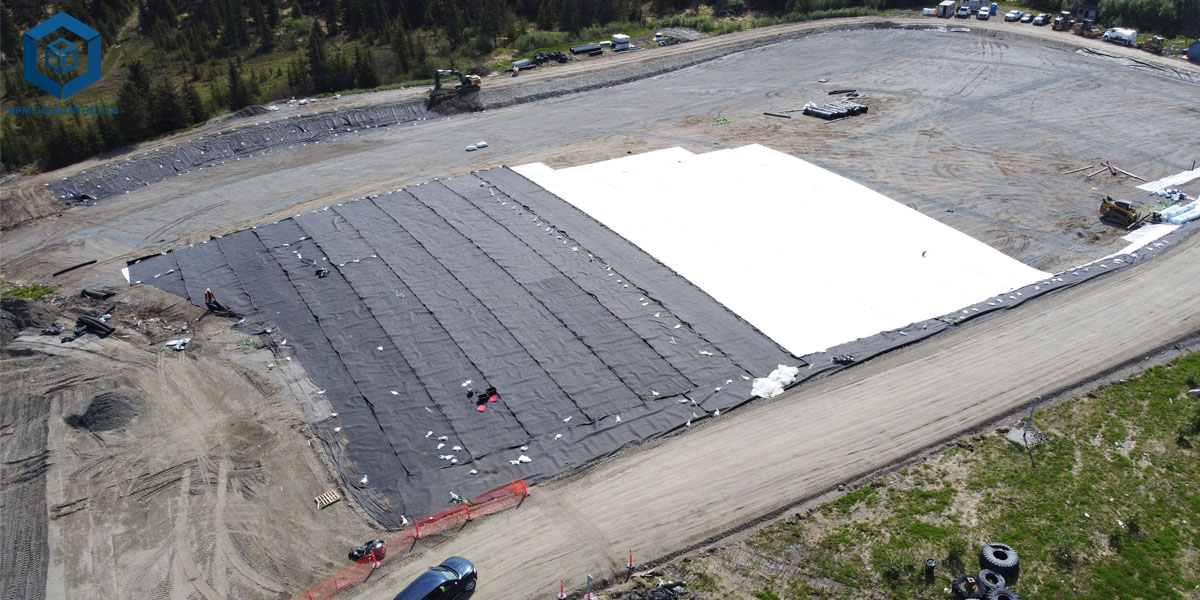
Act as shielding and filtration layers in waste containment systems, stopping leachate leakage and making sure long-term environmental safety.
1.2.4 Geotextile for Erosion Control
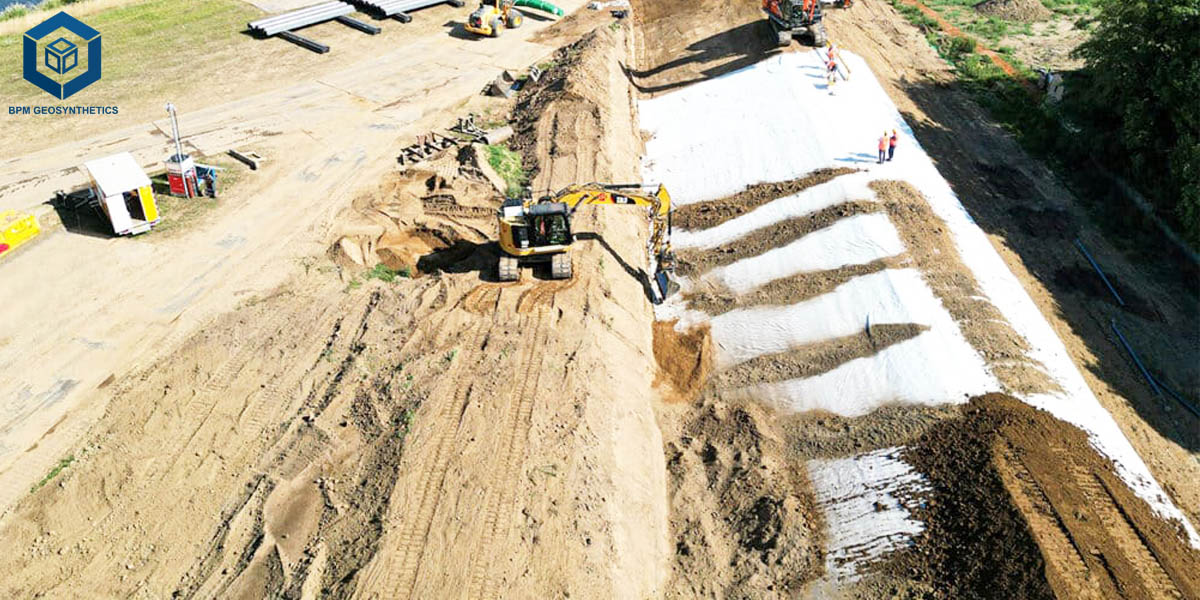
Provide slope stability, defend shorelines, riverbanks, and coastal revetments from erosion prompted by means of water currents and wave action.
In short, geotextile fabric is integral substances in cutting-edge geotechnical engineering. Their capability to mix strength, permeability, and sturdiness makes them a cost-efficient and sustainable answer for construction, water management, and environmental protection.
2. Factors Affecting Geotextile Price
The charge of geotextile is influenced with the aid of a range of technical and market-related factors. Understanding these factors can assist customers make knowledgeable choices when choosing the proper product for their projects:
2.1 Geotextile Price - Raw Material Type
BPM Geotextile is commonly made from polypropylene (PP) or polyester (PET).
- PP geotextile is lightweight, cost-effective, and many times used for drainage and filtration.
- PET geotextile gives greater resistance to UV rays and organic degradation, regularly priced barely higher.
The desire of polymer without delay impacts overall performance and cost.
2.2 Geotextile Price - Fabric Structure (Woven geotextile vs. Nonwoven geotextile)
- Woven geotextiles require specific weaving, providing excessive tensile electricity for soil reinforcement, commonly at a greater price.
- Nonwoven geotextiles are manufactured with the aid of needle-punching or thermal bonding, making them extra inexpensive however nevertheless high-quality for filtration and drainage.
- Knitted geotextiles and geocomposites frequently fee extra due to specialised manufacturing and area of interest applications.
2.3 Geotextile Price - Weight and Thickness (GSM / g/m²)
Heavier geotextiles with greater gram weight (GSM) or thickness furnish higher power and durability, however additionally expand cloth cost. Lightweight geotextile is cheaper, however may additionally now not meet overall performance necessities for heavy-duty projects.
2.4 Geotextile Price - Tensile Strength and Performance Requirements
Projects with excessive load-bearing needs (e.g., highways, airports, embankments) require strengthened geotextile landscape fabric with greater tensile strength, which extensively influences pricing in contrast to geotextiles used in landscaping or easy drainage systems.
2.5 Geotextile Application and Project Scale
The meant use additionally determines price.
Road construction, railways, and landfills frequently require heavy-duty, licensed geotextiles, growing cost.
Agriculture, landscaping, and gardening generally use lighter, much less steeply-priced fabrics.
Larger initiatives typically buy in bulk, which can minimize the unit cost.
2.6 BPM Geotextile Manufacturing Process and Quality Standards
Advanced manufacturing technologies, strict exceptional control, and certifications such as ISO, CE, ASTM expand manufacturing prices however assurance regular performance. Fabric geotextile except certification may additionally be more cost effective however threat decrease sturdiness and reliability.
2.7 Geotextile Market Supply, Brand, and Logistics
Well-known manufacturers and factory-direct suppliers may additionally rate otherwise relying on popularity and warranty.
Global uncooked fabric fees (polymer resin costs) and delivery prices additionally without delay have an impact on geotextile cloth rate in global markets.
3. Other Costs to Consider Beyond Geotextile Price
When evaluating the real price of geotextile, it’s vital to seem past the base cloth price. Several extra prices can drastically have an impact on the standard price range of a project:
3.1 Geotextile Transportation and Shipping Costs
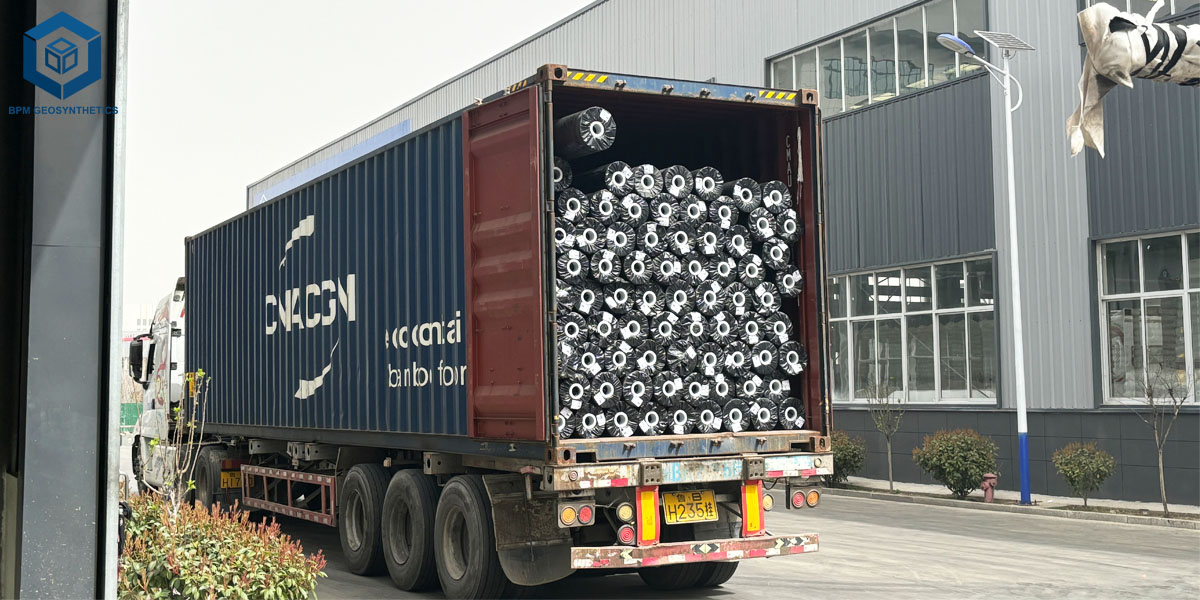
Geotextile roll is bulky and require careful handling, but they are usually shipped without pallets to save space and reduce transportation costs.
International orders contain freight charges, import duties, and customs clearance fees.
Shipping prices can every now and then signify 10–30% of the whole cloth cost, relying on distance and logistics.
3.2 Geotextile Installation Costs
Proper set up is indispensable to geotextile performance.
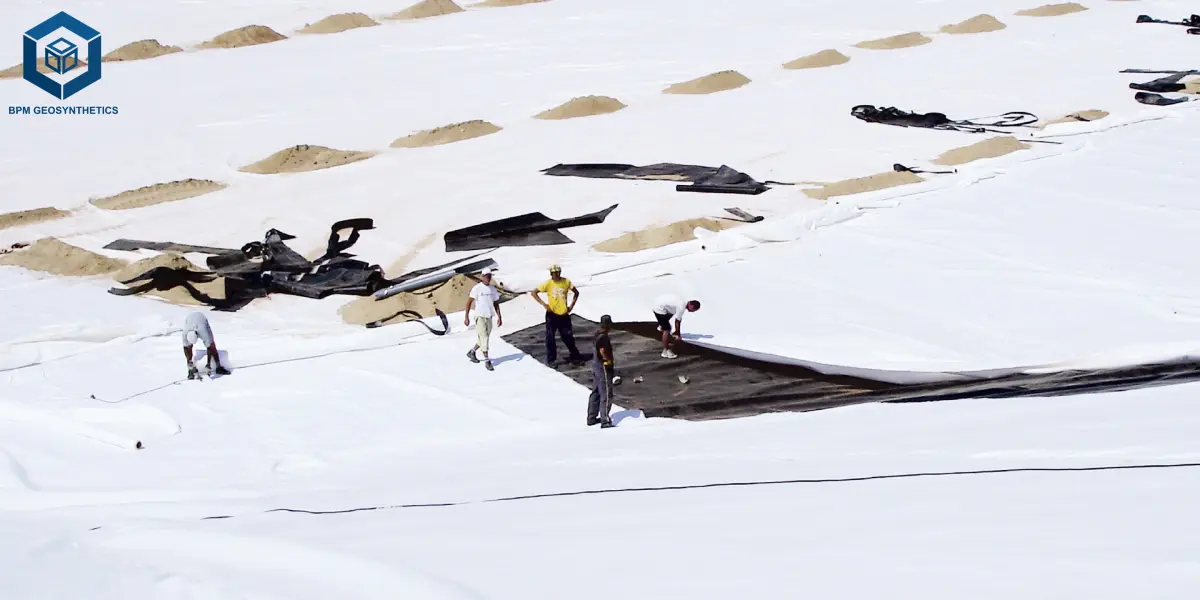
Costs consist of floor instruction (clearing debris, grading, compacting), laying the fabric, and making sure right overlaps and alignment.
For large-scale tasks such as highways or landfills, specialised tools may also be needed, growing labor and condo costs.
3.3 Labor Costs
Labor charges range through place and challenge size.
Skilled employees are regularly required for purposes like slope protection, drainage systems, or geomembrane protection.
In some cases, labor expenses can exceed the geotextile fabric fee itself, mainly for small or complicated projects.
3.4 Geotextile Accessories and Consumables
Pins, stakes, or pegs for securing the cloth in place.
Seaming or jointing substances (e.g., stitching, warmness bonding, adhesives).
Protective layers (sand, gravel, or geogrids) positioned above the material in sure applications.
Geotextile set up requires extra substances such as:
These add-ons add to the general fee however are quintessential to make sure sturdiness and performance.
3.5 Geotextile Maintenance and Replacement Costs
While geotextiles are durable, some initiatives may additionally require periodic inspection and alternative due to mechanical damage, UV exposure, or sudden soil conditions.
Factoring in plausible long-term upkeep helps in assessing the lifecycle value of the project.
3.6 Geotextile Wastage and Cutting Allowances
During installation, extra fabric is frequently wished to cowl overlaps, anchor trenches, or irregular surfaces.
It is advocated to finances an more 5–10% of geotextile cloth to account for wastage.
4. How to Choose the Right Geotextile Within Budget?
Selecting the proper geotextile is no longer solely about overall performance however additionally about balancing cost-efficiency with technical requirements. Here are key elements and pointers to information the decision-making process:
4.1 Define Geotextile Project Objectives Clearly
Identify the main motive of the geotextile: separation, reinforcement, filtration, drainage, or protection.
For example, street development requires excessive tensile energy woven geotextiles, whilst drainage structures operate excellent with permeable nonwoven fabrics.
Choosing the right kind prevents overspending on pointless specifications.
4.2 Match Geotextile Type to Soil Conditions
Soft or susceptible soils: Use enhanced woven geotextiles to stop rutting and enhance load distribution.
Granular soils with water flow: Nonwoven geotextiles with excessive permeability are greater cost-effective.
Conducting a easy soil evaluation ensures you don’t over-engineer the solution.
4.3 Consider Geotextile Weight and Strength Requirements
Heavier geotextiles (higher GSM / g/m²) value extra however are no longer continually necessary.
For landscaping, agriculture, or backyard drainage, a light-weight geotextile (100–200 GSM) is sufficient.
For roads, landfills, and railways, pick out medium to heavy-duty geotextiles (≥300 GSM).
Avoid overspecifying energy if the assignment does no longer demand it.
4.4 Optimize Roll Sizes and Layout
Choosing wider rolls reduces overlaps and saves labor time.
For irregular sites, graph the sketch in develop to limit slicing waste.
Buying custom-made roll lengths from the manufacturing unit can decrease wastage and universal cloth cost.
4.5 Balance Upfront Cost vs. Long-Term Performance
A lower-priced geotextile might also shop cash firstly however ought to fail early, main to expensive repairs.
Investing in a certified, notable geotextile ensures longer carrier lifestyles and decrease lifecycle costs.
Always examine value per rectangular meter vs. anticipated durability.
4.6 Leverage Bulk Purchasing and Supplier Options
Large tasks advantage from bulk orders with factory-direct pricing.
Compare a couple of suppliers, thinking about now not simply cloth price however additionally shipping, lead time, and warranty.
Partnering with a dependable producer like BPM Geosynthetics ensures constant exceptional and technical support.
4.7 Check Certifications and Standards
Ensure the geotextile meets global requirements such as ISO, ASTM, or CE.
Certified substances decrease the hazard of undertaking failure and make certain compliance with engineering requirements.
This minimizes the hidden fees of changing substandard products.
5. Why Choose BPM Geosynthetics Geotextile?
- ISO & CE Certified: Ensures compliance with global standards.
- Custom Solutions: Tailored weights, widths, and strengths.
- Competitive Pricing: Direct manufacturing facility furnish reduces costs.
- Global Supply: Exports to North America, Europe, and Asia.
6. Conclusion
The geotextile price is influenced with the aid of countless factors, along with uncooked materials, weight, tensile strength, certifications, and provider reliability. While value is an vital consideration, deciding on the proper kind of geotextile for your particular application—whether street construction, drainage systems, landfills, or erosion control—directly affects the long-term sturdiness and success of your project.
For shoppers looking for each great and value, The Best Project Material Co.. Ltd.(BPM Geosynthetics)is a relied on producer and international dealer of high-performance geotextiles. With superior manufacturing facilities, strict high-quality control, and global certifications, BPM can provide woven and nonwoven geotextiles that meet the best engineering standards. Offering factory-direct pricing, custom-made solutions, and expert technical support, BPM ensures that each and every client receives the most low-cost and dependable answer for their needs.
By partnering with BPM Geosynthetics, you no longer solely store on geotextile costs, however additionally reap self assurance in long-term performance, environmental compliance, and venture success.