The 8 Best Geogrid Fabric Review
1. Introduction and Overview
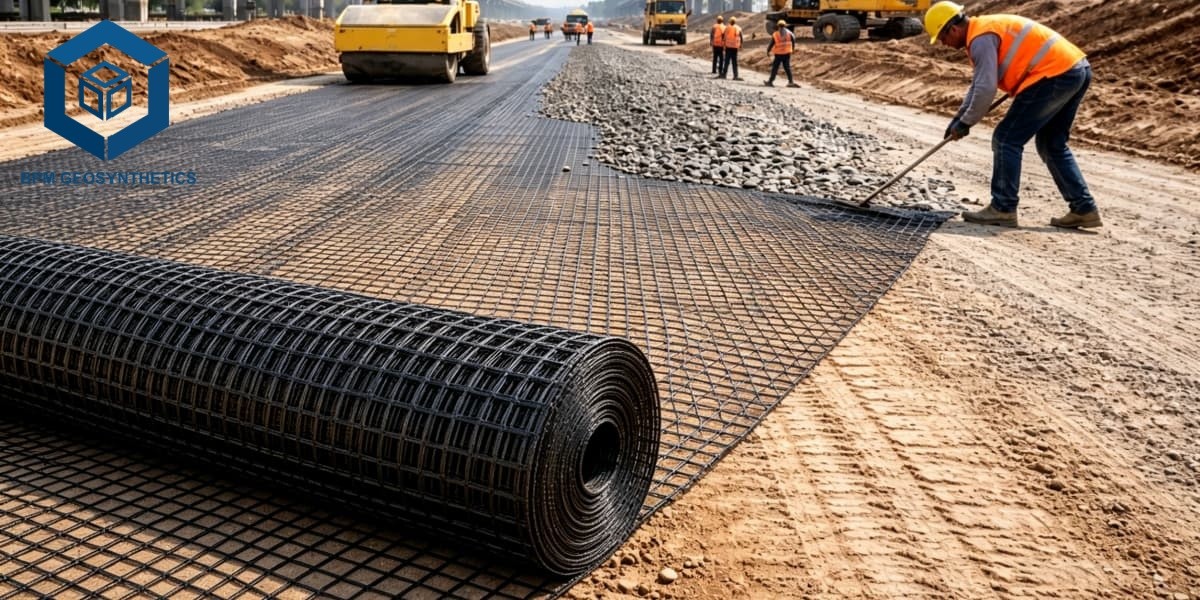
Choosing the right geogrid fabric is critical for any construction, road stabilization, or erosion control project. Geogrid fabrics reinforce soil, distribute loads, and prevent ground deformation. With so many options on the market, I have reviewed the the 8 best geogrid fabric based on tensile strength, aperture design, durability, and real-world performance. Below are my detailed reviews, followed by selection guidelines, installation tips, and answers to common questions.
2. Product Reviews – Tensar BX1200 and US Fabrics 400
2.1 Tensar BX1200 Biaxial Geogrid
Tensar is the industry benchmark for ground stabilization. The BX1200 is ideal for unpaved roads, parking lots, and working platforms.
2.1.1 Key features
Superior long-term creep resistance under static and dynamic loads.
High junction efficiency (over 90%) – intersections do not pull apart.
Works well beneath paved surfaces to reduce asphalt thickness.
Withstands installation stresses from heavy compaction equipment.
2.1.2 Considerations
Significantly more expensive than budget brands.
Heavy rolls (around 100 pounds) require two people for placement.
Needs a flat, well-prepared subgrade to avoid wrinkling.
2.2 US Fabrics Uniaxial Geogrid 400
Uniaxial geogrids carry high loads in one direction only. This HDPE model excels at reinforcing retaining walls and steep slopes.
2.2.1 Key features
Tensile strength of 400 kN/m in the machine direction.
UV stabilized for up to 60 days of direct sunlight exposure.
Easy to splice and overlap using polypropylene connectors.
Highly resistant to chemical and biological degradation.
2.2.2 Considerations
Not suitable for road base reinforcement (use biaxial instead).
Requires careful attention to orientation during installation.
More rigid than polypropylene geogrids, less forgiving on uneven ground.
3. Product Reviews – Hanes HGB 20 and Strata SG30
3.1 Hanes Geo Components Biaxial Geogrid (HGB 20)
An excellent value biaxial geogrid for light to moderate applications. Made from woven polypropylene yarns with a protective coating.
3.1.1 Key features
Affordable – often 30% cheaper than Tensar equivalents.
Lightweight rolls allow one person to handle installation.
Good aperture stability for driveway and parking pad use.
Resists common soil chemicals and rot.
3.1.2 Considerations
Lower junction strength compared to integral punched geogrids.
May stretch under sustained heavy truck traffic.
Not recommended for clay subgrades that undergo freeze-thaw cycles.
3.2 Strata Biaxial Geogrid SG30
High-performance punched and drawn biaxial geogrid, effective on soft, wet subgrades.
3.2.1 Key features
High aperture stability prevents aggregate from pushing ribs sideways.
Ribbed surface texture improves friction with granular fills.
Resistant to installation damage from sharp rocks.
Works under both static and dynamic loads.
3.2.2 Considerations
Premium pricing, often comparable to Tensar.
Limited availability at big-box home improvement stores.
Requires overlap of at least 18 inches at seams.
4. Product Reviews – Propex 4400 and GeoSolutions 200
4.1 Propex 4400 Geogrid
Built for heavy civil applications – rail tracks, highway interchanges, port facilities. Tensile strength of 440 kN/m.
4.1.1 Key features
Extremely high modulus means minimal deformation under load.
Excellent fatigue resistance for repeated heavy axle passes.
Performs well in freeze-thaw environments without losing integrity.
Long history of successful project data for engineers.
4.1.2 Considerations
Overkill for small-scale residential work.
Very heavy rolls (150+ pounds) requiring machinery or multiple workers.
High upfront cost per square foot.
4.2 GeoSolutions Uniaxial Geogrid 200
Balanced strength and cost for mechanically stabilized earth (MSE) walls.
4.2.1 Key features
Tensile strength of 200 kN/m sufficient for walls up to 20 feet high.
Flexible enough to wrap around modular block facing.
Easy to cut with standard utility knives.
Meets ASTM D6637 standards for quality assurance.
4.2.2 Considerations
Not biaxial – cannot be used for base reinforcement.
Requires compacted backfill in thin lifts for best performance.
UV degradation occurs after 30 days if left uncovered.
5. Product Reviews – AGRU BG-30 and SKAPS BX-1600
5.1 AGRU America Biaxial Geogrid BG-30
Unique extrusion process with very large apertures for deep aggregate penetration. Works well with rounded river gravel.
5.1.1 Key features
Large apertures (over 1.5 inches) reduce the need for perfectly graded aggregate.
High resistance to puncture from sharp debris.
Can be laid directly over soft, muddy subgrades with minimal preparation.
Made from polypropylene that resists acidic and alkaline soils.
5.1.2 Considerations
Rolls are wider than standard (13 feet), requiring special handling.
More expensive than woven geogrids.
Seams must be tied with zip ties or wire – mechanical overlap alone is insufficient.
5.2 SKAPS Biaxial Geogrid BX-1600
Budget-friendly biaxial geogrid that meets ASTM standards. Woven polypropylene with coated junctions.
5.2.1 Key features
Very affordable – often half the price of premium brands.
Lightweight and easy to unroll by one person.
Adequate for low-traffic areas like horse paddocks, garden paths, and overflow parking.
Resists UV for short-term exposure during installation.
5.2.2 Considerations
Coated junctions can separate under high point loads.
Lower tensile strength than punched geogrids (around 160 kN/m).
Not recommended for permanent paved roads or heavy truck traffic.
6. How to Choose the Right Geogrid Fabric?
Selecting the best geogrid goes beyond brand names. Follow these five guidelines.
6.1 Identify load direction
For retaining walls or steep slopes, choose a uniaxial geogrid (US Fabrics 400, GeoSolutions 200). For roads, parking pads, or vertical loads spreading in two directions, choose a biaxial geogrid (Tensar BX1200, Hanes HGB 20).
6.2 Assess soil conditions
Soft, high-moisture subgrades require high aperture stability and rib stiffness. Strata SG30 and AGRU BG-30 perform well here. For well-drained granular soils, a budget option like SKAPS BX-1600 may suffice.
6.3 Consider long-term creep
All geo grid mesh stretch over time under sustained loads. Premium products like Tensar and Propex use low-creep polymers that maintain tension for decades. Cheaper woven geogrids may continue to deform, causing surface rutting after several years.
6.4 Check UV exposure
Most geo grid fabric is not intended for permanent above-ground exposure. If your installation will be covered within 30 days, standard UV stabilization is fine. For longer exposure, request enhanced UV protection or carbon black formulation.
6.5 Evaluate installation damage
Plastic geogrid installed beneath angular crushed stone or over rough subgrades face puncture risks. Punched and drawn geogrids (Tensar, Strata, Propex) have higher resistance to installation damage than flexible woven types.
7. Geogrid Fabric Installation Tips and Frequently Asked Questions
7.1 Installation tips for maximum performance
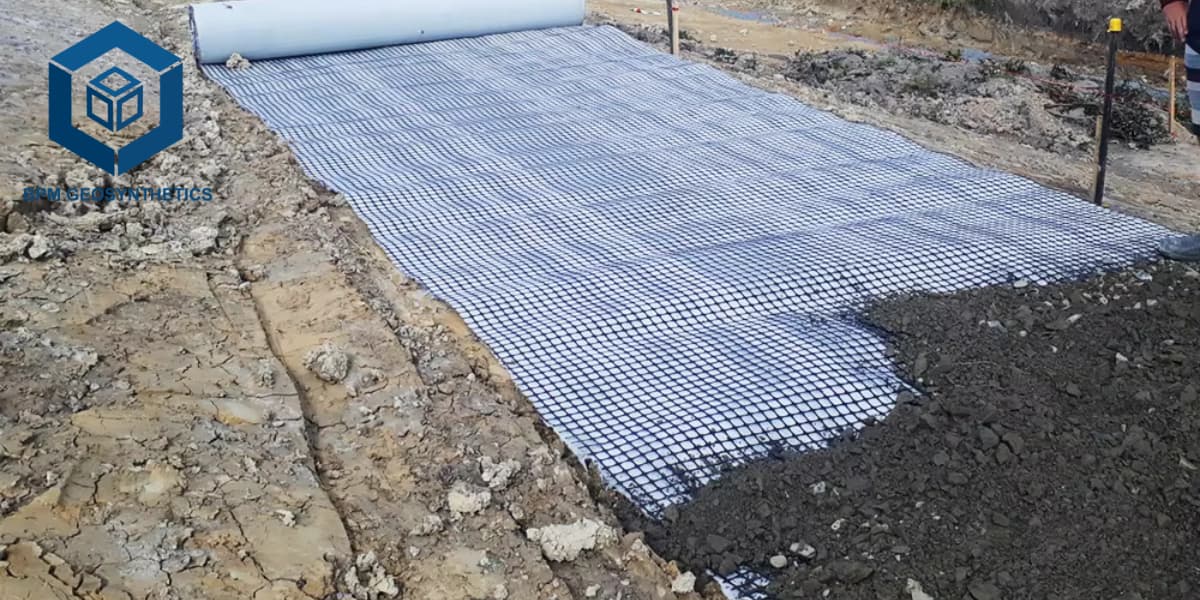
Clear and grade the subgrade. Remove sharp rocks or debris.
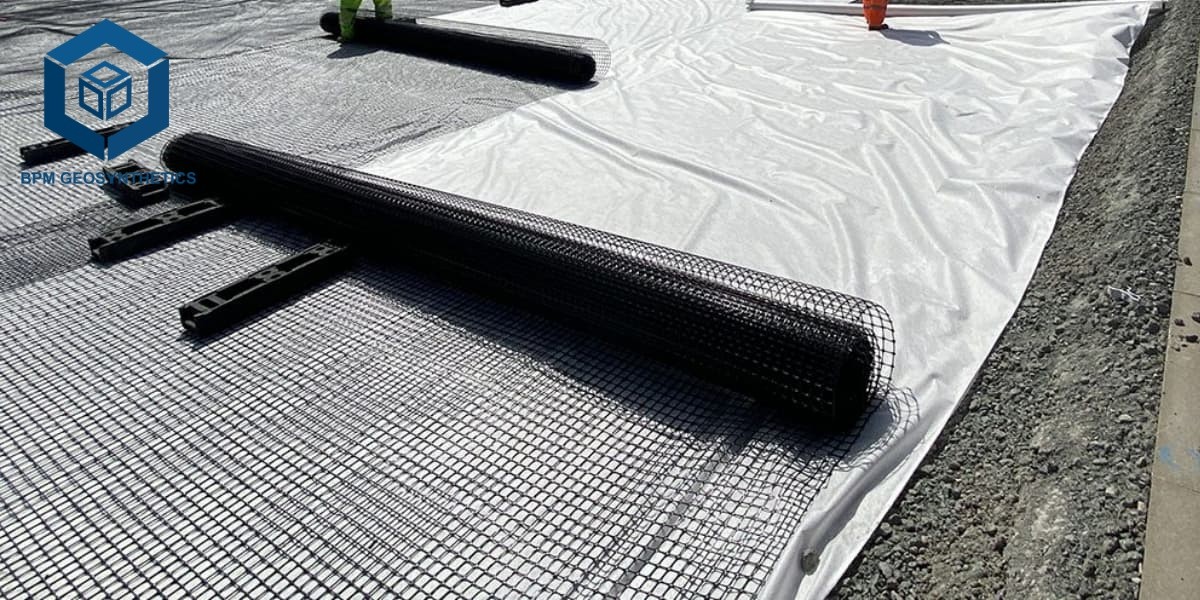
Unroll the geogrid in the direction of primary reinforcement. For uniaxial types, align high-strength ribs with the load direction.
Overlap adjacent rolls by at least 12 to 24 inches, following manufacturer recommendations.
Secure overlaps with staples, pins, or plastic zip ties to prevent shifting.
Place the first lift of aggregate (typically 6 to 8 inches) directly onto the geogrid without driving vehicles on the unprotected grid.
Compact the aggregate in thin lifts – the geogrid becomes an integral part of the stabilized layer.
7.2 Frequently asked questions
Q1: What is the difference between geogrid and geotextile fabric?
Geogrids have open apertures designed to interlock with aggregate, providing reinforcement. Geotextiles are continuous fabrics that separate, filter, or drain.
Q2: Can I use biaxial geogrid for a retaining wall?
No. Retaining walls require uniaxial geogrid because the load is directional.
Q3: How deep should geogrid be buried?
For road base applications, place geogrid directly on the subgrade, then cover with 6 to 12 inches of aggregate. For retaining walls, place it between layers of compacted backfill at 12 to 24 inch vertical intervals.
Q4: Does geogrid really work for driveways?
Yes, especially on soft or wet soils. It reduces rutting, prevents potholes, and allows you to use less aggregate depth.
8. Conclusion
Investing in the right geogrid fabric pays off through decades of stable ground. For heavy commercial or infrastructure projects, the Tensar BX1200 and Propex 4400 are the top choices despite their higher cost. Their creep resistance and junction integrity are unmatched. For residential driveways, parking pads, or landscaping projects, the Hanes HGB 20 and SKAPS BX-1600 provide excellent reliability at a fraction of the price. Retaining wall builders should stick with uniaxial products like the US Fabrics 400 or GeoSolutions 200. No single geogrid is best for every job, but this list of the eight best geogrid fabric options covers all common applications. Choose based on your load, soil, and budget, and you will enjoy stable, long-lasting results.
Whether you need a biaxial geogrid for road stabilization, a uniaxial geogrid for retaining walls, or a heavy-duty solution for large infrastructure projects, selecting a reliable manufacturer is essential to ensure long-term performance and cost efficiency.
As a leading geosynthetics manufacturer with over 20 years of industry experience, The Best Project Material Co., Ltd.(BPM Geosynthetics) provides premium-quality geogrid products for road construction, soil stabilization, slope reinforcement, retaining walls, and foundation improvement. Our products are manufactured to international standards and have been supplied to customers in more than 100 countries worldwide.
If you are looking for a dependable geogrid supplier or need expert advice for your next project, contact the BPM Geosynthetics team today. We are ready to provide professional recommendations, competitive factory pricing, and customized solutions tailored to your specific engineering requirements. Send us your inquiry now and let BPM Geosynthetics help you build stronger, safer, and longer-lasting infrastructure.