The 7 Best Geogrid Slope Stabilization Review
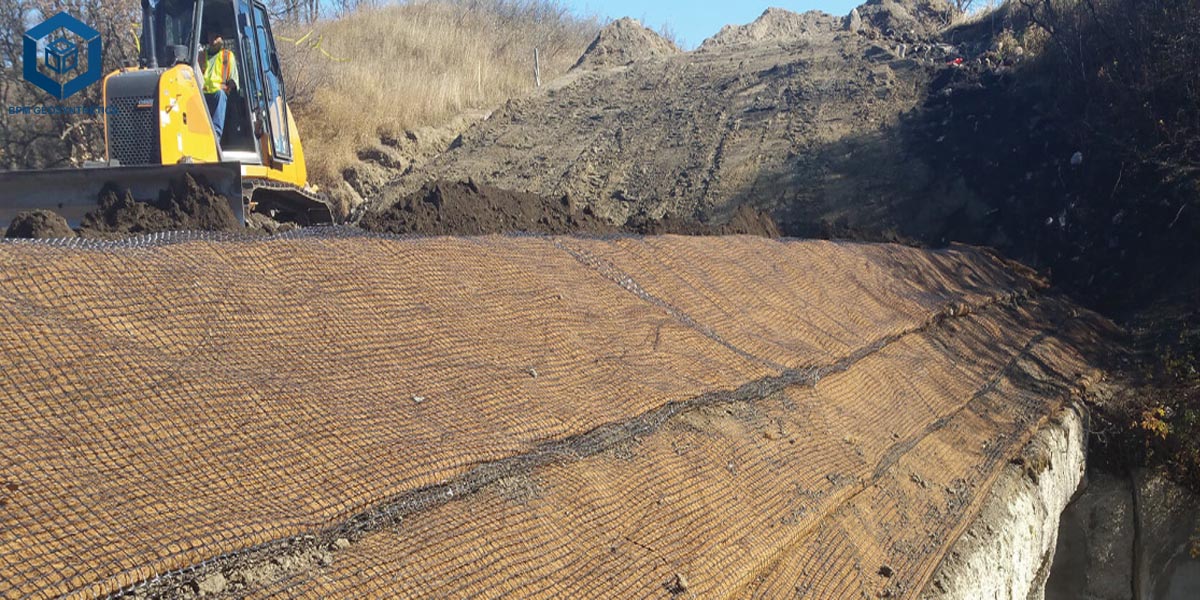
Slope instability poses critical risks to infrastructure, mining operations, and environmental safety worldwide. Geogrids—high-strength polymeric or composite grids—have emerged as the most reliable, cost-effective, and sustainable solution for stabilizing steep slopes, embankments, and cuttings. By enhancing soil shear strength, distributing loads, and preventing erosion, modern geogrids address diverse challenges from highway embankment failures to tailings dam collapses
Slope stabilization lives or dies on one thing: whether the reinforcement actually mobilizes tensile resistance across the failing soil mass and stays there for decades. A geogrid slope stabilization that looks "heavy enough" on paper but lacks validated junction efficiency, creep data, and proper reduction-factor documentation will quietly become the weak link—especially on steepened embankments, saturated subgrades, or seismically active sites.
1. The 7 Best Geogrid Slope Stabilization Review
1.1 BPM Geosynthetics Commodity BX-Class Equivalents — Best Overall for Reinforced Soil Slopes
When the slope is >1.5–2 m high, the soil is marginal, or the design requires a steepened face (up to ~70°) with a 20–50+ year design life, BPM Geosynthetics uniaxial polyester geogrids remain the industry benchmark .
1.1.1 Why it wins for slopes:
The uniaxial orientation aligns tensile capacity exactly where a circular or compound slip surface needs it.
Long-term allowable design strength (LTADS) is supported by documented reduction factors (creep RFcr, installation damage RFid, durability RFd) rather than optimistic "peak tensile" marketing numbers.
BPM geogrid on slope reinforced soil slope systems explicitly enable steeper side slopes, shrinking embankment footprint and reducing imported fill volumes.
1.1.2 Spec snapshot (representative):
Ultimate strengths in the UX series span roughly 70–330+ kN/m depending on grade; LTADS in the 30–60+ kN/m range after reduction factors . Always use the manufacturer's published LRFD/allowable stress pathway, not just ultimate tensile.
1.1.3 Case context:
On projects like reinforced slope embankments over weak ground, combining uniaxial reinforcement with proper drainage/facing has demonstrated meaningful cost avoidance compared to rigid alternatives (e.g., deep soil mixing or massive concrete transitions).
1.1.4 Pros:
Proven DOT/Hwy acceptance; predictable creep; strong design-method support.
1.1.5 Cons:
Higher unit cost than commodity grids; you mustfollow the designer's reduction-factor approach—this is not a "drop-in" product.
1.2 Tensar UX1600HS / UX3300 -Best Next-Gen Option for Heavy Plant Over Weak Toe Ground
UX1600HS / UX3300 is Tensar's most advanced stabilization-focused geogrid (introduced ~2021), purpose-built so that the geogrid–aggregate composite carries load more efficiently, letting you reduce required aggregate thickness versus older biaxial options.
1.2.1 On slope projects, InterAx typically appears in:
Crane/compactor platforms at the toe
Upgraded site-access that keeps construction plant off the fresh reinforced slope
Transition zones where an embankment meets a rigid structure and differential settlement is the enemy
1.2.2 Pros:
Highest stiffness-per-unit; best chance at cutting imported fill volumes.
1.2.3 Cons:
You cannot "swap it in" for a BX or TX without reviewing the design—aggregate requirements change and the product stands on its ownvalidation data.
1.3 StrataGrid® UX / SG Series — Best Value for Mid-Height Slope Rebuilds
Strata's polyester uniaxial lines (commonly referenced as SG800–SG1200 and UX1100–UX3300 ranges) are widely used in DOT-approved, NTPEP-evaluated supply chains and compete neck-and-neck with premier brands on price-to-performance .
1.3.1 What makes them slope-relevant:
Published tensile-at-low-strain and LTDS values allow proper MSE slope design.
Junction efficiency >90% is critical: on a slope, load transfers through the rib–junction network; weak junctions = progressive unraveling under cyclic wetting or surcharge.
1.3.2 Where it shines:
Roadside embankment failures, shoulder rebuilds, and subdivision cuts where the engineer wants full-spec UX reinforcementwithout paying the absolute premium tier.
1.3.3 Pros:
Strong documentation culture; good roll-format logistics; cost-effective on 3–12 m (10–40 ft) slopes.
1.3.4 Cons:
Still requires proper facing/system design—geogrid alone doesn't "hold a face" without erosion control and drainage.
1.4 Huesker Fortrac® R & MDT — Best for Steep Vegetated / Wrap-Face Slopes
If the design calls for a vegetated face, wrap-face detailing, or very high junction demands, Huesker's warp-knitted PET grids are a go-to. The Fortrac R family is specifically noted for junction efficiency around 95–98%, which matters enormously when the grid is bent around a wrap-face and anchored into topsoil/hydroseed layers.
1.4.1 Why it matters geotechnically:
Vegetated RSS works onlyif the reinforcement stays engaged while roots establish. High junction integrity prevents local "unzipping."In aggressive or chemically variable fills, coated PET with traceable creep data gives designers confidence for 50+ year horizons.
1.4.2 Pros:
Excellent face flexibility; high-end creep pedigree; strong European & international spec presence.
1.4.3 Cons:
Premium pricing; you'll want a supplier who can provide the exact project-specific reduction-factor package your jurisdiction requires.
1.5 Tensar TriAx® TX Series (TX160–TX190L) — Best Biaxial for Slope-Toe & Platform Stabilization
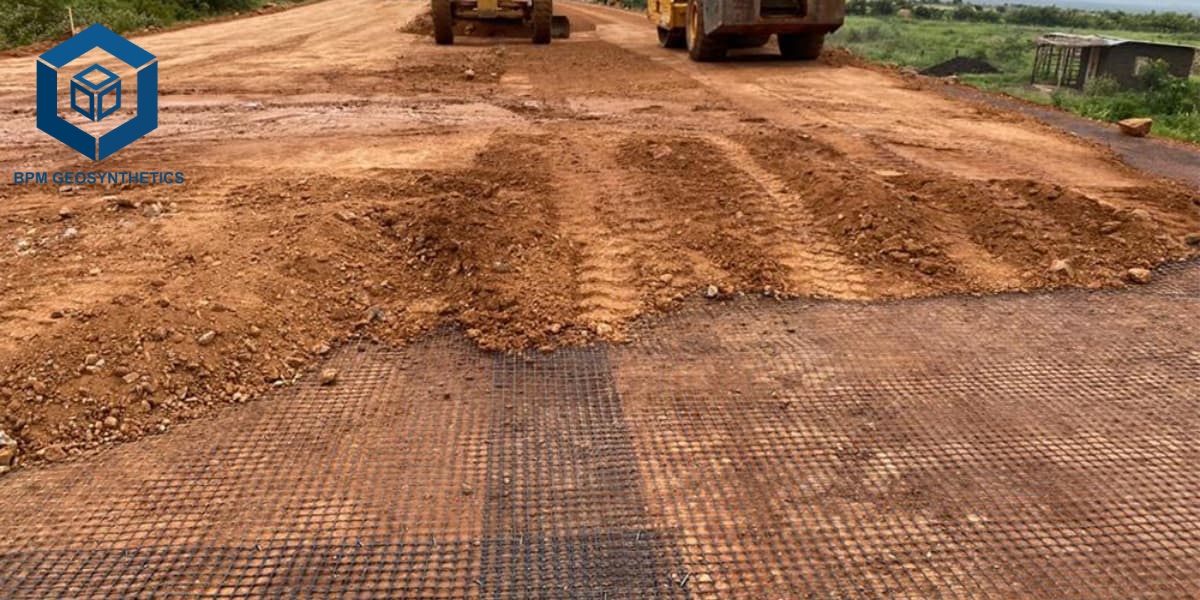
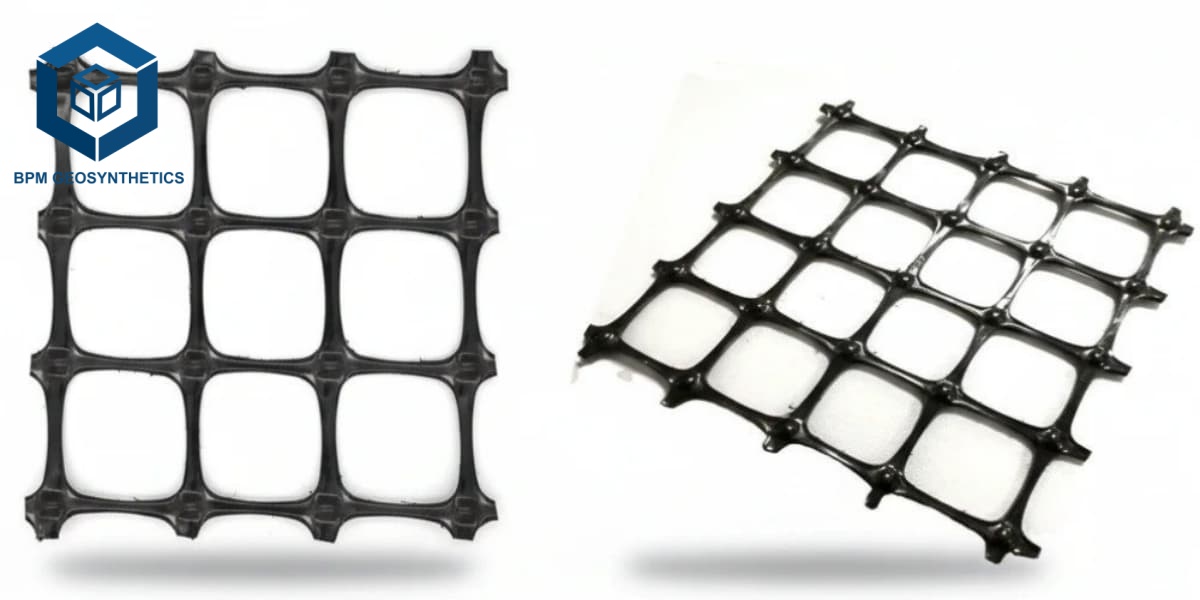
Most people think of TriAx for roads, but it's equally strategic at the toe of a slope. If your slope's toe sits on soft subgrade, the whole mass can squeeze out regardless of how much reinforcement you put higher up. TriAx's triangular aperture / near-isotropic stiffness gives superior aggregate confinement and radial load distribution versus square-aperture biaxials.
1.5.1 Representative specs:
Material: high-modulus punched & oriented PP
Strength @ 2% strain: roughly 4–14 kN/m range depending on grade (TX160–TX190L)
Junction efficiency >90%; apertures optimized for 19–50 mm aggregate interlock
1.5.2 Typical slope role:
Working platforms for drilling/compaction plant, temporary haul routes along the berm, and granular blankets that prevent mud pumping and toe instability—often in combination with UX layers higher in the section.
1.5.3 Pros:
Outstanding interlock; NTPEP/DOT-visible pedigree; can thin aggregate by 30–50% vs. unreinforced sections (site-dependent).
1.5.4 Cons:
Not a slope-facereinforcement—use it withUX, not instead of it, on true deep slips.
1.6 Tensar BX Series (BX1200 / BX1300 / BX1500) — Best Entry-Level Biaxial with Proven Global Track Record
BX is Tensar's original biaxial punched-and-drawn PP geogrid, deployed on 500,000+ projects worldwide since the 1980s . It remains a sensible choice when the requirement is: Separation + modest reinforcement under access roads,Light embankment support,Or a cost-first specification where design still requires a name-brand, documented product.
1.6.1 Tensar itself is transparent:
BX is the lowest initial-cost option in their lineup, but notnecessarily the highest performer per dollar once you account for aggregate thickness . That said, it's bulletproof for what it's designed for.
1.6.2 Example spec (BX1200):
Polypropylene, UV-stable, apertures ~25–33 mm, inert to common soil chemistry, widely stocked .
1.6.3 Pros:
Availability; familiarity; predictable handling; lowest barrier to specification.
1.6.4 Cons:
Square apertures don't interlock quite like TriAx/InterAx; verify with your designer before "upgrading" or "downgrading" between families without redesign.
1.7 Tensar InterAx® — Best Budget Option for Non-Critical & Temporary Slopes
For rural access, farm-track embankments, or temporary erosion-prone grades where a full LRFD MSE design isn't triggered, value-tier PP/HDPE biaxial grids (BX1200-class tensile ranges, 25–40 mm apertures) can get the job done at a fraction of the cost .
1.7.1 Rule of thumb:
If the slope protects critical infrastructure, a roadway, or downhill structures, step up to Item BPM geogrid. If it's a farm track, staging area, or temporary bench, a commodity biaxial may be defensible—provideddrainage and surface protection (mats, seeding, riprap toe) are addressed.
2. How to Select the Right Geogrid Slope Stabilization for Your Slope?
2.1 Is the problem a deep circular slip or a shallow erosion/squeeze failure?
The first step in selecting a geogrid stabilization system is identifying the type of slope failure affecting your project.
Deep circular slip failures typically occur when a large mass of soil moves along a curved failure surface. These failures require high-strength UX uniaxial geogrid reinforcement (Items 1–3) combined with proper drainage and phreatic control measures to improve overall slope stability and long-term performance.
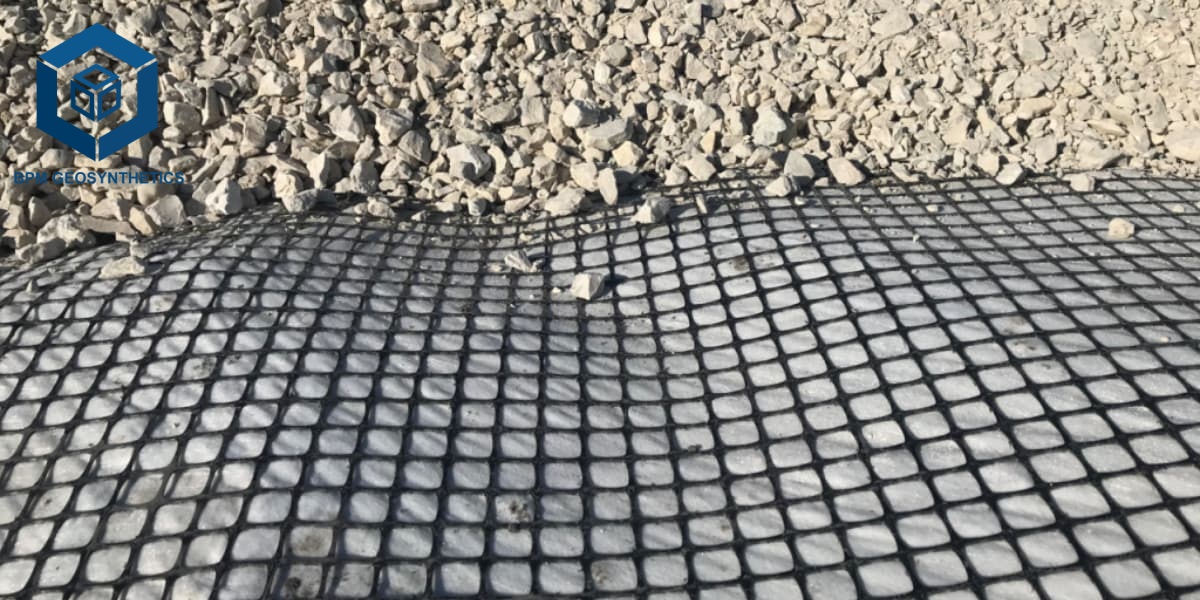
Toe squeeze, rutting, or platform failures are generally shallow stability issues caused by weak foundation soils or insufficient load distribution. In these cases, TriAx, InterAx, or BX geogrids (Items 4–6) are commonly used to reinforce the granular working platform, improve load transfer, and increase bearing capacity while reducing deformation.
2.2 What's the face angle?
Slope geometry has a significant influence on the required stabilization method.
For slopes with face angles of 1(V):2(H) or flatter, adequate performance can often be achieved through a combination of effective drainage systems, erosion control measures, and surface protection products such as geotextiles, turf reinforcement mats, or vegetation.
For steeper slopes, typically 1:1.5 or steeper (approaching 70°), a more engineered solution is usually required. Reinforced Soil Slopes (RSS) or Mechanically Stabilized Earth (MSE) structures utilizing UX geogrids provide the tensile reinforcement needed to maintain stability. These systems should also incorporate appropriate facing elements and erosion protection to prevent surface degradation.
2.3 Demand NTPEP / FHWA-Type Validation and Published Reduction Factors
When evaluating geogrid products, always request independent performance verification and engineering documentation.
Reliable manufacturers should provide NTPEP-tested data, FHWA-compliant design information, and clearly published reduction factors addressing creep, installation damage, and durability. These values are essential for calculating the long-term design strength of the reinforcement.
If a supplier cannot demonstrate how the product's design strength was derived using recognized engineering methodologies, the stated tensile strength may not represent actual field performance.
2.4 Verify LTADS Rather Than Ultimate Tensile Strength
A geogrid's Long-Term Allowable Design Strength (LTADS) is far more important than its ultimate tensile strength.
LTADS is determined by applying reduction factors for creep (RFcr), installation damage (RFid), and durability (RFd) to the product's ultimate strength. This value represents the reinforcement capacity that can realistically be relied upon throughout the design life of the structure.
If a supplier cannot provide LTADS calculations and supporting documentation, the advertised strength should be viewed as a marketing figure rather than a valid engineering design parameter.
2.5 Never Substitute Geogrid Types Without Redesign
Not all geogrids function in the same manner, even when tensile strengths appear similar.
BX geogrids primarily provide biaxial confinement and load distribution, TriAx geogrids enhance aggregate interlock through a multi-directional aperture geometry, InterAx geogrids optimize confinement and stiffness in challenging ground conditions, while UX geogrids are designed specifically for high-tensile soil reinforcement applications.
Because each geogrid family interacts differently with soil and aggregate, replacing one type with another without a complete engineering review can significantly alter system performance and potentially reduce the project's safety factor. Any substitution should be supported by a revised design and verified stability analysis.
Conclusion
As a geogrid manufacturer with more than 20 years of development experience, BPM Geosynthetics has always been committed to the production, research and development, sales, and service of geotechnical materials, supported by high-quality products and professional sales and after-sales teams.
The Best Project Material Co., Ltd.(BPM Geosynthetics) geogrids have passed the ISO 9001 Quality Management System, ISO 14001 Environmental Management System, and ISO 45001 Occupational Health and Safety Management System certifications. They have also obtained SONCAP, SAAO, and BV certifications and successfully passed SGS and Intertek testing.
BPM Geosynthetics is willing to become your trusted partner by providing cost-effective, innovative geomembrane and geosynthetic products, excellent quality, and comprehensive after-sales service.
Join BPM Geosynthetics. Win Our Future.