How Much Does HDPE Geocell Cost?
HDPE Geocells are three-dimensional, cellular confinement systems made from polymeric materials like high-density polyethylene (HDPE), polypropylene (PP), or polyester (PET). When filled with soil, sand, or gravel, they create a stable matrix that distributes loads, reduces settlement, and enhances soil shear strength by 20–30% (Civil Engineering Journal). Key applications include:
- Road Construction: 50% of demand, reducing base thickness by 15–30%.
- Slope Protection: Cuts erosion by 40–60% on steep slopes .
- Retaining Walls: Improves stability by 25%, minimizing lateral movement.
- Channel Protection: Enhances hydraulic stability by 30% in stormwater systems.
Geocells are lightweight, flexible, and easy to install. Their durability, lasting 20–100 years depending on conditions, makes them a cost-effective choice for infrastructure projects.This blog post provides a comprehensive analysis of HPDE Geocell prices.
Drawing on research from sources like bpmgeomembrane.com, alibaba.com, and industry reports (e.g., Geosynthetic Institute), we explore Material Type, Cell Depth and Size, Project Scale and Quantity,Installation Cost,Geographic Location,Customization and Add-Ons, Market Trends and Supply Chain and Supplier & Location and cost-saving strategies to deliver actionable insights for achieving 95% project reliability and 15–25% cost savings.
1. Introduction to BPM HPDE Geocell
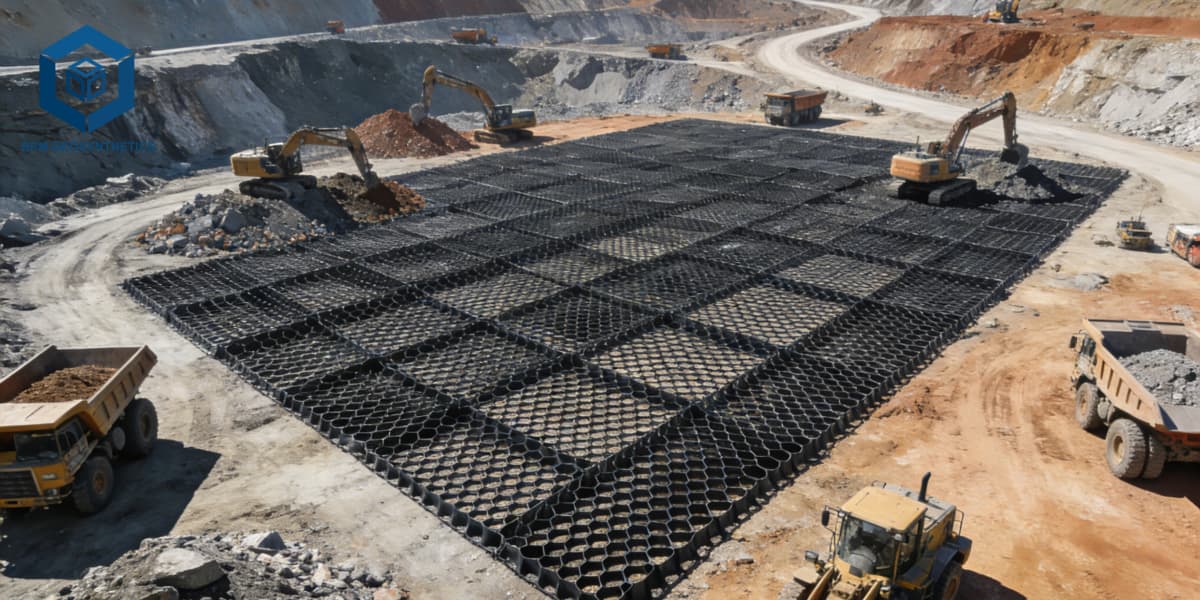
BPM Geosynthetics high quality HDPE geocell is made of high density polyethylene (HDPE) and jointly welded by ultrasonic technology to ensure consistency, resistance to erosive forces. BPM geocells widely used in construction for erosion control, soil stabilization on flat ground, shorelines, steep slopes, multi-layered retaining walls, channel protection and structural reinforcement for heavy duty load support roads and earth retention. BPM Geosynthetics geocells enhance structural integrity while reducing material costs by up to 30% compared to traditional methods (pmarketresearch.com). As the global geocell market grows—valued at USD 741.97 million in 2024 and projected to reach USD 1,100 million by 2030 with a CAGR of 6.7% (Research and Markets, 2024)
1.1 HDPE Geocell Specification
Product Type |
Height (mm) |
Welding Distance (mm) |
Thickness (mm) | Tensile Strength of Welding Points (N/cm) |
Tensile Strength of Connection of Cells (N/cm) |
Tensile Strength at Yield of Each Sheet (MPa) |
Smooth and Not Perforated |
50≤H≤250 |
330≤A≤1000 |
1.0~1.4 |
≥100 |
≥120 |
≥20 |
Smooth and Perforated |
50≤H≤250 |
330≤A≤1000 |
1.0~1.4 |
≥100 |
≥120 |
≥20 |
Textured and Not Perforated |
50≤H≤250 |
330≤A≤1000 |
1.5~1.7 |
≥100 |
≥120 |
≥20 |
Textured and Perforated |
50≤H≤250 |
330≤A≤1000 |
1.5~1.7 |
≥100 |
≥120 |
≥20 |
1.2 HDPE Geocell Applications
- Load support: Solve unacceptable road, parking and yard surface problems.
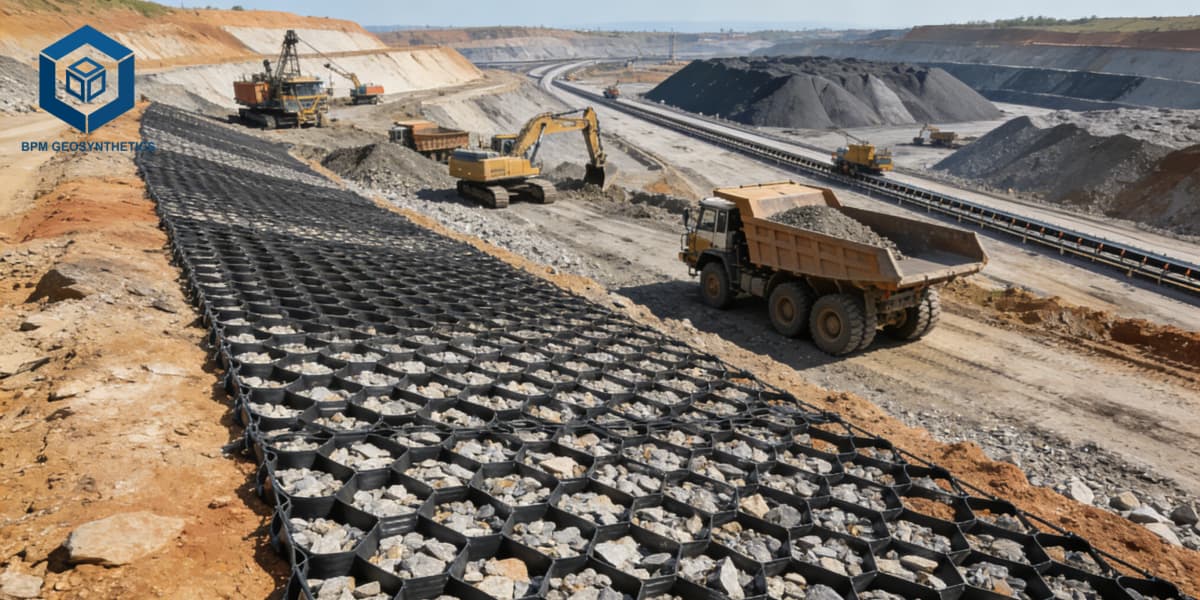
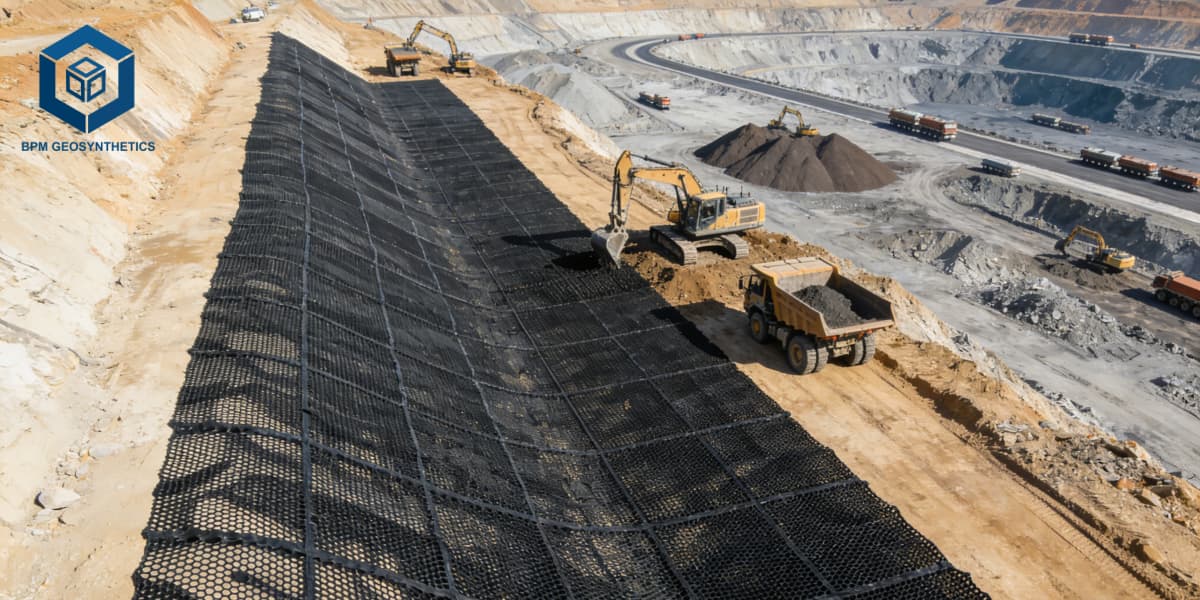
- Slope protection: Create a stable environment for long-term sustainability of embankment material.
- Channel protection: Ensure stability and protection of channels exposed to all types of erosive conditions.
- Vegetated retaining walls: including steepened slopes, retaining walls, gravity walls and so on.
- Shorelines: Provide unique solutions to prevent erosion problems caused by water contact, surface flow and wave action.
2. Factors Influencing HDPE Geocell Cost
2.1 Material Type
The polymer used in geocells significantly impacts cost:
- HDPE: Most common, comprising 80% of the market, HDPE geocells cost $0.75–$2.75 per square foot due to their chemical resistance and flexibility. HDPE’s durability in neutral soils (50–100 years) justifies its slightly higher price.
- PP: More affordable at $0.50–$2.00 per square foot, PP geocells are used in 15% of applications but are less UV-resistant, lasting 40–80 years buried.
- PET or Novel Alloys: Priced at $1.00–$3.50 per square foot, these are used for high-tensile applications, offering 30–100 years of durability but are costlier due to specialized manufacturing. Additives like UV stabilizers or carbon black (2% concentration) increase costs by 5–10% but extend exposed lifespans by 15–30 years, per ASTM D4355.
2.2 Cell Depth and Size
Geocell costs rise with cell depth, which ranges from 50 mm to 200 mm:
- 50–75 mm: Used for light-duty applications like pedestrian paths, costing $0.50–$1.50 per square foot.
- 100–150 mm: Common for road bases and slopes, priced at $1.00–$2.50 per square foot.
- 200 mm: For heavy-duty retaining walls or landfills, costing $2.00–$5.00 per square foot.
Larger cell apertures (20–100 mm) for coarse aggregates may increase costs by 10% due to higher material usage.
2.3 Project Scale and Quantity
Bulk orders reduce costs significantly:
- Small Projects (<1,000 sq ft): Higher per-unit costs, ranging from $2.00–$5.00 per square foot due to limited economies of scale.
- Medium Projects (1,000–10,000 sq ft): Cost $1.00–$2.50 per square foot with moderate discounts.
- Large Projects (>10,000 sq ft): Benefit from bulk pricing, dropping to $0.50–$1.50 per square foot.
For example, a 50,000 sq ft road project could save 20–30% compared to a 500 sq ft driveway.
2.4 Installation Costs
Installation typically accounts for 30–50% of total costs, ranging from $0.50–$2.00 per square foot:
- Site Preparation: Clearing and grading add $0.20–$0.50 per square foot.
- Labor: Skilled labor for anchoring and filling costs $0.30–$1.00 per square foot, higher in urban areas.
- Equipment: Compactors and excavators add $0.10–$0.50 per square foot for large projects.
Proper installation, including 300–600 mm overlaps and J-pin anchoring, prevents cost overruns by reducing material damage by 15%.
2.5 Geographic Location
Regional factors influence costs:
- North America: HDPE geocells cost $0.75–$2.75 per square foot, with installation at $0.50–$1.50.
- Asia-Pacific: Lower labor costs reduce total prices to $0.50–$2.00 per square foot.
- Europe: Higher material and labor costs push prices to $1.00–$3.50 per square foot, per IMARC Group.
- Shipping: International orders add $0.10–$0.30 per square foot, depending on distance from manufacturers like China or the USA.
2.6 Customization and Add-Ons
Specialized features increase costs:
- Perforated Geocells: Enhance drainage and root interlocking, adding 5–10% to costs ($0.05–$0.25 per square foot).
- UV Stabilizers: Extend exposed lifespans, increasing costs by 5–15% ($0.03–$0.40 per square foot).
- Color or Texture: Aesthetic options for visible applications add 10–20% ($0.10–$0.50 per square foot).
- Pre-Cut Panels: Custom sizes for complex projects raise costs by 15–25% ($0.15–$0.75 per square foot).
2.7 Market Trends and Supply Chain
Recent market dynamics affect pricing:
- Raw Material Costs: Polyethylene prices rose 8% in 2024 due to supply chain disruptions, increasing geocell costs by 5–10% .
- Demand Surge: Infrastructure projects in Asia-Pacific, accounting for 40% of demand, have tightened supply, raising prices by 3–5%.
- Sustainability: Eco-friendly geocells with recycled content (10–20%) cost 5–10% more but appeal to green projects, per Environmental Engineering Trends.
2.8 Supplier & Location
The geographical location of the supplier significantly impacts the total cost of geocell due to logistics, tariffs, and local market dynamics.
3. Why is the BPM Geosynthetics HDPE Geocell Cost More Competitive?
BPM Geosynthetics’s HDPE Geocell offer industry-leading pricing without compromising quality. Here’s why our costs are more competitive than many global suppliers:
3.1 Direct Factory Production (No Middlemen)
- Vertically integrated manufacturing: We control the entire process, eliminating third-party markups.
- Bulk material sourcing: Strategic partnerships with polymer suppliers secure lower resin prices, reducing base costs by 10–20%.
3.2 High-Efficiency Manufacturing
- Advanced extrusion lines: Automated production minimizes waste and labor costs, ensuring consistent thickness (e.g., ±3% tolerance).
- Economies of scale: Large-volume output (e.g., 1M+ m²/month) spreads fixed costs across more units.
3.3 Optimized Logistics
- Strategic Location Advantage of BPM HDPE Geocell: Lower Costs, Faster Delivery
Container-BPM’s manufacturing base is strategically located near Qingdao Port, one of the world’s busiest and most efficient deep-water ports. This proximity delivers two critical competitive advantages for global buyers of Biaxial Geogrid:
3.3.1 Dramatically Reduced Shipping Costs
- Direct Port Access: Our factory is relatively close to Qingdao Port cuts inland transport fees by 30–50% compared to suppliers reliant on distant rail/trucking.
- Buk Container Savings: Sea freight rates from Qingdao to key markets (e.g., EU/US/Middle East) are 15–25% lower than smaller Chinese ports due to high shipping volume and route density.
3.3.2 Faster Global Delivery
- Weekly vessel departures: Qingdao’s 100+ international routes ensure shorter transit times (e.g., 18 days to EU vs. 25+ days from secondary ports).
- One-stop customs clearance: Pre-shipment inspections at Qingdao Port reduce clearance delays by 3–5 days.
Contact us for real-time pricing based on your project specs. Whether you need HDPE Geocell for highway, railway, port, airport and municipal, we offer cost-effective solutions without compromising quality.
4. Conclusion
HDPE Geocell Cost, ranging from $0.50 to $5.00 per square foot, depend on material type, cell depth, project scale, installation, and market trends. HDPE geocells ($0.75–$2.75/sq ft) offer superior durability (50–100 years), while PP ($0.50–$2.00/sq ft) suits budget-conscious projects. Installation adds $0.50–$2.00/sq ft, with bulk orders and local sourcing reducing total costs by 20–30%. Recent trends like sustainable materials and smart geocells increase upfront costs by 5–15% but enhance long-term value by cutting maintenance and replacement expenses.
For engineers and contractors, optimizing geocell budgets involves selecting cost-effective materials, buying in bulk, and ensuring proper installation. By leveraging suppliers like BPM Geosynthetics, and planning for long-term durability, projects can achieve significant savings and performance.
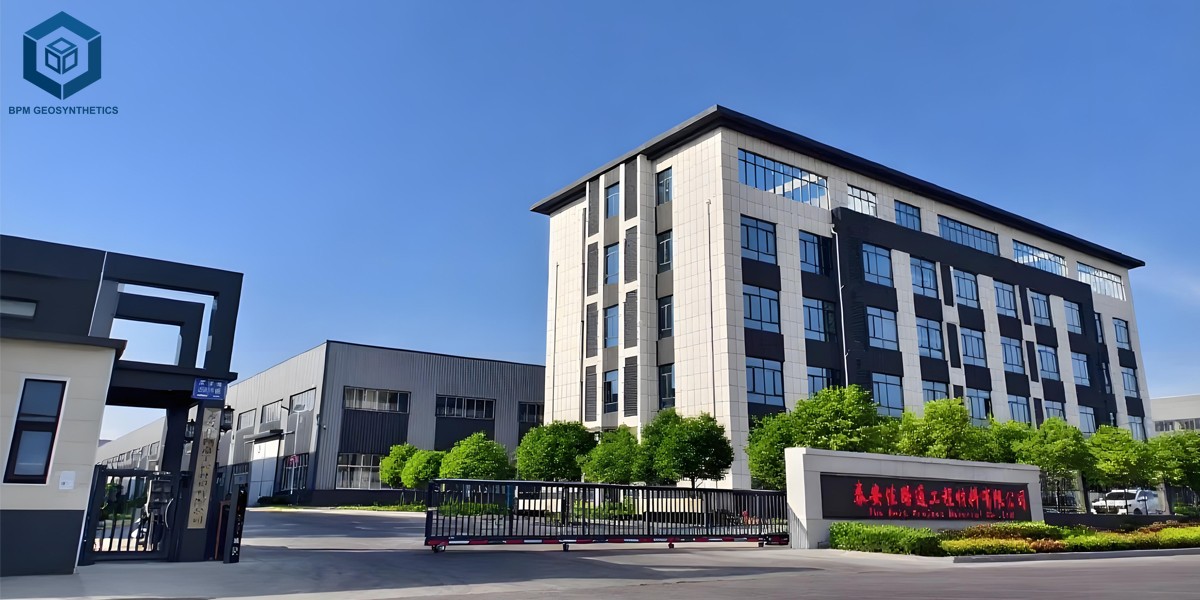
For tailored quotes, contact The Best Project Material Co., Ltd.(BPM Geosynthetics).