How to Choose Geotextile Fabric Near Me?
When embarking on a project that requires geotextile fabric, selecting a reliable supplier nearby is crucial for ensuring project success and cost-efficiency. A well-chosen local partner minimizes logistics challenges, reduces transportation costs, and provides easier access to technical support when unexpected issues arise during installation.
This comprehensive guide will walk you through the essential steps to choose the best geotextile fabric supplier in your vicinity. We begin by helping you define your project's specific technical requirements, then explore professional channels to identify qualified local suppliers. You'll learn practical methods for evaluating supplier capabilities—from product range and inventory levels to technical expertise and customer service. Finally, we discuss how to make informed decisions by applying industrial layout principles, considering factors like supplier density, distribution networks, and long-term partnership potential. Whether for landscaping, construction, or erosion control, this guide ensures you find a supplier perfectly aligned with both your technical specifications and practical business needs.
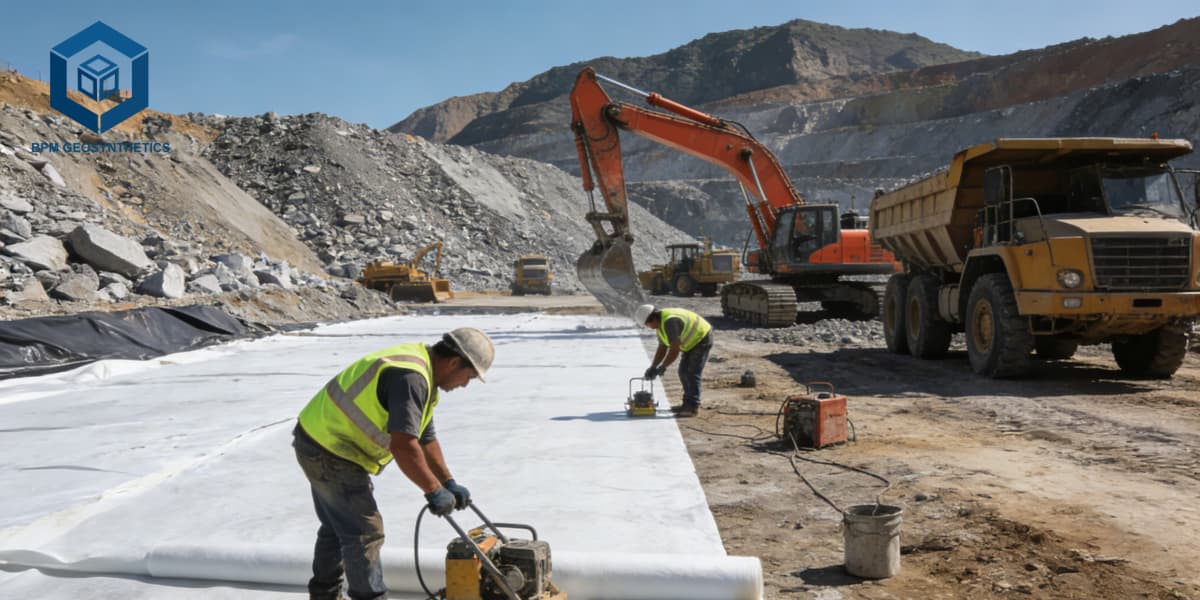
1. Understanding Geotextile Fabric Near Me Basics
Before you start calling suppliers, you need to know what you are looking for. A geotextile is a permeable textile material used in conjunction with soil, rock, or earth to increase stability, control erosion, or improve drainage . Modern geotextiles are typically made from synthetic polymers like polypropylene or polyester, which resist biological and chemical decay .
There are two primary families of geotextiles, and your project will dictate which one you need.
1.1 Non Woven Geotextile Fabric Near Me
Nonwoven geotextiles are made from randomly oriented synthetic fibers bonded together through needle-punching or heat. They resemble felt or heavy landscape fabric .
- Key Properties: High permeability, excellent filtration, superb elongation (stretch), and good puncture resistance .
- Best Applications:
- Drainage Systems: Wrapping French drains or trench drains to allow water in while keeping soil out .
- Separation: Preventing gravel from mixing with soft subsoil under driveways or pathways .
- Erosion Control: Under rip-rap or on slopes .
- Retail Example: A typical 6oz (approx. 200gsm) nonwoven fabric is marketed for driveway stabilization and drainage, offering tear resistance and a 30-year lifespan when buried.
1.2 Woven Geotextile Fabric Near Me
Woven geotextiles are manufactured by interlacing yarns on a loom, creating a fabric that looks like burlap or sack material .
- Key Properties: Very high tensile strength, low elongation (does not stretch much), and high modulus .
- Best Applications:
- Reinforcement: Stabilizing soft soils (subgrade) for roads, parking lots, and railways .
- Access Roads: Creating working platforms over unstable ground .
- Heavy Loads: Where filtration is less critical than strength .
1.3 Quick Tip for Local Shopping
If you are working on a standard home project like a gravel path, garden bed, or French drain, non woven fabric is usually the safer, more versatile choice . If you are building a driveway for heavy trucks or reinforcing a slope, ask for woven.
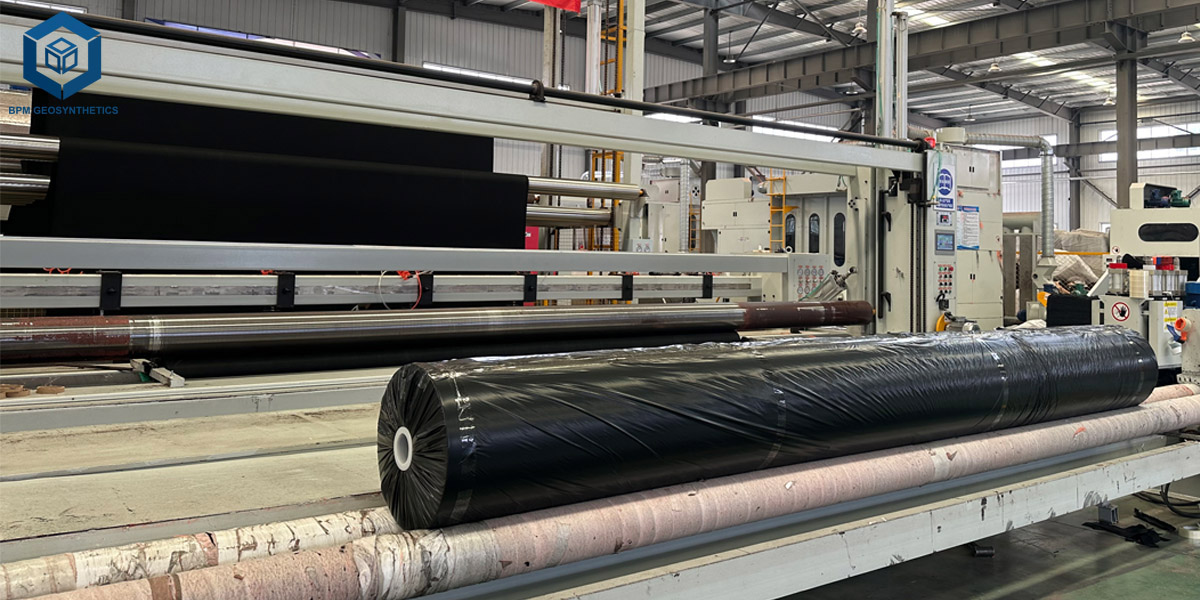
2. How To Find "Geotextile Fabric Near Me"?
Now that you know the geo fabric near me type, where do you find it? Searching online is the first step, but using the right keywords will yield better results.
2.1 Optimize Your Search Terms
Instead of just typing "geotextile fabric near me," try these variations:
- "Landscape supply store near me" (often stock non-woven rolls)
- "Construction materials supplier near me"
- "Erosion control products [your city]"
- "Gravel yard geotextile"
- "Drainage fabric wholesale"
2.2 Types of Local Suppliers
2.2.1 Big Box Retailers (e.g., Walmart, Home Depot, Lowe's)
These are convenient for small projects. They often carry standard non-woven rolls suitable for basic landscaping . However, the staff may have limited technical knowledge.
2.2.2 Specialized Landscape Supply Yards
These are ideal for homeowners and contractors. They typically stock a wider range of weights (gsm) and widths, and the staff are usually experienced with local soil conditions .
2.2.3 Geotechnical/Industrial Suppliers
If you need high-strength woven fabric for a major construction project, look for distributors that supply civil engineering firms. They offer products like high-performance PP woven geotextiles designed for demanding subgrade stabilization .
3. Key Factors for Choosing the Right Geotextile Fabric Near Me
When you arrive at the store, you need to evaluate the product based on your specific site conditions. Here is what to consider, based on professional specification guides .
3.1 Assess Your Ground Conditions (Soil Type)
- Firm, Free-Draining Soil (Sandy/Gravelly): A lighter-grade, standard non woven geotextile fabric focused on separation may be sufficient .
- Soft, Clay-Rich Soil: Clay has a low California Bearing Ratio (CBR). It requires a more robust geotextile with high puncture resistance to prevent the fabric from being pushed into the soft ground . Look for heavier non-wovens or woven fabrics.
3.2 Determine the Load and Traffic
- Light Use (Foot Traffic, Garden Paths): A 100gsm to 140gsm non-woven fabric is often adequate .
- Moderate Use (Car Driveways, Light Trucks): You need a fabric with higher tensile strength and puncture resistance, typically in the 150gsm to 200gsm+ range .
- Heavy Use (Roads, Construction Access): This requires high-tenacity woven geotextiles designed to distribute heavy loads and reinforce the subgrade .
3.3 Consider Drainage and Filtration
If water management is your priority (e.g., for a French drain), you need a fabric with high permittivity (flow rate) and the correct Apparent Opening Size (AOS) . This ensures water passes through freely while holding back fine soil particles to prevent clogging . Geotextile fabric suppliers near me excel here due to their random fiber structure and broad pore size distribution.
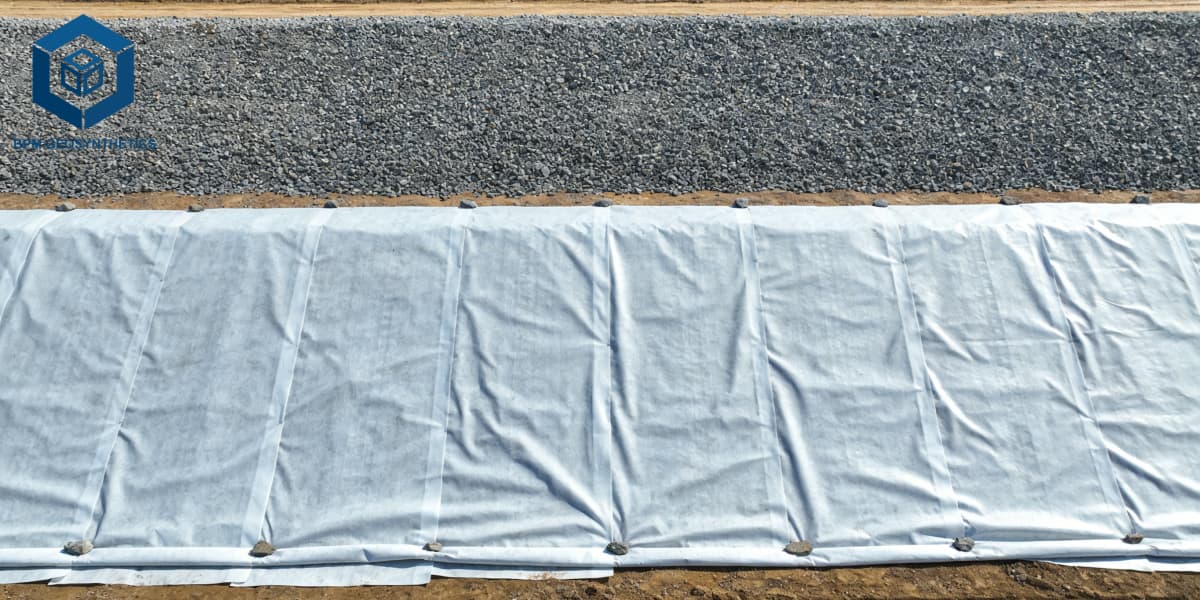
4. Evaluating Your Geotextile Fabric Near Me Local Supplier
Not all suppliers are created equal. After finding a local store or distributor, it is important to evaluate their products and services carefully. Asking the right questions can help you avoid low-quality materials and ensure you choose a reliable partner for your project. A professional supplier should be able to provide clear technical data, product support, and installation guidance.Below are four key questions to ask before making your purchase:
4.1 “What is the GSM (Grams Per Square Meter)?”
GSM indicates the weight and density of the geotextile fabric. It is one of the most important indicators of durability and performance.
A higher GSM usually means thicker material, better puncture resistance, and longer service life. For non-woven fabrics used under gravel driveways, walkways, or patios, 140gsm is commonly considered a reliable benchmark. For heavier traffic areas, you may need a higher GSM to ensure long-term stability.
Always ask for the exact GSM value and confirm whether it meets your project requirements.
4.2 “What Is the Tensile Strength?”
Tensile strength measures how much force the fabric can withstand before breaking. This is especially important for woven geotextiles used in reinforcement and soil stabilization applications.
A strong tensile rating (such as 350N or kN/m) indicates that the fabric can handle heavy loads, traffic pressure, and soil movement without tearing. Higher tensile strength improves structural support and reduces the risk of failure over time.
Request certified test reports if possible, and make sure the strength rating matches your engineering needs.
4.3 “Do You Have Installation Accessories?”
A reliable supplier should provide more than just fabric. They should also offer essential installation accessories such as landscape staples, steel pins, anchors, or fixing clips.
These accessories help secure the geotextile in place during installation, preventing shifting, folding, or displacement when gravel, soil, or concrete is applied. Proper fastening improves overall performance and reduces maintenance issues in the future.
Choosing a supplier that offers complete installation solutions can save you time and reduce project risks.
4.4 “Can I See a Sample?”
Requesting a physical sample is one of the best ways to evaluate product quality. By touching and inspecting the fabric, you can assess its thickness, texture, flexibility, and overall strength.
Ask yourself:
- Does the fabric feel too thin or flimsy?
- Can it be easily torn or punctured by hand?
- Does it feel dense and well-structured?
A high-quality geotextile should feel robust, resistant to damage, and professionally manufactured. Seeing and testing a sample helps you avoid inferior products and ensures confidence in your purchase.
5. Geotextile Fabric Near Me Installation Best Practices
Buying the right fabric is only half the battle. Proper installation ensures longevity. Follow these steps common to most projects :
5.1 Prepare the Surface
Remove sharp rocks, roots, and debris from the area. Compact the soil if necessary.
5.2 Unroll and Cut
Lay the fabric flat, smoothing out any wrinkles. Cut it to size, allowing for overlap.
5.3 Overlap Seams
If using multiple pieces, overlap them by at least 12 to 24 inches (30-60 cm), especially on soft ground, to prevent soil from squeezing through the gap .
5.4 Secure the Fabric
Use landscape staples or pins around the edges and throughout the field to prevent shifting when you place the gravel or fill .
5.5 Cover Immediately
Non woven geotextile fabric degrade in direct sunlight (UV exposure). Cover the fabric with your gravel, soil, or aggregate as soon as it is laid.
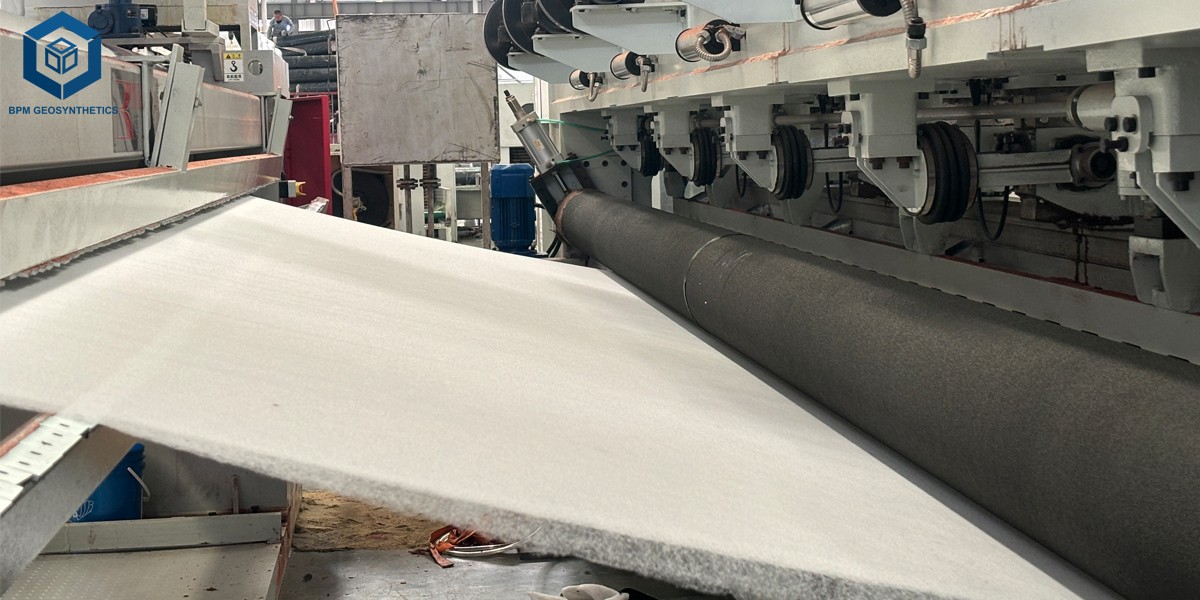
Conclusion
Searching for "geotextile fabric near me" is the first step toward a durable, professional-grade project. By understanding the difference between woven (for strength/reinforcement) and non-woven (for drainage/filtration/separation), assessing your soil and load requirements, and asking the right questions at your local supply yard, you can make an informed decision.
Remember, the cheapest option is rarely the best. The Best Project Material Co., Ltd.(BPM Geosynthetics)a quality geotextile, properly installed, can last for decades, saving you from costly repairs and failed landscaping . Take this guide with you, consult with your local experts, and build something that lasts.