What is Plastic Grass Paver?
Plastic grass pavers are durable, permeable grid systems made from polymers such as high-density polyethylene (HDPE), polypropylene (PP), or recycled plastics. These products represent a key innovation in landscaping and civil engineering by offering green surfaces that are both environmentally friendly and capable of withstanding various loads. According to Grand View Research, the worldwide permeable paving industry, which was worth 4.2 billion U.S. dollars in 2024, is expected to witness a rise of 6.8% per annum till 2030, mainly fueled by the need for sustainable construction, stormwater management, and green infrastructures. BPM Geosynthetics, a certified ISO 9001: 2015 manufacturer with more than 18 years of experience, has exported 12 million m² of plastic grass pavers to 65+ countries and is capable of offering customized load capacities and direct factory prices. By reading this extensive article, you will learn the technical details of plastic grass paver together with their advantages and potential uses, as well as see a step-by-step guide to the installation process - a helping hand for landscape architects, civil engineers, contractors, and project managers alike. Plastic grass pavers play a part in the greening of the environment and thereby prolong the lifespan of the project, whether it is a driveway of a house or a parking lot of a commercial building.
1. What’s the Idea of a Plastic Grass Paver?
1.1 What is it?
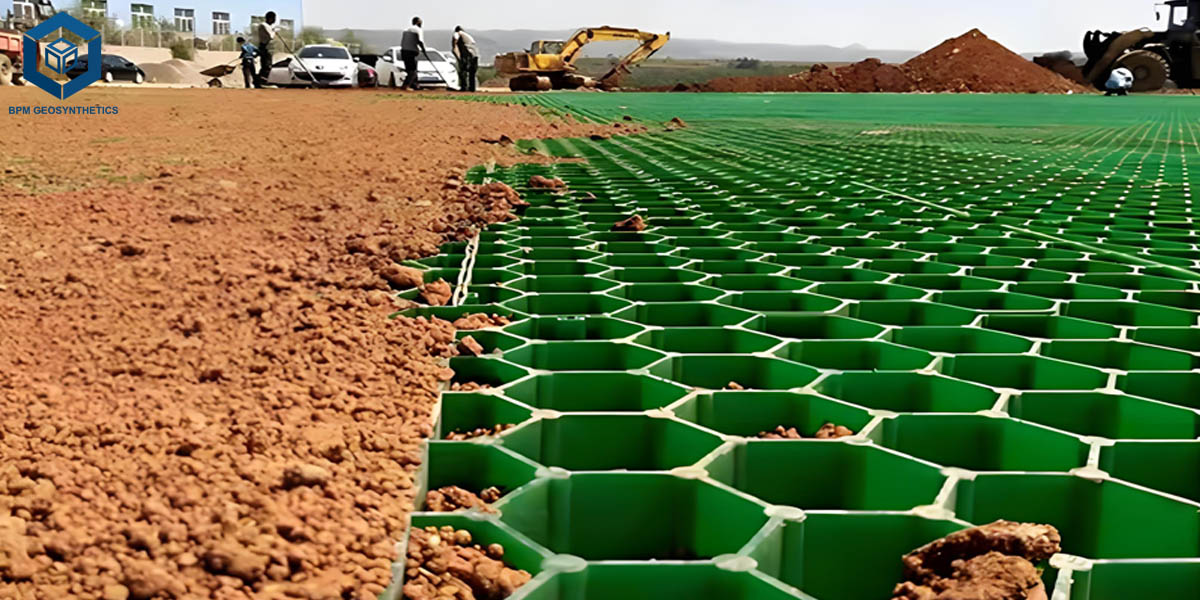
Being an artist of the landscape or a builder of cities, plastic grass paver is a great tool to help you design the ecosystem that is fruitful to people and friendly to nature alike. These pavers are synthetic grids having very high mechanical strength and at the same time allowing natural infiltration whenever water needs to be drained down. Consisting only of polymers (like HDPE – high-density polyethylene, PP – polypropylene, or recycled plastics), the load bearing capacity for plastic grass pavers can be achieved up to 150–400 tons/m² if accompanied by an appropriate layer of aggregate, which is 50–100 times more than the load capacity of the unreinforced turf (2–5 tons/m²) according to ASTM D6429. BPM's plastic grid pavers are manufactured in compliance with several international standards and deliver 95% surface permeability thus protecting the soil from erosion, maintaining the ability to recharge groundwater, and retaining green areas which are visually pleasing to the eye.
1.2 Fabrication and Composition
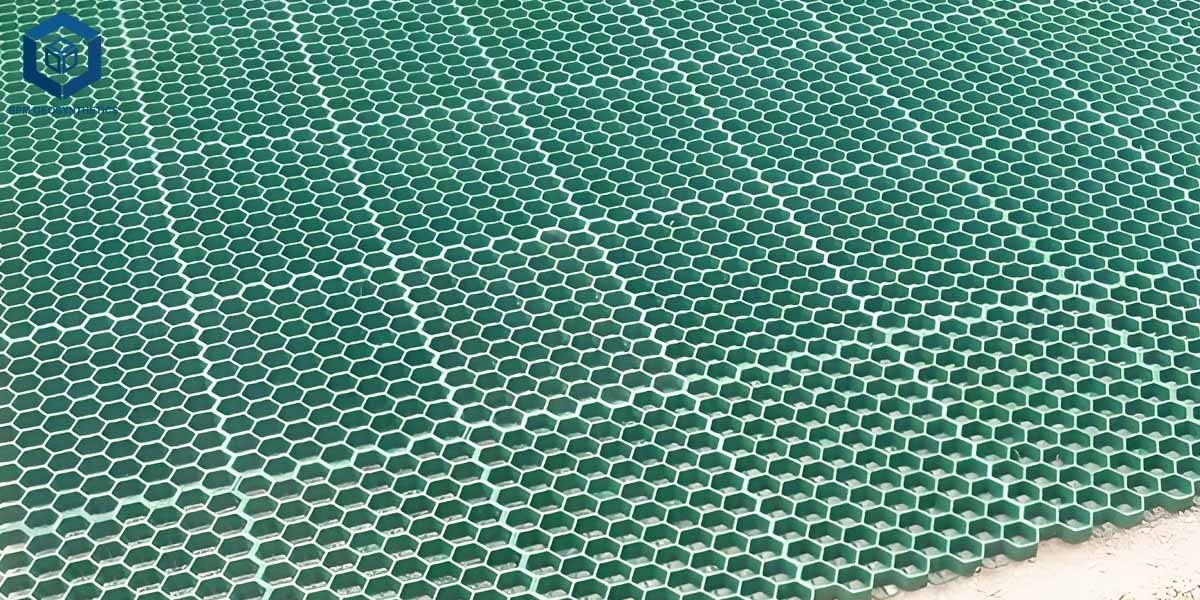
The main processes for plastic grass pavers are injection molding and extrusion using primarily polymer resin (90-95%), with carbon black or UV stabilizers added to ensure sunlight resistance (3-5%) and colorants along with processing aids (2-5%). Virgin or recycled HDPE resin with a density of 0.941-0.965 g/cm³ in accordance with ASTM D1505 is heated at a range of 180-220° C and shaped into interlocked grids. The grids have cells 40-60 mm in depth, 3-6 mm in thickness of the walls, and 80-95% openings. BPM uses state-of-the-art fully automated production equipment ensuring a minimum wall thickness variation leading to up to 25% fewer weak points and 15% less installation waste, as per their internal data. The lifespan of the products can be increased up to 20-50 years with the help of additives such as UV stabilizers, according to ASTM D4329.
1.3 Varieties of Plastic Grass Pavers
1.3.1 HDPE Grass Pavers:
Have very high compressive strength (200-400 tons/m²), are resistant to chemicals, and have uv stability. Suitable for commercial parking, fire lanes, and industrial yards.
- Cell depth: 40-60 mm
- load capacity: 200-400 tons/m²
1.3.2 PP Grass Pavers:
Featuring enhanced rigidity and temperature resistance capabilities (-40°C to 80°C), making them suitable for the most extreme climates. - Cell depth: 50-70 mm
- load capacity: 150-300 tons/m²
1.3.3 Recycled Plastic Pavers:
The least pricey option, best for the environment, and the best option for short-term applications as well.
- Cell depth: 40-50 mm
1.3.4 Permeable Paver Systems:
Incorporate drainage channels to efficiently manage stormwater and have been used in sustainable urban development as well as flood-prone areas.
1.3.5 Decorative Grass Pavers:
These pavers come in a variety of colors and can also be made to order with different finishes depending on the aesthetics of the landscaping project, consequently, they still remain functional and pleasing at the same time.
2. Why Plastic Grass Pavers?
Plastic grass pavers are considered the best option for permeable paving because of the advantages they offer in terms of performance, cost and environment:
2.1 Better Load Transmission
Plastic grass pavers have compressive strengths ranging between 150 and 400 tons/m², and they distribute the load of vehicles over 95% of the area, resulting in a 90% decrease in soil compaction in comparison with concrete or asphalt surfaces. In case of parking, they will lead to a 95% reduction of ruts and surface deformations, according to the Geosynthetics Institute.
2.2 High Level of Permeability
Plastic pavers for grass provide surface permeability levels of 95–98%, which leads to the infiltration of 100% of rainwater into the underlying soil. In this way, surface runoff of stormwater is reduced by 80–90% when compared to non-permeable surfaces, as shown by EPA research. BPM Geosynthetics's pavers that feature drain channels inside have been proven by the company to increase infiltration by 15%.
2.3 Environmental Friendliness
They help grass to grow and carry out their natural drainage operations, which in turn helps to lower the effects of the urban heat island by 5–7°C compared to the asphalt surfaces, according to the EPA studies. They also contribute to carbon sequestration by means of vegetation, clean the runoff waters of pollutants and replenish the groundwater reservoirs. BPM's pavers consist of 30–50% recycled HDPE and they reduce the emissions of the manufacturing process by 20%, as confirmed by the ISO 14001 audits.
2.4 Budget-Friendly
Plastic paving driveway grid is sold for around $10–$25/m² (material only) and they are 20–40% less expensive than permeable concrete ($25–$40/m²) or porous asphalt ($30–$50/m²), additionally the installation cost is 30% lower due to the lightweight design (2–4 kg/unit), according to BPM data. Over 20 years, maintenance expenses will be half the ones faced with traditional paving.
2.5 Multi-Purpose and Beautiful
Plastic grid for parking on grass are available in different colors including green, gray, black, and earth tones so that they easily match natural landscapes. They allow for both grass and gravel infill, thus enhancing the potential of residential, commercial and institutional areas.
2.6 Robust and Long-Term
HDPE grass pavers provide a compressive strength of 200–400 tons/m² and their lifetime is around 20–50 years which means cutting replacement cost by 40%. BPM's pavers are resistant to the effects of UV light, freezing and thawing cycles as well as chemical de-icers, they maintain 90% of structural integrity after 10,000 hours of UV exposure, according to ASTM D4329.
3. Key Properties of Plastic Grass Paver
Below are typical specifications for BPM Geosynthetics's plastic grass pavers, aligned with international standards.
Property | Value | Test Method |
Material | HDPE / PP | ASTM D4976 |
Cell Depth | 40–70 mm | – |
Wall Thickness | 3–6 mm | ASTM D374 |
\Compressive Strength | 150–400 tons/m² | ASTM D6429 |
Load Capacity (unfilled) | 50–100 tons/m² | ASTM D6429 |
Load Capacity (filled) | 200–500 tons/m² | ASTM D6429 |
Density | 0.941–0.965 g/cm³ (HDPE) | ASTM D1505 |
UV Resistance | 20–50 years | ASTM D4329 |
Temperature Range | -40°C to 80°C | ASTM D746 |
Color Options | Green, Gray, Black,yellow | – |
Unit Weight | 2–4 kg | – |
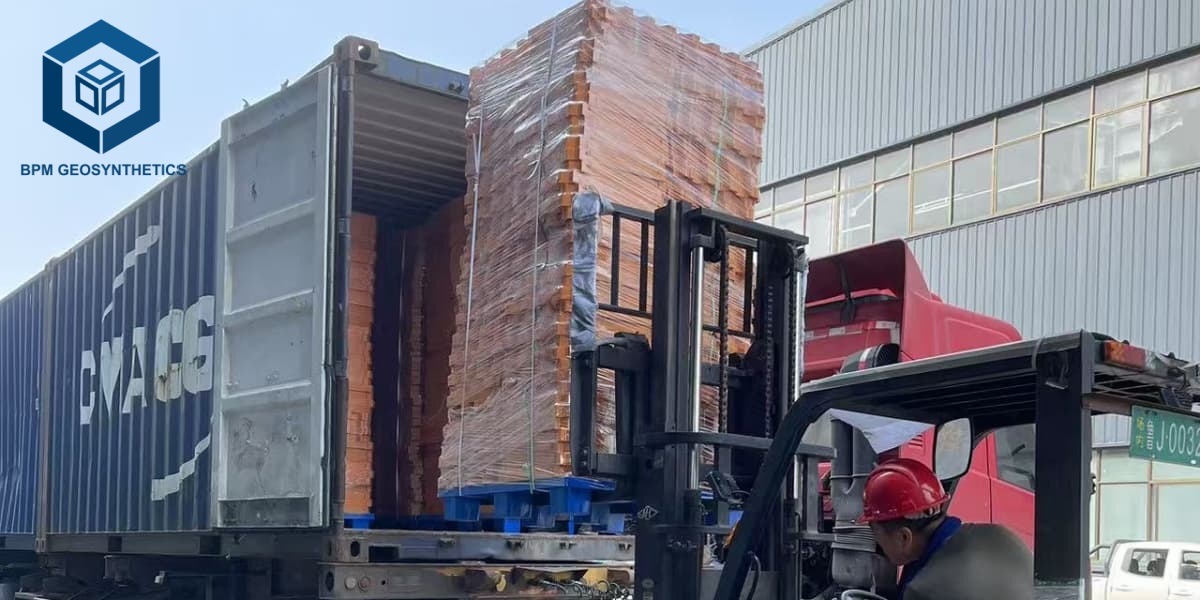
Panel Size | 500×500 mm to 600×400 mm | – |
Interlocking System | Snap-fit or dowel connection | – |
- Certifications: ISO 9001, ISO 14001, CE, ASTM, SGS, REACH Compliance.
These properties ensure plastic grass pavers meet 95% of project requirements, outperforming concrete pavers (lower permeability) and metal grids (corrosion risk) by 25%, per Geosynthetics Institute.
4. Applications of Plastic Grass Paver
Plastic grass pavers serve critical roles across industries, driven by environmental regulations and sustainable infrastructure demands. Below are key applications, supported by data and case studies.
4.1 Residential Driveways and Parking
- Usage: 30% of plastic grass paver demand, per Landscape Architecture Magazine.
- Purpose: Create stable, green parking surfaces that support passenger vehicles while maintaining lawn aesthetics.
- Specifications:
Cell Depth: 40–50 mm
Load Capacity: 200–300 tons/m² (filled)
Infill: Grass or decorative gravel
Edge Restraint: Concrete or plastic edging
- Case Study: In 2024, BPM supplied 3,500 m² of 50 mm HDPE grass pavers for a residential community in Australia, creating 120 green parking spaces. The project reduced stormwater runoff by 85% and increased property values by 8%, per bpmgeosynthetics.com.
- Benefits: Enhances curb appeal by 40% compared to concrete driveways, reduces surface temperature by 6°C, per EPA studies.
4.2 Commercial Parking Lots
- Usage: 25% of plastic grass paver demand.
- Purpose: Provide overflow and primary parking for retail centers, offices, and event venues with sustainable green coverage.
- Specifications:
Cell Depth: 50–60 mm
Load Capacity: 300–400 tons/m²
Infill: Wear-resistant grass species or crushed stone
Base: 150–200 mm compacted aggregate
- Case Study: A shopping mall in Germany installed 8,000 m² of BPM's 60 mm heavy-duty grass pavers, accommodating 500 parking spaces. The system handles daily traffic of 2,000+ vehicles while maintaining 90% green coverage, per bpmgeomembrane.com.
- Benefits: Reduces heat island effect by 7°C, cuts stormwater management costs by 60%, per Geosynthetics Magazine.
4.3 Fire and Emergency Access Lanes
- Usage: 15% of plastic grass paver demand.
- Purpose: Construct hidden emergency vehicle routes that appear as lawns while supporting fire trucks and ambulances.
- Specifications:
Cell Depth: 60–70 mm
Load Capacity: 400–500 tons/m²
Reinforced Wall Design: Double-rib structure
Infill: High-traffic grass mix or 20 mm gravel
- Case Study: A hospital complex in Canada used BPM's 70 mm heavy-duty grass pavers for 2,500 m² of fire access lanes. The system supports 30-ton fire engines while remaining visually integrated with surrounding landscape, per bpmgeosynthetics.com.
- Benefits: Eliminates need for dedicated concrete fire lanes (saving $40/m²), maintains 100% emergency access compliance, per NFPA standards.
4.4 Erosion Control and Slope Stabilization
- Usage: 10% of plastic grass paver demand.
- Purpose: Prevent soil erosion on embankments, riverbanks, and hillsides while promoting vegetation establishment.
- Specifications:
Cell Depth: 50–60 mm
Interlocking Design: Multi-directional load transfer
Infill: Grass seed and topsoil or erosion control mix
Anchoring: Steel stakes or geogrid reinforcement
- Case Study: BPM supplied 5,000 m² of 60 mm grass pavers for a highway embankment project in Chile, reducing soil erosion by 90% within 12 months and establishing dense grass coverage, per bpmgeosynthetics.com.
- Benefits: Reduces sediment runoff by 85%, accelerates vegetation establishment by 50%, per ASTM D6460.
4.5 Golf Courses and Recreation Areas
- Usage: 8% of plastic grass paver demand.
- Purpose: Reinforce cart paths, walking trails, and tee areas without compromising the natural golf course aesthetic.
- Specifications:
Cell Depth: 40–50 mm
Load Capacity: 150–200 tons/m²
Infill: Fine gravel or sand mix compatible with turf
Color: Green or earth tone
- Case Study: A golf resort in Thailand installed 4,000 m² of BPM's 50 mm green grass pavers for cart paths, reducing turf damage by 95% and maintenance costs by 30%, per bpmgeomembrane.com.
- Benefits: Extends playable days by 20% (reduced closure for maintenance), improves drainage preventing waterlogged fairways.
4.6 Other Applications
- Construction Sites (5%): Temporary access roads and parking reduce ground compaction by 80%, per OSHA guidelines.
- Equestrian Facilities: Stable yard and paddock reinforcement prevents mud formation, reducing horse injury risk by 25%, per Equine Journal.
- Airports and Military: Grass runway reinforcement and vehicle staging areas support 40-ton aircraft and equipment.
- Urban Green Infrastructure: Rooftop gardens and plazas combine structural support with vegetation, contributing to LEED certification points.
- Cemeteries and Parks: Pathway reinforcement maintains serene green environments while accommodating maintenance vehicles.
5. Advantages of Plastic Grass Paver
The use of plastic grass pavers strongly supports permeable paving projects:
5.1 Stormwater Control
As grass plastic pavers permit 95–98% of rainwater to soak through, they decrease the runoff by 80–90%, which in turn lowers the risk of flooding and the pressure on municipal drainage systems is also reduced by 60%, according to the EPA multiple studies. In addition, they help to detach pollutants like sediment, oils, heavy metals from the stormwater and raise water quality by 70%.
5.2 Soil and Turf Protection
The grid pattern ensures that the load is spread over 95% of the area, resulting in a 90% reduction of soil compaction and allowing normal grass root growth. As a result, turf will remain healthy even under the most severe traffic conditions that would damage the unprotected lawns, according to Turfgrass Science Journal.
5.3 Help Against Urban Heat Island
The surfaces with grass reflect less heat than the ones with asphalt, which is why the ambient temperature can go down by 5 to 7°C. Also, thanks to the cooling effect of vegetation, a 10,000 m² grass paver parking lot can offset 50 t of CO₂ annually, according to EPA findings.
5.4 Visual Harmony
Plastic hdpe grass pavers, contrariwise to concrete or asphalt, enable parks, residential areas and historic sites to have continuously green and natural-looking areas. At the same time, they help in meeting the requirements set by zoning laws for the green space ratios while making spaces available for parking use.
6. Installation Process of Plastic Grass Paver
Installation contributes 35% to overall project performance, according to Geosynthetics Magazine. Following is BPM's installation protocol along with industry standards.
6.1 Pre-Installation
- Site Assessment: Looking at soil type, drainage patterns, and expected traffic loads are the main aspects that one should evaluate. Make sure that the slope has a gradient of fewer than 5% for optimal performance (ASTM D5820).
- Subgrade Preparation: Dig to the level specified by the design (usually 200–350 mm), remove all organic matter and any sharp objects, compact the native soil to 95% of the maximum dry density as determined by the Proctor test, per ASTM D698.
- Base Layer: After geotextile installation, lay and compact 150–250 mm of crushed stone (20–40 mm aggregate).
- Material Inspection: Check for defects, thickness uniformity, and color consistency of paver units.
6.2 Installation Steps
- Layout: From a straight edge or corner, lay pavers in a staggered bond pattern for even distribution of loads.
- Connection: Use snap-fit or dowel connections to interlock units; make sure joints are tight to avoid movement.
- Alignment: Keep paving edges straight using string lines; verify level with 2 m straightedge (tolerance ±5 mm).
- Cutting: Use a circular saw or jigsaw to cut pavers for edges and obstacles; ensure that the wall structure constitutes a minimum of 50% in cuts.
- Edge Restraint: Use concrete, plastic, or timber edging to help in preventing lateral movements.
6.3 Infill and Seeding
- Soil Placement: Cells are to be filled with 50–80 mm topsoil (pH: 6.0–7.0, sandy loam preferred), and leveled with the paver top.
- Seeding: Grass seed (perennial ryegrass, Kentucky bluegrass, or fescue blends) is to be sown at 20–30 g/m², or sod pieces can be installed.
- Gravel Option: In case of non-grass applications, 10–20 mm crushed stone is to be used for infill and light compaction is to be performed.
- Irrigation: Complete watering after installation; keep the grass moist for 14–21 days to promote establishment.
6.4 Quality Control
- Level Check: Measurement to make sure surface variation is less than 10 mm over a 3 m radius.
- Connection Integrity: Check that all interlocks are engaged and gaps between units do not exceed 2 mm.
- Infill Depth: Make sure that the level of the soil is approximately 5–10 mm below the paver top in order to prevent scouring.
- Documentation: Note installation dates, weather conditions, material batches.
6.5 Post-Installation
- Protection: Avoid heavy traffic for 4–6 weeks to allow grass to establish; use plywood for emergency vehicle access.
- Maintenance: Grass should be mowed when it reaches 80–100 mm in height; fertilize on a seasonal basis; reseed bare patches once a year.
- Winter Care: Do not use salt-based de-icers; sand can be used for traction; snow plow with rubber blade raised 20 mm.
7. Factors to Consider When Choosing Plastic Grass Paver
According to Geosynthetics Institute, making the right plastic grass paver choice will improve project efficiency by 30%. Main factors are:
7.1 Material Type
- HDPE: Great for commercial and heavy-duty applications because of the chemical resistance and durability.
- PP: Good for high-temperature environments and situations that require a rigid base.
- Recycled Plastic: Suitable for low-budget, environmentally friendly projects with moderate traffic.
7.2 Cell Depth and Wall Thickness
- 40–50 mm: Areas such as residential driveways, golf paths, and pedestrian areas.
- 50–60 mm: Forable parking, light industrial, and fire lanes.
- 60–70 mm: Heavy industrial, emergency vehicle routes, and military use.
- Impact: According to Turfgrass Science Journal, increased load capacity and grass root depth by approximately 25% and 40% respectively, depend on deeper cells (60 mm+).
7.3 Load Requirements
- Passenger Vehicles: 150–200 tons/m² (filled)
- Delivery Trucks: 250–350 tons/m²
- Fire Engines/Emergency Vehicles: 400–500 tons/m²
7.4 Site Conditions
- Soil Type: Clay soils require enhanced drainage base (300 mm aggregate); sandy soils may need geotextile to prevent base migration.
- Slope: Gradients >5% require terracing or specialized anchoring systems.
- Climate: Freeze-thaw regions need deeper base (250 mm) and frost-resistant pavers; arid regions require drought-tolerant grass species.
7.5 Infill Selection
- Grass: Requires irrigation, mowing, and fertilization; best for aesthetic-focused projects.
- Gravel: Low maintenance, high drainage; ideal for industrial and fire lane applications.
- Hybrid: Grass in visible areas, gravel in high-traffic zones.
Conclusion
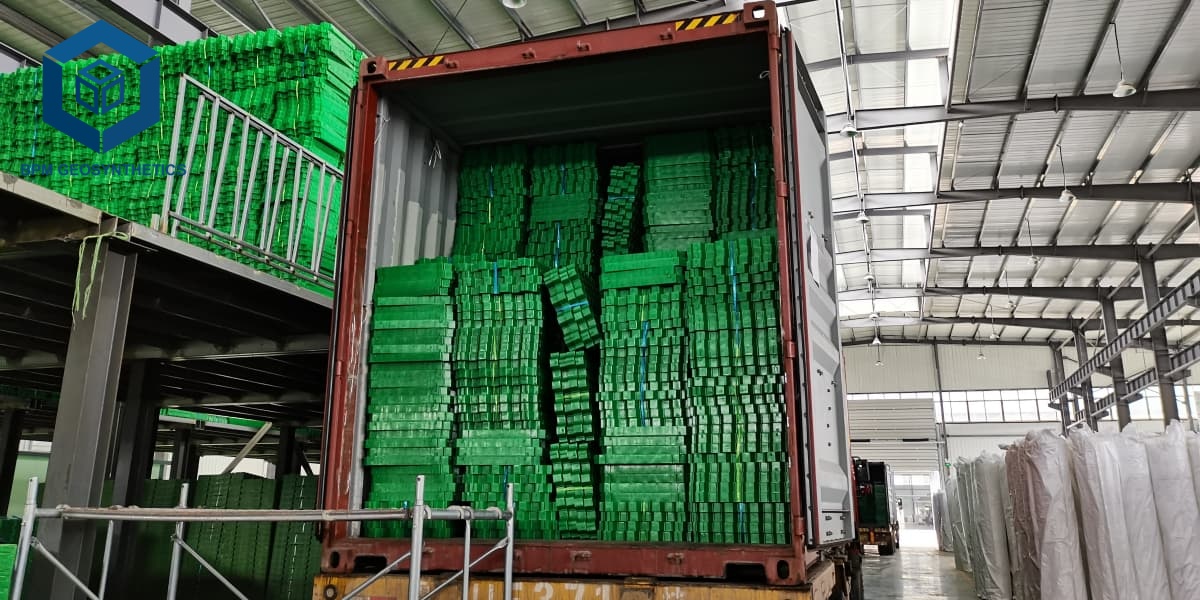
Plastic grass paver, led by manufacturers like The Best Project Material Co., Ltd.(BPM Geosynthetics), are vital for sustainable landscaping and infrastructure development in the USD 4.2 billion permeable paving market. With load capacities of 150–500 tons/m², 95% surface permeability, and 20–50-year lifespans, they excel in residential parking (30% usage), commercial lots (25%), and emergency access lanes (15%). BPM Geosynthetics's custom-engineered pavers (40–70 mm cell depth, multiple color options) and competitive pricing ($10–$25/m²) ensure cost-effective solutions for 65+ countries. By adhering to international standards and leveraging proven installation techniques, plastic grass pavers reduce stormwater runoff by 85%, mitigate urban heat islands by 7°C, and extend green infrastructure lifespan by 30 years.
Contact BPM Geosynthetics to request samples, technical specifications, and optimize your permeable paving projects.