Ultimate Guide to Geocell for Road Construction
1. The Hidden Problem Under Your Pavement
Roads fail from the bottom up. This is a fact most people do not see. The asphalt surface looks smooth. But underneath, the base layer struggles. Weak soil is the enemy. It shifts. It settles. It retains water. When traffic loads hit, the pavement cracks. Potholes form. Maintenance costs skyrocket.
Traditional road construction fights this with extra stone. Thicker base layers become the answer. More aggregate is hauled in. It is expensive. It takes time. It still does not fix the root problem. The poor soil underneath is still weak. A smarter, cheaper solution exists. That solution is the BPM Geosynthetics Geocell for Road Construction System.
2. The Principle of Load Distribution
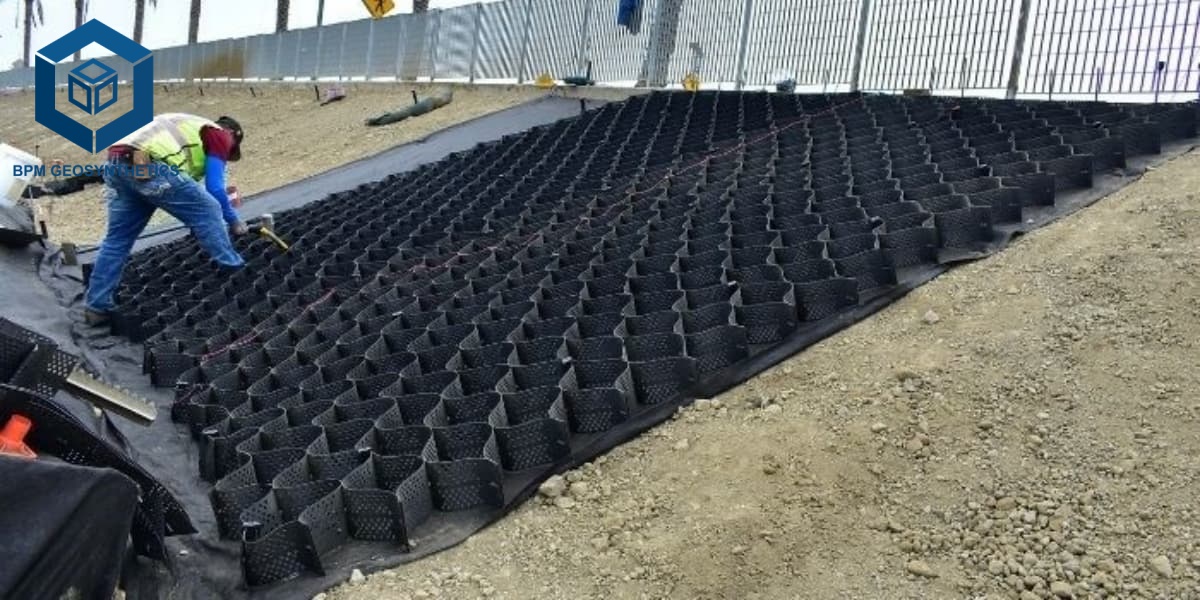
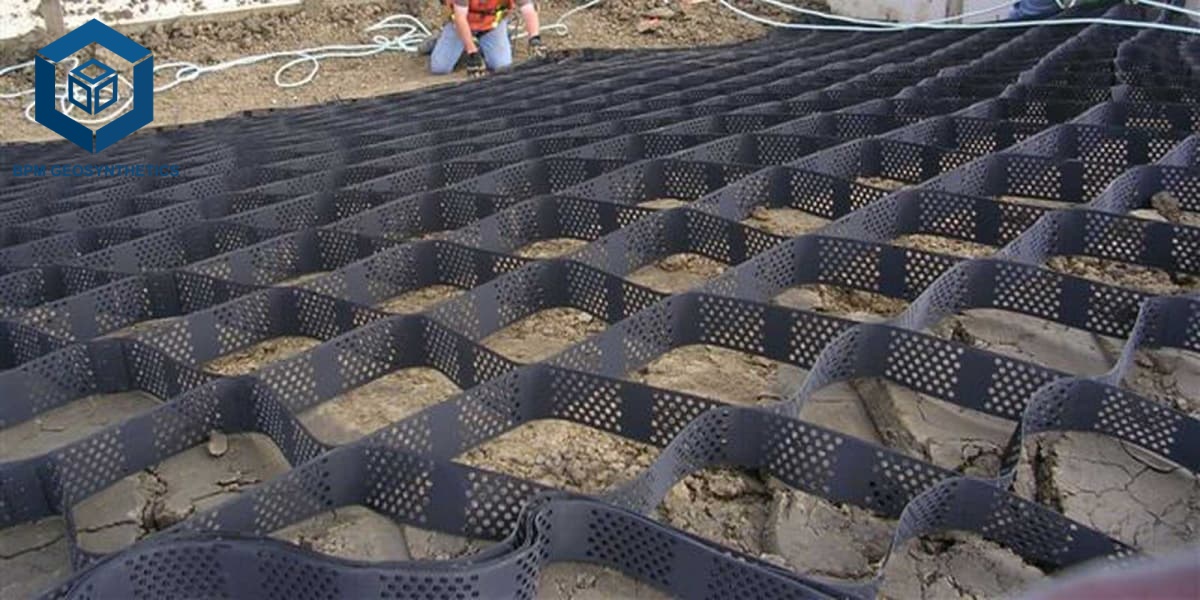
A geocell is a three-dimensional honeycomb structure. It is made from high-density polyethylene (HDPE). The material is lightweight yet strong. It is deployed on the road base layer. Workers expand the panels. They create a grid of connected cells. These cells are filled with compacted aggregate.
The magic is confinement. The cell walls lock the stone together. The aggregate cannot move sideways. It cannot sink into the soft soil below. The geocell creates a stiff mattress. It spreads the weight of vehicles over a wider area. Vertical pressure becomes lateral resistance. The load distribution is superior. The base layer performs like a much thicker one. This is how geocells stop rutting and cracking.
3. Why Geocell for Road Construction Beat Traditional Methods?
Contractors often ask why they should change. The answer is in the numbers. A geocell-reinforced base cuts structural thickness by up to 50%. Less excavation is needed. Less aggregate is required. Truck trips to and from the site drop sharply. The project carbon footprint shrinks.
Construction speed matters too. Geo cell panels are light. One truck carries many panels. Workers handle them easily. No heavy cranes are needed. The panels expand quickly over the subgrade. Filling and compaction follow directly. The road is ready for asphalt sooner. Time is money. BPM Geocells save both.
4. Key Components of the BPM Geocell for Road Construction
Building a strong road requires the right parts. The BPM system is an engineered package.
4.1 The Geocell Panel
The core element. It comes in various cell depths. For roads, the common depth is 100mm to 200mm. The cell size is optimized for common road aggregates. Textured walls add friction. The aggregate locks in tighter.
4.2 The Connection Key
A high-strength polymer fastener. It joins panels together end-to-end. No special tools are required. A simple twist secures the connection. This speeds up large-area installation.
4.3 The Geotextile Separator
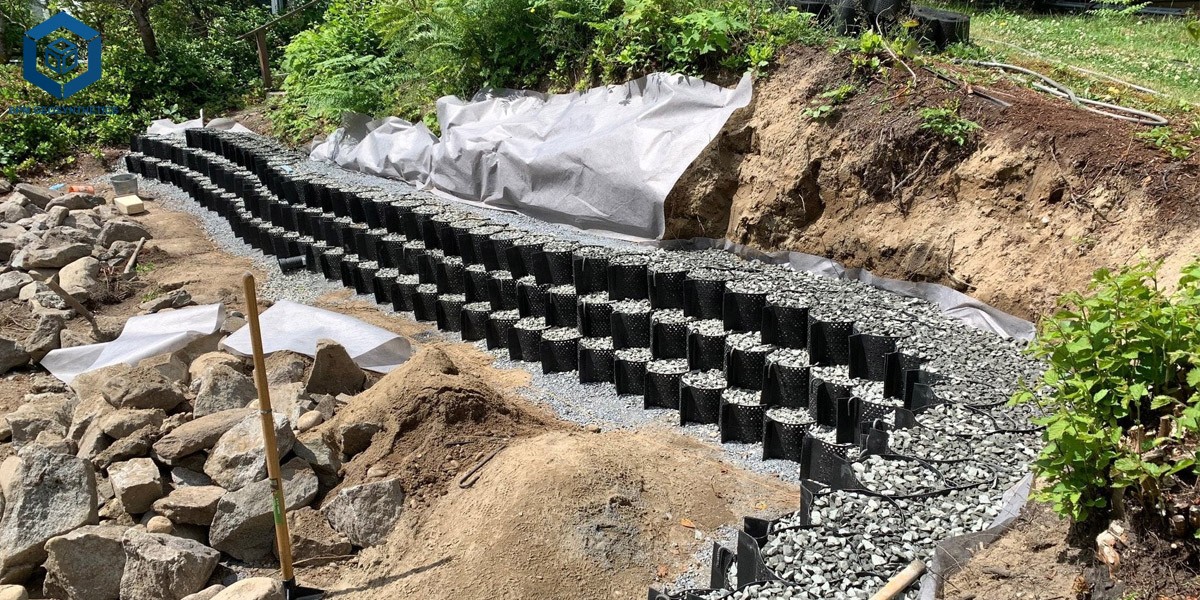
A non-woven fabric placed under the geocell. It is a critical layer. It stops the subgrade soil from mixing with the aggregate. Without it, fine particles can clog the stone. The base loses its drainage. The separator keeps the system functional for decades.
4.4 Anchors (if required)
On steep grades, anchors hold the panel in place during filling. They are simple steel stakes. They are driven through the cell wall into the ground.
5. Technical Specifications of BPM Geocell for Road Construction
Engineers need hard data. The table below provides the standard specifications for BPM Geocells used in road construction. These values guarantee a durable, high-performance pavement foundation.
Parameter | Standard Value / Range | Unit | Notes |
Material | Virgin HDPE | -- | High-Density Polyethylene, chemically inert |
Cell Depth (Height) | 50,75,100, 150, 200 | mm | Match to traffic load (heavy vs light) |
Sheet Thickness | 1.0, 1.2, 1.5 | mm | Selected based on structural loading |
Welding Spacing | 356, 400, 445, 660 | mm | Controls the expanded cell diameter |
Standard Panel Width | 2.56 | m | Compact for transport, large for coverage |
Standard Panel Length | 6.0 - 10.0 | m | Covers large areas with few panels |
Tensile Strength (Sheet) | ≥ 25.0 | MPa | Resists bursting from compaction pressure |
Seam Peel Strength | ≥ 1200 | N/10cm | Critical for withstanding aggregate loading |
Density | 0.94 - 0.97 | g/cm³ | Lightweight, easy logistics |
Thermal Stability | -50 to +60 | °C | Performance in permafrost and desert |
Projected Service Life | > 50 years | -- | Exceeds standard pavement design life |
Panel Connection Type | Interlocking Key | -- | Fast mechanical connection, high tensile strength |
Note: Custom sizes and textured surface options are available. Discuss your project load case with a BPM engineer.
6. Geocell for Road Construction Case Study: The Heavy-Haul Mine Road
A large copper mine needed a new haul road. The route crossed soft clay and sandy silt. Haul trucks weigh over 200 metric tons when loaded. A normal gravel road would rut within days. The standard design called for 1.2 meters of crushed base. This was very expensive to quarry and haul.
The engineering team redesigned the section using BPM Geocells. They stripped the organic subgrade. They placed a geotextile separator directly on the soft soil. They expanded BPM 200mm depth panels over the fabric. The cells were filled with well-graded crushed aggregate. A vibratory compactor locked the stone in place. Finally, a thin base course was applied on top.
6.1 The result
The haul road held firm. Deflection testing showed minimal movement. The geocell road construction mattress bridged the soft spots. The effective load distribution prevented rutting. The project saved 40% on aggregate costs. Construction finished three weeks early. The road is still in service with zero structural failures.
7. Geocell for Road Construction Case Study: The Urban Street Upgrade
A city faced a problem with a residential street. The subgrade was expansive clay. It swelled in rain. It cracked in drought. Asphalt overlays failed every two years. The budget was tight. A full rebuild with deep excavation was unaffordable.
The city engineer chose a low-impact solution. They milled the old cracked asphalt. They leveled the subgrade. Then they installed BPM 150mm geocell panels directly on the clay. The cells were filled with crushed limestone. The limestone was compacted to refusal. A new 50mm asphalt layer capped the road.
7.1 The result
The geocell erosion control acted as a raft foundation. The expansive clay beneath could move slightly. The stiff geocell layer absorbed the movement. The asphalt stayed flat. The road now lasts many times longer than before. Residents were happy with the short construction time.
8. Geocell for Road Construction Installation Steps for Road Base
8.1 Prepare Subgrade
First, mold the ground to the desired contours and clean off trash, roots, and sharp stones. Compress the soil so that it has the same density all over and the base is solid. Drainage must be checked and fixed so that water does not get trapped and weaken the base.
8.2 Lay Geotextile
Using a geotextile on the prepared surface is the next step. Make sure it lies flat without folds and fits the soil perfectly. It is recommended to have overlapping adjacent sheets about 30–50 cm so that soil doesn’t get inside and the separation and drainage functions are enhanced.
8.3 Expand Panels
Extend the geocell panel gradually from one side by pulling it out. Cells will open up to expose honeycomb or diamond shapes. If necessary, secure the first edge with temporary anchors and continue fixing the alignment during expansion.
8.4 Connect Panels
Match neighboring geocell panels by employing connectors or fasteners. Secure both lateral as well as longitudinal connections. They form one continuous grid that leads to even load transfer and structural integrity.
8.5 Place Aggregate
Inward fill the grid cells with rock or crushed stone. Fill every cell completely with a little surplus to allow for settlement during compaction. This action confines the aggregates and enhances the structural strength.
8.6 Compact Thoroughly
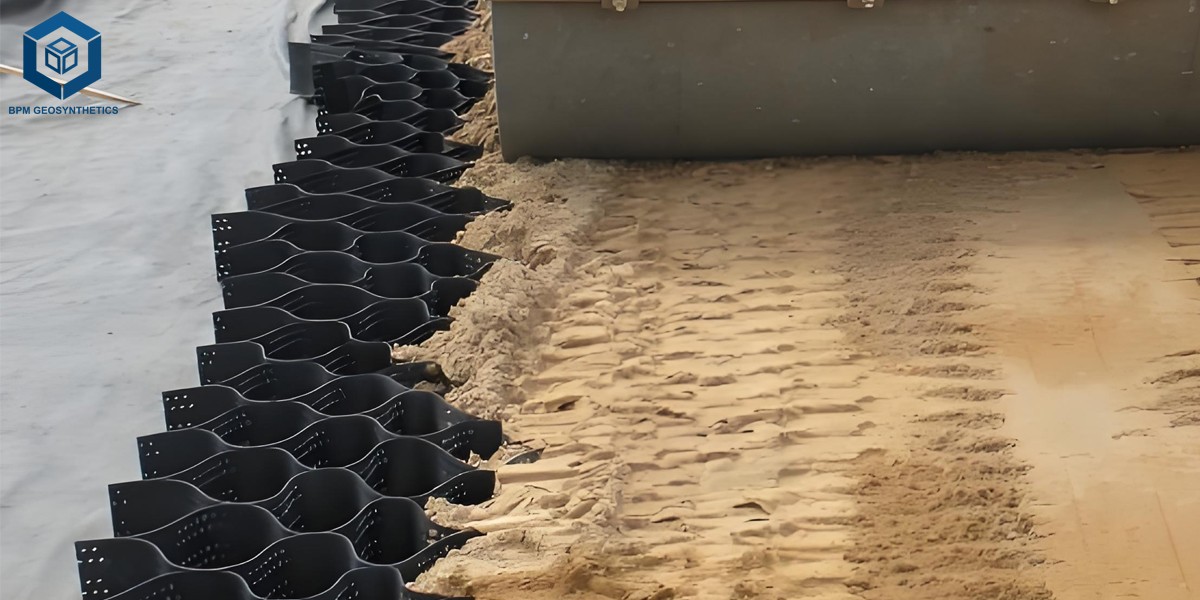
Employ vibratory rollers for compacting the cells filled with aggregates. During compaction, aggregates become locked to one another which leads to higher stiffness and load capacity as well as lesser settlement when trafficked.
8.7 Final Trim
After harvesting the material from the surface, spread it out evenly so that it is smooth. Now the ready base stabilized can be coupled with asphalt, concrete, or other types of surfacing layers that form a strong, long-lasting road.
9. Geocell for Road Construction Design Benefits Summary
Implementing BPM Geocells drastically increases road design performance levels and modernizes construction methods by significantly upgrading structural integrity while diminishing material usage.
9.1 Thinner Sections
Geocells work by wrapping and locking the aggregates inside so that the base layer gets a higher structural level. Because the loads get shared more evenly, a thin pavement layer could do the job just as well leading to a cut in materials used and a fall in costs overall.
9.2 Low-Quality Fill Utilization
Often, on the construction sites, abundant sand or poor soils could go straight inside the geocell frame. In this way, there are minimal if any, aggregates that need to be hauled in which leads to huge savings on materials and logistics.
9.3 Soft Soil Bridging
What a geocell panel does is pretty close to that of a semi-rigid deck over very soft soil spots and unstable soils. Since the operating area gets extended for load distribution, the stresses acting on the weak subgrade get reduced thereby keeping the users away from about deep excavation or soil replacement.
9.4 Fast Installation
When it comes down to laying out the geocell systems and fastening them on-site even a small team of workers might be able to manage it in one go. Modular structures are beneficial in terms of lowering quite a lot operating costs among which handling and transportation are the most significant ones. Project progress indicators are thus improved overall.
9.5 Longevity
By surrounding the aggregate and stopping it from pushing around sidewise, geocells are raising the pavement’s overall equilibrium substantially. This is good pavement health as it diminishes rutting, settlement, and surface deformation appreciably, ensuring the consequent service life and maintenance needs are both markedly less.
Summary: The Smarter Way to Build
Roads are investments. They must be durable. The Best Project Material Co., Ltd.(BPM Geosynthetics) Geocell technology delivers that durability. It transforms weak ground into a solid foundation. It cuts costs on stone and trucking. It makes roads last longer with less repair. From heavy industrial haul roads to quiet neighborhood streets, the principle is the same. Confine the stone. Distribute the load. Protect the pavement. BPM geocell for road construction is the ultimate guide to modern road construction.