The 6 Best Fiberglass Geogrid Review
Geogrid is one of the most versatile and widely used geosynthetic reinforcement materials in modern civil engineering and construction. Featuring a grid structure, it delivers tensile strength and achieves mechanical interlock with soil or granular fill, which greatly improves load distribution, shear resistance, bearing capacity and overall stability for multiple projects including mechanically stabilized earth (MSE) retaining walls, reinforced steep slopes, road and railway subbases, unpaved haul roads, parking lots, airport runways, landfill liners, coastal revetments and ground improvement over soft soil.
From 2025 to 2026, the global geogrid market scale stands at approximately USD 1.35–1.5 billion, and it is expected to reach USD 1.97–2.1 billion by 2032 with a compound annual growth rate (CAGR) of 4.4%–4.7%. Relevant data is sourced from Fortune Business Insights, Grand View Research and industry reports of Geosynthetics Magazine. Market growth is driven by massive global infrastructure investment (highways, high-speed railways, airports, ports), mining expansion, urban development on low-quality land, river and coastal protection, as well as the popularization of sustainable and low-cost ground improvement technologies. Compared with unreinforced solutions or concrete structures, properly designed geogrid reinforcement systems can reduce aggregate consumption by 25%–50%, cut excavation and backfill volume by 20%–40%, and lower total project costs by 15%–35%. Meanwhile, the service life can reach 50 to over 120 years with extremely low long-term maintenance costs (refer to Tensar design models, FHWA Specification NHI-10-024 and NCMA standards).
1. Fiberglass Geogrid Quantifiable Advantages of Geogrid
1.1 Load Dispersion and Rutting Control:
Under repeated vehicle loads, bearing capacity rises by 300%–600%, and rut depth is reduced by 50%–90% (Tensar field tests, FHWA reports).
1.2 Compatibility with Slopes and Retaining Walls:
It supports slopes with an angle of 45°–80° and retaining walls over 50 feet high, with an overall factor of safety of 1.5 or above.
1.3 Economic Benefits:
Compared with gravity retaining walls and gabion structures, gravel aggregate consumption drops by 25%–50%, and overall construction costs are cut by 15%–35%.
1.4 Environmental Benefits:
Permeable structures reduce stormwater runoff by 80%–100%, comply with Low Impact Development/Sustainable Drainage System standards, and minimize land disturbance.
2. Basic Knowledge of Fiberglass Geogrid
2.1 Definition and Composition
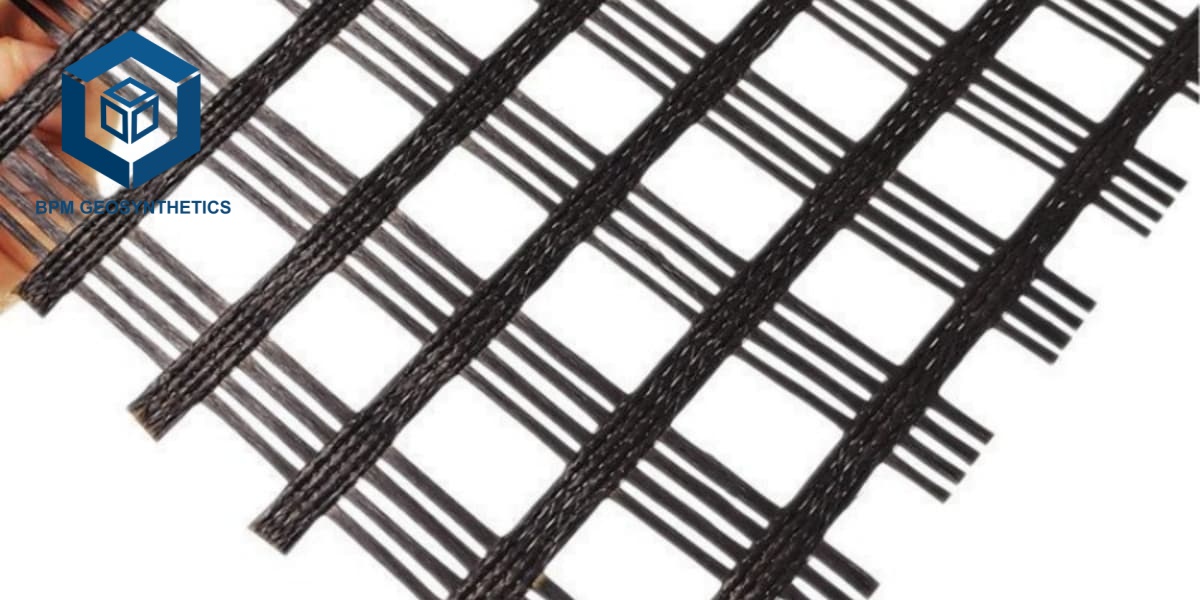
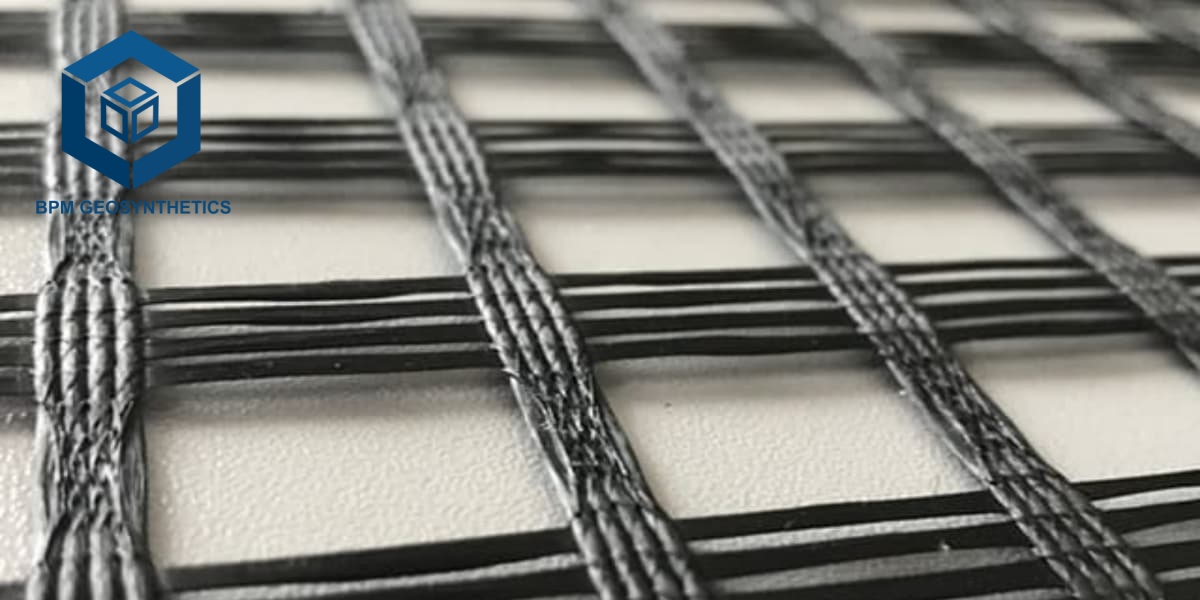
Fiberglass geogrid is a planar geosynthetic material woven from high-modulus, alkali-free continuous glass fiber yarns and coated with a high-grade asphaltic or polymer-based surface agent.
By combining the structural rigidity of glass fibers with the chemical compatibility of asphalt binders, fibreglass geogrids act as tensile reinforcement within pavement layers, distributing localized stress across a wider area to prevent reflection cracking and rutting.
2.2 Key Performance Characteristics
2.2.1 High Tensile Strength & Low Elongation:
Features high ultimate tensile strength in both longitudinal and transverse directions with an elongation at break typically below 3%, preventing thermal and fatigue cracking without excessive deformation.
2.2.2 High Temperature Resistance:
Glass fibers maintain structural integrity at temperatures well above 200℃, easily withstanding the thermal impact of hot-mix asphalt (HMA) placement and compaction.
2.2.3 Creep Resistance:
Unlike synthetic polymers (such as polypropylene or polyester), glass fibers exhibit virtually zero long-term stress relaxation or creep under constant loads.
2.2.4 Asphalt Compatibility:
The specialized surface coating creates a strong chemical and mechanical bond with bitumen, ensuring uniform shear transfer between asphalt lifts.
2.2.5 Chemical & Biological Resistance:
Impervious to moisture, rot, biological attack, and chemical degradation from deicing agents, acids, or alkalis commonly found in roadway environments.
2.3 Core Technologies & Manufacturing Process
2.3.1 High-Modulus Yarn Selection:
Utilizing continuous filament E-glass yarns engineered for optimal flexibility and tensile capacity.
2.3.2 Warp-Knitting Technology:
Fabricated on multi-axial warp-knitting machines. The warp and weft threads cross without bending or crimping, which preserves maximum fiber strength at cross-intersections.
2.3.3 Advanced Surface Coating Technology:
Impregnation with a specialized asphalt emulsion or acrylic polymer coating. This step serves three critical functions:
- Protects the glass fibers against abrasion during aggregate compaction.
- Ensures optimal bonding with the asphalt tack coat.
- Enhances alkali and weather resistance.
2.3.4 Self-Adhesive Backing (Optional Innovation):
Application of a pressure-sensitive self-adhesive layer on the underside of the grid, allowing direct, fast installation on milled asphalt surfaces without extensive tacking.
2.4 Primary Application Fields
2.4.1 Asphalt Pavement Reinforcement:
Overlaying existing concrete or asphalt roads to delay or eliminate reflective cracking.
2.4.2 Subgrade & Foundation Stabilization:
Distributing heavy wheel loads over soft or variable subgrade soils.
2.4.3 Airport Runways & Taxiways:
Reinforcing heavy-duty pavement areas subject to extreme aircraft point loads and thermal stress.
2.4.4 Widening Existing Highways:
Interlocking the joint interface between old and new road sections to prevent longitudinal cracking.
3. Detailed Introduction to 6 Premium Fiberglass Geogrid Products of 2026
3.1 GEOSINCERE Polyethylene Plastic Geogrid (Best Overall Biaxial Geogrid)
3.1.1 Product Category:
High-performance polyethylene biaxial geogrid Core Specifications: Material: High-density polyethylene (HDPE) or polypropylene (PP); Tensile Strength: 15–40 kN/m in machine and cross directions (models TGSG15-15 to TGSG40-40); Strength at 2% Elongation: ≥5–13 kN/m MD, ≥7–15 kN/m CMD; Strength at 5% Elongation: ≤8–16 kN/m MD, ≤10–20 kN/m CMD; Elongation at Break: ≤13% MD, ≤16% CMD; Aperture Size: Uniform square/rectangular holes of 25–65 mm; Roll Specifications: Width 3–6 m, single roll length 50–100 m; Junction Efficiency: >90%; Durability: Excellent UV and chemical resistance, design service life of 50–100+ years (ASTM D4355 standard); Certifications: ISO9001 Quality Management System, ISO14001 Environmental Management System, SGS, Intertek Certification.
3.1.2 Application Scenarios:
MSE retaining walls, highway subbases, slope stabilization, gravel driveways, parking lots. Price Range: USD 0.5–3.5 per square meter for bulk orders.
GEOSINCERE geosynthetics polyethylene geogrid delivers balanced bidirectional reinforcement performance, high junction strength and outstanding soil interlock with strong price competitiveness. Application data from highway, retaining wall and driveway projects in 2025–2026 shows that this product can reduce aggregate base thickness by 25%–40%, easily reach a compaction degree above 95% with minimal settlement, and maintain stable and reliable performance under repeated vehicle loads.
3.1.3 Advantages:
Balanced strength and stiffness in machine and cross directions;
Excellent soil confinement and interlock effect;
Outstanding cost performance for medium and small reinforcement projects.
3.1.4 Disadvantages:
Ultimate strength is lower than high-end triaxial and uniaxial geogrids under heavy load conditions.
3.1.5 Review Conclusion:
The best overall biaxial geogrid; widely applicable with industry-recognized cost performance and engineering reliability.
3.2 Tensar TriAx Triaxial Geogrid
3.2.1 Product Category:
High-end triaxial geogrid Core Specifications: Material: Polypropylene; Multi-directional Tensile Strength: 30–400 kN/m; Aperture Form: Triangular; Junction Efficiency: >90%; Roll Type: Wide-width rolls; Service Life: 50–100+ years.
3.2.2 Application Scenarios:
Retaining walls, road subbases, heavy load distribution, steep slopes. Price Range: USD 1.0–5.0 per square meter.
3.2.3 Advantages:
Top-tier multi-dimensional reinforcement performance;
Greatly reduced aggregate laying thickness;
Abundant mature application cases in large key projects.
3.2.4 Disadvantages:
Relatively high unit price.
3.2.5 Review Conclusion:
The preferred product for heavy-load subbases and steep reinforced slopes.
3.3 HUESKER Fortrac Uniaxial Geogrid
3.3.1 Product Category:
High-strength uniaxial geogrid Core Specifications: Material: High-modulus polyester (PET); Longitudinal Tensile Strength: 20–800 kN/m, low elongation rate, wide-width rolls; Service Life: 50–100+ years.
3.3.2 Application Scenarios:
Extra-high MSE retaining walls, ultra-steep slopes, bridge abutments. Price Range: USD 1.5–6.0 per square meter.
It features outstanding longitudinal tensile bearing capacity, suitable for high-load structures.
3.3.3 Advantages:
Extremely strong long-term tensile bearing capacity;
Minor creep deformation;
Excellent seismic performance.
3.3.4 Disadvantages:
High strength only exists in a single direction.
3.3.5 Review Conclusion:
The dedicated optimal choice for ultra-high and ultra-steep reinforced soil structures.
3.4 Mirafi BXG Series Biaxial Geogrid
3.4.1 Product Category:
Standard biaxial geogrid Core Specifications: Material: Polypropylene; Tensile Strength in MD & CMD: 20–80 kN/m, square/rectangular apertures, high junction efficiency.
3.4.2 Application Scenarios:
Base reinforcement, medium-height retaining walls, parking lots. Price Range: USD 0.8–3.5 per square meter. A general-purpose biaxial geogrid with stable performance and balanced cost performance.
3.4.3 Advantages:
Convenient laying and construction;
Favorable soil interlock effect;
Well-balanced cost and performance.
3.4.4 Disadvantages:
Ultimate strength is lower than high-end series products.
3.4.5 Review Conclusion:
A stable mid-range general biaxial geogrid.
3.5 StrataGrid SGU Uniaxial Geogrid
3.5.1 Product Category:
High-strength uniaxial geogrid Core Specifications: Material: Polyester; maximum longitudinal tensile strength 200–300 kN/m, low elongation rate.
3.5.2 Application Scenarios:
Extra-high MSE retaining walls, steep slopes, landslide treatment and restoration. Price Range: USD 1.5–5.0 per square meter. Specially designed for permanent structures with stable and reliable performance.
3.5.3 Advantages:
High long-term design strength;
Excellent creep resistance;
Long-term durability verified by engineering projects.
3.5.4 Disadvantages:
Strength only works in one direction.
3.5.5 Review Conclusion:
A high-strength alternative for extra-high reinforced retaining walls.
3.6 Tensar BX Biaxial Geogrid
3.6.1 Product Category:
Classic biaxial geogrid Core Specifications: Material: Polypropylene; tensile strength 20–80 kN/m in MD & CMD, square apertures.
3.6.2 Application Scenarios:
Base reinforcement, medium-height retaining walls. Price Range: USD 0.8–3.0 per square meter. A classic general-purpose product with a long application history in the industry.
3.6.3 Advantages:
Stable and reliable long-term service performance;
Widely specified and selected by major design institutes;
Moderate procurement cost.
3.6.4 Disadvantages:
Reinforcement performance lags behind new-generation triaxial geogrids.
3.6.5 Review Conclusion:
A time-tested reliable classic general geogrid.
4. Fiberglass Geogrid Purchasing Guide
4.1 Key Specification Criteria
When sourcing fiberglass geogrids, specify the parameters matching your structural and pavement engineering requirements:
4.1.1 Tensile Strength & Orientation:
Determine whether your project requires Biaxial (equal strength in warp and weft directions, e.g., 50/50 kN/m, 100/100 kN/m) or Uniaxial (higher strength in one primary direction) reinforcement.
4.1.2 Grid Mesh Size (Aperture):
Standard aperture sizes typically range from 12.7 mm × 12.7 mm to 25.4 mm × 25.4 mm or 50 mm × 50 mm. The aperture must match the maximum aggregate grain size of the asphalt overlay to ensure interlocking.
4.1.3 Coating & Adhesion Type:
- Standard Bitumen Coating: Requires a liquid asphalt tack coat applied before grid placement.
- Self-Adhesive (Pressure-Sensitive): Pre-coated underside allows rapid deployment directly onto clean, milled surfaces, reducing labor time and equipment needs.
4.1.4 Roll Dimensions:
Standard roll widths range from 1.0 m to 6.0 m, with lengths usually at 50 m or 100 m. Select widths that minimize overlapping and wastage on your specific lane configuration.
4.2 Quality Assurance & Certification Standards
To ensure the geogrid meets performance criteria under load, require manufacturers to provide proof of compliance:
Testing Parameter | Primary Test Standard | Acceptable Threshold / Note |
Ultimate Tensile Strength & Elongation | ASTM D6637 / ISO 10319 | Elongation ≤ 3%; Strength per project spec |
Coating Mass & Compatibility | ASTM D5261 / ISO 9864 | Asphalt emulsion coating weight verification |
Melting Point / Thermal Stability | ASTM D276 | No melting below 250°C |
Grid-Asphalt Interlayer Shear Strength | EN 15381 / Leutner Shear Test | Confirms bond integrity across pavement lifts |
Quality System Accreditation | ISO 9001 / CE Marking | Verifies factory production control and consistency |
4.3 Vendor Selection & Cost Factors
4.3.1 Manufacturing vs. Trading Companies:
Sourcing directly from certified manufacturers ensures factory-direct quality testing, customization of roll sizes/coatings, and lower unit pricing.
4.3.2 Cost Drivers:
Unit prices are primarily driven by continuous yarn density (tensile capacity per unit area), polymer coating type, self-adhesive backing additions, and shipping volume.
4.3.3 Logistics & Packaging:
Ensure rolls are wrapped in light-resistant plastic film to prevent UV exposure during site storage and transit.
4.4 Checklist for RFQs (Request for Quotations)
When issuing an RFQ to suppliers, include the following details to receive accurate pricing:
Target Tensile Strength (MD × CD in kN/m).
Coating preference (Standard Bitumen vs. Self-Adhesive).
Desired Mesh Aperture Size (mm).
Total area required (m²) including a 5%–10% allowance for overlapping and site waste.
Project destination, delivery timeline, and packaging requirements.
Conclusion
Selecting the right fiberglass geogrid is critical to preventing reflective cracking, rutting, and premature failure in road and runway pavement. While each of the top options reviewed offers distinct advantages, The Best Project Material Co., Ltd. (BPM Geosynthetics) stands out as our top overall recommendation. With ISO-certified manufacturing, exceptional tensile strength, low elongation, and competitive factory-direct pricing, BPM Geosynthetics delivers reliable quality and global supply capability for both commercial and municipal road construction projects